

Changing the Rules of Naval Warfare on an International Scale (1/3)
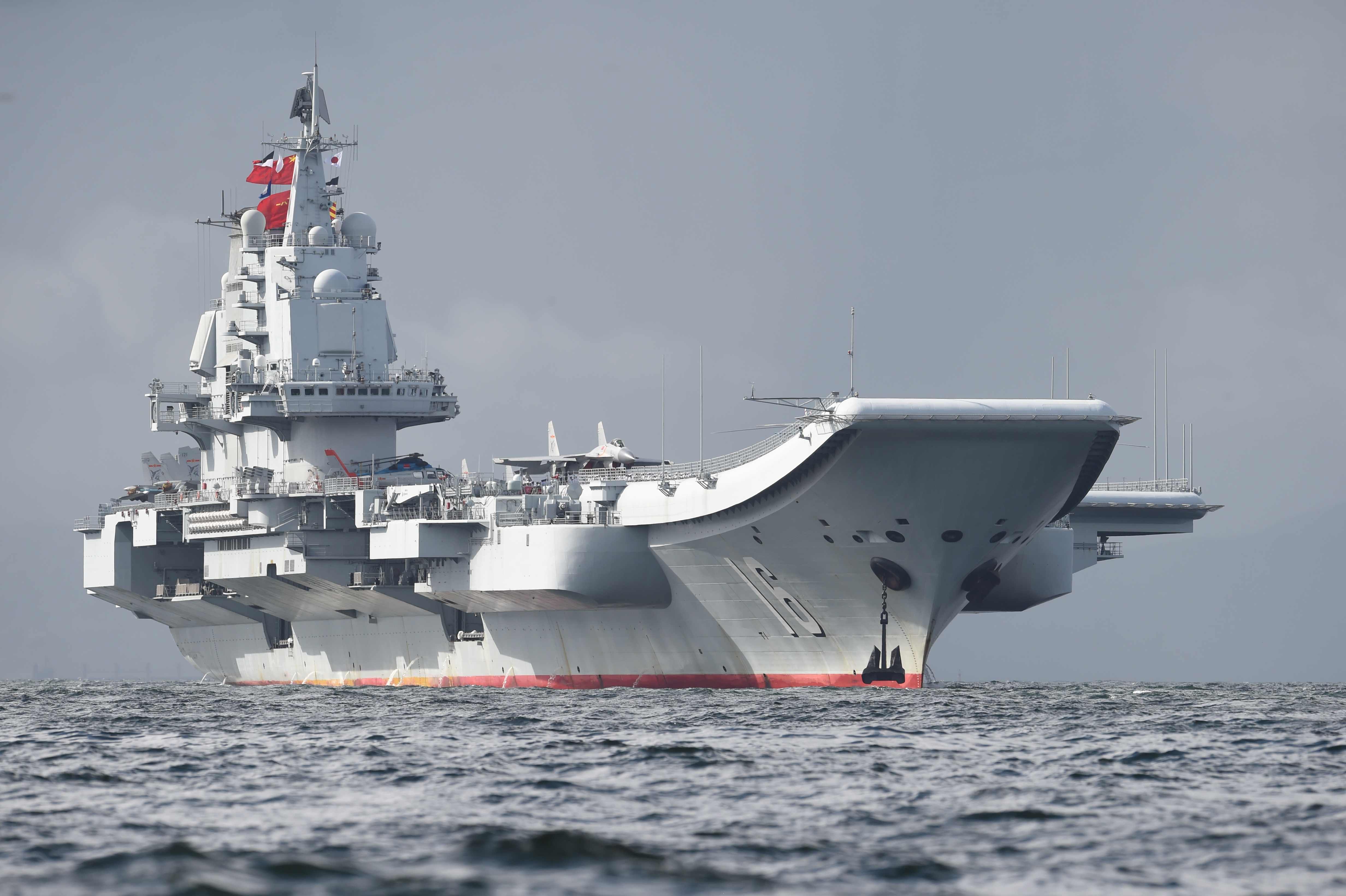

Since the 19th century, maritime strategists—most notably the American Alfred Thayer Mahan and the Briton Julian Corbett—have theorized the concepts of “command of the sea” and “sea power.” These terms are too often treated as synonymous, even though they are quite distinct, addressing different political and military dimensions. Another concept has emerged in recent years: naval power. Unfortunately, some commentators—including prominent ones—conflate naval power with sea power, without understanding the increasingly important distinctions between them as new weapons and new methods of operation come into play, sometimes turning weakness into strength and vice versa. It is these new weapons, together with their associated methods and frameworks of use, that distinguish the terms forming this new terminology: naval or maritime.
By Jean-Patrick Dayras, Admiral (ret.)
To fully understand the rules, stakes, and evolution of the “naval game” among the world’s military powers, we must first take stock of some of the world's leading navies.
The Russian Navy had a genuine war fleet in the Black Sea in February 2022: frigates, submarines, amphibious landing ships, missile corvettes, and patrol vessels. It had the capacity to blockade the Ukrainian coast, conduct amphibious landings, and carry out long-range strikes.
Ukraine had lost most of its fleet following the annexation of Crimea in 2014 and then in the early stages of the Russian invasion in 2022. It did not rebuild an equivalent fleet; instead, it developed a strategy to prevent the Russian fleet from freely exploiting its superiority—a strategy of sea denial. In April 2022, the cruiser Moskva, flagship of the Black Sea Fleet, was struck by Ukrainian missiles and sank.
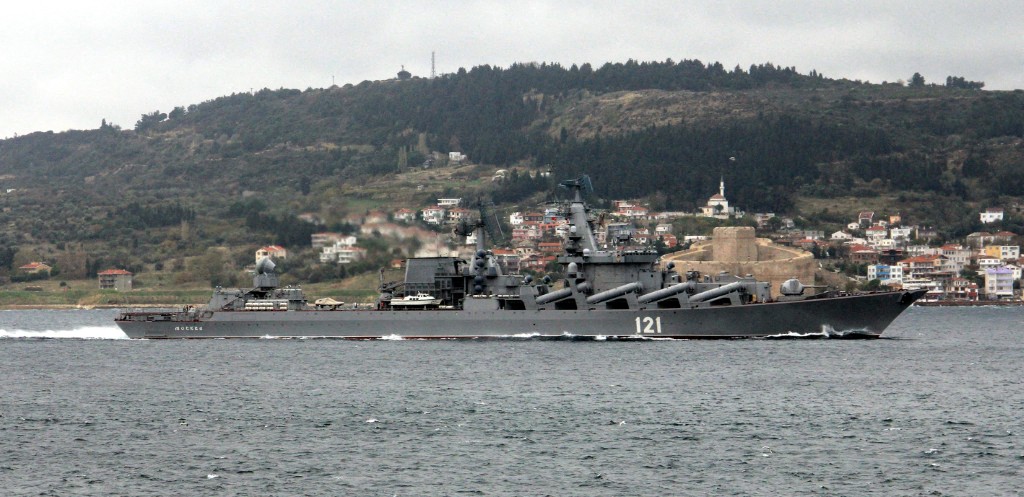
The Moskva. (AFP)
Between 2023 and 2026, Ukraine turned the Black Sea into a denied area by combining naval and aerial drones, anti-ship missiles, and cruise missiles to strike both ships and bases, supported by its intelligence capabilities. As a result, Russia was forced to relocate a significant portion of its vessels from Sevastopol to Novorossiysk, much farther east.
In 2022, Russia’s naval dominance in the Black Sea was overwhelming compared with Ukraine’s small, defensive navy. In 2026, Russia still has a far more powerful navy, but it has been neutralized, confined, and rendered vulnerable; Ukraine has a small fleet but an extremely advanced asymmetric naval warfare capability. Through its use of missiles and drones, Ukraine has changed the rules of the naval game.
Iran has two naval forces. The regular Islamic Republic of Iran Navy (IRIN) is a conventional fleet comprising frigates, corvettes, submarines, logistics vessels, and missile ships. The 2026 strikes hit it hard, and it lost much of its surface capability. The Islamic Revolutionary Guard Corps Navy (IRGC Navy), designed for asymmetric warfare in the Persian Gulf, operates fast attack craft, anti-ship missiles, drones, mines, and surveillance systems.
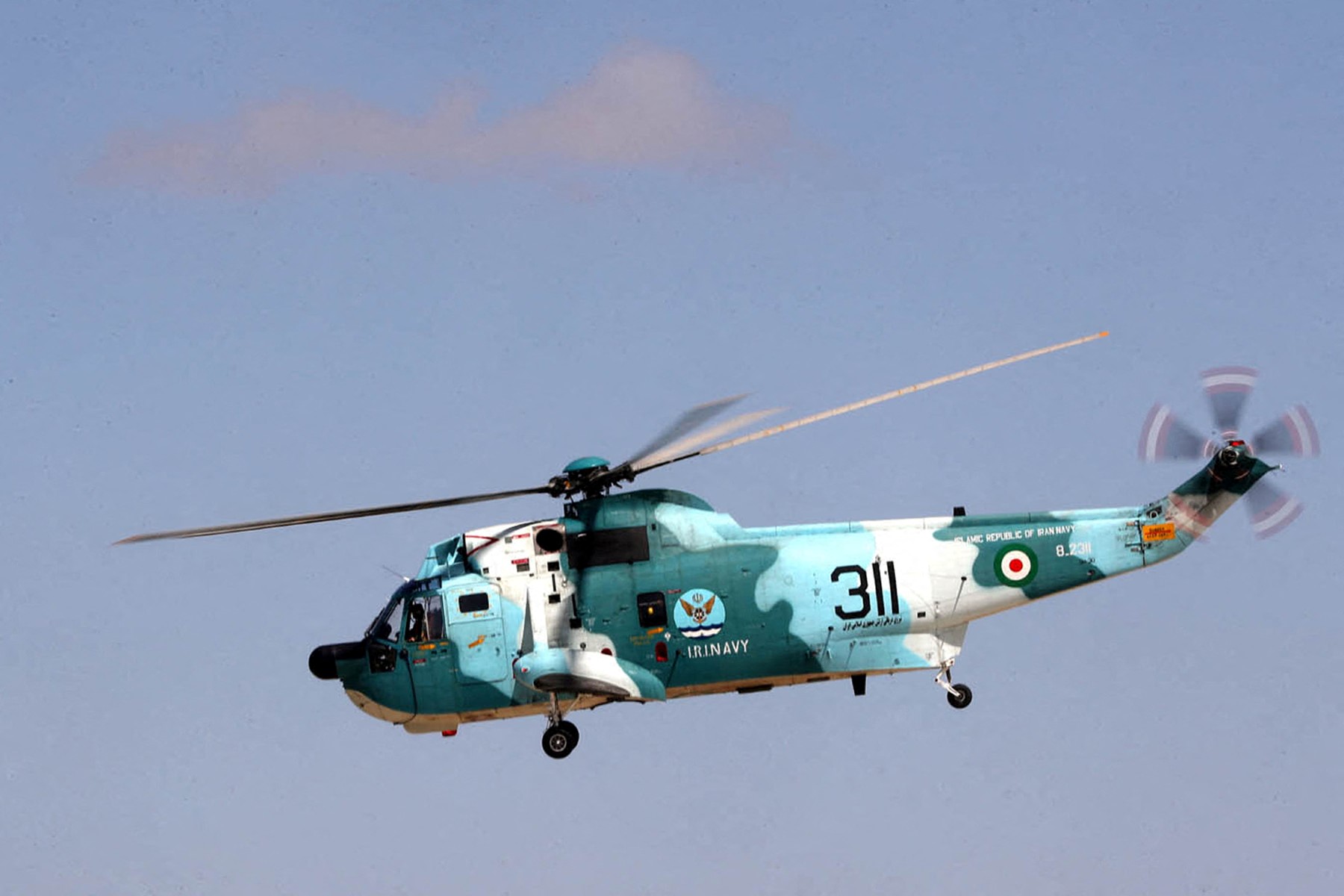
A U.S.-built Sikorsky Sea King, a naval helicopter dating from the Shah’s era. (AFP)
Iran has lost the ability to wage a genuine conventional naval battle—but does that matter? The sea denial it imposes on the entire world in the Persian Gulf and around the Strait of Hormuz, using fast attack craft, shore-based missiles, drones, and mines, is enough to pose a persistent and credible deterrent threat to commercial shipping through the strait. Its sea power may seem negligible compared with that of the United States, or even Europe, yet through the capabilities of the Islamic Revolutionary Guard Corps Navy, Iran holds the key to the Strait of Hormuz. Here again, the rules of the naval game have changed—this time in confined waters.
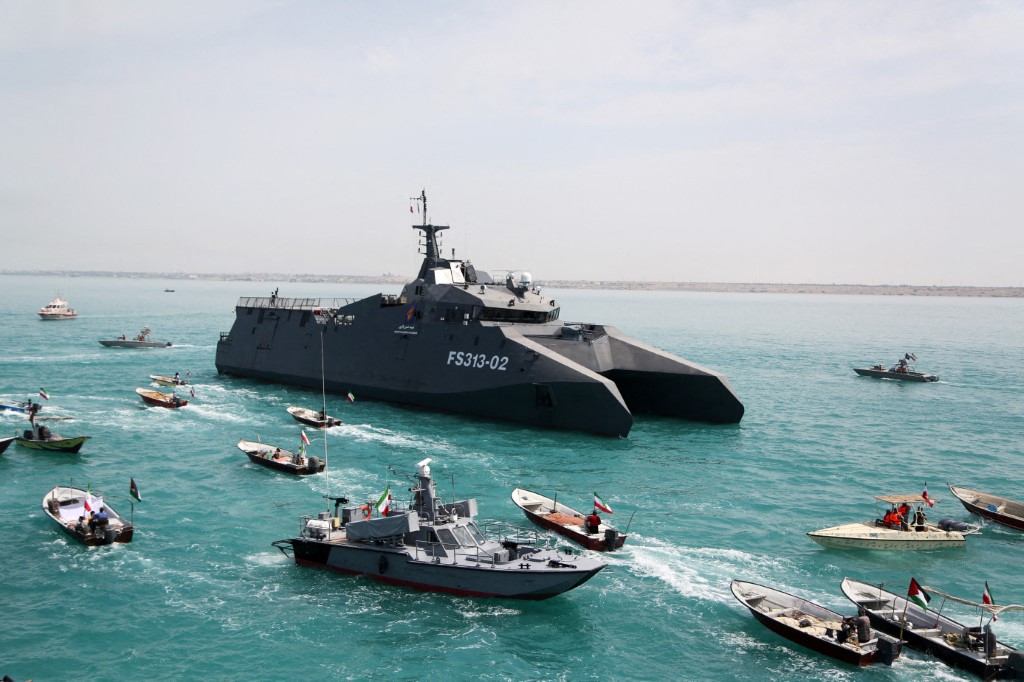
A modern ship surrounded by several fast patrol boats and other small craft belonging to the Islamic Revolutionary Guard Corps Navy. (AFP)
The Chinese Navy has evolved since 2000 from a largely coastal force limited to defending the shoreline and its approaches into a blue-water navy.
From 2000 to 2010, China undertook a massive modernization of its shipbuilding industry and developed modern destroyers and frigates, submarines, and anti-ship missiles as part of an anti-access/area-denial strategy.
In 2012, its first aircraft carrier entered service, converted from a former Soviet carrier purchased from Ukraine and extensively modernized. In 2019, the first aircraft carrier built in China was launched. It has now been followed by the first carrier equipped with electromagnetic catapults, marking a technological leap. Alongside these carriers have come large 11,000-ton destroyers with numerous vertical launch cells, designed in particular to escort carrier strike groups.
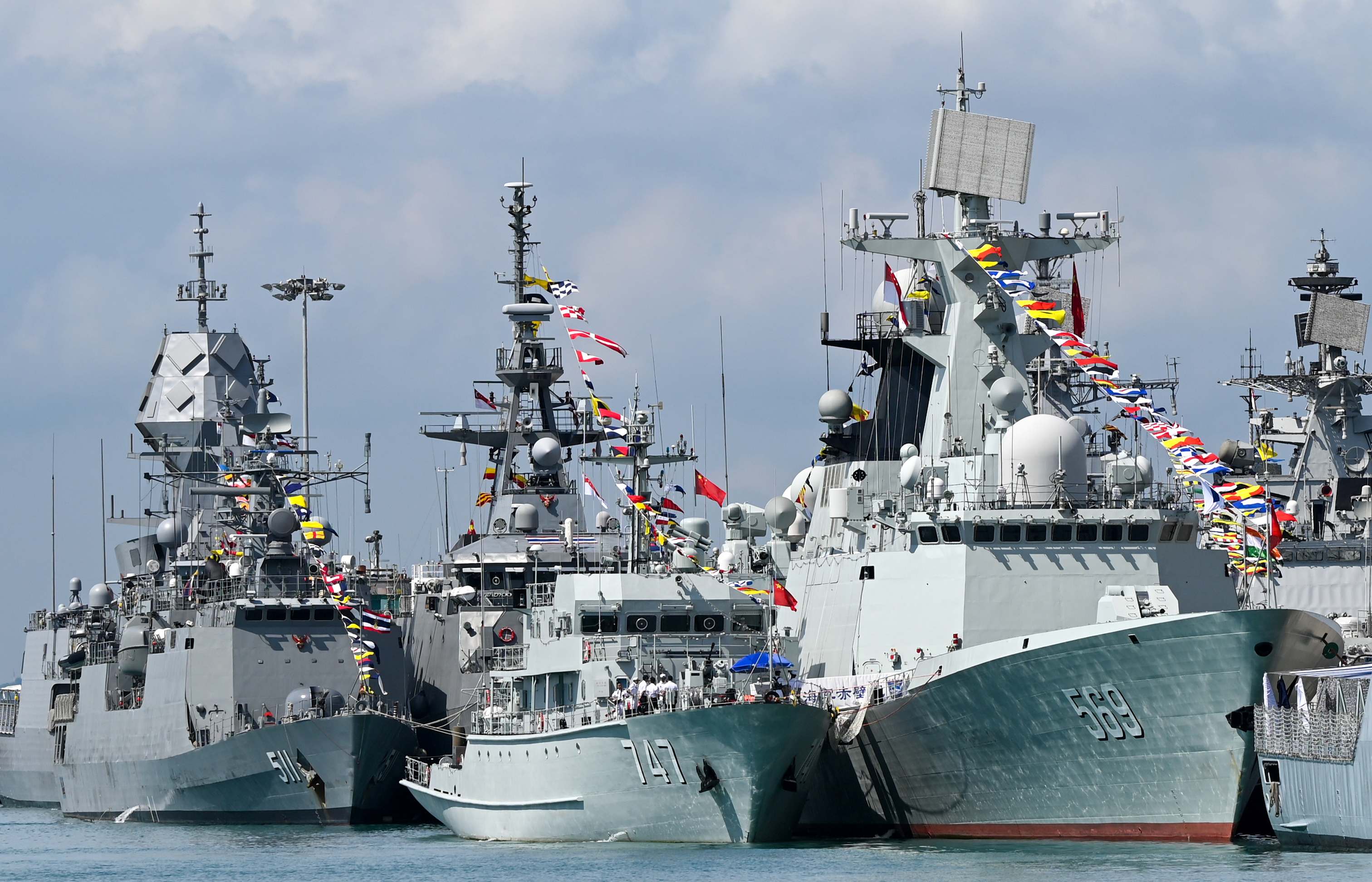
The guided-missile frigate Yulin, on the right. (AFP)
China then began developing a complete naval system comprising frigates, replenishment ships, amphibious vessels, and helicopter assault ships, as well as submarines, aircraft, satellites, missiles, and the bases and logistics required for a blue-water navy. Its highly efficient shipbuilding industry is a fundamental part of this strategy. Since 2020, the real change has been qualitative. By 2030, it will have 435 vessels. Naval power, however, should not be assessed solely by the number of platforms.
What is such a blue-water navy for?
The first objective is Taiwan: to isolate the island, prevent or deter a supporting US intervention, maintain China's supply lines, and potentially impose a blockade. To this end, the navy is backed by land-based missiles, combat aircraft, satellites, cyber capabilities, and the coast guard. If necessary, this integrated system will make it possible to encircle and isolate Taiwan and control the surrounding maritime area, probably avoiding the need for an amphibious landing.
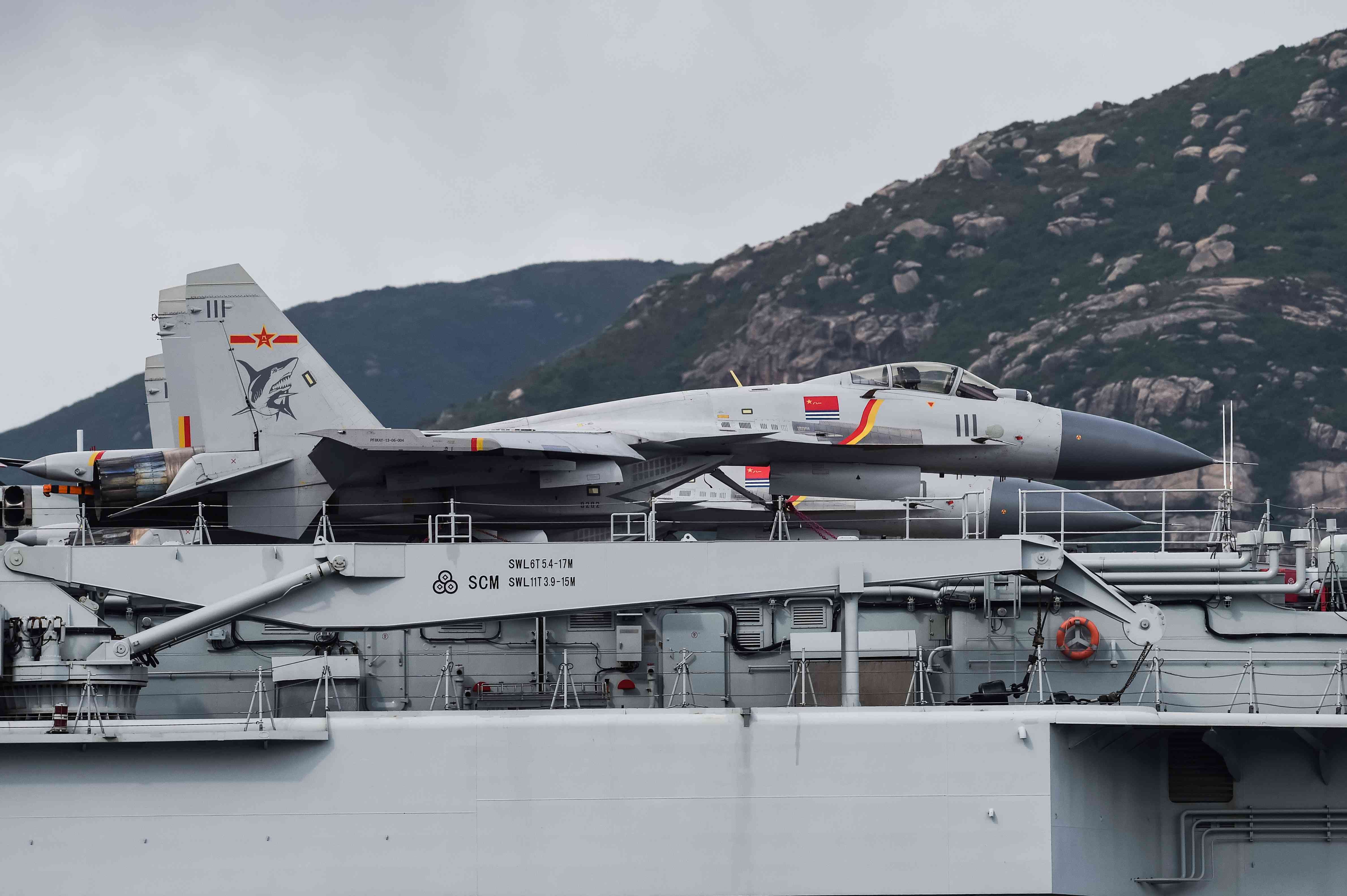
Shenyang J-11 aircraft aboard the Liaoning aircraft carrier. (AFP)
At least initially, China is not seeking to field a fleet superior to that of the United States everywhere. For now, it aims to make US intervention in its strategic environment prohibitively costly—another form of “conventional” deterrence.
The combination of aircraft carriers, surface ships, submarines, anti-ship missiles, aircraft, drones, and satellites is intended to give Beijing a sphere of maritime power near China and across its geopolitical area: first the East and South China Seas, then the straits of Southeast Asia, followed by the Indian Ocean and, later, the Pacific. In addition, the coast guard and maritime militias enable China to exert significant maritime pressure in the South China Sea without necessarily deploying its navy directly. This is the second objective.
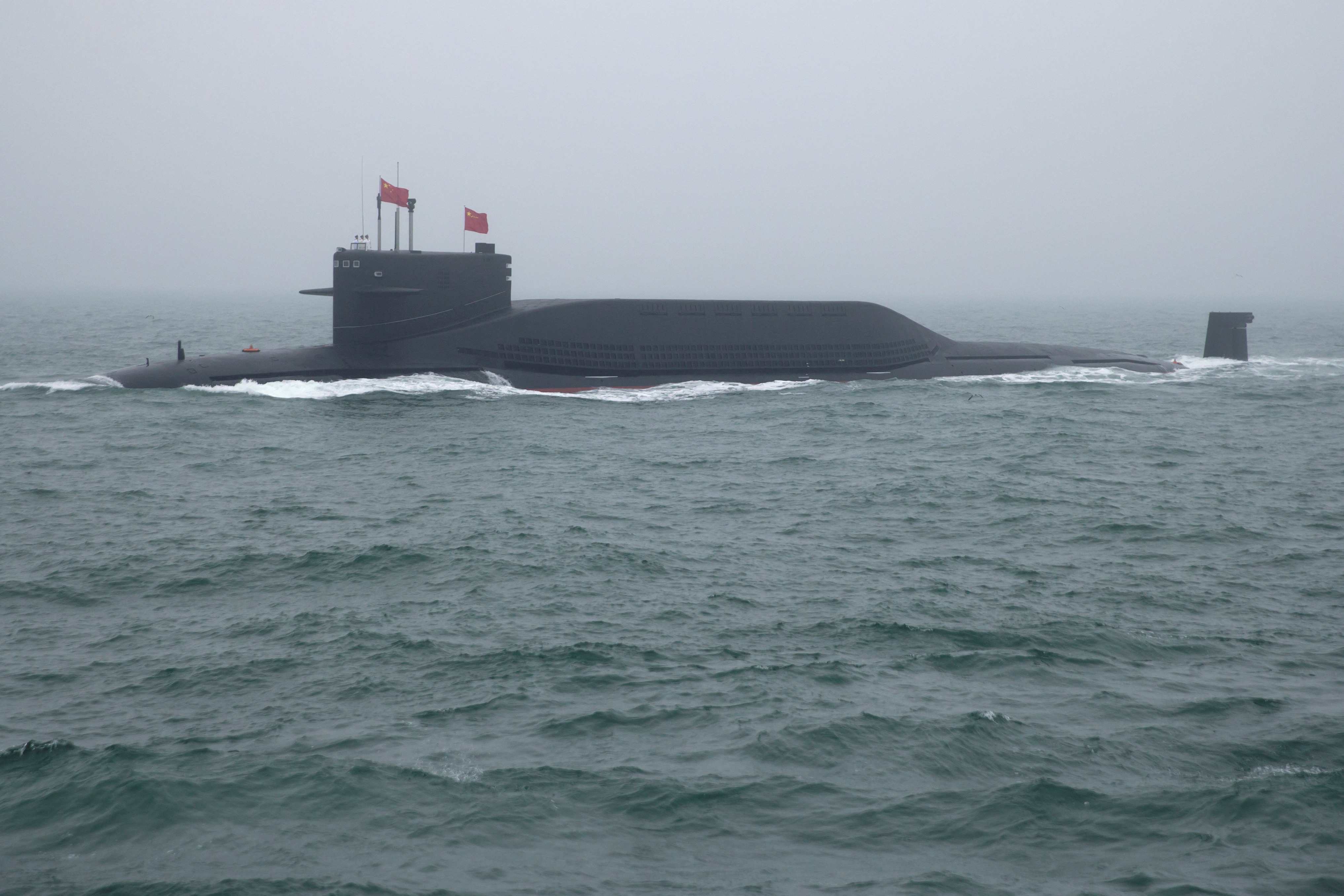
The Chinese submarine Long March 15. (AFP)
By deploying combat aircraft far from Chinese territory aboard aircraft carriers, Beijing aims to protect its interests in the Indian Ocean, the Gulf of Aden, Africa, the Middle East, and the trade routes to Europe. This order of priorities reflects China's determination to develop and protect its commercial power in order to drive the growth that will enable it to become the world's leading economic power.
The focus has shifted from defending China to defending Chinese interests worldwide. To achieve this goal, China is building a maritime power ecosystem based on a shipbuilding industry, satellites, missiles, aviation, bases, a merchant fleet, and overseas port facilities. This is the third objective.
The Japanese Navy, the Maritime Self-Defense Force has evolved since 2000 from a force designed to defend Japan's maritime approaches and conduct anti-submarine warfare into a versatile navy capable of long-range operations.
From 2000 to 2010, Japan developed a primarily defensive navy that was nevertheless already highly modern, tasked with protecting the archipelago, sea lanes, and maritime approaches. A major shift came with the introduction of helicopter destroyers from 2009 onward. Their size and configuration already foreshadowed the future transition to aircraft carriers.
From 2010 to 2020, the focus shifted toward an expeditionary navy. China's rise was the main strategic driver. The Chinese navy expanded rapidly, while tensions increased around the Senkaku/Diaoyu Islands, Taiwan, and the East China Sea. Japan strengthened its capabilities particularly in the southwestern part of the archipelago.
Since 2020, Japan has been moving toward a blue-water navy capable of operating in high-intensity conflicts. In December 2022, Japan adopted three documents: the National Security Strategy, the National Defense Strategy, and the Defense Buildup Program. Key elements include integrated air and missile defense, aircraft carriers with carrier-based aircraft, submarines, and long-range missiles. This marks a doctrinal break. Japan is no longer content merely to build a navy capable of repelling an attack on its waters; it now seeks the ability to detect, intercept, and, if necessary, strike enemy capabilities at long range, while protecting sea lanes and the southwestern islands.
Between 2000 and 2026, the Japanese navy evolved from an outstanding defensive force specializing in anti-submarine warfare into a versatile navy capable of operating in a high-intensity conflict in the Indo-Pacific and helping to protect the country's supply routes.
Recent developments in the size and use of the Russian, Ukrainian, Iranian, Chinese, and Japanese navies have provided an opportunity to illustrate—without explicitly naming them—the concepts of naval power, maritime power, and command of the sea.
These concepts, which are sometimes confused, will be explained in the next article, examining these countries' objectives, the strategies they have implemented, and their relative advantages.