

Command of the Sea, Naval Power, Maritime Power (2/3)
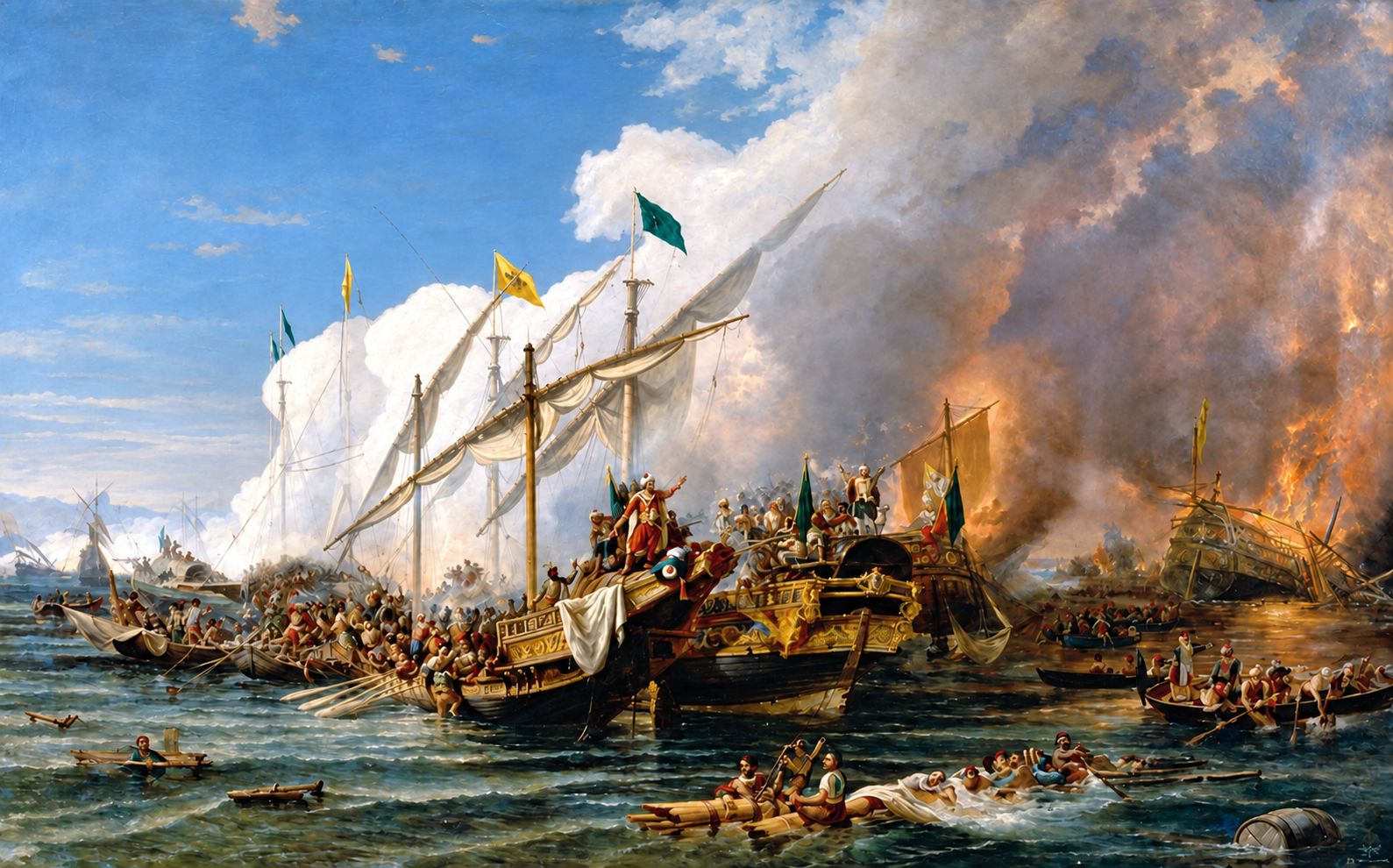

In the 19th century, two theorists—Mahan, an American, and Corbett, a Briton—who remain pillars of strategic naval thought, put forward theories on “command of the sea” and “sea power” (sometimes confused with maritime power).
Alfred Thayer Mahan argued that a nation’s greatness, prosperity, and global dominance depend directly on its ability to control the seas: command of sea routes and the defeat of the enemy fleet take precedence over everything else. “Sea power” refers to a state’s ability to use the seas and oceans for military, economic, and political purposes in order to project its power and safeguard its global geopolitical interests.
For Julian Corbett, the sea is merely a means in the service of land.
Different theories, different countries, different interests. For one, the island of America; for the other, an expanding British Empire.
By Jean-Patrick Dayras, Rear Admiral (ret.)
Founding principles
Command of the sea
The chain of maritime power rests on three pillars: domestic production (trade and industry), the merchant marine (to transport goods), and the navy (to protect flows). Hence the imperative of controlling strategic points: seizing key passages and chokepoints (straits, canals, coal-bunkering bases) to lock down movement across the oceans.
Naval power
Control the sea lines of communication.
Two theories:
For Alfred Thayer Mahan (1840–1914), whose major work is The Influence of Sea Power upon History, 1660–1783 (1890), command of the sea is the supreme goal. The objective of any naval strategy must be the destruction or neutralization of the enemy fleet in order to achieve decisive and lasting control of the seas. Every battle must be decisive (Trafalgar) and requires the concentration of forces. Mahan rejected the dispersal of naval forces. He conceived of naval warfare in terms of major confrontations that determine command of the sea, much as Clausewitz did for land warfare.
The six elements of sea power are: geographical position, physical configuration (coasts, ports), extent of territory, size of population, national character (aptitude for trade), and the nature of government (support for maritime policy). He therefore linked the sea, empire, and trade. Naval power, the merchant marine, colonial possessions, and bases form a virtuous circle essential to great-power status. Hence the arms race of the late 19th century.
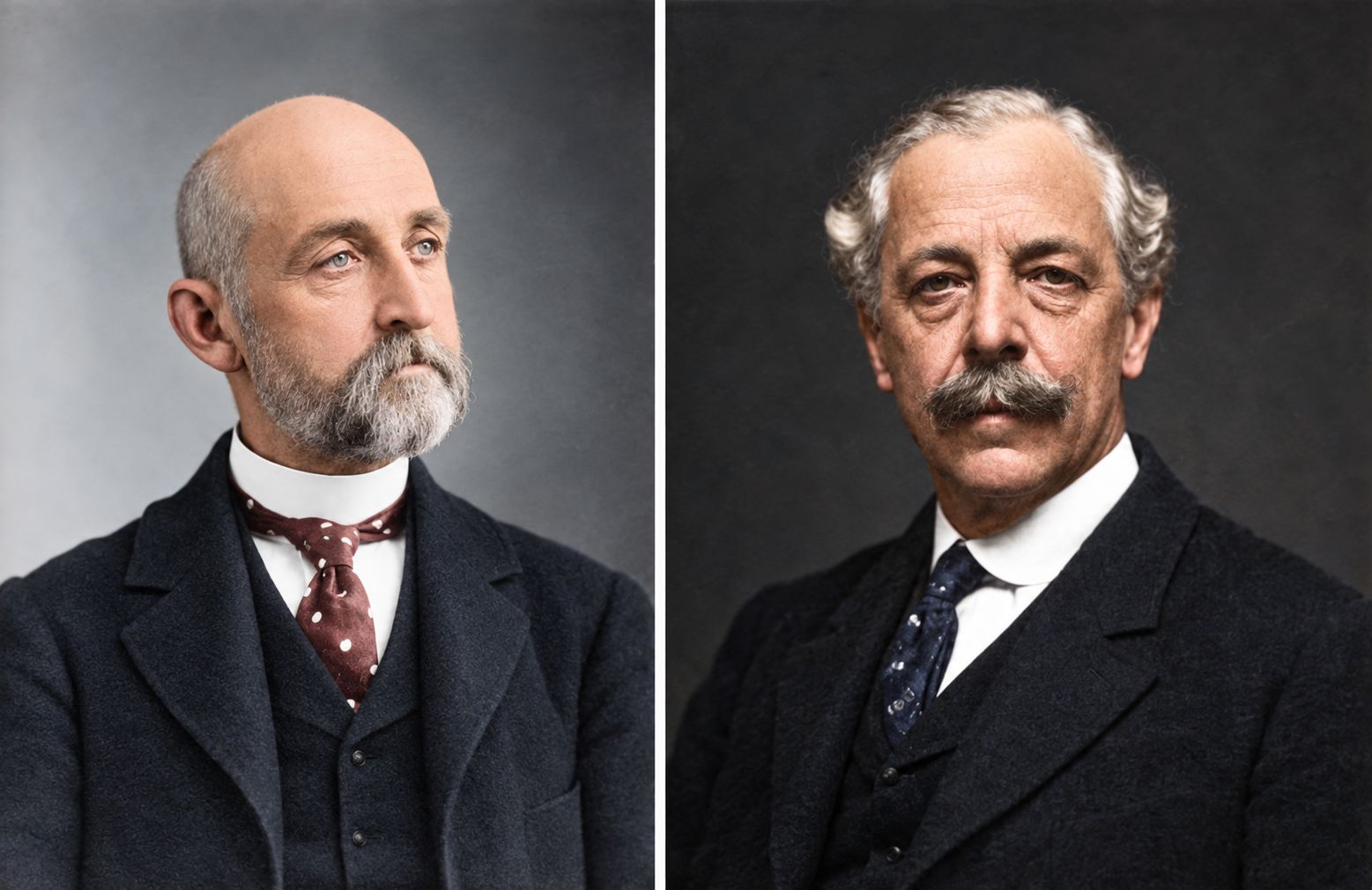
Alfred Thayer Mahan and Julian Corbett. (Wikimedia Commons)
For Julian Corbett (1854–1922), whose major work is Some Principles of Maritime Strategy (1911), the sea is a means. He stressed that naval warfare only has meaning through its influence on events on land—wars are not won at sea, but through what the sea makes possible on land. Under this theory, command must be relative. Corbett believed that absolute and permanent command of the sea is almost theoretical. What usually matters is temporary, local, or contested control, sufficient to accomplish a specific objective.
Consequently, control of maritime communications can only be temporary. The real objective is not so much to destroy the opposing fleet as to secure one’s own lines of communication—trade, supplies, and troop transport—and disrupt those of the enemy.
Another consequence of his reasoning: even an inferior fleet does not need to seek a decisive battle if it is sufficiently strong; its mere existence (a fleet in being), by remaining sheltered, may be enough to constrain the enemy and contest command of the sea without ever engaging in a head-on battle.
This was, ahead of its time, a joint approach (jointness). Corbett saw naval strategy as being constantly linked to land strategy—the navy serves to project and support the army (landings, blockades, interdiction).
Corbett's thinking is more flexible and defensive, and less dogmatic than Mahan's. It is better suited to secondary naval powers or to situations in which a decisive battle is neither possible nor desirable.
Corbett was British, Mahan American. Their theories shaped the navies of those two countries. One championed prosperous global trade; the other, an empire.
Explaining these two theories and identifying the particular features they introduce into command of the sea or naval power amounts to attempting to define them:
- Command of the sea (command of the sea / sea control) is a state, a strategic situation: the ability to use a maritime area for one's own needs (trade, force projection, resupply) while preventing the enemy from doing so. It is not simply a matter of “having the biggest fleet”; it means exercising effective control at a given time and place. Command of the sea, or sea control, refers to a navy's ability to use a maritime area freely, protect its own vessels, and prevent the adversary from using that same area.
- Command of the sea is not necessarily global. It may be local (for example, in the eastern Mediterranean), temporary (during a military operation), or locally complete or partial. It is achieved through naval, air, and submarine superiority, as well as intelligence dominance.
- Command of the sea is a strictly operational concept: it describes what a navy is capable of doing in a given area.
- Naval power is a measure of capability: the number, quality, and technology of ships; a navy's operational reach; and its industrial and logistical capabilities. It is quantifiable; it is potential, a tool. A naval power may be superior without ensuring complete command of the sea (a fleet may be dispersed, engaged elsewhere, or locally neutralized by a weaker but well-positioned force—asymmetric warfare, mines, anti-ship missiles).
In short, maritime power is the potential; command of the sea is the military effect that potential makes possible. For example, France is a maritime power thanks to its vast exclusive economic zone, its navy, its ports, and its shipbuilding industry. However, it does not seek to exercise permanent command over all the oceans, but rather to gain command of the sea only in areas where its interests are involved.
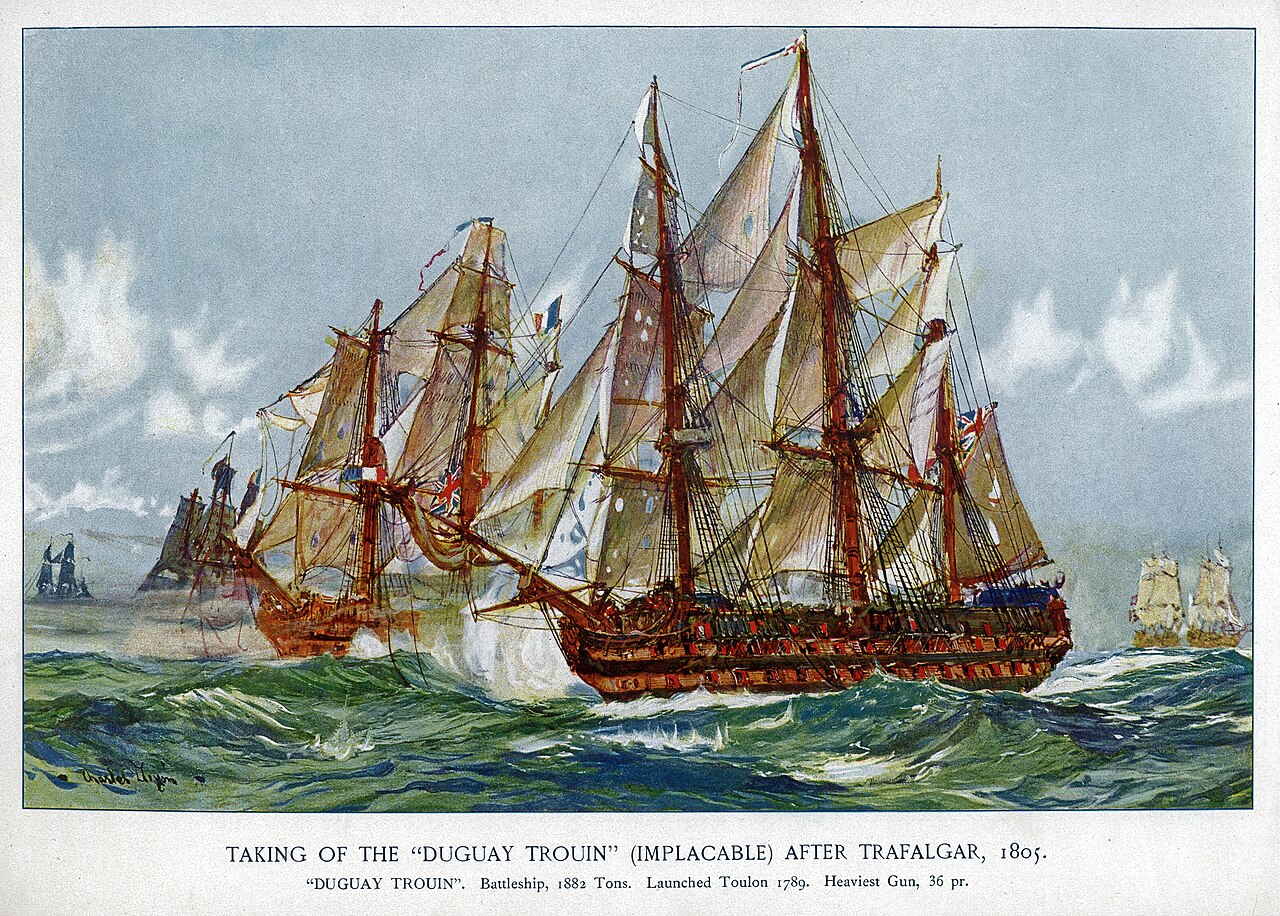
Capture of the Duguay Trouin, which became the HMS Implacable after the Battle of Trafalgar. (Wikimedia Commons)
For Mahan, command of the sea is the foundation of grand strategy (trade, colonies, force projection); it may be absolute (global and permanent dominance), relative (local or temporary), or simply the control of a specific area at a specific moment (a strait, a trade route), and it applies to the control of maritime communications as an operational objective.
Naval power (Corbett) is limited to the military dimension: a state's maritime armed forces—its war fleet, combat capabilities, military technology, and naval doctrine. It is a subset, an instrument of coercion.
Naval power is what one has; command of the sea is what one does with it.
For several years now, French geographers and geopolitical scholars such as Yves Lacoste, as well as scholars working in Mahan’s own tradition, have used the term maritime power, or sea power, in its broad sense, distinguishing it from the term naval power, which had previously been used interchangeably. This is a much broader concept, encompassing everything that connects a nation to the sea and identifying the potential that enables it to endure and renew itself.
The capabilities required to move from naval power to maritime power would include:
- The navy (and therefore naval power is part of it).
- The merchant marine (commercial fleet, cargo tonnage transported).
- Port and industrial infrastructure (shipyards, ports, logistics).
- Fishing and the exploitation of marine resources (fisheries, offshore operations, energy).
- Maritime geography (coastline, strategic location, access to straits).
- Scientific research and maritime training capabilities.
- A legal and diplomatic framework enabling the protection of its interests at sea.
- Legal rights and influence over maritime areas (EEZs, law of the sea).
- Maritime culture and expertise (seafaring populations, maritime tradition).
Today, this list could also include force-projection capabilities (amphibious assault helicopter carriers).
Maritime power is comprehensive: it requires strong economic development, influence, and strategic autonomy. It is a state’s ability to use the sea to defend its interests, ensure its prosperity, and wield international influence. Naval power is purely military. In The Influence of Sea Power upon History Mahan was already thinking in these broader terms: for him, naval power was only one of the pillars of sea power, alongside maritime trade and overseas colonies or bases.
Thus, a country may possess significant maritime power (a large commercial fleet, major ports, a fishing industry) without having a highly developed naval power—and vice versa. Some states focus entirely on military capabilities without a solid civilian maritime foundation. Norway, for example, is a major maritime power, with substantial merchant and fishing fleets, an offshore maritime industry (oil and gas), and longstanding naval expertise, yet it has modest naval power: its very limited navy is geared toward territorial defense and NATO rather than power projection. The sea is central to its economy, not to an offensive military strategy.
See also on the same topic:
Changing the Rules of Naval Warfare at the International Level (1/3)
Next article:
Reflections on Various Cases: Russia, Ukraine, Iran, China, Japan (3/3)