

Preventing the April 17th speech from remaining a dead letter

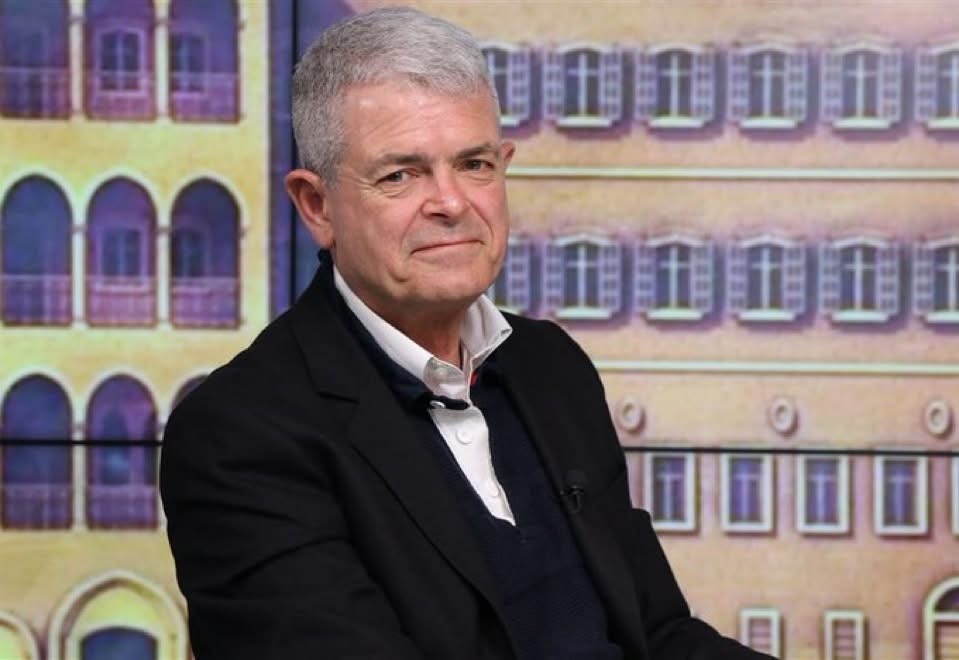
In Lebanon, the ceasefire proclaimed by Donald Trump, which came into effect on Thursday night to Friday, and President Joseph Aoun's message to the nation on Friday, applauded by sovereignist leaders and many editorialists alike, have rekindled public hope.
Hezbollah was quick to vehemently criticize the presidential speech, even resorting to threats, although its name was not explicitly mentioned once. This speech, commendable in itself, however, recalls the inauguration speech of January 9, 2025, which has still not been implemented.
Donald Trump will invite President Joseph Aoun and Prime Minister Benjamin Netanyahu to the White House for direct negotiations.
Talks between belligerents always begin with contradictory positions, generally followed by a compromise. This is usually in favor of the stronger party but provides guarantees to the weaker party, when a true will for a solution exists.
Before engaging in the exercise of predicting the results of the planned Lebanese-Israeli negotiations, it is appropriate to recall previous regional peace talks.
Egypt has been at peace with Israel for 48 years and Jordan for 32 years. At the time of signing the peace treaties, both states were accused of all evils by countries claiming to be part of the “front of refusal.”
The Palestinian-Israeli Oslo Accords have been stalled for 33 years, due to a lack of Israeli will and Palestinian divisions. The Abraham Accords for normalization, signed by the United Arab Emirates, Bahrain, Sudan, and Morocco with Israel, are working very well despite the Gaza war triggered by the Hamas attack against Israel on October 7, 2023. Following this war, however, Saudi Arabia has frozen the opening of normalization talks with Israel.
Bashar al-Assad's Syria had calculated that it was in its interest not to sign peace agreements with Israel, to maintain an extremist posture, and to ally with Iran.
Assad had two priorities: first, to preserve his regime and ensure its succession for the benefit of his son; second, to maintain his grip on Lebanon. He had estimated that the only way to secure these objectives was not to engage in a peace that could threaten his regime, which, deprived of the state of belligerence with Israel, could no longer justify either its hold on Lebanon or its internal repressions.
The will to reach a peace agreement on both sides is therefore the key to the success of future Lebanese-Israeli negotiations. This peace would deprive Hezbollah of its “resistance” rhetoric and the legitimization of its militia structure. The pro-Iranian group would have to change its discourse and perhaps abandon its raison d'être. Consequently, it should not be expected to make concessions. Moreover, it clearly states that it wants neither negotiations nor peace.
So what will the Lebanese state do during the Washington talks? It is absolutely clear that there is a common point between Lebanon and Israel: the dismantling of the Hezbollah militia. In geopolitical terms, this means the end of Iranian hegemony exercised for 44 years over the Eastern Mediterranean. But this will not be easy. In this case, how will the Lebanese authorities solve this problem? Sheikh Naim Qassem has already shown his hand, stating bluntly that he will continue the resistance until his last breath, and will continue to refuse to hand over his weapons before Israeli withdrawal and the implementation of a national security strategy (to keep his weapons under a different label).
Have the president and his advisors, and/or the Council of Ministers, put the Hezbollah problem on the discussion table with a multidirectional approach? Have they developed a military, security, diplomatic, economic, social strategy… a compact strategy as required by any action of this magnitude? Is there collective work in this regard? Or will they hide behind our army, as they have been doing since August 2025?
It should be known that the war triggered by Hezbollah to support Iran, which has just been interrupted by the current ceasefire, is the fifth between this group and Israel since 1993. Hezbollah therefore has 33 years of experience in how to take advantage of truces to reorganize, rearm, and renege on its commitments to hand over its weapons, as it did for UN Security Council Resolution 1701 of 2006 and the ceasefire of November 27, 2024.
If the Lebanese-Israeli peace talks falter, we must unfortunately prepare for a sixth war of its kind, always as devastating, if not more so.
President Elias Hraoui's mandate was unable to confront Hezbollah. Those of Emile Lahoud and Michel Aoun granted all favors to this group. Only President Michel Sleiman proposed a roadmap to restore state sovereignty, with the Baabda Declaration (June 2012) as a starting point, which was very quickly circumvented and paralyzed by Hezbollah, the Free Patriotic Movement (Michel Aoun), and the Lebanese Democratic Party (Talal Arslane). President Sleiman was accused of all evils by his detractors, amidst a media and social media campaign.
Hezbollah has always regarded the state as a shell, serving as a legally cosmetic cover, but remaining at its mercy. Lebanese negotiators in peace talks should propose credible solutions to this 44-year-old problem, which several current powerful figures have helped to maintain. Without this, solutions will come from abroad, as has been the case for 50 years.
A minimum of seriousness and credibility should emerge, otherwise the presidential speech of April 17, which is promising and a source of hope, risks not being followed by actions and ending up like the inauguration speech.
Hezbollah-Israel: An Endless War in Whose Interests? (20)
The Trump-Xi Summit: Between Pragmatism and Necessity
The Conflict in Yemen: Geopolitical and Strategic Considerations
Yemen: The Mecca Pact Moves from Theory to Military Action
Hezbollah-Israel: An Endless War in Whose Interests? (19)
More from Khalil Helou
View All


More in Strategia
View All


Latest from Levant Time
View All


