

Nabih Berri... Stop this Blackmail!

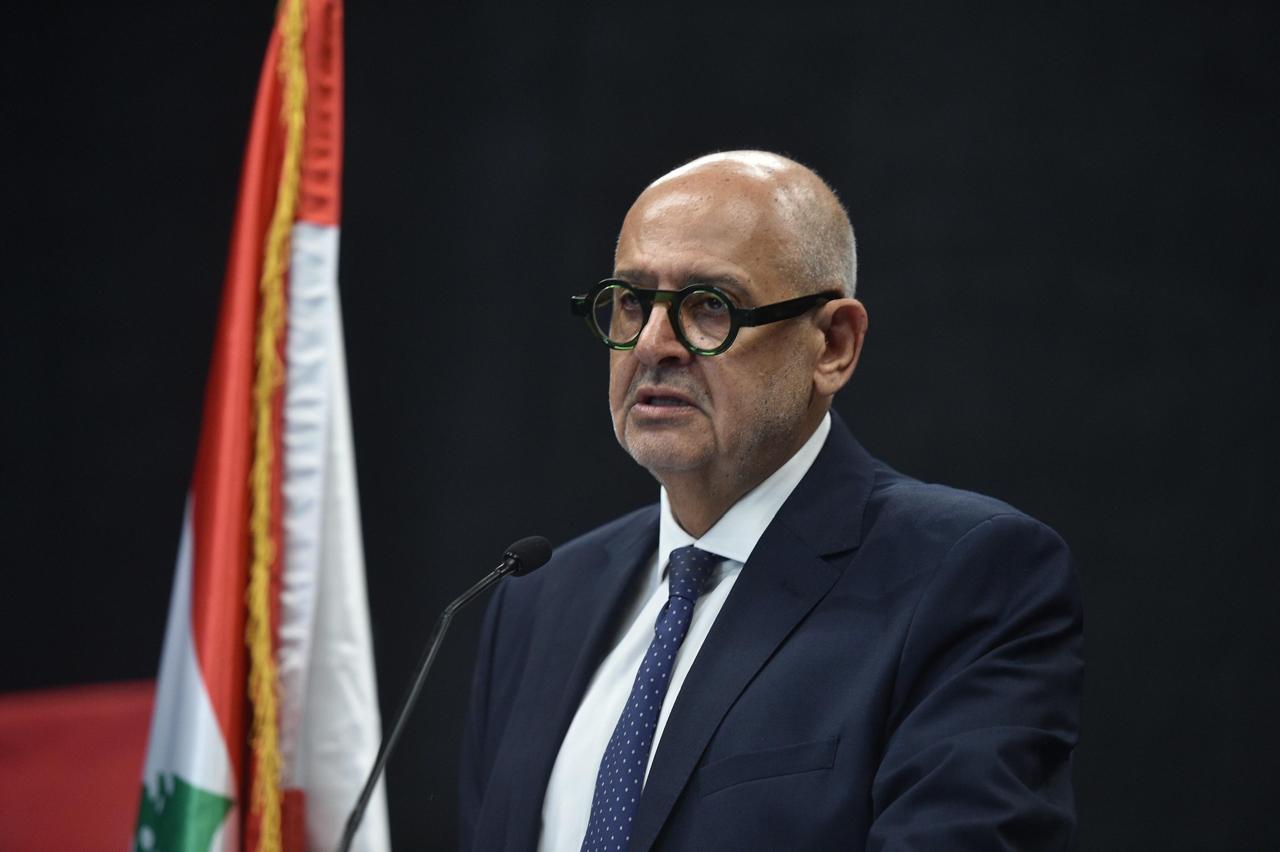
At every decisive moment in Lebanon’s history, the same rhetoric resurfaces: threats to bring down the government, warnings of yet another collapse, and an escalating political confrontation. Yet the question is no longer whether Nabih Berri can topple the government. The real question has become far simpler: what comes next?
What is the alternative? What vision does he offer for Lebanon? And how is the country expected to emerge from its crisis if it once again slips into the vicious cycle of political and institutional paralysis?
If opposition to the framework agreement genuinely stems from a desire to defend Lebanon’s sovereignty, then those who reject it should put forward a clear, realistic and workable alternative. Simply calling for the government’s downfall without presenting the slightest roadmap offers the Lebanese nothing but deeper uncertainty.
But the more fundamental question lies elsewhere: is the government really the problem?
If, according to this reasoning, the government has lost its political legitimacy, what about the Parliament from which it derives that legitimacy? If the solution is to bring down the executive branch, why should those advancing this argument not carry it through to its logical conclusion by calling for the dissolution of Parliament as well and returning to the people through early parliamentary elections?
The issue then becomes even more uncomfortable. Can Nabih Berri guarantee that he would be returned as Speaker of Parliament if new elections were held? Can the Shiite duo guarantee that the current political balance within Parliament would remain intact? If the answer is uncertain, the Lebanese are entitled to ask whether the real objective is to save Lebanon or simply to preserve a political balance that has remained in place for years.
Democracy cannot be practiced selectively. Anyone demanding a change of government should also be prepared to accept a complete reconfiguration of political power and submit it to the judgment of the ballot box, rather than deciding which institutions should change and which should remain beyond any form of political accountability.
Experience has shown that the policy of obstruction has never built a state. On the contrary, it has contributed to weakening one. Whenever Lebanon glimpses an opportunity to rebuild its institutions, the language of threats and escalation returns, as though the objective were to keep the country at the mercy of political power balances rather than under the authority of the Constitution.
The most troubling aspect of this rhetoric is that it leaves the Lebanese with only one choice: either submit to the political conditions imposed by the Shiite duo or watch the government fall and the country descend into yet another crisis. This can no longer be viewed as ordinary political opposition. It has become a permanent instrument of pressure on the state and its institutions, with the Lebanese people alone bearing the cost.
In democratic systems, governments are challenged within the framework of institutions and brought down only when a constitutional majority rallies behind a clear alternative program. They are not overthrown because obstruction has become a method of governing, nor because institutional paralysis has been turned into a bargaining tool.
If Speaker Nabih Berri opposes the framework agreement, that is his political right. If he seeks to bring down the government, that too is a constitutional right, provided the necessary conditions are met. But the Lebanese are equally entitled to ask him a simple question: what comes next? Who will form the next government? On what parliamentary majority will it rely? What will its program be? How will it revive the economy? How will it rebuild southern Lebanon? And how will it restore the confidence of both the Arab world and the international community?
If the real objective is merely to acquire another lever of pressure with which to impose political conditions, the Lebanese can no longer bear such an approach. They have already paid an exorbitant price through the paralysis of state institutions, the collapse of the economy, and Lebanon’s isolation from its Arab and international environment. It is no longer acceptable for their future to remain hostage to the calculations of political forces.
The time has come to move beyond the logic of “either we get what we want, or there is no state.” The state belongs to no one. The government is not a prize to be claimed. Parliament is not the exclusive preserve of any political force. And legitimacy can be renewed only through the will of the people.
If those who invoke democracy truly believe in it, they should be willing to embrace it in its entirety, not only when it serves their interests. They should accept that it is the people who decide who governs, who serves as Speaker of Parliament, who remains in power, and who leaves it.
Threatening to bring down the government whenever circumstances change, while refusing even to consider a comprehensive reconfiguration of political power, no longer convinces the Lebanese. They have grown weary of political blackmail. They are weary of the paralysis of the state. And they are weary of seeing their future turned into a bargaining chip in an endless political struggle.
Lebanon today needs statesmen who build institutions, not politicians who threaten to bring them down whenever their decisions run counter to their own interests.
From the Clash of Civilizations to the Security of Humanity
Who, then, claimed the annexed Golan?
Lebanon: Is Neutrality the Next Project?
But Who Are These Houthis Threatening Freedom of Navigation?
We Do Not Want a Lebanese Hashd al-Shaabi
Más de Jad Akhawi
Ver todo


Más en Opinion
Ver todo


Lo último de Levant Time
Ver todo


