

The US intervention in Venezuela: a Multifaceted Geopolitical Impact
Bogota, Colombia, from Maxime Pluvinet


Like a play. Last act in Venezuela… The deus ex machina from the United States, so long announced, has finally intervened. Donald Trump's administration materialized its threats of a direct intervention on Venezuelan soil against the government of Nicolas Maduro, early Saturday, January 3, 2026.
For the record, it's worth noting that it was also on January 3rd that Qassem Soleimani, commander of the Quds Force (part of the Islamic Revolutionary Guard Corps), was assassinated in Baghdad in 2020, on the orders of President Donald Trump. It was also on January 3rd that the President of Panama, Manuel Noriega, surrendered to the Americans following a U.S. intervention in Panama.
Returning to the operation of January 3rd, 2026, alongside air strikes launched near military positions in the capital Caracas and other regions of the Bolivarian Republic, Maduro was captured with his wife by a unit of US special forces and evacuated to the United States, where he faces criminal charges for drug trafficking.

This US military operation obviously upsets the geopolitical landscape in Latin America and across the American continent, but its impact also extends beyond this part of the world. More specifically, for the populations of the Levant, the Middle East, and the Gulf generally, a fundamental question arises in light of these upheavals: will the fall of Maduro consequently weaken, by ripple effect, the already struggling Iranian mullahs' regime, especially in recent days? The American administration indeed affirms that close ties exist more than ever between Caracas and Tehran. The Islamic Republic would consequently be deprived of a precious ally at a time when it faces a popular uprising, an unprecedented socio-economic crisis, and increased American pressure.
A second question arises acutely in this context for the countries of the Levant, and more particularly for Lebanon: will the changes in Venezuela truly contribute to further drying up the funding sources of Hezbollah, accused by the Trump Administration of exploiting the Maduro regime's card to engage in large-scale drug trafficking and money laundering operations?
While awaiting credible answers to these questions and also more precise information regarding the developments of the last few hours and their short-term repercussions on Venezuela, three other equally fundamental questions arise concerning the circumstances and the short-term impact of the American intervention.

First major question: was Maduro's “exit” the result of a negotiation? Despite the state of emergency and statements by Venezuelan officials, who early Saturday claimed not to know the whereabouts of the Bolivarian leader, the option of a negotiated exit had been mentioned by the media and Western chancelleries for several months. While American interventionism in the Caribbean Sea has been justified since mid-August by the fight against drug trafficking, the net tightened around Nicolas Maduro from the start, accused for several years by Washington of being at the head of the supposed Cartel de Los Soles, in addition to being called an illegitimate president.
Nicolas Maduro had repeatedly called for direct talks with Trump, and recent visits by American officials to Belarus had hinted at a possibility of fleeing to Minsk. The equivalent of a Bashar in Moscow… An admission of weakness? The fact remains that an operation of this kind, like the one that occurred on January 3, takes the unprecedented form of a forced extradition; a scenario not seen in Latin America since the capture of Noriega in Panama in 1990.
The fact remains that the idea of a negotiated exit is not new, knowing that the outcome of such a negotiation could only be to Maduro's disadvantage. But negotiations still allowed for saving face, in a way… A sign, no doubt, that Maduro had become aware of his lack of legitimacy in the face of the crises his country had been confronting since the great wave of repression in 2017.
What about the short-term future?
Second unknown, for now: should we expect a power vacuum in Venezuela? It must be noted in this regard that the opposition is fragmented in the face of Chavism. In 2017, Juan Guaido was President Trump's protégé in the wake of unprecedented demonstrations that had shaken the country, causing one of the largest exoduses in the world: according to the UN, more than 8 million Venezuelans have left the country since then. However, Guaido was relegated to the background in his golden retreat in Florida.
Following the controversial 2024 elections, Edmundo González Urrutia had been declared the winner, but he had been forced into exile. Despite promises of return, it was ultimately Maria Corina Machado, recently honored with the Nobel Peace Prize, who was openly supported by Washington. This change of figure internally betrays a difficulty in maintaining a united and coherent opposition, especially since Machado's voting instructions were not followed by the opposition base. This is without counting a part of Venezuelan society committed to the ideals of Chavism and opposed to the American embargo. This public, beyond its appreciation or not of Maduro, maintains ideological – rather than concrete – support for the regime in place.
In this context, it is important to emphasize President Trump's attitude towards Iran – Venezuela's great ally. Saturday's muscular intervention will obviously facilitate access to Venezuela's mineral, oil, and gas resources, but it also aims, and above all, to cut off Russia, China, and the Iranian axis. It remains to be seen whether internal dissensions in Venezuela will cause chaos that may have been underestimated by the United States.
The fight against drug trafficking
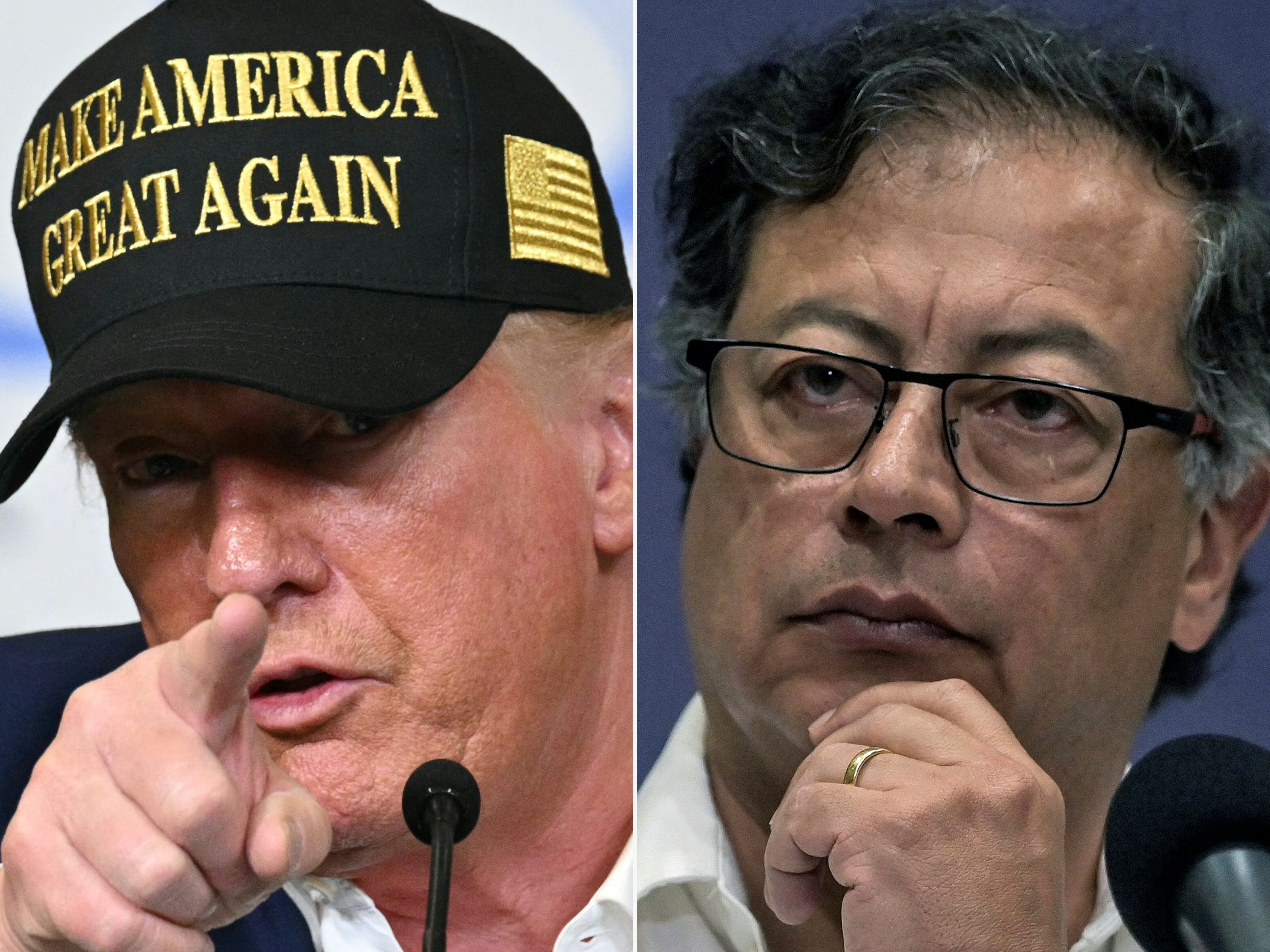
Last unknown, in conclusion: what impact should be expected at the regional level? The unprecedented deployment of American forces, especially since November 13, the official launch date of “Operation Southern Spear,” has as its proclaimed raison d'être the fight against drug trafficking. However, Venezuela is far from being, according to UN experts, the main producing country and the main transit country for cocaine. The first place in this regard goes to its Colombian neighbor. Colombia, led since 2023 by left-wing president Gustavo Petro, it should be noted, has experienced the worst bilateral relations in its history with the United States since President Trump's return to the White House.
From the migratory issue to the Gaza war, via the fight against drug trafficking, almost everything opposes the South American leader to Donald Trump. Customs tariffs, visa restrictions, threats to end funding for the Colombian army, nothing works… The Colombian president was even placed on the famous OFAC Clinton list, putting him and several of his relatives under the purview of US Treasury sanctions.
The question is whether, in the shadow of the current situation, the current escalation also concerns him, five months before the Colombian presidential elections which will take place in an unprecedented context of a shift to the right, since 2022, of elected governments in the countries of this part of the world.
In Search of Lebanon, from Beirut to the Vatican
UN: Paris Wants to Replace UNIFIL With a 'Different Type' of Presence
The Abolition of the Death Penalty: Ibrahim Najjar and Élie Keyrouz’s Long Fight
The Testament of Hassan Rifai
A ceasefire... yes, but what happens next?
المزيد من Maxime Pluvinet
عرض الكل


المزيد في Politics
عرض الكل



Mexico: after the Elimination of El Mencho, the Calm Before the Storm?
«Remaining»: Rekindle the Memory of the Victims of Political Assassinations Since 2005
Revolutionary Guards, Supreme Organ of Repression
Tropic Thunder: Understanding US Interventionism in the Caribbean
Tropic Thunder: Understanding US Interventionism in the Caribbean
الأحدث من Levant Time
عرض الكل


