



Contemporary political discourse is no longer measured solely by what a leader says, but by the meanings and symbols his words, movements, and images generate. From this perspective, the performance of U.S. President Donald Trump stands as one of the most striking semiotic models in contemporary politics—one in which language, body, and image merge into integrated tools for the production of power and influence.
Donald Trump's political discourse represents an exceptional case in contemporary political literature, owing to its linguistic and semiotic characteristics, which have made it a subject of study across political science, communication studies, and political psychology.
Its impact extends well beyond the content of his speeches to encompass an integrated system of verbal, visual, and bodily signs. This system reshapes the relationship between leader and audience, and lends his political performance a unique quality rooted in the construction of presence rather than the mere transmission of messages.
According to theorists of discourse analysis and semiotics—such as Roland Barthes, Umberto Eco, and Teun A. van Dijk—semiotics is no longer simply a theoretical framework for analyzing a political figure; it has become an indispensable approach for understanding how the United States manages its international relations at the present moment.
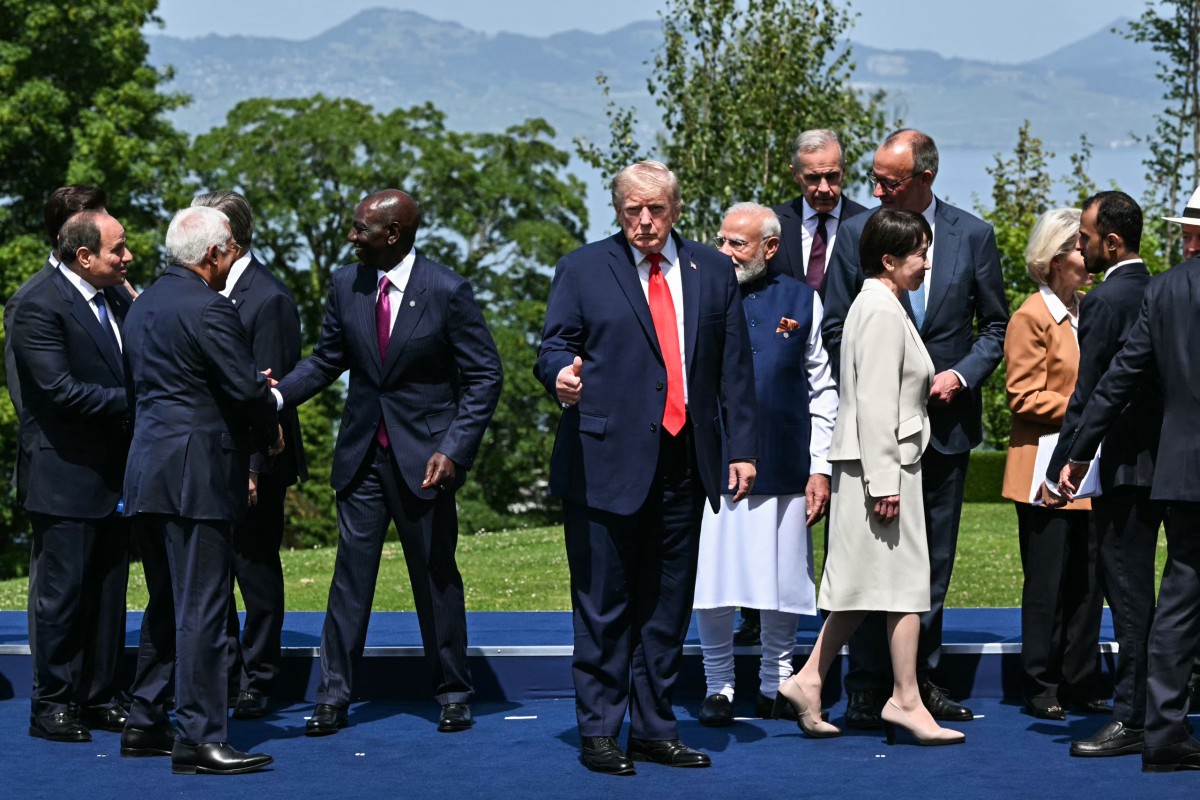
The outcomes of the most recent G7 summit demonstrated that the American presence was defined not by the final communiqués, but by the president's personal presence. His gestures, his approach to bilateral meetings, his terse statements, and even the deliberate ambiguity of certain positions all functioned as political messages running parallel to official decisions.
In this context, image and symbol are no less influential than diplomatic texts; they have become an integral part of the negotiating process and the shaping of international balances.
This reflects a shift in contemporary politics away from the logic of classical diplomacy and toward a logic of 'impression management,' in which a political sign can produce an effect that surpasses that of the decision itself.
Compared to his predecessors, Trump employs simple, direct language—short sentences, present-tense verbs, and intensive repetition of slogans—which broadens his audience and gives his discourse an immediate, dynamic quality.
This linguistic structure is paired with a physical performance characterized by a sharp vocal tone, repetitive gestures, exaggerated facial expressions, and a bodily posture that projects confidence and defiance, together forming a deliberate semiotic system that reinforces the image of the decisive leader.
Semiotics has returned to the forefront of analysis with his second term—not only because of his controversial decisions, such as imposing tariffs or redefining foreign policy priorities, but also because of his style in managing crises and manufacturing political ambiguity.
His decisions and statements frequently generate a state of uncertainty both inside and outside the United States, turning ambiguity itself into a political tool deployed in negotiation and conflict management.
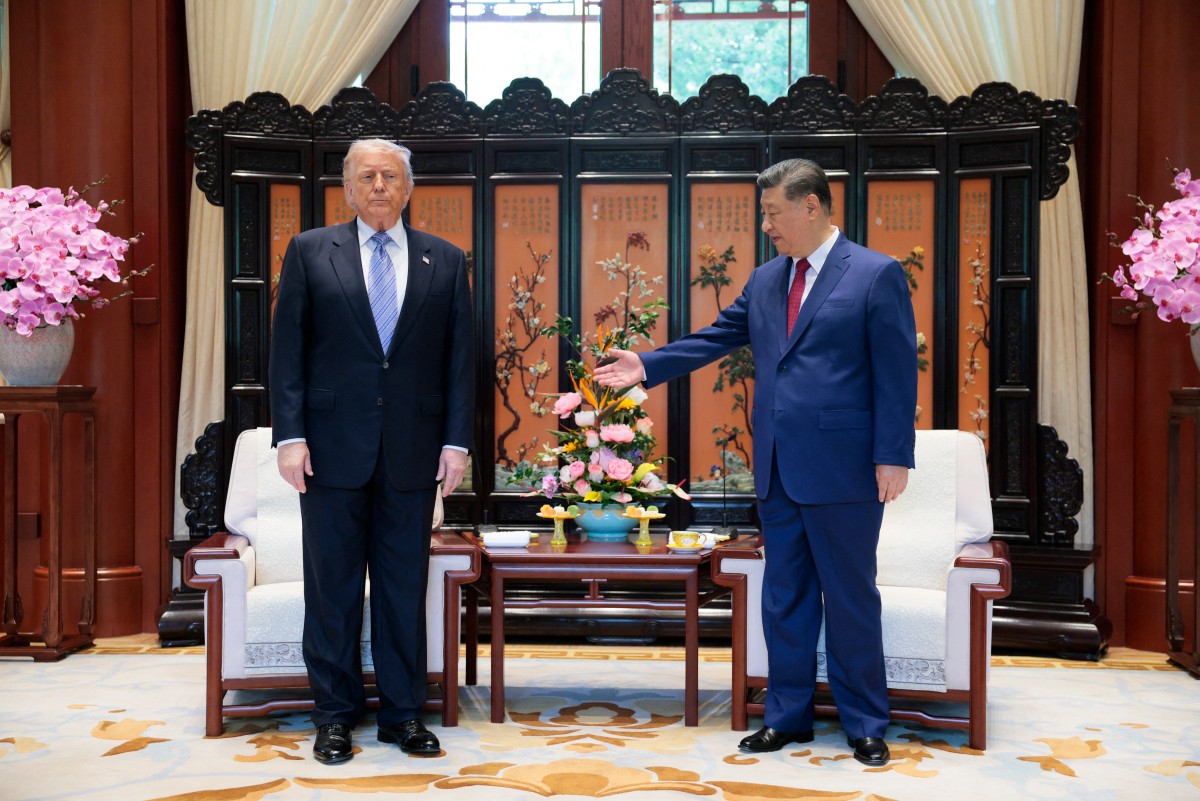
This approach is evident in his positions toward both allies and adversaries alike: whether in his criticism of international institutions, his stance on the war in Gaza, his statements regarding Greenland and the Panama Canal, his relationship with Russian President Vladimir Putin, his hardline rhetoric on immigration, or his repeated attacks on political elites and the media—all while casting himself as the savior against the "Deep State."
This style is equally apparent in his clashes with political rivals and in the way he addresses foreign leaders, making provocation an essential component of his political communication toolkit.
A linguistic and semiotic analysis reveals that Trump's discourse is built on a strict duality between "Self" and "Other," in which he reserves attributes of strength and legitimacy exclusively for himself and his supporters, while portraying opponents as the source of danger and corruption. Furthermore, his preference for short sentences and direct structures is not a sign of simplicity, but rather a deliberate communicative choice designed to maximize the media circulation of his messages and embed them more deeply in the collective consciousness.
Repetition emerges as one of his most powerful rhetorical tools.
Slogans such as "America First," "Build the Wall," and "Drain the Swamp," along with his repeated assertion that "Iran will never have a nuclear weapon," evolve into political symbols that compress entire policy platforms into brief, easily spreadable formulas.
In this way, repetition becomes far more than a mere stylistic device—it serves to entrench ideas and shut down debate before it even begins.
Trump also weaponizes language to drive political polarization, constructing a collective identity for his supporters as "real Americans" in opposition to the "Fake News" media, "corrupt elites," and "enemies of the people."
He does not hesitate to use harsh and inflammatory labels against his rivals or even his allies (such as Benjamin Netanyahu), turning political discourse into a symbolic battle aimed at reinforcing internal loyalty rather than persuading opponents.
This performance extends beyond language and into the body as a tool of political communication.
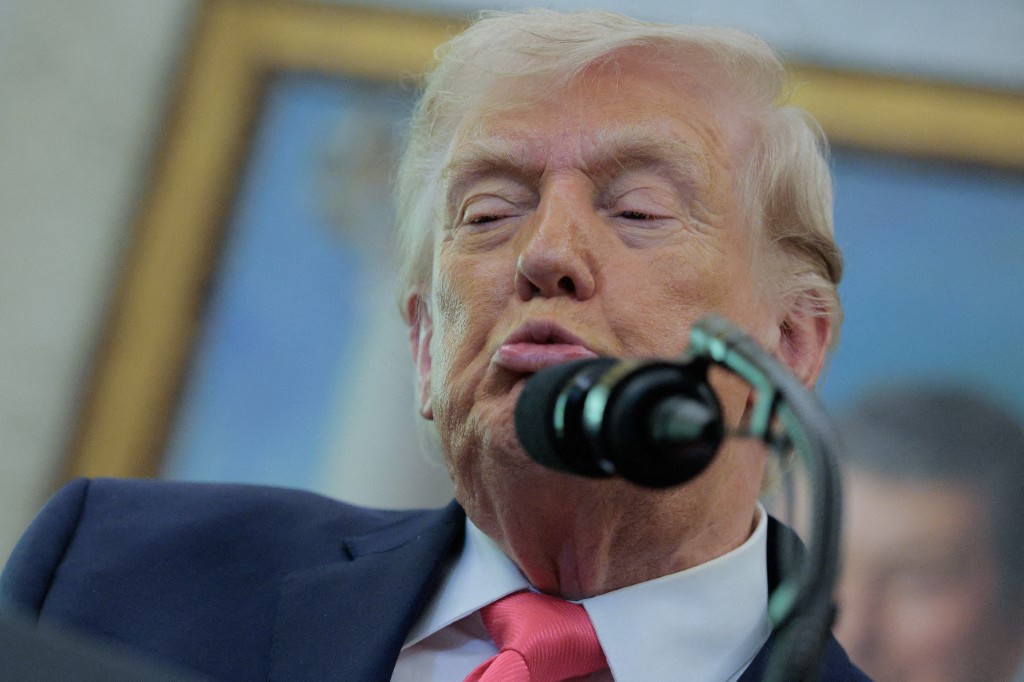
His gestures, gaze, hand movements, posture at the podium, and even the dancing he occasionally performs at the end of his rallies all constitute semiotic signs that reinforce the image of a confident leader who defies traditional political norms.
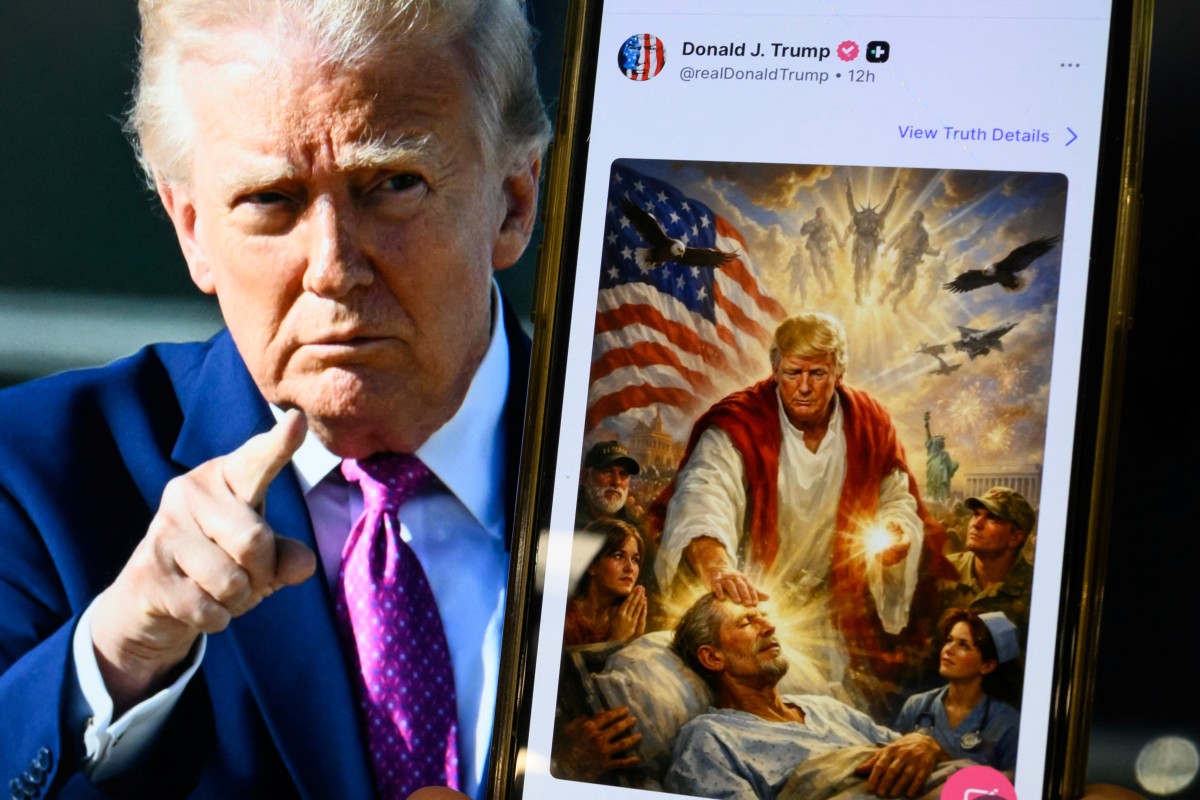
When his decisive words are paired with sharp physical cues, the impact of the message is multiplied, and the speech transforms into a fully integrated visual performance.
Trump's political vocabulary draws on three primary semantic fields: war and confrontation, superiority and exceptionalism, and the embodiment of evil.
His frequent use of terms such as "we destroyed," "the greatest," "the strongest," and "evil" aligns seamlessly with a populist worldview that perceives the world through the lens of an endless struggle between good and evil, between the nation and its enemies.
This style has influenced several populist leaders around the world—such as former Brazilian President Jair Bolsonaro and Hungarian Prime Minister Viktor Orbán—reflecting a political trend that challenges many of the foundations of traditional liberal democracy by prioritizing personal leadership over institutions, democratic pluralism, and constitutional checks and balances.
Another dimension emerges in Trumpian discourse: the exploitation of symbols tied to 'political masculinity.' Here, conflict is not confined to platforms and policies but extends to representations of strength and hegemony within the public sphere.
In his clashes with Hillary Clinton and later Kamala Harris, the discourse frequently went beyond mere political disagreement to reproduce the strength/weakness and leader/adversary duality — through sarcasm, the belittling of competence, and the portrayal of his opponent as lacking resolve or leadership ability.
In this context, masculinity functions not merely as a personality trait but as a semiotic tool that projects the image of a leader capable of imposing his will, reinforcing among the populist base the archetype of the 'strong man' standing against the traditional elites.
Even in his dealings with conservative figures or allies — such as Giorgia Meloni — his style, rooted in sharp humor or passing sarcasm, reflects a tendency to monopolize the center of symbolic leadership, keeping others in an orbit that revolves around his personal presence and thus turning political personality itself into an instrument for generating power.
From a semiotic standpoint, masculinity in Trump's discourse is not simply a stance toward women per se, but a political sign invested in constructing the image of the hegemonic leader — one in which linguistic and bodily performance becomes a means of producing symbolic superiority and entrenching power dynamics within the political field.
Nevertheless, it remains essential to distinguish between analyzing a political style and issuing preconceived judgments. A rigorous, scholarly reading requires examining facts and discourse in their proper context, free from political bias or personal preference.
Ultimately, every political worldview flows from a particular conception of human nature and human behavior — which explains the growing interest among researchers in neuroscience and political psychology as tools for understanding decision-making mechanisms and the making of leadership.
The Trump experience does not merely present a different model of political discourse; it reveals a deeper transformation in the very nature of contemporary leadership.
Image, gesture, and symbol are now active elements in the production of political power, on an equal footing with decisions and institutions.
Political semiotics therefore emerges today as an indispensable explanatory tool for understanding the shifts reshaping the international system — at a time when conflict is no longer solely about policies, but about the meanings that leadership produces, and the ways in which those meanings are perceived and disseminated on a global scale.
The Nobel Prizes and the Search for a Glimmer of Light in Human Behavior
Iran: Executions of young people, a favored tool of repression
A Chinese Perspective on Lebanon's Collapse
Dahr el-Baidar Explosives: Toward the End of Complacency?
Lebanese Moderation Needs a Project
Más de Yakzan Takki
Ver todo


Más en Analyze
Ver todo


Lo último de Levant Time
Ver todo


