

Europe in Search of Its Soul: Leo XIV’s Message
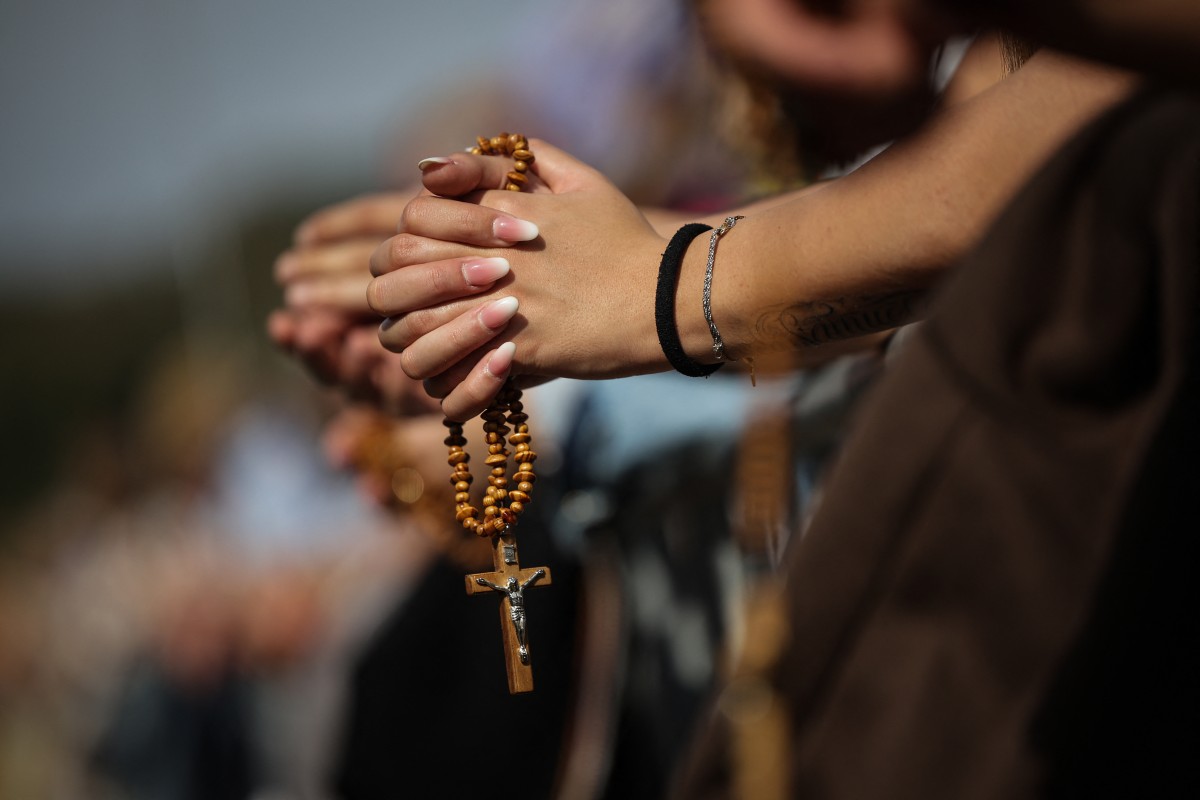
Although the major European leaders did not accept the French President’s invitation to attend the Pope’s speech on Europe in Metz, I would say that the trip was addressed to the whole of Europe, or to Europeans. On his return to the Vatican, Leo XIV spoke of the rise of far-right groups in Germany and, more broadly, of the extreme forms that growing discontent is taking in Europe and around the world. He noted, in particular, the emergence of expressions combining such political positions with a certain form of religiosity which, in the judgment not only of himself but also of the leaders of the Catholic and Protestant Churches in Germany, “is not an authentic expression of Christianity.” Once again, he said, we must return to “the values of the Gospel.” Pope Leo did not need to travel to France to speak out against the extreme forms that growing European discontent is taking; he had already done so. But the trip did take place, and it was significant, first and foremost, for this reason: “the values of the Gospel.”
This, in my view, was well captured in the article published in the Italian daily La Stampa on 29 September by the theologian Vito Mancuso. He rightly emphasizes the simultaneous human need “to come together” — the Italian verb aggregare derives from gregge, “flock,” a word very dear to the Church — alongside the principle affirmed by the French Revolution: the possibility of forging a personal identity free from interference by the State and the Church in one’s own life.
Pope Leo’s visit to Paris brought him face to face with this European man, lost and in need of both, given the universal significance of Paris as the city where the Bastille fell. A man who is no longer “connected” rediscovers the need to be so, but often seeks that connection in the wrong way. This is why it seems to me that, by travelling to France, particularly to Paris and to the border between France and Germany, Leo visited the whole of Europe, because Europe is shaken by this dual need: to find a way to rediscover a lost social identity without losing the individual identity that secularism liberated through the affirmation of personal identity.
Focusing on numbers through a triumphalist lens is therefore short-sighted. But it would be equally short-sighted not to recognize, in the extraordinary interest shown in the Pope by young people — and, more generally, by so many French people — a genuine “sign of the times.” The peoples of Europe feel the need for what they have lost: unity in the name of ideals that transcend immediate interests. This is the deep and hidden driving force behind the many movements that emphasize identity politics in a terrible manner, hostile to other identities, but it is also the reason for the popular consensus and attention surrounding his visit. In Paris, in my view, Leo proposed — or rather revived — that encounter between the Second Vatican Council and modernity which shaped European humanism and which today offers a remedy for Europe, above all through that fraternité so dear to the Church — the encyclical Fratelli tutti — and which completes the famous triad of liberty and equality, which acquire their full meaning in this third word.
This was the common thread running through the entire journey, beginning with the words addressed to the authorities:
“France is a land with deep Christian roots. From the time of Saint Irenaeus and the baptism of Clovis, the soul of the nation has drawn from Christianity a rich spiritual, cultural, intellectual, artistic and missionary élan that continues to be felt in our world today. So it was that humanism flourished in sixteenth century France, as a means of uniting the heritage of classical Greece and Rome with the Christian faith. With the great thinkers of the Renaissance, and later of the Grand Siècle, succeeded by those of the Enlightenment, France was responsible for significant advances in our world, including the recognition of human rights grounded in the nature of the human person, particularly religious freedom. This constant focus on the dignity inherent in every person is echoed in your national motto. Liberty, equality and fraternity are not simply words emblazoned on the front of your public buildings; they refer to universal ethical imperatives that also find in the Gospel message an inexhaustible source of inspiration and fulfillment.”
And he made this clear in his speech at the Robert Schuman Conference Centre, after pointing out that one cannot speak of Europe without speaking of Christianity:
“The principle of secularity (laïcité) that governs the life of States does not simply imply the non-confessional nature of civil institutions; it also presupposes genuine cooperation among all parties, as well as respect by national and European authorities for the autonomy of the Churches and the promotion of their freedom of organization, expression and worship. It is a matter of returning to the source of the values that form the foundation of civil coexistence, namely ‘the universal values of the inviolable and inalienable rights of the person, of freedom, of democracy, of equality and of the rule of law’ (Treaty on European Union, Preamble). In today’s multicultural context, the affirmation of the universality of these values — essential for their survival — also involves a rediscovery of one’s own roots and an openness to dialogue with others. This is a social and political necessity for rediscovering the central role of the human person and giving real substance to words such as freedom, democracy, peace and unity. To this end, Pope Francis’s call to appreciate the complexity of the European reality in all the richness of its traditions and sensibilities is invaluable, emphasizing ‘the challenge of constructive harmony, free from hegemony.’”
This attempt to save Europeans from their fears and their sense of disorientation can be extended to other major themes, beginning with the discourse on peace and moving on to the related issues of arms and negotiation as the best way to resolve conflicts. Everything is clearly interconnected.
The Pope’s message encounters a Europe in crisis: on the one hand, it is immersed in a consumerist culture — which has become the sole prevailing culture — that has isolated the individual, eroded society and left the individual in a competitive environment. On the other hand, it is immersed in the failure of globalization, which has eroded European confidence in all that is universal, creating the conditions for the resurgence of a dangerous nationalism. It is interesting to note that the great attention paid to the Pope of the Catholic Church should also be understood as attention paid to the head of the only global institution to have survived these difficult times.
For Vito Mancuso, the Church must now place itself at the service of the need for social identity, in a spirit of service rather than with the desire to regain its former positions of power: in this way, it can be the “salt of the earth.” I agree. This is an important point, but perhaps the lost soul needs something else as well. And what is that? Is this discourse on reason, while decisive, not also a little cold? I would like to explain what I mean by quoting a phrase from Fontenelle, a leading Enlightenment thinker who led a very reasonable life: “A work of politics, morality, criticism, perhaps even literature, will be more beautiful, all things being equal, if produced by the hands of a geometer.” This expresses what I fear.
In these times of great difficulty, reason is essential, but it seems to me that people today also need warmth — that is, someone to help them rediscover the central role of the heart. Pope Francis wrote in his final encyclical, Dilexit nos:
“The issues raised by today’s liquid society are much discussed, but this depreciation of the deep core of our humanity — the heart — has a much longer history. We find it already present in Hellenic and pre-Christian rationalism, in post-Christian idealism and in materialism in its various guises. The heart has been ignored in anthropology, and the great philosophical tradition finds it a foreign notion, preferring other concepts such as reason, will or freedom. The very meaning of the term is imprecise and hard to situate within our human experience. Perhaps this is due to the difficulty of treating it as a ‘clear and distinct idea’, or because it entails the question of self-understanding, where the deepest part of us is also that which is least known. Even encountering others does not necessarily prove to be a way of encountering ourselves, inasmuch as our thought patterns are dominated by an unhealthy individualism. Many people feel safer constructing their systems of thought in the more readily controllable domain of intelligence and will. The failure to make room for the heart, as distinct from our human powers and passions viewed in isolation from one another, has resulted in a stunting of the idea of a personal centre, in which love, in the end, is the one reality that can unify all the others.”
This is what is also needed: “the values of the Gospel.”