

Suspension of Iranian Airlines Flights: a Double Economic and Political Impact

We are a long way, a very long way, from 2014, when Iranian leaders publicly boasted that they had succeeded in politically and militarily “linking” three capitals to the Iranian Revolution, explicitly naming Baghdad, Damascus and Beirut as the nuclei of an “empire” they dreamed of building.
Twelve years later, the Islamic Republic finds itself resorting to all kinds of manoeuvres in an attempt to preserve a minimum of influence in two countries where its military instruments have been significantly weakened. The third, Syria, has completely slipped from its control.
On Friday, Baghdad followed Beirut’s lead by closing its airspace to Iranian aviation, dealing a severe blow to Tehran, which regards Iraq as the natural extension of its “empire.”
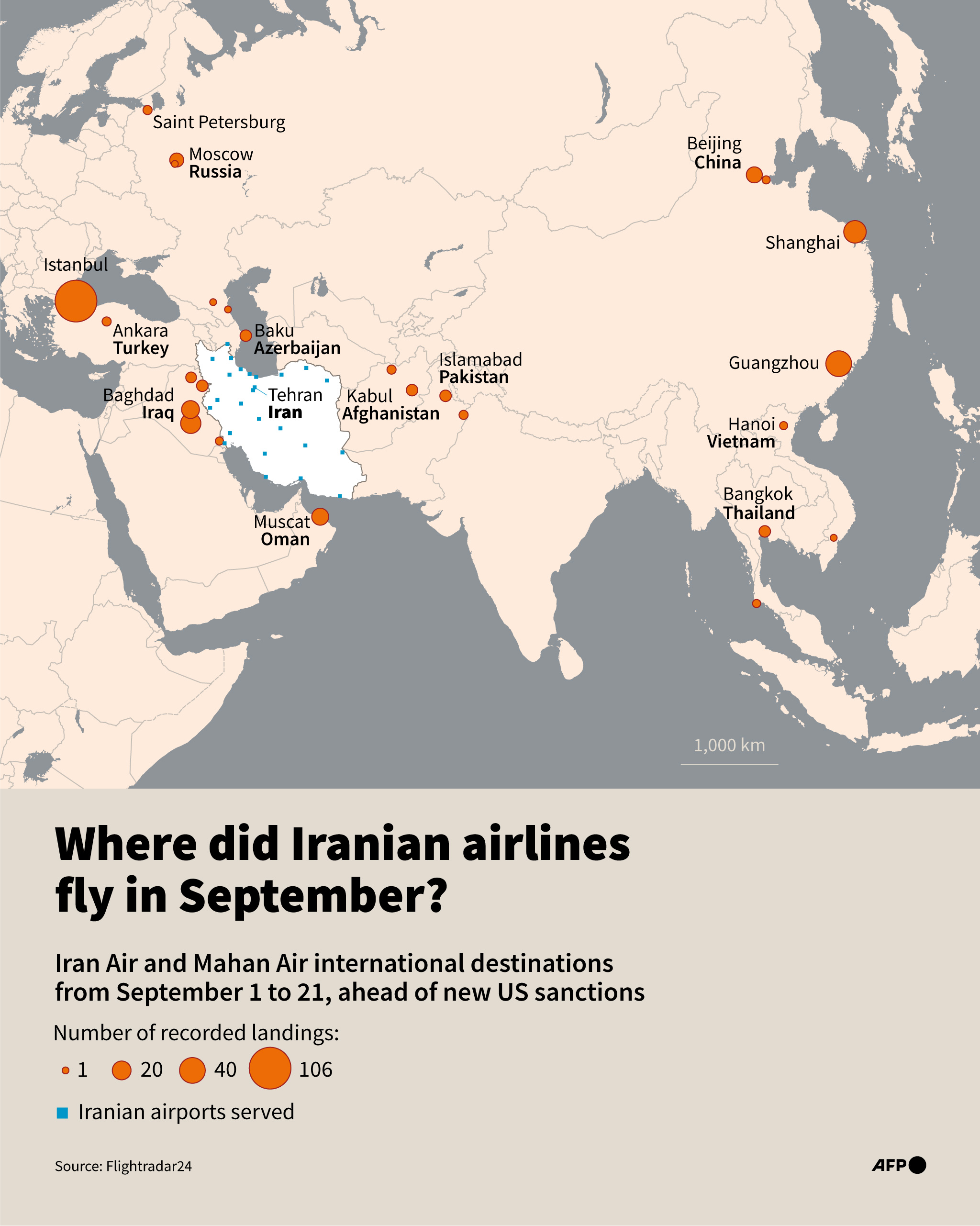
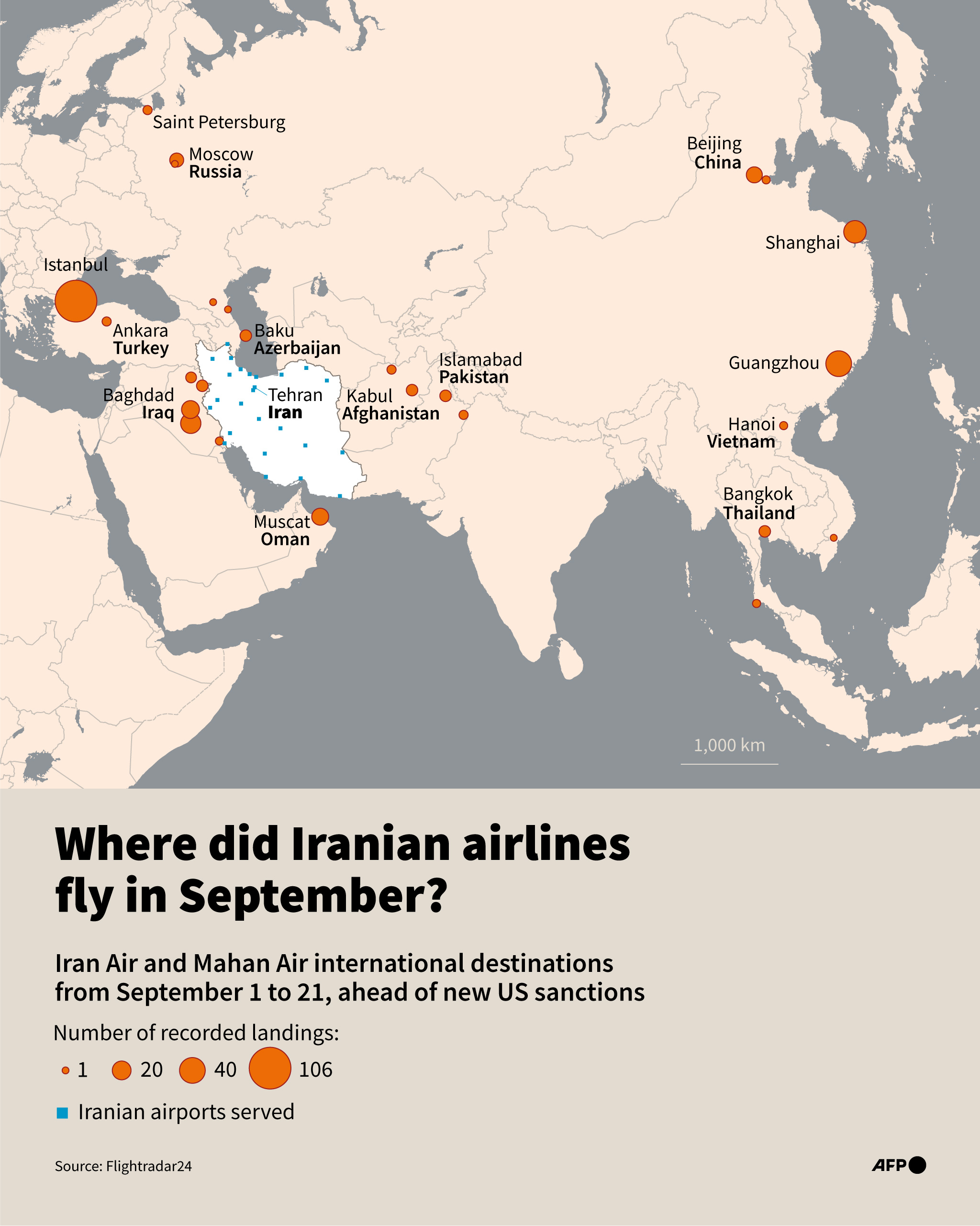
The airports of Erbil and Sulaymaniyah, in Iraqi Kurdistan, as well as those of Baghdad and Najaf — a city that is home to one of the world’s most important Shiite shrines and constitutes a major hub for Iranian flights — suspended flights to and from Iran.
These decisions were taken in implementation of restrictive measures adopted by Washington against the regime in Tehran. The United States, it should be recalled, had threatened to impose sanctions on any entity dealing with Iranian airlines after September 23. The aim is to ground Iran’s entire air fleet, as part of the operation dubbed “Economic D-Day,” announced on August 24, 2026, and designed to economically suffocate the Islamic Republic in order to force it to accept US conditions in negotiations between the two countries. Paralysing the civilian fleet would inevitably inflict colossal losses on the aviation sector in a country already grappling with enormous economic and financial difficulties.
On Thursday, the United Arab Emirates, the Middle East’s main aviation hub, suspended all flights by Iranian airlines to and from the country. At least nine countries have so far taken the same decision: Oman, Turkey, Qatar, Georgia, Azerbaijan and Turkmenistan, in addition to Iraq, the UAE and Lebanon.
In practical terms, Iranian airlines now serve, according to a non-exhaustive list, only China, India, Pakistan and Russia, provided they do not fly over European Union countries, which have imposed sanctions on Tehran. They are also unable to serve Latin American countries because of problems related to connecting flights or sanctions, and they have no routes to Africa.
A Shortage of Foreign Currency
For Tehran, the impact is twofold: economic and political. Economically, these bans will certainly worsen the losses already suffered across Iran’s various sectors of activity. But, like the restrictions imposed on Iranian fuel exports and the banking sector, they will above all deprive the country of foreign currency, which it badly needs to keep its economic — and even military — machinery running as best it can.
This is undoubtedly the most important aspect of the US restrictions, given that Iran is already facing a serious shortage of foreign currency as a result of the US maritime blockade and successive rounds of American and European sanctions.
This policy of draining Iran’s foreign-currency reserves and paralysing its air fleet will prove all the more costly if Tehran attempts to circumvent the bans by routing its aircraft through third countries, or if it continues to maintain aircraft that remain grounded.
The social impact is also easy to imagine, as many Iranians will effectively find themselves trapped in their own country, unable to afford alternatives that would allow them to circumvent the restrictions imposed on flights. Rising fuel prices, fuel rationing and the collapse of the rial are making domestic travel, as well as overland journeys to neighbouring Iraq, increasingly difficult.
Politically, the direct consequence is a deepening international isolation that even Beijing and Moscow, powerful as they may be, will find difficult to offset, and which Tehran will struggle to withstand over the long term.
This is precisely what US President Donald Trump has repeatedly argued, saying that the Iranian regime will eventually “fall on its own.” Yet Tehran continues to manoeuvre. There is now talk of a new Iranian proposal that broadly revives ideas already rejected by Washington: an end to the war with a view to opening negotiations on the nuclear issue. There is one variation, however: the proposal, presented in New York by Iranian Foreign Minister Abbas Araghchi, envisages a seven-day roadmap, whereas the previous one extended over 60 days.
The Fall of an “Empire”
In any event, the most significant aspect of this isolation concerns above all the collapse of the “empire” Tehran believed it had begun to build.
The process began with the fall of Bashar al-Assad’s regime, which deprived Tehran of its access to the Mediterranean, and continued with Iraq and Lebanon, both of which are now firmly engaged on a path toward freeing themselves entirely from Iranian influence.
Ironically, these transformations might never have occurred had Tehran not itself signed what amounts to its own death warrant by deciding, through its regional proxies, to become involved in the regional military conflict that began with Hamas’s attack on Israel on October 7, 2023.
By closing all its airports to Iranians and Iraqi Shiites travelling to the Islamic Republic, Iraq has taken another step along a path from which it has no intention of deviating, as Prime Minister Ali al-Zaidi confirmed on Friday before the United Nations General Assembly.
He notably insisted that the Iraqi state must retain exclusive authority over power and over decisions of war and peace, while sharply criticising pro-Iranian armed factions that continue to refuse to disarm.
His remarks were echoed by his Lebanese counterpart, Nawaf Salam, who developed the same argument, stressing the Lebanese authorities’ determination to fully restore the country’s sovereignty.
Nawaf Salam also responded indirectly to Tehran’s repeated attempts to include the Lebanese file in its negotiations with the United States, declaring before the UN General Assembly: “No one speaks on behalf of Lebanon.”
“No one negotiates on its behalf either, except the Lebanese state, through its institutions,” Mr Salam continued.
The message was aimed as much at Tehran as at its military instrument in Lebanon, Hezbollah, which opposes the direct negotiations launched by Beirut with Israel and recognises only Iran’s right to act in this sphere.
The Islamic Republic’s manoeuvring is therefore being compounded by that of its regional proxies — equally futile, even if they are trying to make as much noise as possible.