

Received by Rubio, Salam Calls for a “Renewed Partnership” with the US

The New York phase of the Lebanese authorities’ efforts to consolidate their sovereign authority in the face of Hezbollah’s strategy of dismantling the central state is drawing to a close. From the outset, it was clear that the multiple meetings held by Prime Minister Nawaf Salam and Foreign Minister Joe Raggi on the sidelines of the UN General Assembly could in no way lead to concrete decisions or practical results. It is common knowledge, after all, that the meetings held by world leaders during the UN’s traditional annual gathering in September rarely go beyond formal exchanges and consultations.
The mission of the Lebanese delegation, which has been in New York for several days, could only be understood in this context. This does not mean, however, that Nawaf Salam and Joe Raggi’s contacts were without significance. They undoubtedly provided an opportunity to reaffirm, unequivocally and with complete transparency, the strategic choices set out by the government when it took office, for all those willing to listen.
This was particularly the case during the meeting with Iranian President Masoud Pezeshkian and his Foreign Minister, Abbas Araghchi. No one is unaware that the two men cannot make any concrete commitments, as major decisions within Iran’s power structure fall almost exclusively within the purview of the Islamic Revolutionary Guard Corps. Nevertheless, Salam and Raggi made a point of telling their Iranian interlocutors in no uncertain terms that Lebanon will no longer accept being a battleground exploited by regional powers, which means that only the Lebanese central government has the authority to negotiate and make decisions on behalf of Lebanon. Salam and Raggi also reiterated to the Iranian president and foreign minister the government’s principled position that Iran’s relations with Lebanon must be confined to state-to-state relations, rather than being conducted through a proxy beholden to the Islamic Republic.
The Meeting with Marco Rubio
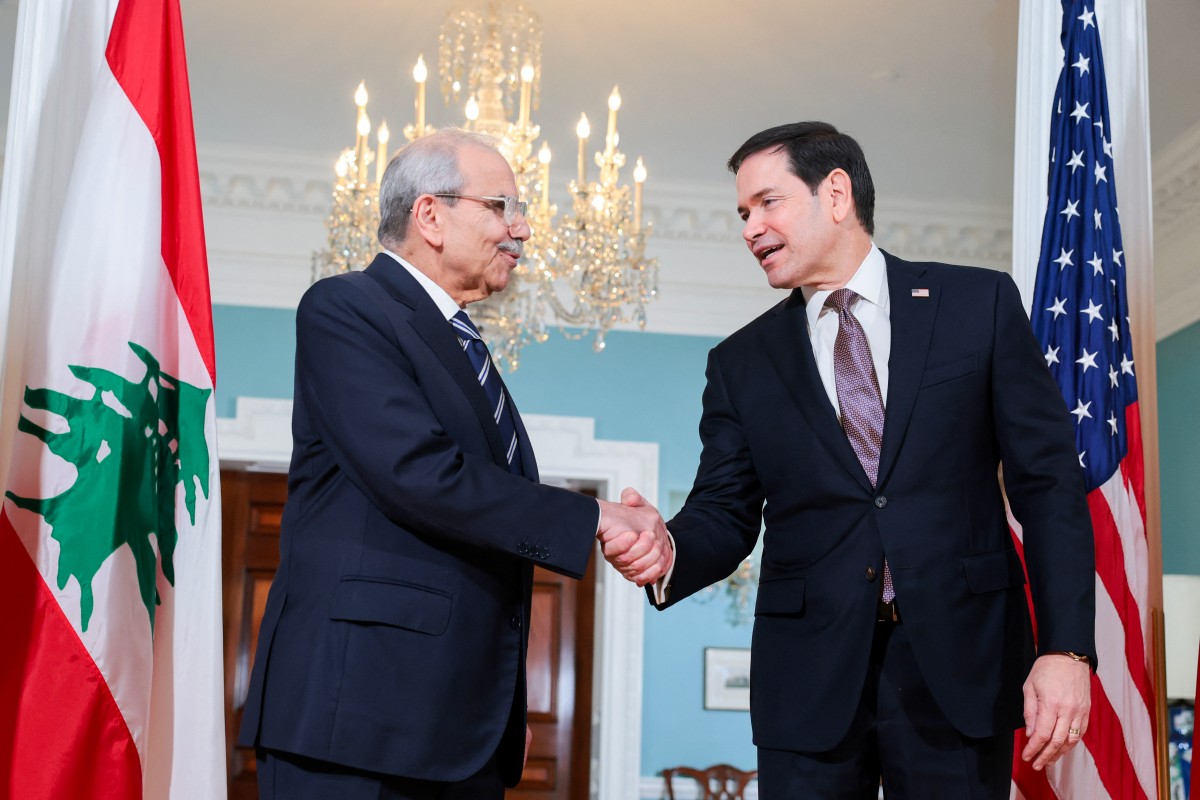
The undisputed highlight of Mr. Salam’s visit to New York was his meeting Monday with Secretary of State Marco Rubio. Here again, no concrete decision was made, but the prime minister took the opportunity to advocate for a “renewed partnership” between the United States and Lebanon. In a post on his X account, Mr. Salam said that such a partnership should aim to provide a framework for “the project of rebuilding the state and strengthening legal institutions.”
Notably, and in a development that confirms the strategic choices of the Lebanese authorities, both Mr. Rubio and the Lebanese prime minister stressed the need to “boost” the tripartite framework agreement between the United States, Israel and Lebanon. Mr. Salam particularly emphasized that the agreement goes beyond its military and security component, relating to Israel’s withdrawal from southern Lebanon, and must in practice encompass a mechanism for strengthening the central government, and more specifically the Lebanese army.
It is worth noting in this context that the prime minister’s reaffirmation of his principled commitment to the US-Israel-Lebanon framework agreement came just hours after a speech by Hezbollah Secretary-General Sheikh Naim Qassem, who launched a scathing attack on President Joseph Aoun and the government precisely because of their commitment to the agreement signed with Israel. Clearly, the prime minister wanted to reaffirm, in New York itself and in the presence of the secretary of state, Lebanon’s commitment to moving forward with the process initiated with Israel under US auspices. The message is therefore clear: with Washington’s backing, the Lebanese authorities can no longer afford to plunge the country back into the dark and disastrous period of regional tutelage, which has repeatedly dragged Lebanon into acute crises and into “support” wars that it wants nothing to do with…