

The Post-Nabih Berri Era
Will Shiite Leadership in Lebanon Finally Move from Personal Rule to Institutions?

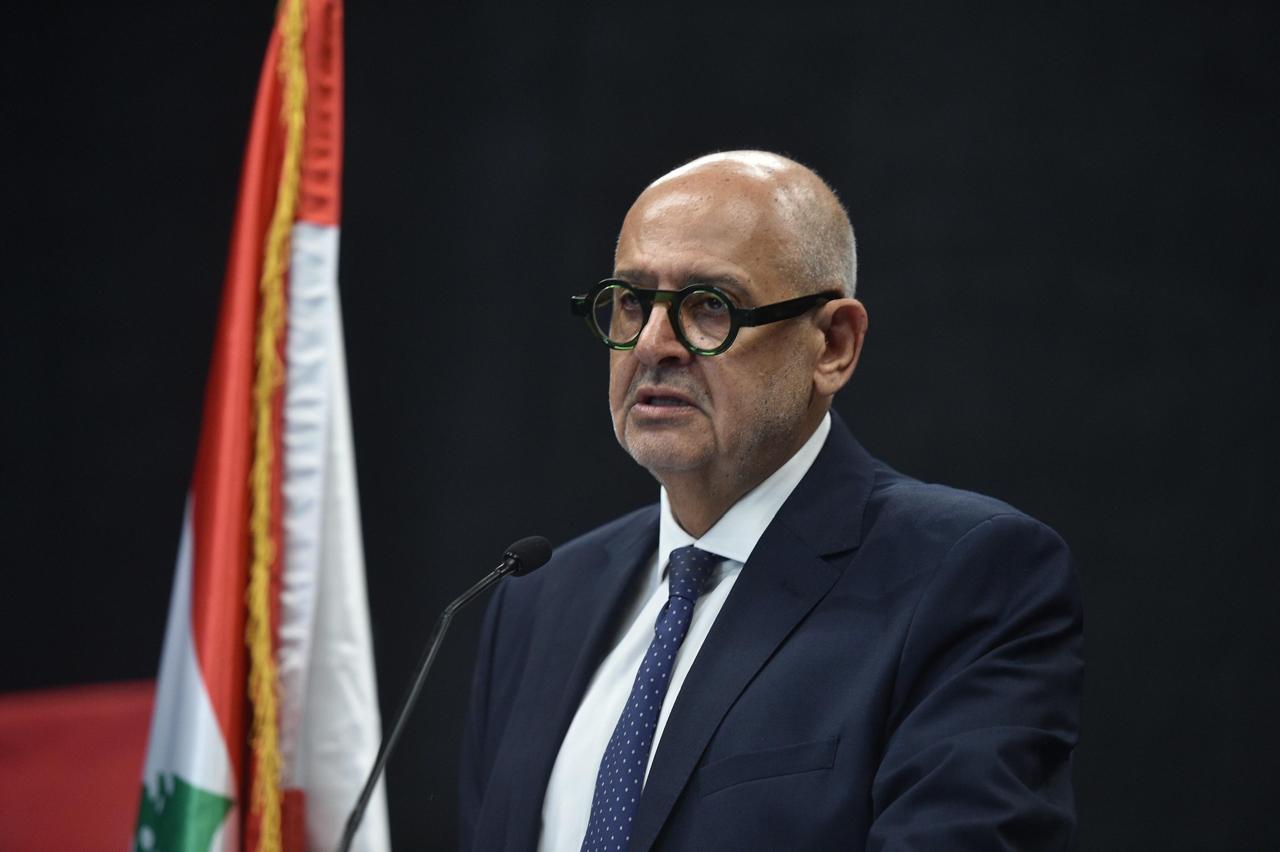
For more than three decades, Lebanese politics has been closely associated with the name of Nabih Berri. Since assuming the speakership of Parliament in 1992, Berri has outlasted presidents, prime ministers, regional wars, international interventions, and profound geopolitical transformations. He has become far more than the head of the legislative branch. He established himself as one of the principal architects of post-Taif Lebanon and the undisputed political leader of the Amal Movement.
Yet politics inevitably raises the same question whenever a leader remains in power for so long: what comes next?
The issue is not whether Berri will step down tomorrow or years from now. Nothing suggests that his departure is imminent. The real strategic question is whether Lebanon is genuinely preparing to move from a political system centered on individuals to one built upon institutions.
This debate extends far beyond the Amal Movement and the Shiite community. In many respects, it is a test of Lebanon’s own capacity to evolve toward a more institutional political order.
The End of an Era
Few politicians in the Middle East have maintained such influence for so long. His longevity was no accident. Berri mastered the art of balancing Lebanon’s competing domestic forces while maintaining working relationships with Damascus, Tehran, Riyadh, Paris, Washington and, whenever necessary, international mediators.
Within Lebanon’s Shiite political landscape, an unwritten division of labor gradually took shape: Hezbollah became the dominant military and ideological force, while Berri positioned himself as the institutional face of Shiite political participation within the Lebanese state.
This division of roles helped preserve a relatively stable internal balance for decades, while simultaneously contributing to the gradual weakening of state institutions.
History, however, rarely allows political formulas to endure indefinitely.
The regional environment that sustained this balance is now undergoing profound change. Iranian influence is facing growing challenges. Arab states are re-engaging with Lebanon under new conditions. The United States continues to emphasize strengthening state institutions and reforming the security sector. Debate over Hezbollah’s future role has become increasingly frequent, while pressure continues to mount on the Lebanese state to restore its monopoly over legitimate authority.
Against this backdrop, the question of succession inevitably becomes part of a much broader conversation.
Beyond the Familiar Names
Media discussions often reduce the succession question to the search for a single heir. The reality, however, is far more complex.
Among the names most frequently mentioned within the Amal Movement is Ali Hassan Khalil, one of Nabih Berri’s closest political associates and a former finance minister. His experience and longstanding proximity to Berri make him a natural heir within the movement’s traditional hierarchy. Yet international sanctions, corruption allegations, and deep political polarization significantly complicate his prospects of emerging as a broadly unifying national figure.
Another name that regularly surfaces is Jamil Hayek, head of Amal’s Political Bureau. Hayek possesses extensive organizational experience and enjoys considerable credibility within the movement’s institutional structure. But organizational leadership does not automatically translate into political authority on the national stage.
Other senior Amal figures, such as Qabalan Qabalan and Hani Qobeissi, also possess substantial parliamentary and organizational experience. Yet none currently appears capable of replicating Berri’s unique combination of political legitimacy, negotiating skills, regional relationships, and institutional authority.
That alone suggests Lebanon is unlikely to witness the emergence of “another Nabih Berri.”
Could the Next Leader Come from Outside Amal?
The more intriguing possibility is that Shiite leadership in the post-Berri era may no longer remain confined to Amal’s traditional hierarchy.
One name frequently mentioned is retired Major General Abbas Ibrahim, the former Director General of General Security, whose career stands apart from that of conventional politicians. Throughout his years in office, he built an extensive network of relationships across Lebanon’s political spectrum while maintaining communication channels with Arab governments, Western capitals, and influential regional actors.
Unlike traditional politicians, his reputation rests on crisis management, hostage negotiations, intelligence diplomacy, and a deeply pragmatic approach to dialogue.
Whether those qualifications can evolve into political leadership remains uncertain. Experience in the security services does not automatically translate into electoral legitimacy. Yet during periods of transition, states often turn to consensus figures capable of bridging competing political camps.
Another name occasionally put forward is MP Jamil El Sayyed.
Despite his long career in the security establishment, El Sayyed has sought to project an image of independence from Lebanon’s traditional party structures. His criticism of the country’s established political elite has earned him support among those seeking an alternative discourse within the Shiite community.
At the same time, he remains one of Lebanon’s most controversial public figures. His confrontational political style may energize his supporters, but it also makes the pursuit of broader national consensus considerably more difficult.
Neither Abbas Ibrahim nor Jamil El Sayyed currently represents a clear succession project. Their significance lies elsewhere: they illustrate that the next chapter of Shiite politics may not be written exclusively within Amal’s organizational framework.
The Real Question Is Institutional
Focusing exclusively on personalities risks overlooking the far more significant transformation already underway.
Modern political systems do not simply ask who will succeed a leader. They ask whether institutions themselves are capable of producing new leadership.
This is where Lebanon faces its greatest challenge.
For decades, political parties across the country’s sectarian spectrum have revolved largely around personal authority rather than internal democratic mechanisms. Leadership transitions have generally been shaped by individual influence, family networks, or exceptional political circumstances, rather than by transparent institutional processes.
The Amal Movement is no exception.
The real opportunity presented by the post-Berri era lies in transforming Amal from a movement identified with a single historic leader into a fully institutionalized political party, governed by internal elections, regular leadership renewal, policy debate, and meaningful accountability.
Such a transformation would strengthen the movement rather than weaken it.
Strong institutions outlive their leaders.
Political systems built primarily around individuals rarely do.
A Test for Lebanon’s Shiite Community
Lebanon’s Shiite community itself now stands before a historic opportunity.
For decades, its political representation has been dominated by two major organizations whose legitimacy was forged in the context of war, the “resistance,” and regional conflict.
The years ahead, however, may require an entirely different political vocabulary.
Economic recovery.
State-building.
Institutional reform.
Foreign investment.
Judicial independence.
Administrative modernization.
These priorities call for political leaders capable not merely of mobilizing supporters, but of governing.
Ultimately, the next generation of Shiite leaders will be judged less by their wartime credentials than by their ability to rebuild the Lebanese state.
The Post-Berri Era
In the end, Lebanon’s future should not be measured by whether anyone succeeds Nabih Berri by reproducing his extensive control over state institutions, along with the patronage networks and indiscriminate public-sector hiring that produced widespread disguised unemployment.
No one is likely to replicate that model.
The more fundamental question is whether Lebanon can finally free itself from its chronic dependence on supposedly indispensable leaders.
If the post-Berri debate is reduced to selecting another “strongman,” Lebanon will merely reproduce the same political culture under a different name.
If, however, the transition encourages stronger political parties, transparent leadership selection mechanisms, institutional governance, and broader political pluralism within the Shiite community, then Berri’s departure, whenever it comes, may mark not the beginning of instability, but the beginning of genuine political maturity.
Lebanon does not need another indispensable man.
It needs indispensable institutions.
And more than any succession battle, that is what will shape the country’s next political chapter.
The Nobel Prizes and the Search for a Glimmer of Light in Human Behavior
Iran: Executions of young people, a favored tool of repression
A Chinese Perspective on Lebanon's Collapse
Dahr el-Baidar Explosives: Toward the End of Complacency?
Lebanese Moderation Needs a Project
Mais de Jad Akhawi
Ver tudo


Mais em Analyze
Ver tudo


O mais recente do Levant Time
Ver tudo


