

The Last Taboo Has Fallen: Lebanon Will Not Be the Last to Sign a Peace Agreement!

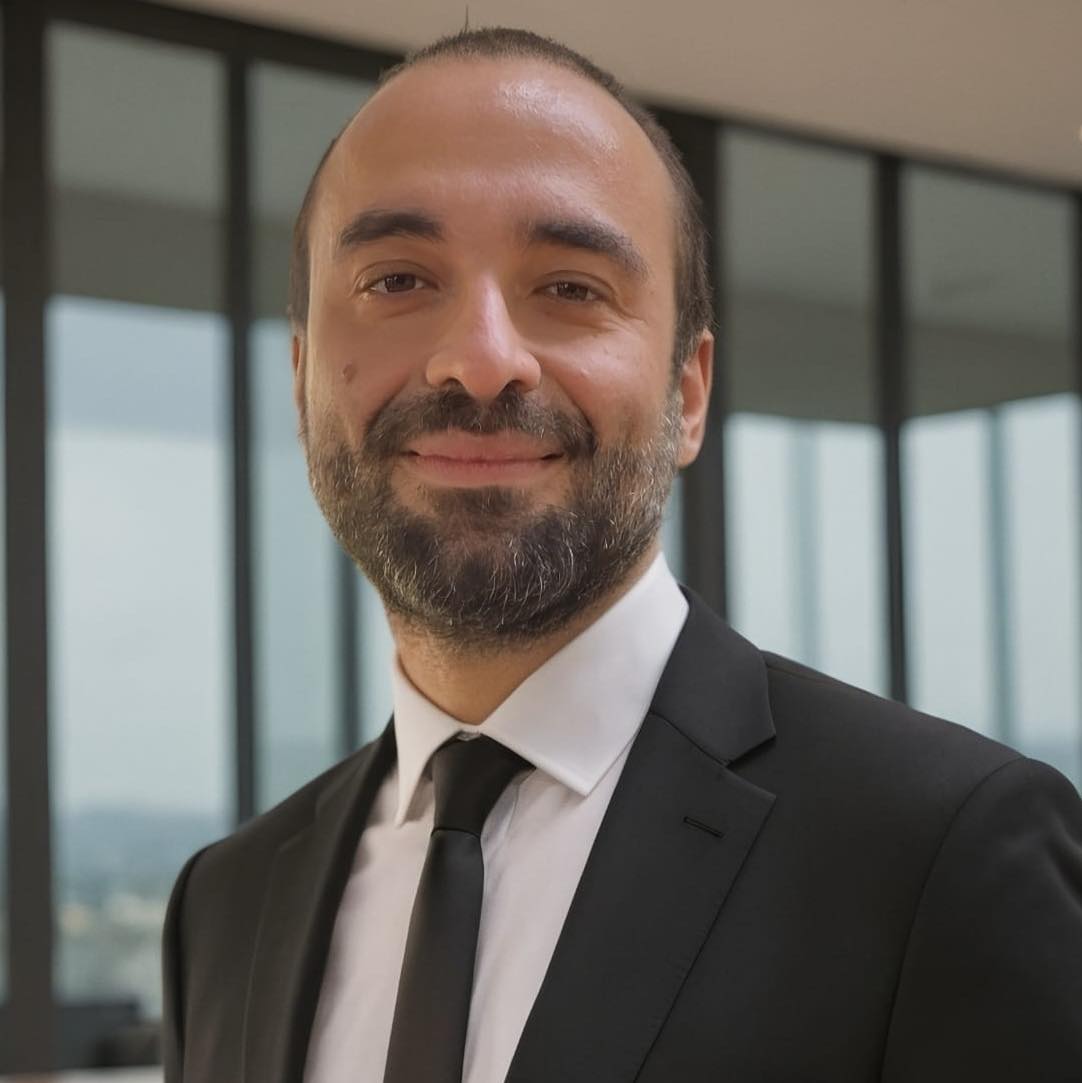
Direct negotiations between Lebanon and Israel have officially begun with the aim of reaching a peace agreement. Their fundamental condition is the disarmament of Hezbollah. Other points, both essential and secondary, are on the table, notably economic cooperation enabling both countries to move forward on the path to recovery, the reconstruction of South Lebanon, and security and stabilization on Israel's northern border.
Before going into detail and analysis, before examining the various perspectives, and before reviewing the events that have led Lebanon to pay the heaviest price in the Arab-Israeli conflict for over half a century, a simple question arises: what is the alternative to peace with Israel, to Lebanon's recovery, and to the country's reconstruction? There is no clear answer. The state has been absent for decades, and the Iranian militia based in Lebanon decides, unilaterally, when to launch a war, when to conclude a truce, when to negotiate, when to support Gaza, when to provoke Israel, or when to destabilize neighboring Arab countries. It builds tunnels to continue the wars instead of constructing shelters and hospitals. Until the day Hezbollah trapped itself in a strategic dead end. The war it instigated to serve the Iranian project under the slogan of "unity of fronts" is one it can no longer end. Tehran has gradually withdrawn the cover it provided to Hezbollah. It seeks to buy time to preserve the regime and maintains Hezbollah for future use. But Israel now refuses to tolerate any continued threat posed by Hezbollah. He pushed this militia back north of the Litani River, which proved simpler than carrying out Nabih Berri's famous quip to his visitors, who were warning him about the deteriorating situation, suggesting that the Litani River should be moved to the border with Israel! As a result, Hezbollah is no longer acting according to the old rules of deterrence. In fact, it isn't reacting at all. It has endorsed a truce, but a truce is merely a respite between two wars. The Lebanese leaders, long absent and hesitant, even overwhelmed by the de facto reality, have finally woken up. They have taken the initiative, but hesitated, then failed to follow through. What they will not accomplish, Israel will do in their place—but the price to pay will be far higher.
It was within this specific context that a historic event occurred: the exceptional visit of Pope Leo XIV; a visit that took on a political dimension due to its central theme, "Blessed are the peacemakers." Just hours after the departure of the Holy Father, who urged the Lebanese to choose peace, the commission monitoring ceasefire violations was transformed into a committee for direct negotiations between Lebanon and Israel.
The peace negotiations initiated between Lebanon and Israel serve Lebanon's national interest. They are in the interest of Lebanon's security and its very vocation as a "message country," rather than a "hotbed of conflict." They offer an alternative to Hezbollah's rhetoric, based on endless war and "resistance for resistance's sake," solely aimed at serving Iranian influence in the region.
Direct negotiations between Lebanon and Israel offer the possibility of reaching a peace agreement. Direct negotiations have long been taboo in Lebanon, with no one even considering the possibility or initiating a debate on the subject. If Lebanon doesn't negotiate with Israel to defend its own interests, then who will? Hezbollah negotiates on behalf of Iran, serving the expansionist agenda of the Wilayat al-Faqih (the Islamic Observatory). Direct negotiations thus mark Lebanon's renewed assertion of its sovereign role and the beginning of a decline in Iranian influence.
The talks have begun officially, seriously, and effectively. Israeli Prime Minister Benjamin Netanyahu has tasked a team from the National Security Council with joining the technical committee, known as the "mechanism," and meeting with Lebanese officials. The Lebanese presidency has announced that President Joseph Aoun has appointed Ambassador Simon Karam to represent Lebanon. The direct negotiations will not only address ceasefire violations but also lay the groundwork for future economic relations and cooperation between Lebanon and Israel. The US Embassy in Beirut supported the initiative in a statement: “Sustainable progress is only possible,” the statement emphasized, “if the concerns and aspirations expressed by both parties are addressed.”
“Both lebanese and Israeli perspectives are being taken into account.” Ambassador Michel Issa welcomed the Lebanese government’s decision to opt for dialogue after decades of uncertainty. He stated that direct negotiations are a constructive step toward initiating processes that could one day allow the two countries to coexist in an atmosphere of peace, mutual respect, and dignity. In this context, the ambassador reaffirmed his country’s commitment to supporting all efforts that strengthen peace, stability, and security.
The start of negotiations is not the solution in itself, but it represents an important opening. They will continue alongside Israeli operations aimed at dismantling Hezbollah’s military wing and putting an end to its economic—and even social—activities.
The most explosive scenario could come from Iran: Tehran could launch a full-scale confrontation if it perceives that Hezbollah’s role is over or that the regime is nearing its end. He could then completely sacrifice Hezbollah to achieve some gains. These different scenarios could emerge behind the scenes of direct negotiations between Lebanon and Israel.
In Search of Lebanon, from Beirut to the Vatican
UN: Paris Wants to Replace UNIFIL With a 'Different Type' of Presence
The Abolition of the Death Penalty: Ibrahim Najjar and Élie Keyrouz’s Long Fight
The Testament of Hassan Rifai
A ceasefire... yes, but what happens next?
Más de Ali Khalifé
Ver todo

Más en Politics
Ver todo



Mexico: after the Elimination of El Mencho, the Calm Before the Storm?
«Remaining»: Rekindle the Memory of the Victims of Political Assassinations Since 2005
Revolutionary Guards, Supreme Organ of Repression
Tropic Thunder: Understanding US Interventionism in the Caribbean
Tropic Thunder: Understanding US Interventionism in the Caribbean
Lo último de Levant Time
Ver todo


