

The Conflict of All Contradictions
US military delegation in Yarze to finalize details of pilot zones


The long and interminable conflict sparked by the Iranian mullah regime's endless transgressions will likely go down in history as a conflict defined by the verbal diarrhea that all parties engage in, throwing up a thick smokescreen that barely conceals their internal failures and, above all, a bewildering and pervasive incoherence. This incoherence manifests almost daily in actions that are completely at odds with the bellicose, deeply irrational statements made on all sides.
Iran's leaders, for example, have chosen to pursue a lasting, strategic agreement with the United States.
Yet at the same time, they continue to label the US an "enemy" and the "Great Satan" that must be brought down and "inevitably" avenged, sooner or later, no matter the circumstances — as stated on Saturday evening in a communiqué attributed to the new Supreme Leader, the elusive and mysterious Mojtaba Khamenei, about whom it remains unclear whether he is still alive, and if so, whether he is truly in full possession of his mental faculties, or whether, on the contrary, his virtual presence is being kept alive in people's minds by Tehran's new powerbrokers, who attribute decisions and positions to him as events unfold and the balance of power within what remains of the Islamic Republic continues to shift.
To complete the picture, it must be noted that Iran's senior officials have indeed signed a roadmap with Washington outlining talks spread over 60 days — yet they miss no opportunity to stress that they have no trust in the United States and will only agree to enter negotiations if the US administration "changes its attitude," "stops its threats," and "respects the terms of the memorandum of understanding"!
This refusal to negotiate has not, however, prevented the resumption of direct bilateral dialogue — contradictions aside — as a meeting of American and Iranian "experts" was scheduled for this Sunday, July 12, in Pakistan.
The belligerent — and often outright insulting — posture that the pillars of the Islamic Republic continue to adopt toward the United States, despite the calm atmosphere that should normally surround any peace negotiation, reached new heights mid-week when Iran's permanent representative to the United Nations "advised" the American ambassador, in the middle of a Security Council meeting, to be "polite" (!), adding that "it would be better for him and for his country"!
American incoherence
Yet incoherence is not confined to the Iranian side alone. President Donald Trump stated mid-week that negotiations with Iran's leaders — whom he described as "sick" — "are pointless and a waste of time," adding that the memorandum of understanding with Iran is "null and void."
Nevertheless, he went ahead and gave the green light to restart talks (!), claiming that the Iranians had specifically requested the resumption of negotiations and that he had agreed to their request — while simultaneously signaling to the Islamic Republic that the ceasefire now belongs to the past…
Iranian leaders were quick to respond on Saturday, asserting that they had never requested a resumption of talks and that reports to that effect are "allegations" spread by "media close to Israel." They further stated that Iran refuses to re-engage with US negotiators until the Trump administration has "reversed its (hostile) positions" and until the American-Lebanese-Iranian committee tasked with resolving the South Lebanon issue has been formed, in accordance with the agreement reached with US Vice President JD Vance under the memorandum of understanding — signaling that Iran is once again asserting its desire to reclaim the Lebanese card, in disregard of the Lebanese government's own policy on the matter.
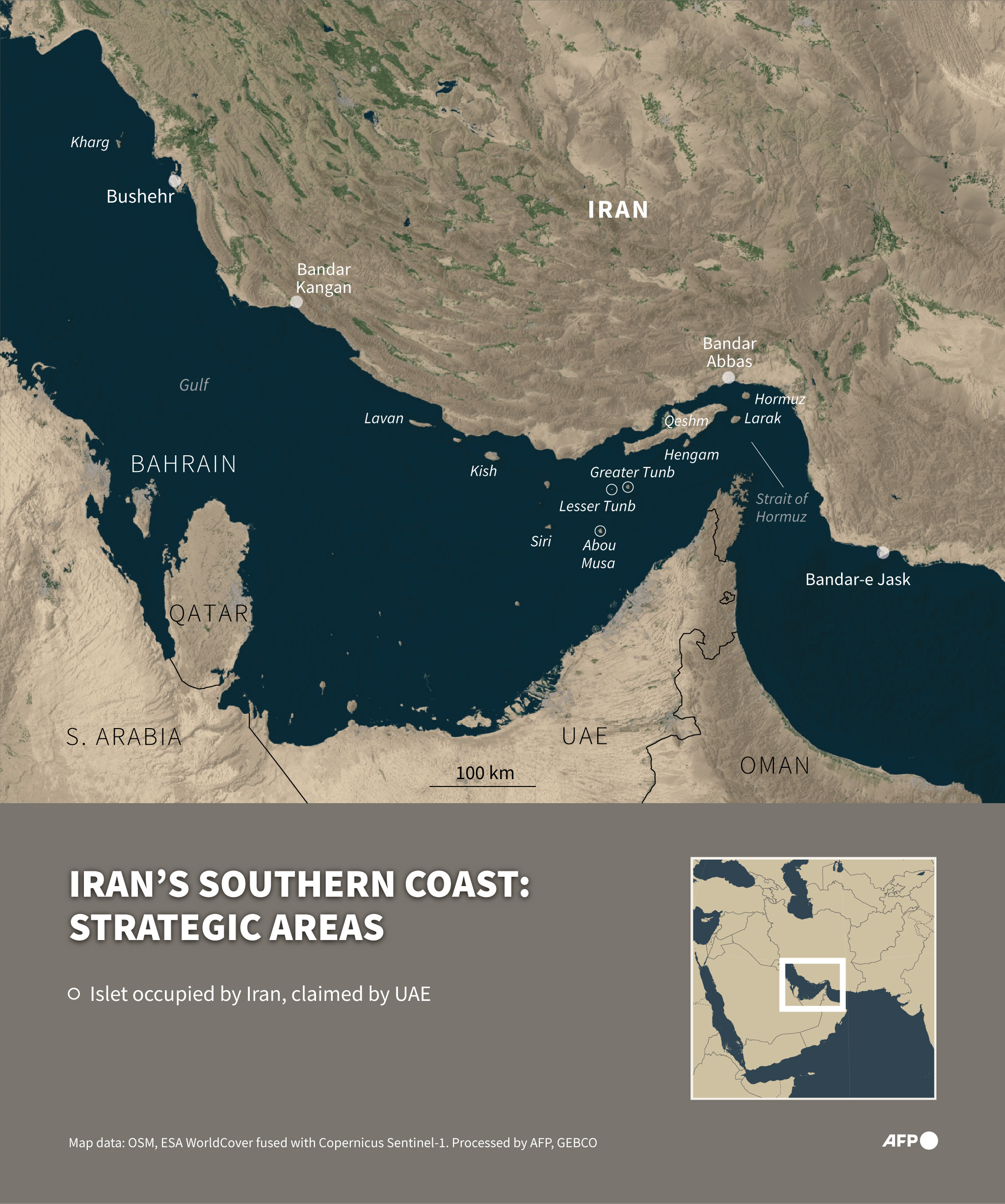
The inconsistency in the parties' stances was further on display Saturday in the Strait of Hormuz file. The Trump administration issued an ultimatum to Tehran, demanding that it publicly release an official document acknowledging that Iranian attacks earlier in the week against three vessels in the Strait of Hormuz had been a mistake.
Washington above all demanded that the Islamic Republic commit publicly and in writing to no longer carrying out attacks against tankers using that waterway.
The Iranian authorities deflected the US ultimatum by claiming that this week's attacks on the three vessels were a "technical error" — even though the incidents had unfolded over a twenty-four-hour period.
Adding to the absurdity: this "technical" explanation — which rules out any deliberate political act — was naively deemed acceptable by certain American officials.
As for a statement committing Iran to cease attacks on shipping, Tehran sidestepped the issue by dispatching its Foreign Minister to Oman on Saturday to persuade the sultanate to issue a joint communiqué emphasizing the need to ensure freedom of navigation through the Strait of Hormuz — allowing the Islamic Republic to avoid giving the impression that it had yielded to American demands on this point.
The question remains whether the Trump administration will, once again, play along with Iran's game…
Lebanese-US Military Meeting
On the Lebanese front, a US military delegation traveled to Yarze on Saturday, where it held a meeting with the army commander and senior officers to work out the details of establishing the pilot zones that the Lebanese army is to take charge of under the framework agreement signed by Lebanon and Israel.
The initial phase of the process envisaged under this framework is expected to take shape within the coming days.
Accordingly, the Lebanese government officially announced Saturday evening that Lebanon will take part in the next round of direct negotiations with Israel, to be held this time in Rome on July 15 and 16, under American supervision.
Lebanon had set as a condition for its participation in this meeting that the establishment of the buffer zones — implying an initial Israeli withdrawal — be effectively launched on the ground, which appeared to have been accomplished by Saturday evening…
The Nobel Prizes and the Search for a Glimmer of Light in Human Behavior
Iran: Executions of young people, a favored tool of repression
A Chinese Perspective on Lebanon's Collapse
Dahr el-Baidar Explosives: Toward the End of Complacency?
Lebanese Moderation Needs a Project
Más de Michel Touma
Ver todo


Más en Analyze
Ver todo


Lo último de Levant Time
Ver todo


