

October 7: The Question That Cannot Be Answered
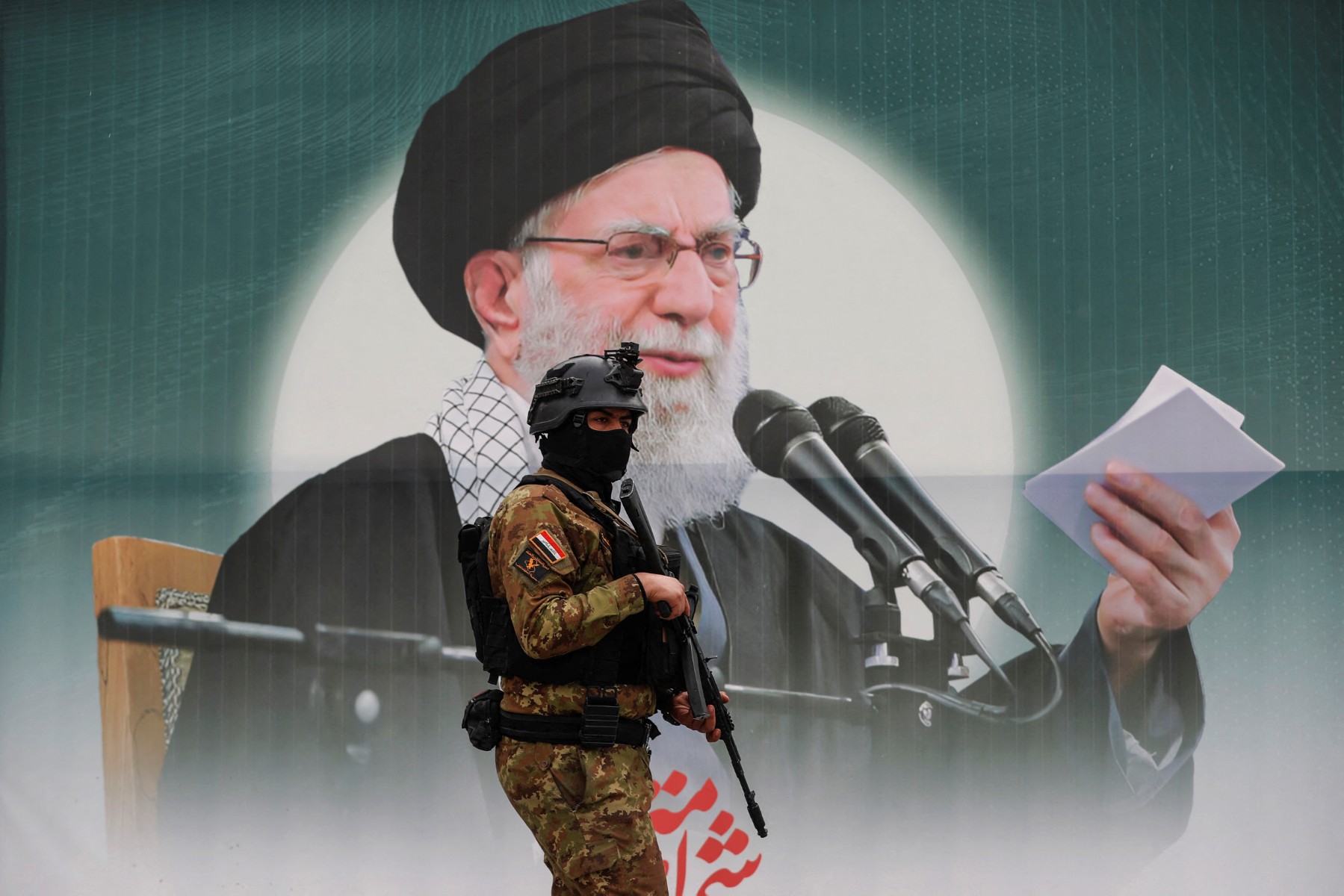

On the third anniversary of the “Al-Aqsa Flood” and the tragedy in Gaza caused by Hamas, it seems legitimate to ask: Where are the Arabs? Indeed, where is Iran? And where is Israel heading? For the time being, this has become a question that cannot be answered.
This is because the problems afflicting the Arab world, or rather the Arab worlds, appear unlikely to be resolved in the foreseeable future, for the simple reason that the key to a solution most often lies in Tehran, not in one Arab capital or another, and certainly not with the Arab League. The Arab League is experiencing a structural crisis that reflects the Arab world’s state of decay. I believe “decay” is a rather gentle word.
To appreciate how impossible it is to answer the question of where the Arabs are heading, one need only consider what has become of Iraq, which Iran rules through its sectarian militias. The paradox is that Iraq, where the “Islamic Republic” has succeeded in transplanting the Revolutionary Guards model, now finds itself in a bewildering position. How can a government that owes its existence to the overthrow of Saddam Hussein by American tanks celebrate the departure of the last American soldier from Iraq, while Prime Minister Ali al-Zaidi speaks of the country regaining its sovereignty? The paradox is that those now celebrating Iraq’s restored sovereignty refuse to acknowledge that the Americans have left while the Iranians have stayed. Iran is more present in Iraq than ever before… Yet that does not prevent us from asking: Where is Iran, and where is Iran heading?
More serious still, the fall of Iraq in 2003, when the George W. Bush administration handed the country over to Iran, created a regional imbalance from which the region continues to suffer to this day.
The focus on Iraq stems from the fact that its fall into Iranian hands brought down the entire regional order. This was the order established in the aftermath of the First World War and the collapse of the Ottoman Empire. It may be useful to recall that the Sykes-Picot Agreement dates back to 1916 and the Balfour Declaration to 1917. The Arabs never truly came to terms with Sykes-Picot, nor did they understand the meaning of the Balfour Declaration and its implications.
The American invasion of a member state of the Arab League, a country home to several ethnic groups, amounted to more than the downfall of a backward Iraqi regime whose demise cannot be regretted. There is no reason for regret, given the fatal mistakes Saddam Hussein committed against both the Iraqi people and the countries of the region, foremost among them Kuwait.
Nevertheless, the fall of the Iraqi regime also meant the collapse of a country and of a dividing line between Arabs and Persians. The entire region is suffering from this imbalance, which allowed Tehran to take control of Baghdad, instead of Iraq, with all its cities, serving as a bulwark against Iran’s expansionist project. That project was able to gain fresh momentum throughout the region, using Iraq as its starting point.
“Where are the Arabs?” is not merely a question. It gives rise to other questions for which there are no answers. For example, who will drive Iran out of Iraq, as it was driven out of Syria? Can life be restored to a country such as Yemen, a country that has been completely fragmented since Iran, through the Houthis, managed to seize control of part of its territory and turn it into a source of danger to Saudi Arabia and to shipping in the Red Sea, and therefore to the Suez Canal?
What future awaits Lebanon, where Hezbollah’s weapons continue to hold the country in their grip? This sectarian arsenal, an Iranian arsenal, has never had any purpose other than to subjugate the Lebanese and, at one stage, the Syrians. The Lebanese have always been, and remain, a target of Iran and Hezbollah. Israel has been nothing more than a pretext for retaining these weapons.
What the Iranian occupation of Iraq failed to reveal was exposed by the “Al-Aqsa Flood” three years ago. Yahya Sinwar, who played a central role in launching the “Al-Aqsa Flood” as a Hamas leader, helped change the nature of the conflict in the region. The conflict moved into Iran itself. The “Al-Aqsa Flood” also changed the nature of Israel, which no longer believes in anything but expansion as a means of preserving its security.
Although Israel has demonstrated that it possesses extraordinary military and intelligence capabilities, another question ultimately remains unanswered, much like the question concerning the Arabs: Where is Israel heading?… And what future can it have without a viable political project, as part of the region, as one of its states, obliged to live in peace and security with its surroundings and with the Palestinians, a people who exist on the land of Palestine… and therefore have a place on the region’s political map?