

One War, from Yemen to Iraq
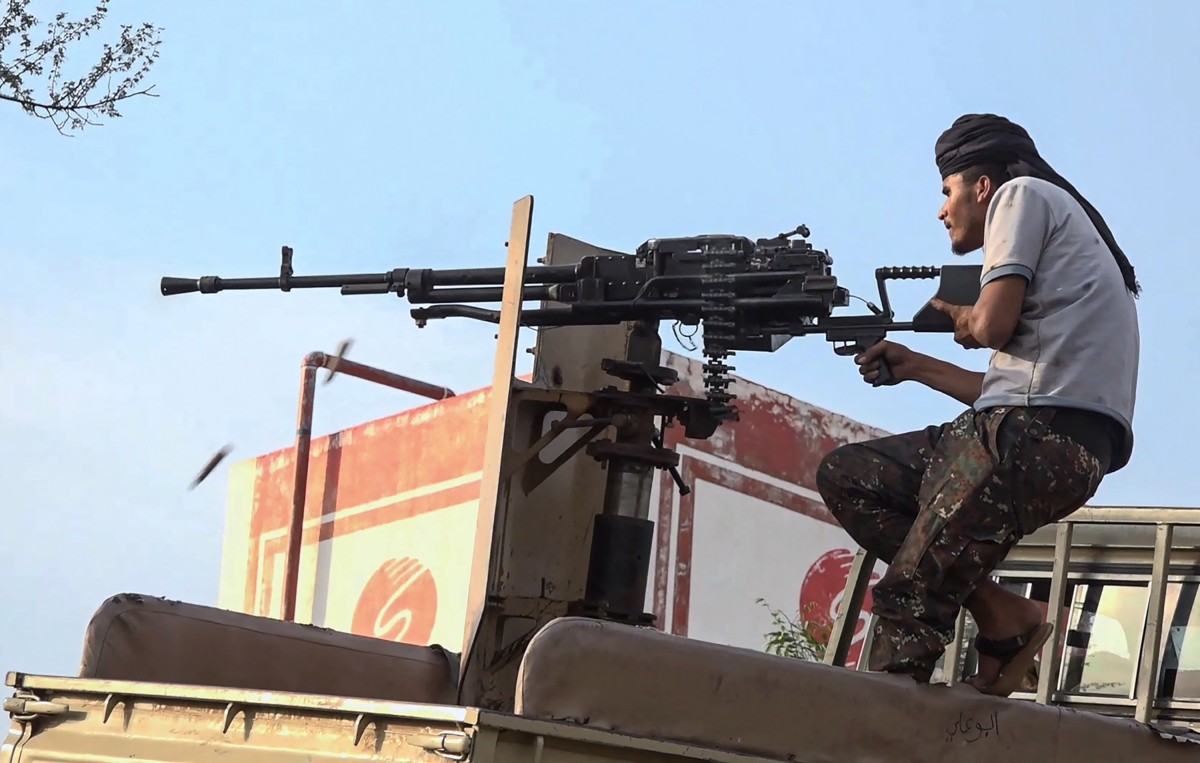

By taking control of the port of Mokha, the Houthis have enabled Iran to take a major step toward controlling the Bab el-Mandeb Strait. The strait is the essential gateway to the Red Sea and the Suez Canal. The “Islamic Republic” has used the Houthis as part of the war it is waging against the United States and Israel, a war it has also extended to the Arab Gulf states and Jordan. Foremost among these countries is Saudi Arabia, which now considers itself to be fighting a war along its long border with Yemen while simultaneously coming under attack from Iraq.
This is no longer merely a test for Yemen’s “legitimacy,” whose very fate is now in question. It is also a test for the Arab world and the Gulf, especially since the “Islamic Republic” has not hesitated to use Yemen to pressure every state in the region.
What will the US administration do? Will it understand that the war with Iran has become an all-encompassing conflict, indeed one and the same war stretching from Yemen to Iraq? Will it understand that the “Islamic Republic” is prepared to go to the furthest lengths in this conflict, of which Iraq has now become an essential component?
What is happening in Yemen raises the question of the future of Yemen’s “legitimacy” and whether it is capable of surviving. But another question is also being raised: the future of Iraq, and whether or not it is under Iranian control.
There is no doubt that the Houthis’ military success represents a major success for Iran in the strategy of blackmail it has been pursuing. Ultimately, in order to continue this policy toward the states of the region, Iran uses the Houthis, who are merely one of the instruments of its regional policy. They call themselves the “Ansar Allah group,” in reference to Hezbollah in Lebanon. It is no secret that Hezbollah played a central role in turning the Houthis in Yemen into a mere instrument of the “Islamic Republic,” particularly through training, the establishment of communications networks, and the setting up of a satellite television station in Beirut. Northern Yemen has thus become a base for Iranian missiles and drones in the Arabian Peninsula, as well as a source of threat to every Arab Gulf state.
The Houthis carried out Iranian instructions without the slightest hesitation. They committed substantial forces to the battle for the port of Mokha, which they had already briefly controlled immediately after entering Sanaa on September 21, 2014, thereby turning yet another Arab capital into one under Tehran’s authority. It is well known who had previously driven the Houthis out of Mokha and, before that, out of Aden itself and other southern areas. UAE-backed forces played an essential role in forcing the Houthis to retreat in various parts of Yemen, particularly in the southern governorates.
The Houthis’ focus on Mokha was clear, beginning with their military advance in the mountainous area of Taiz, where “Ansar Allah” already has a foothold. The Houthis attacked specific positions in Taiz Governorate in an effort to encircle Mokha and make its military fall inevitable. They succeeded in entering the city by taking advantage of the absence, on the ground in Yemen, of a united front capable of standing up to them. It is clear that disagreements among the various Yemeni factions hostile to the Houthis created a situation from which the latter benefited to the fullest.
There is no longer the same eagerness to confront the Houthis among some southern factions and other groups that helped retake Aden and Mokha from them more than ten years ago. There is little reason now to reopen issues Yemen could well do without. It is nevertheless worth recalling that, at one point, the forces that had retaken Mokha from the Houthis were, together with others, on the verge of driving them out of Hodeidah as well. That was in early 2018, when American and British international interventions prevented the Houthis from being expelled from Hodeidah.
A day will come when the reasons behind the insistence shown by certain international circles on keeping the Houthis in Hodeidah, Yemen’s largest port on the Red Sea, will be revealed. The current situation in Taiz can be described as one of advance and retreat. The Houthis make breakthroughs in certain areas, as happened in Mokha, and fall back elsewhere, even suffering heavy losses, as occurred in Al-Jawf, far from Taiz. But one thing is clear: more than ever, there is a need for coordination among the factions opposed to the Houthis, which are supposed to operate under the authority of the “legitimacy” headed by Dr Rashad Al-Alimi. In the end, the rivalries among those who failed miserably to prevent Iran from reaching Mokha are now of no use whatsoever.
Better coordination among the forces loyal to Yemen’s “legitimacy,” or under its authority, is not enough. More than ever, Arab coordination, and Gulf coordination in particular, appears necessary when it comes to Yemen. For one simple reason: the stakes are enormous. They are not limited to Yemen’s future or to the Iranian presence in the country. They concern the “Islamic Republic’s” use of that presence to threaten Gulf security as a whole, extending as far as the Suez Canal and its operations. What has happened in Yemen therefore represents a development of extreme importance, especially since it was followed by attacks launched from Iraq against the Saudi pipeline leading to the Red Sea.
All this comes at a time when there is no clear American strategy for confronting Iran. At one stage, Iran did not hesitate to strike several Gulf states, including Saudi Arabia, the United Arab Emirates, Kuwait, Bahrain, Qatar, and the Sultanate of Oman. In the absence of a clear American strategy, why should there not be an Arab Gulf strategy, with the participation of the Hashemite Kingdom of Jordan, which is itself being subjected to repeated Iranian attacks?