

Iraq: The Collapse of the US Bet on the Al-Zaidi Government
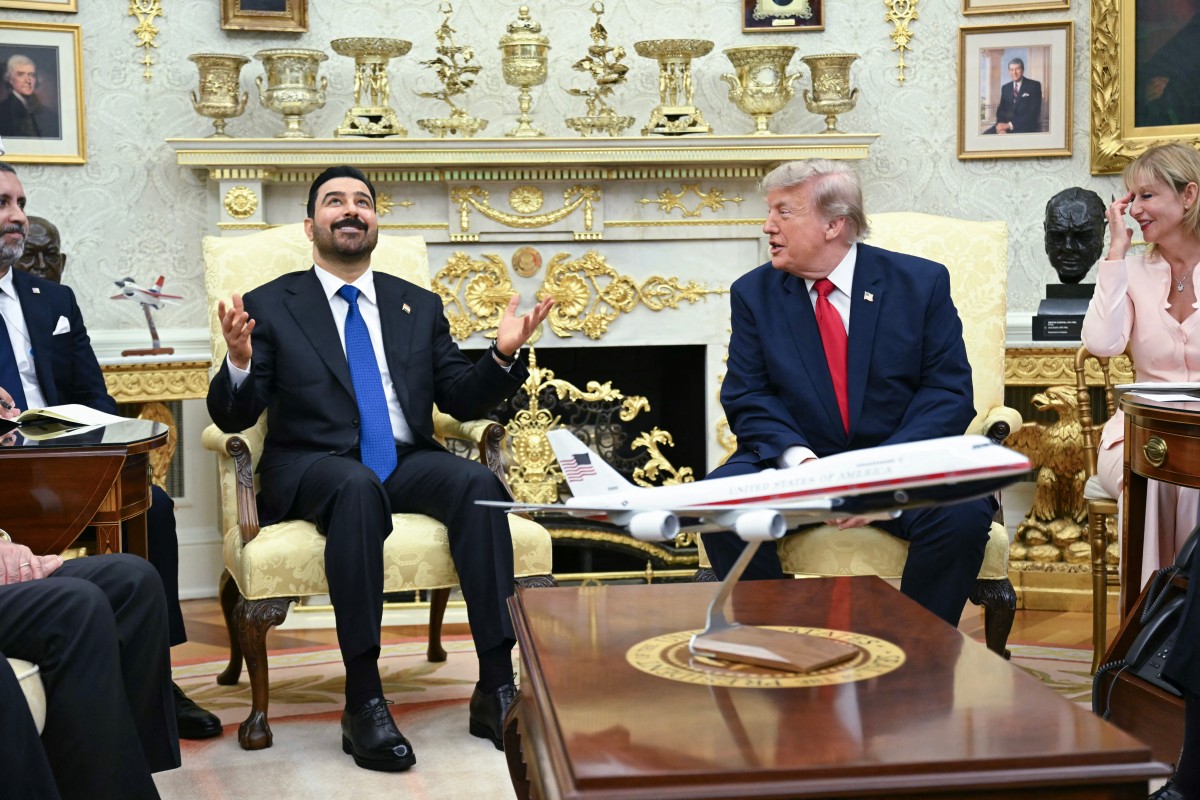

With each passing day, it becomes clearer just how vital Iraq once was to the security of the Gulf as a whole, and how severe the regional imbalance created by the George W. Bush administration in 2003 truly was.
That year, the United States handed Iraq to Iran on a silver platter. American tanks rolled into Baghdad without fully grasping the consequences of a transformation that would reshape the regional balance. That balance had been an integral part of the regional order since the creation of the Iraqi state following the collapse of the Ottoman Empire in the early 1920s.
Iraq, from which drones were launched toward Saudi Arabia in an attempt to disable the oil pipeline terminating at Yanbu on the Red Sea, is not simply another country sharing a long border with Iran.
There is a historically established reality: the Iraqi-Iranian border has long marked the divide between two civilizations, the Persian and the Arab. This was something the late French president François Mitterrand understood in 1981 and 1982. At the time, France provided military assistance to Iraq by “lending” it Super Étendard aircraft used to strike maritime targets and oil refineries. France also sold Iraq Exocet anti-ship missiles capable of disabling tankers. Iraq was then in an unenviable position. Yet those French aircraft and missiles helped it push back Iranian forces that were close to breaking through the Iraqi border, particularly around Basra.
The George W. Bush administration ignored all these considerations. It failed to grasp what it meant to dissolve the Iraqi army and bring to power in Baghdad sectarian Iraqi militias operating under the command of Iran’s Revolutionary Guards.
Despite repeated efforts by Iraqi forces seeking to reconnect with the Arab world and restore some measure of balance within the country, little has truly changed in Baghdad since 2003. Iraq has remained firmly within Iran’s sphere of influence. Tehran succeeded in reversing the balance of power and placing the country under the sway of the “Popular Mobilization Forces,” little more than an umbrella for Iraqi militias directed from Tehran.
Nothing today suggests that the government of Ali al-Zaidi, aged 41, is capable of reclaiming Iraq and turning it into a state free from Iranian influence, whether or not he travels to Washington, Paris or elsewhere. Nor is there anything to suggest that Iraq, under the current system created by the Americans, can become an independent state, honor its commitments toward Saudi Arabia or Kuwait, and prevent the militias of the “Popular Mobilization Forces” from playing the role Iran expects of them.
It is no coincidence that Saudi Arabia was attacked at a time when the Houthis had managed to seize Yemen’s port of Mokha, along with several islands in the Red Sea, with the aim of tightening their grip over navigation through the Bab el-Mandeb Strait.
The United States is now paying the price for what the George W. Bush administration did. It is paying for its failure to build a viable Iraqi system independent of Iranian influence. Iraqis themselves, including the Kurds, are also paying the price of a blind American policy that ended up serving Iran’s expansionist project, knowingly or not. Thanks to Iraq, Iran was able to launch attacks against several Arab Gulf states. Thanks to Iraq as well, it extended its reach in every direction. This included channeling funds to Hezbollah in Lebanon through Iraqi financial institutions, both before and after the shift in Syria…
It is clear that Iraq now plays an important role in preventing the countries of the region from finding alternative routes and means to bypass the Strait of Hormuz. Iran wants to make one point unmistakably clear: it does not merely control Hormuz; it also seeks to control every drop of oil leaving a Red Sea port… while Iraq remains under its influence.
There is no doubt that Saudi Arabia is suffering from this situation, just as it is suffering from the collapse of the military forces loyal to Yemen’s “legitimacy,” which have proven incapable of mounting any serious confrontation with the Houthis.
However long it takes, Iraq will remain a central link in any effort to dismantle Iranian influence in the region. Syria’s departure from the Iranian orbit is not enough. Nor is the collapse of the Persian crescent that once stretched from Tehran to Beirut through Baghdad and Damascus.
The question of whether real change can be brought about in Iraq will therefore remain open. What has emerged in recent days is not merely the inability of Ali al-Zaidi’s government to put an end to the militia weapons at Tehran’s disposal. What has truly emerged is the failure of an American policy that bet on a nonviable Iraqi system and ultimately produced the government now in power. It has become clear that Ali al-Zaidi is not much better than Mohammed Shia al-Sudani, who served as prime minister until the formation of the current government.
The collapse of the American bet on Ali al-Zaidi also means the collapse of an entire system that has governed Iraq since 2003. By any measure, that system is no better than the one that prevailed under Saddam Hussein and his Baathist, family-based regime. That regime committed every conceivable mistake from the moment Saddam succeeded Ahmed Hassan al-Bakr in the summer of 1979.
The issue is not so much Ali al-Zaidi himself as the system that produced him, a system that has left Iraq captive to the Revolutionary Guards. Nothing more…