

What the Sahrawi Turnout in Morocco’s Elections Means
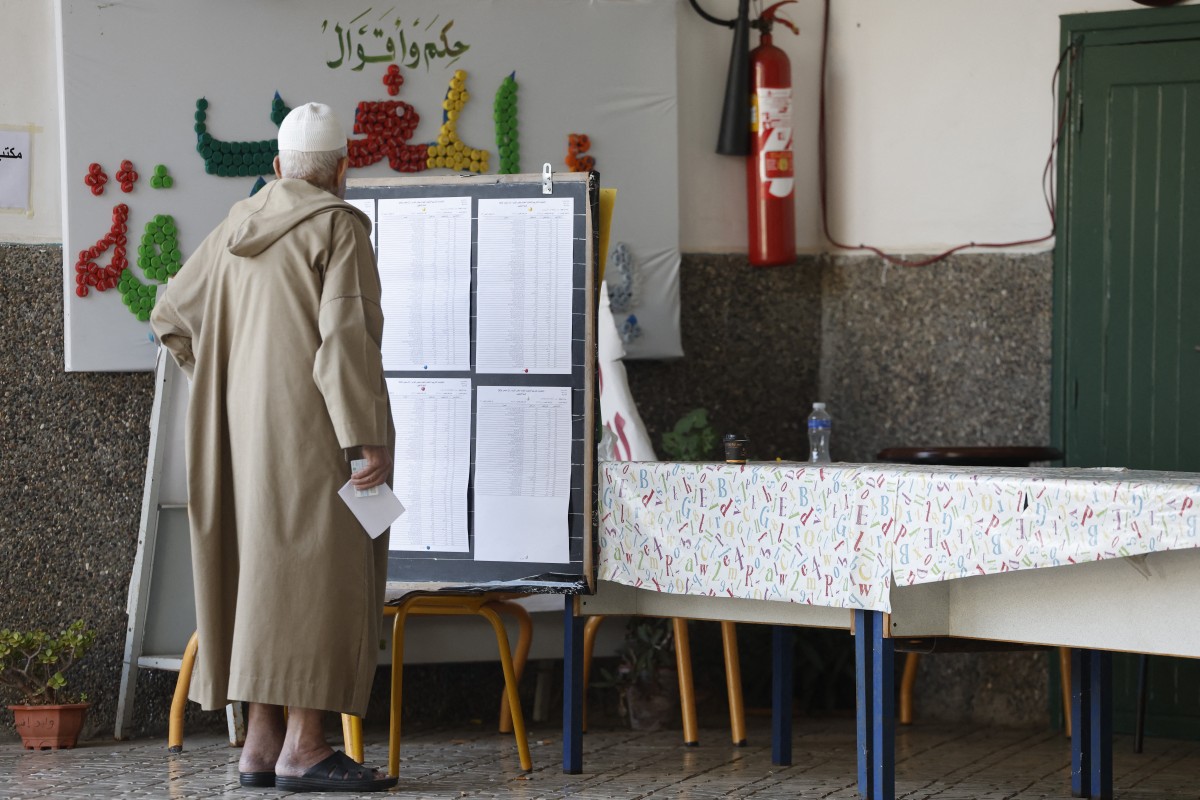

In light of the legislative elections held a few days ago, one can speak of a certain regularity in Morocco’s political life. The elections were calm and normal across the Kingdom. The results were perfectly clear and showed that the biggest winner was Morocco itself, under the leadership of King Mohammed VI, who laid the foundations of a modern state. They also revealed the extent to which the inhabitants of the Sahara provinces are attached to their Moroccan identity. This was clearly reflected in voter turnout in the Saharan provinces.
In modern Morocco, elections are held on schedule and governments do not fall in the street. Change comes through the ballot box. Ultimately, the political system that emerged from the 2011 Constitution places the parties before their responsibilities, namely the obligation to fulfill the promises they made during election campaigns.
Over the past few years, Morocco has faced every challenge and every campaign aimed at casting doubt on it, until it became clear that Mohammed VI was present at all times. More than that, he is involved in the smallest details and is particularly familiar with the nature of the problems facing the Kingdom, including unemployment and rising prices, which have become a global phenomenon.
He also knows how important it is to address unemployment, education and healthcare services. This has been translated into action, as evidenced by the hospitals built in different parts of the Kingdom. In his latest speech on the occasion of Throne Day, Mohammed VI let the figures speak for themselves. The figures reflect reality as it truly is, far removed from any kind of political one-upmanship. Morocco’s growth rate stood at 4.25 percent in 2025. It is likely to remain close to that figure in 2026.
The elections came in the context of what the Moroccan monarch referred to in his latest speech as the “nation-state.” Morocco does not behave like a makeshift state searching for a place for itself, but as a state with deep historical roots, one that has accumulated institutions and traditions of governance and preserved, amid a highly turbulent environment, a rare degree of political continuity.
As for the “jealousy” also mentioned by Mohammed VI, it reflects the irritation of certain parties at a state whose position is changing and which is progressing, unlike neighboring Algeria, in areas that, according to the calculations of those parties, were supposed to remain beyond its reach.
Morocco has succeeded in making itself increasingly present in the calculations of others without having to raise its voice very much. The Tanger Med port and the port of Dakhla in the Moroccan Sahara embody this simple reality, as do the automobile and aerospace industries, Morocco’s economic expansion in West Africa, energy projects and continental links with Europe, as well as its balanced relations with the United States, China and the Gulf states. Morocco has treated these files as components of a single policy whose objective is to turn the Kingdom into a state through which interests pass and to which interests are tied in ways that are increasingly difficult to ignore.
Rabat does not offer the region an ideological project, nor does it claim to possess a formula that others can follow. It rarely speaks the language of leadership or tutelage. Its ambition is more specific: to protect its national interests, consolidate its territorial integrity, diversify its partnerships and raise the cost of bypassing it in regional and international calculations.
This approach has been clearly reflected in the management of the Sahara issue. The file is no longer simply a dispute in which Rabat explains the justice of its position. It has become part of the architecture of Morocco’s foreign relations. Under the guidance of Mohammed VI, Moroccan diplomacy has moved from defending the cause to building an international environment in which Morocco’s position is more closely connected to the interests of states, their investments, their security and their plans in Africa and the Atlantic.
The results of the legislative elections revealed a degree of Moroccan political awareness, even a rejection of political one-upmanship and of those who engage in it, including over the upgrading of relations with Israel to the level of exchanging ambassadors. The campaign waged by the Islamists on this issue failed. Abdelilah Ibn Kirane, leader of the Justice and Development Party, did not succeed in capitalizing on the campaign opposing the upgrading of diplomatic representation with Israel. His party came fourth, behind the Authenticity and Modernity Party (PAM), from whose ranks the new head of government will come, the National Rally of Independents and the Istiqlal Party. The Islamists made gains compared with the previous elections, but this was not enough for one of them to assume the post of prime minister, as happened in 2011 and 2016.
The Moroccan citizen understands that elections are neither an arena for political one-upmanship nor an opportunity to exploit shortcomings that may have occurred, such as those revealed by the events in Ceuta. Those events exposed, on the one hand, the scale of the malicious campaigns targeting Morocco and, on the other, the reality of an unemployment crisis among Moroccan youth. Around 60,000 young Moroccans flocked to Ceuta, a Spanish enclave on Moroccan territory, as soon as a rumor spread that Ceuta had opened its doors to those entering by sea, in light of a ruling issued by a Spanish court.
The elections cannot be separated from the positive developments Morocco has witnessed in every field since Mohammed VI ascended the throne twenty-seven years ago. The greatest success remains what has been achieved in the Saharan provinces, whose inhabitants affirm that they are an integral part of Morocco. Voter turnout in the Saharan provinces was higher than in other Moroccan regions. It reached 77 percent in the Laâyoune-Sakia El Hamra region. Nationwide, turnout stood at 38 percent. This demonstrates the loyalty of the inhabitants of these provinces to Morocco and their attachment to that loyalty. It also demonstrates that the Sahara issue has always been an artificially created issue, nothing more, indeed a war of attrition waged by Algeria against Morocco with the aim of creating an artificial entity that would provide it with access to the Atlantic Ocean…
Morocco, meanwhile, is moving toward a more vibrant party-based political life. The Authenticity and Modernity Party has no choice but to prove that it is worthy of the responsibility of leading the government and that it is indeed capable of making a difference compared with previous governments, in order to block a future return of the Islamists to power.