

Lokman Slim: When Words Defy Weapons

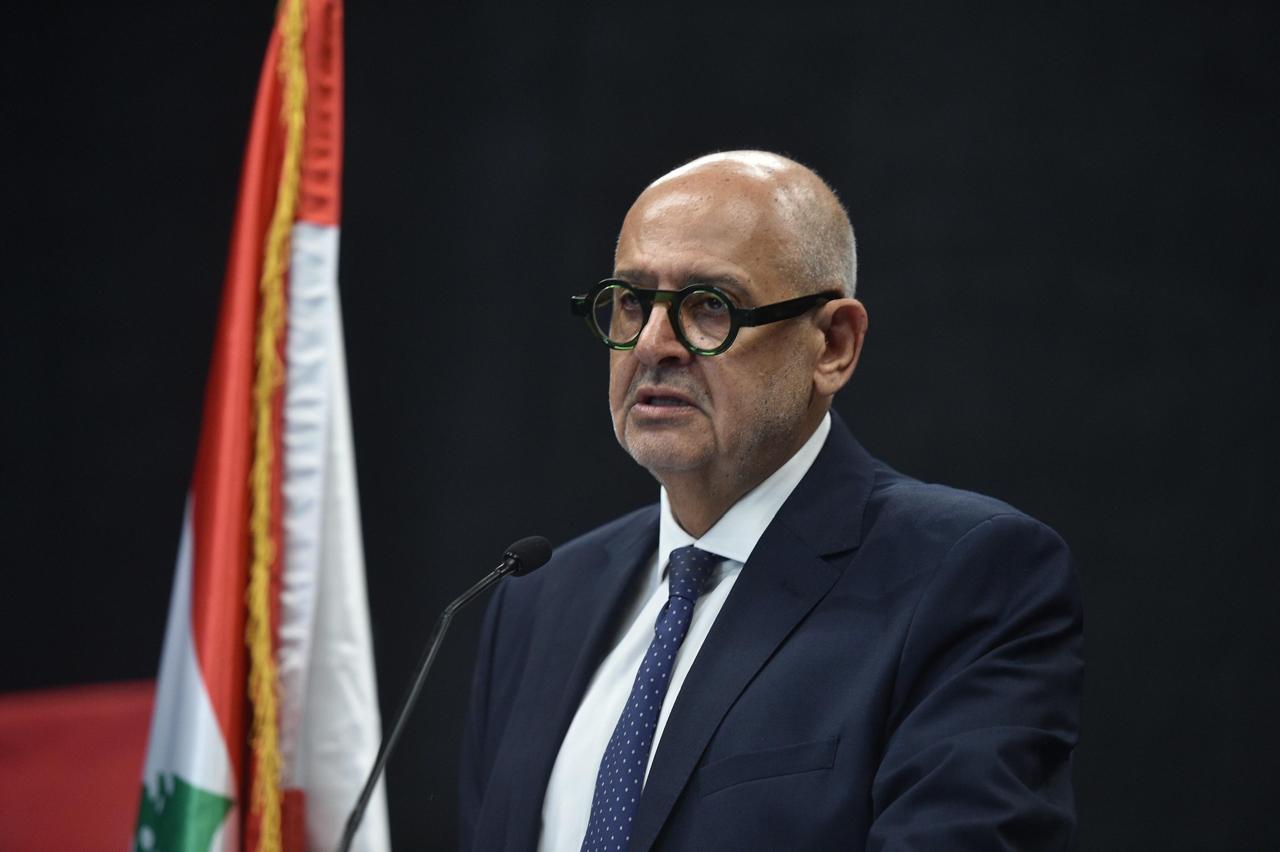
Lokman Slim was not an opponent in the conventional sense, nor a partisan activist seeking power or position. At the core of his experience, he was an intellectual who chose to pay the full price for his convictions, confronting the system of oppression not from outside, but from within its social environment, through its prevailing narratives and the rhetoric it sought to claim as its own. His assassination thus appeared, from the very first moment, as a symbolic killing before it was a classic crime, a political message before it became a personal liquidation.
Lokman Slim was born into a Shia environment from which he never detached himself. Yet he refused to allow it to become an ideological prison or a reductive identity. Early on, he understood that the true danger to a community does not come so much from outside as from the suppression of its right to critique, and the transformation of that community into a closed bloc governed by fear and enforced loyalty. His conflict with Hezbollah, therefore, was not a mere political disagreement, but an existential clash between those who see politics as an open space for debate and accountability, and those who regard it as a closed doctrine, protected by arms.
Together with his sister Rasha, Lokman Slim founded Dar al-Jadid publishing, and with his wife Monika Borgman, the UMAM Documentation and Research association, placing memory at the heart of his struggle. He had long recognized that domination is exercised not only through military force, but also by controlling narratives, neutralizing inconvenient facts, and rewriting history to serve an authoritarian present. This is why he devoted himself to documenting the civil war, violations, and assassinations – not to exhume the past, but to protect the future from a repetition of the same violence under new names, particularly under the guise of reconciliation with memory.
Lokman Slim stood out as an exception in the Lebanese cultural scene, accustomed to equivocation. He did not hide behind a polished discourse, follow prevailing opinion, or seek semantic compromises. He stated clearly that weapons outside state control were a national disaster, that linking Lebanon’s fate to an Iranian-led regional project was political suicide, and transforming the Shia community into a “resistance” bloc violated its members’ right to dissent. In an environment governed by accusations of treachery and political heresy, these positions made him a constant target of threats and defamation, before ultimately leading to his assassination.
In this context, his engagement in structured political action was neither a luxury nor a departure from his cultural role. It stemmed from his understanding of the limits of words alone and the need to embed them within a collective framework capable of protecting them and turning them into concrete action. This led him to found the Lebanese Democrats’ Coalition, an attempt to establish a sovereigntist, cross-confessional democratic opposition that rejects both the logic of weapons and that of clientelism, and which links the concept of the state to justice and accountability rather than to sectarian power-sharing.
After his assassination, the coalition did not become a mere symbolic memory. Since I assumed its leadership, it has entered a challenging phase of consolidating its political action. Efforts were thus made to embed this political choice as an organized action, rather than reducing it to a moral slogan. As president, I have sought to translate Lokman Slim’s intellectual legacy into a clear political program: a sovereigntist and democratic discourse, uncompromising on the question of weapons, rejecting populism, and addressing Lebanon’s collapse with a view to rebuilding the state rather than managing disaster.
Lokman Slim’s assassination did not mark the end of a process, but a moment of truth. It highlighted the scale of the violence inherent in the informal system that governs Lebanon, as well as the fragility of the state and its inability to protect its citizens in all their diversity. It also showed that attempts to silence a voice do not erase the idea it carries, but place those who defend it under the responsibility of ensuring its continuity by other means – this time political and organizational – as the coalition sought to do since the assassination.
In his struggle, Lokman Slim was never an isolated, elitist voice. He constantly sought to bridge the gap between thought and politics, culture and society. He did not address the West in search of legitimacy, nor did he adopt a condescending tone towards his own community. On the contrary, he confronted it from within, asserting its right to be more than a mere human reservoir for others’ projects. This is what made his struggle so painful for his adversaries: it stripped them of their claim to exclusive representation and exposed the fragility of their discourse when confronted with argument rather than slogans.
Years after his assassination, Lokman Slim cannot be reduced to the image of a victim or martyr. His true value lies in the model he embodied, that of the uncompromising intellectual who refused to separate ethics from politics and who would not remain passive in the face of his country’s collapse. He left us a heavy legacy, not only in his books and archives, but also in the questions that remain: can a state be built under the threat of weapons it does not control? Can pluralism be preserved in a climate of fear? And can memory itself constitute a form of resistance?
Lokman Slim may not have achieved victory in his lifetime, but his struggle made defeat harder and silence impossible. He opened a rift in the narrative of power – a rift that no attempt at denial could ever heal. In itself, this constitutes a form of victory.
In Search of Lebanon, from Beirut to the Vatican
UN: Paris Wants to Replace UNIFIL With a 'Different Type' of Presence
The Abolition of the Death Penalty: Ibrahim Najjar and Élie Keyrouz’s Long Fight
The Testament of Hassan Rifai
A ceasefire... yes, but what happens next?
المزيد من Jad Akhawi
عرض الكل


المزيد في Politics
عرض الكل



Mexico: after the Elimination of El Mencho, the Calm Before the Storm?
«Remaining»: Rekindle the Memory of the Victims of Political Assassinations Since 2005
Revolutionary Guards, Supreme Organ of Repression
Tropic Thunder: Understanding US Interventionism in the Caribbean

Tropic Thunder: Understanding US Interventionism in the Caribbean
الأحدث من Levant Time
عرض الكل


