

Leo XIV arrives in Lebanon bearing the tools of peace

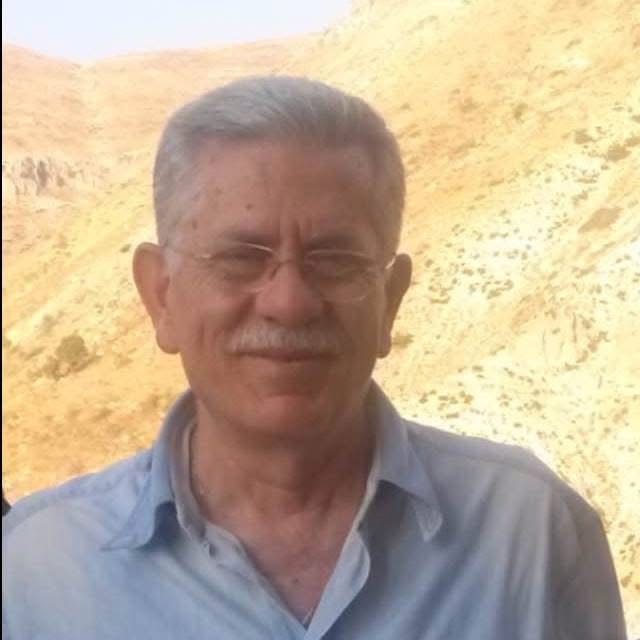
Pope Leo XIV arrives in Lebanon bearing a message of peace that is “disarming and disarmed, humble and steadfast.” He comes to reach out to the Eastern Churches and to comfort those who suffer, in a Middle East deeply scarred, where the intercession of the saints and the outstretched hand are on the verge of becoming humanity’s last refuge.
Armed with the ‘weapons’ of peace, persuasion and dialogue, Pope Leo XIV arrives in Lebanon on Sunday for a brief visit spanning one full day and two half-days (30 November–2 December). He arrives on Sunday afternoon from Iznik in Turkey – ancient Nicaea, the site of the first ecumenical council, whose 1,700th anniversary the Church is celebrating this year. In other words, he comes from a place steeped in symbolism, seeking renewed unity for a Church that has fractured over the centuries and now looks for a fresh covenant of fidelity to its Bridegroom, Christ, who shed sweat and blood that she might be one.
He will not deliver a different message to the Eastern Churches, of which Lebanon is both a microcosm and a living relic. “He is coming to Lebanon, but he has the whole Middle East in mind,” Monsignor César Essayan, the Apostolic Vicar for Latin Catholics in Lebanon, told the press. He comes to pick up where Francis left off – that is, on the ground, in a Middle East in tatters, fanatical and torn apart by extremists of every kind, whose shifting borders move under the fire of artillery and air raids.
Given this Middle East in flames, senior Church sources insist that Leo XIV, in addition to his pastoral messages, is carrying an extra-ecclesial proposal. Will he call for a conference on Lebanon at the Vatican, much like Pope Francis did when he received the heads of all the Eastern Churches in November 2013? Given the scale of the Christian exodus from the Middle East, such an initiative would be fully justified. As Vincent Gelot, head of the NGO L’Œuvre d’Orient in Lebanon, Syria and Jordan, notes: “Since Benedict XVI’s visit in 2012, Syria has lost 80% of its Christians.” Much the same could be said of Iraq.
In any case, it is not hard to see that in Lebanon, any solution will depend on moderation and dialogue between the country’s religious and political authorities. Vincent Gelot adds that “local Churches have educational and healthcare missions under financial threat, which need support to survive.” He believes a global Vatican-led fundraising effort should be possible. “What will we do if Christians disappear from the region that was the cradle of Christ?” he asks. “Lamenting is no longer enough. Action is required!”
A different atmosphere
The tone of Pope Leo XIV’s visit is set to be very different from that of Benedict XVI (2012) and, above all, John Paul II’s (1997) papl visits, when he completely captivated the crowds and drew nearly half a million faithful to the seafront for his Mass. This time, it seems that space for popular gatherings has been considerably restricted, probably for security reasons. Only around 100,000 places, both seated and standing, have been allocated for the Mass, though giant screens have been installed for additional crowds. A VIP guest with a special pass was asked to attend the 10:30 a.m. Mass… from as early as 5 a.m. The Mass will close Leo XIV’s visit to Lebanon on Tuesday, 2 December, and will be followed by a farewell ceremony at the airport.
The visit is short enough that every stop becomes a highlight. Monday, the central day, is the busiest: a visit to the tomb of Saint Charbel, immersed in the contemplative silence of the Maronite monastic tradition, alongside a miracle-working monk who has become as much a symbol of Lebanon as the cedar; meetings with priests, nuns, and committed laypeople in Harissa – a community threatened by brain drain; an interfaith and ecumenical gathering under a marquee erected by Solidere in the city centre; and finally, a meeting with young Lebanese from all walks of life, alongside young Syrians, Jordanians, and Iraqis, on the forecourt of the Maronite Patriarchate.
It is an ideal moment for Pope Leo XIV to encourage young Lebanese to remain rooted in their homeland and resist the temptation to leave, so that their country continues to be a beacon of religious freedom, fraternal harmony, and pluralism in the Middle East.
“He may not have the magnetic charm of John Paul II, nor the gift for memorable phrasing of Francis,” remarks a Vatican correspondent travelling with the Pope, “but he is firmly grounded.” Journalists accompanying him will be staying at the Phoenicia Intercontinental, where a press centre has been set up.
On Tuesday, before the 10:30 a.m. Mass, the Pope will visit the Sisters of the Cross and their psychiatric hospital, Lebanon’s casa della sofferenza, where nuns care for severely disabled patients often shunned by society. He will then pay tribute to the victims - and to the Lebanese people as a whole - with a moment of silent prayer at the site of the 4 August 2020 explosion at the Port of Beirut.
Crowd movements have been carefully planned and channelled wherever possible, including along the route from the airport – where he will receive an official welcome – to the presidential palace. According to the organisers, no one will be able to reach the event sites independently. Visitors will be required to use designated parking areas and the shuttle services provided.
On certain parts of his journeys, the Pope will travel in the popemobile, allowing him to greet the faithful and for them to welcome him in turn. This will be the case, in particular, on the flat road from the army checkpoint to the main parking area in Annaya (Jbeil) on Monday morning, 1 December, during his visit to the tomb of Saint Charbel, and on the early-morning route on Tuesday, 2 December, from Jal el-Dib Square to the Convent of the Cross. Municipal authorities, schools, parishes, and security forces will all work together to line these routes and maintain order.
Toward a Humanist Vision Beyond Religious Boundaries
Israel: a Constellation of Parties Reflecting a Fragmented Political Landscape
A Series of Tight Votes in the Race to Succeed Guterres
In Search of Lebanon, from Beirut to the Vatican
UN: Paris Wants to Replace UNIFIL With a 'Different Type' of Presence
More from Fady Noun
View All


More in Politics
View All



Mexico: after the Elimination of El Mencho, the Calm Before the Storm?
«Remaining»: Rekindle the Memory of the Victims of Political Assassinations Since 2005
Revolutionary Guards, Supreme Organ of Repression
Tropic Thunder: Understanding US Interventionism in the Caribbean
Tropic Thunder: Understanding US Interventionism in the Caribbean
Latest from Levant Time
View All


