

Toward a Humanist Vision Beyond Religious Boundaries

I have read a book by an Israeli author.
This is not the first time I have read a book by an Israeli author. In Lebanon, despite the 1955 law prohibiting dealings with Israel, I have managed to obtain books by Israeli authors such as Ilan Pappé and Shlomo Sand, published in Beirut by Lebanese publishing houses. Pappé is sharply critical of the State of Israel and its political system, while Sand challenges the very idea that a single Jewish people has existed throughout history. For many years, Lebanon was under Iran’s considerable influence and Hezbollah’s sway. Books by Pappé and Sand, which lent support to the narrative espoused by the dominant forces in Lebanon, were therefore permitted. You had nothing to fear from General Security, and the military courts would not come after you. Better still, you could openly own a weapon, with the state’s full knowledge, as long as you claimed you intended to use it to fight Israel…
Regrettably, any prospect of peace between Lebanon and Israel, despite everything that divides them, was long suppressed in the name of the principle that “Israel is absolute evil and any relationship with it is forbidden.” Even questioning this dogma was out of bounds, let alone voicing the slightest thought that might shatter these taboos. It was as though this state of affairs were an inescapable fate. The Lebanese in Israel were portrayed solely through the lens of perpetual hostility, killing and hatred. Any attempt to move beyond that hostility and seek a better life, a better future and peace, by contrast, exposed those who dared to make it to penalties under Lebanese law!
It seemed, in the end, that this land was destined for endless wars, and that its people had grown so accustomed to them that the only sound they could hear was the din of battle. Then, one day, a different voice caught my attention… the voice of an Israeli Jewish muezzin singing of peace. That was how I came across Kobi Farhi’s book, The Jewish Muezzin, on Amazon. The digital world seems to have become a refuge where we can envision a better future when we cannot bring it about in the real world.
I read this book without obtaining a permit from Lebanon’s General Security Directorate. It opened up an entirely new world to me, prompting me to question everything: the narrative, history, and our relationship with the world we inhabit. As I read Kobi Farhi’s book, I felt I was reading my own story. I do not know the author, nor can I reach out to him, because of an absurd law and an equally absurd reality. And yet, we are living through the same tragedy, albeit under different names, shedding tears on either side of the border, above a river of sorrow… So long as we continue to view one another through the same prism of conflict, we will neither free ourselves from it nor find our way out of the cave in which we remain trapped…
The further I read, the stronger my urge grew to reach the end, even as I found myself wishing the book would never end. It brought to mind the words of a Sufi reflecting on the human quest for light: “The litany only made me thirstier.”
Peace Is an Act of Courage… Not Endless Confrontation
What makes this book particularly compelling is that its author does not initially cast himself as a peacemaker, nor does he claim to have been guided by an enlightened humanist outlook from an early age. On the contrary, he acknowledges his past and the evolution of his thinking. He speaks openly about a period in his life when he embraced hatred of Arabs, going so far as to scrawl slogans calling for their death on walls. The killing of a young Israeli woman had deeply affected him, as had the social and media environment that fueled his desire for revenge.
What makes this admission all the more powerful is that Farhi does not assume the role of a moralist lecturing others. He speaks as someone who has seen how fear, grief and anger can turn into collective hatred, and how people can become prisoners of a narrative they did not choose but grew up with, until they came to regard it as the only possible truth.
One of the most telling episodes in his account is his recollection of his father during the October 1973 war. His father had covered Egyptian prisoners to protect them from the cold, even though they belonged to an army fighting his own. His action was motivated by no political or military calculation, but by a moral conviction: a person's humanity should not depend on how others treat them.
As his son recounts, his father believed that the hardships he had endured himself should never lead him to abandon his moral principles. To forsake compassion and humanity in wartime, he would say, was to allow the enemy to prevail on moral grounds.
Farhi invites us here to distinguish between military victory and moral victory. One may defeat an adversary on the battlefield but lose oneself in the process by allowing violence to turn one into a copy of those one is fighting.
This is one of the central tenets of the book: peace is neither surrender nor a denial of suffering or rights, nor does it entail abandoning memory. Rather, it means refusing to turn pain into a licence for hatred and revenge. Peace takes courage; endless confrontation does not.
Jaffa: A Microcosm of Coexistence
Jaffa occupies a special place in Farhi’s recollections. It is not simply the city where he was born and raised, but a place where cultures, languages, traditions and religious practices meet and intermingle. In its narrow streets, Arabic music mingled with Jewish liturgical chants, while the muezzin’s call to prayer could be heard alongside the pealing of church bells. In neighboring homes, windows glowed with Hanukkah candles, illuminated crosses at Christmas and the crescent moon marking the arrival of Ramadan.
The picture Farhi paints of his hometown offers a glimpse of pluralism in practice – not as a political slogan or philosophical ideal, but as a way of life. In Jaffa, coexistence did not require Jews to renounce their faith, Muslims to forsake theirs, or Christians to turn their backs on their religion. All it asked was that people live alongside one another, show mutual respect and discover, in their shared lives, something that transcended the boundaries of their respective religious identities.
The story of his grandmother Lili and her Arab Muslim friend is particularly telling. The two women had worked together, and their friendship endured for decades, long after the factory had closed. Lili’s friend would wish her a happy Passover, and Lili would reciprocate by wishing her a blessed Ramadan.
This seemingly simple story, which might at first glance appear to be no more than a passing detail of family life, encapsulates an entire philosophy of interfaith relations. Friendship does not require people to share the same beliefs. What gives a human relationship its true meaning is precisely its ability to embrace difference without seeking to erase it.
The Abrahamic Faiths: Between Spiritual Teachings and Ideological Exploitation
One of the book’s most compelling features is the way Farhi engages with the three Abrahamic faiths: Judaism, Christianity and Islam. Rather than treating them as separate and self-contained worlds, he seeks to highlight what they have in common and the shared spiritual and human ground on which genuine dialogue can be built.
His approach is not, however, uncritical. He takes issue with the transformation of religion, whose original purpose is to convey a moral and spiritual message, into a system of boundaries, categories and judgments that can be used to justify discrimination and hostility.
In his critique of religious institutions, he raises a fundamental question: what is the point of delving into religious texts, teachings and precepts if that knowledge is not reflected in one’s conduct and dealings with others?
In this regard, he recalls two principles rooted in Jewish tradition: that ethical conduct must come before the study of the Torah, and that one should love one’s neighbor as oneself. He then questions the value of religious learning if it does not lead people to live by these principles but instead serves to divide them and turn them against one another.
This perspective helps explain his criticism of religious discourse that invokes the sacred to justify violence. The problem, as he sees it, lies neither in faith itself nor in differences of belief, but in religion being turned into a means of excluding others rather than fostering respect for them.
Farhi naturally approaches Judaism as someone whose identity has been shaped by that tradition. As a Muslim reader, I found his reflections on Judaism particularly familiar. He discusses Jewish symbols, rituals and texts, while drawing attention to the tensions that can arise between religious observance and moral conduct.
He also revisits the history of persecution endured by Jews, stressing that antisemitic stereotypes did not arise in a vacuum. They were shaped, in part, by religious, social and political interpretations, including the accusation that Jews as a people were collectively responsible for the crucifixion of Christ, blood libel accusations, and other forms of incitement to hatred that fueled persecution throughout history.
“The Jewish Muezzin”: When Music Becomes a Language of Interfaith Dialogue
The title itself points to one of the book’s most profound ideas. In the Muslim tradition, the muezzin is the person who gives the call to prayer, summoning the faithful to worship. For a Jewish musician to assume that role carries a symbolic weight that goes well beyond the realm of artistic performance.
Farhi sets out to show that religious and cultural voices we habitually place in separate categories can converge in a shared human space. This is precisely what he seems to have achieved by bringing together elements from the three faiths. What emerges is not merely a musical fusion of three religious traditions, but an artistic statement about the possibility of bringing different spiritual traditions into dialogue.
Throughout history, religious symbols have been used as instruments of war, rallying communities against one another. Farhi, by contrast, seeks to draw on those very same symbols to create opportunities for encounter.
Music thus becomes a universal language that needs no translation and asks nothing of its listeners – not even which faith they profess – before reaching their souls.
This approach reflects the broader artistic journey of his band, Orphaned Land, which has consistently sought to blend Eastern and Western musical influences and build cultural bridges between societies divided by political and religious differences.
Back to Our Story…
Did I say Orphaned Land?
What a small world, Kobi! Would you mind if I spoke to you as though we knew each other, even though we have never met? I feel as if I know you… and somehow, I have the feeling that I remember you! How small our part of the world is, and how wildly out of proportion our conflicts have become!
My friend, whom I cannot address or meet without risking legal prosecution: I, too, was among those who called for a boycott of your band when a campaign was launched in Lebanon against an initiative to light up giant screens in cities across the Mediterranean as a gesture of fraternity and human solidarity. At the time, boycott activists portrayed the initiative as an imminent threat that had to be confronted, on the grounds that some of the participating cities were Israeli and that the group behind the initiative was Israeli. And I, like so many others, allowed myself to be swept along by the crowd!
I knew nothing of who you were, what you wanted or what you were doing. Nor did I really know what I was doing myself. At a certain point, we both passed judgment, each in our own way, whether as individuals or as part of a social, political and cultural system that breeds condemnation and baseless hatred.
My friend, whom I cannot address or meet… Despite the culture of war, our education, the media, the shaping of our collective consciousness and the weapons, we are now giving serious thought to how a different future might be built.
Yes to building peace… as a comprehensive project to rebuild both the human being and society. One that begins in schools and within the family, extends to the media, art and culture, and reaches all the way to public policy and the economy.
The real challenge will be to free future generations from this psychological and cultural legacy, so that war will no longer be, as it has been for us, an inescapable fate… or even a possibility, however remote.
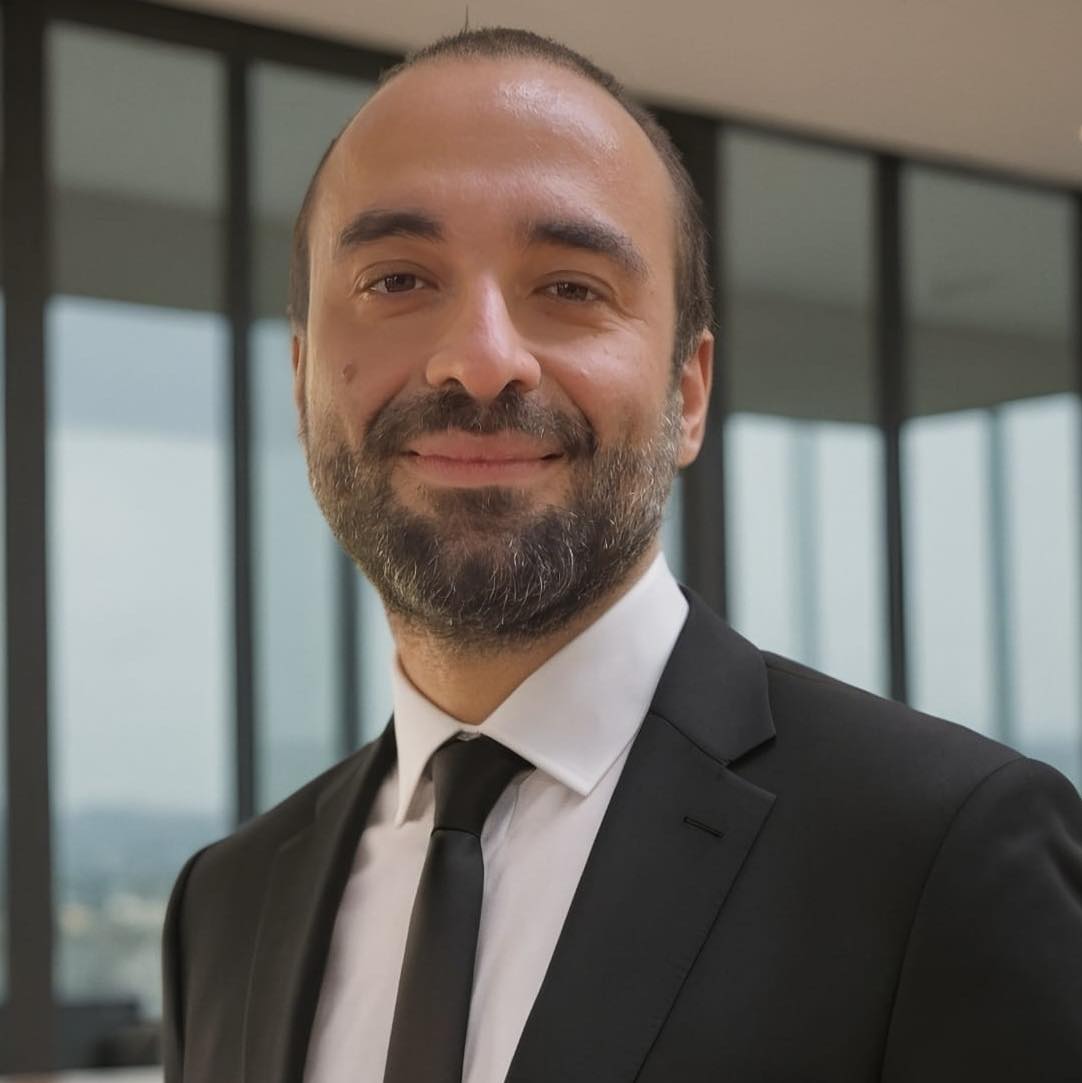
Ali Khalifeh is a university professor and Lebanese political activist.
Israel: a Constellation of Parties Reflecting a Fragmented Political Landscape
A Series of Tight Votes in the Race to Succeed Guterres
In Search of Lebanon, from Beirut to the Vatican
UN: Paris Wants to Replace UNIFIL With a 'Different Type' of Presence
The Abolition of the Death Penalty: Ibrahim Najjar and Élie Keyrouz’s Long Fight
More from Ali Khalifé
View All


More in Politics
View All


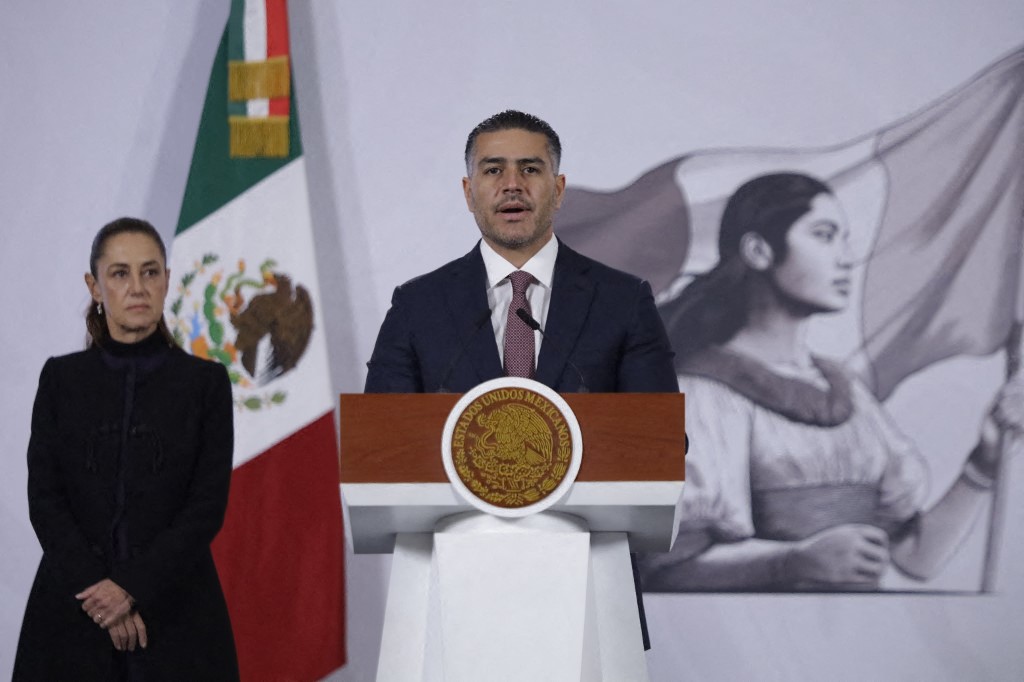

Mexico: after the Elimination of El Mencho, the Calm Before the Storm?

«Remaining»: Rekindle the Memory of the Victims of Political Assassinations Since 2005
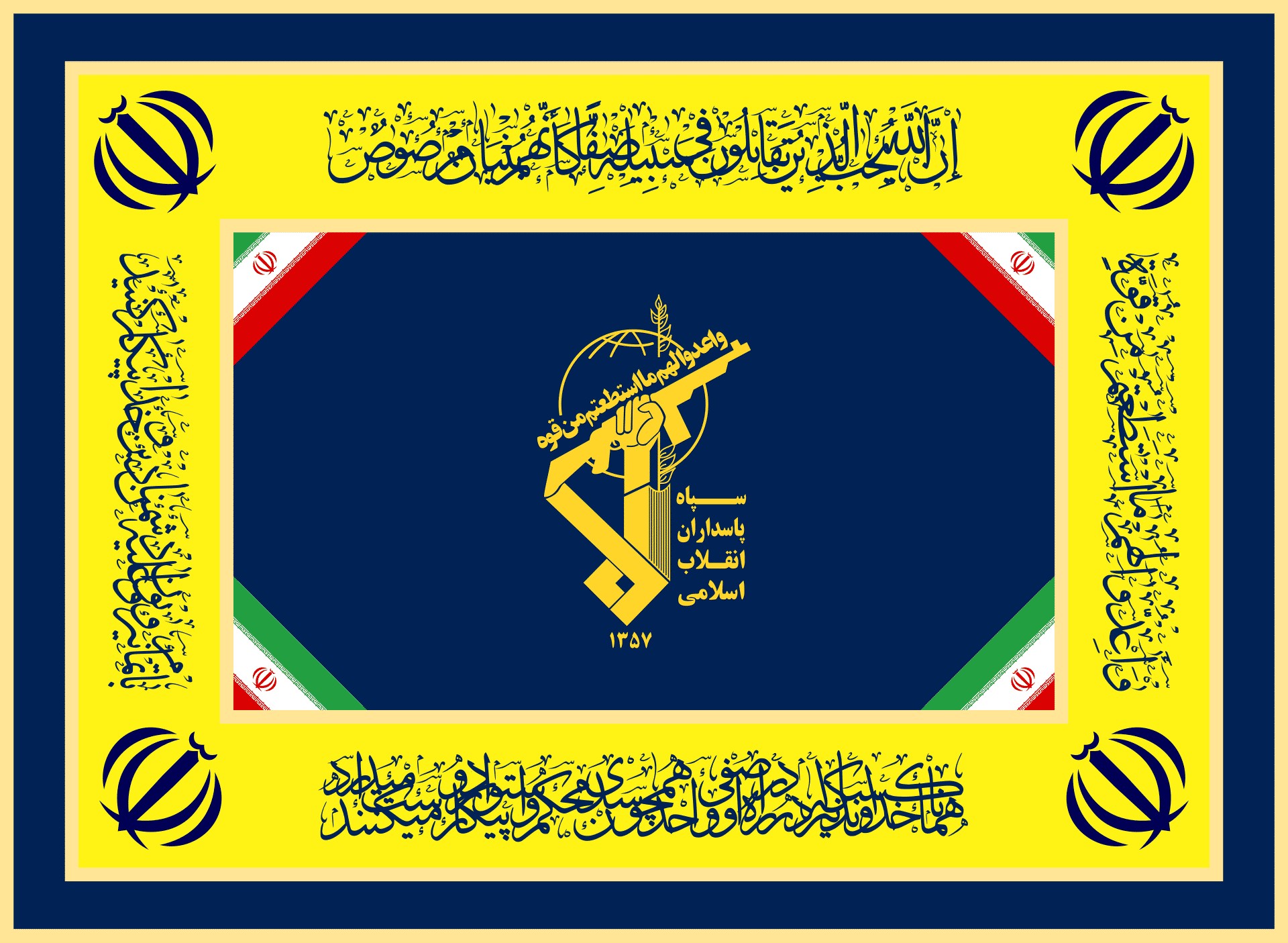
Revolutionary Guards, Supreme Organ of Repression

Tropic Thunder: Understanding US Interventionism in the Caribbean

Tropic Thunder: Understanding US Interventionism in the Caribbean
Latest from Levant Time
View All


