

Sudan's Collapse: War for War's Sake (1/4)

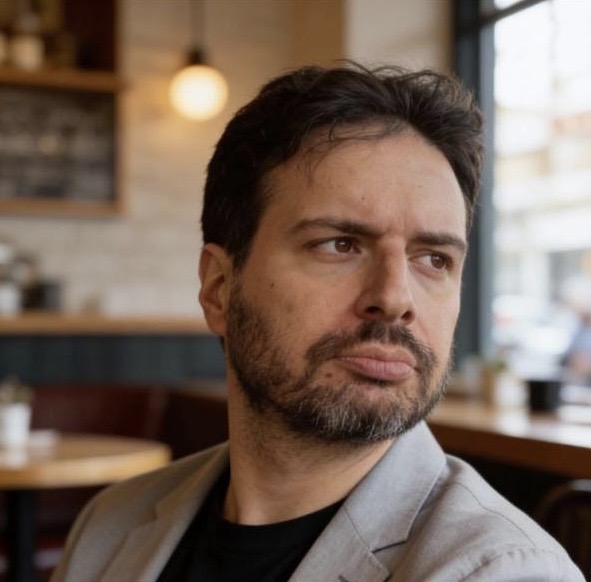
An analytical focus on the war in Sudan which, since 2023, has already resulted in tens of thousands of deaths and millions of displaced people, with a particularly overwhelming human cost in Darfur, where mass violence, sieges, and forced displacement have taken on a dimension that many international actors now qualify as genocidal.
Sudan did not collapse all at once. It unravelled in successive layers, to the rhythm of a war that aims neither at the lasting seizure of power nor the reconstruction of a political order, but the gradual exhaustion of what still remains of the state. Since April 2023, violence has established itself there as a regime in itself, transforming the country into a fragmented space where the long duration of the conflict counts more than any specific military victory.
The confrontation between the Sudanese Armed Forces (SAF), led by General Abdel Fattah al-Burhan, and Mohamed Hamdan Dagalo's Rapid Support Forces (RSF), known as Hemedti, is only the visible surface of a deeper process that erupted in the political vacuum left after the fall of Omar al-Bashir in April 2019, when the alliance of convenience between the regular army and the RSF broke down over the issue of control of the military apparatus, the integration of militias, and the real sharing of power in an already deeply delegitimized state.
It should be recalled in this context that the RSF have their direct origin in the Janjaweed, the Arab militias of sinister memory, mobilized by the al-Bashir regime in the early 2000s to crush rebellions in Darfur. The regime had transformed militia violence into a state tool, legitimizing the Janjaweed as auxiliaries for counter-insurgency, restructuring them from 2013 under the name of RSF, and legally integrating them into the Sudanese security apparatus, while granting them exceptional autonomy.
The RSF are therefore the product of a deliberate strategy by the Bashir regime, aimed at delegating extreme violence to peripheral forces, socially and geographically detached from the center, in order to preserve the regular army from direct exposure to mass crimes. One could say, without circumlocution, that it is the dictator's last poisoned gift to his country.
No structured political project
It would, however, be illusory to read the current confrontation as a strictly internal mimetic duel between another « Tapioca » and another « Alcazar ». Behind the classic scheme of the two « mad generals », each of these armed apparatuses only endures and projects itself because it is part of distinct external support configurations, which condition both the conduct of the war and its entrenchment.
The conflict thus pits a state military apparatus supported mainly by Egypt and Saudi Arabia – with opportunistic capacity support from Iran – against a paramilitary force largely dependent on financial, commercial, and logistical networks attributed to the United Arab Emirates.
What nevertheless favors the classical reading of the mimetic duel between two megalomaniacs in camouflage is that neither side carries a structured political project. But isn't that the prerogative of the entire region? On both sides, there is no question of governing a refounded state, much less rebuilding a social contract. The stake is elsewhere. It is about holding exploitable spaces, securing flows, preserving nuisance capabilities, or preventing the other from transforming a military advantage into exclusive domination. In this context, Khartoum has lost its function as a political capital. Its conquest or reconquest has not changed the general logic of the conflict; it has simply shifted tactical balances without touching the deep architecture of the war.
The RSF understood very early on that international recognition was not decisive. Therefore, their strategy relies more on duration, on integration into regional arms and funding networks, and on the use of extreme violence aimed at producing irreversible effects. Darfur, and particularly the el-Fasher region, illustrates this logic. Prolonged sieges, systematic destruction of displaced persons' camps, organized obstruction of humanitarian aid, and mass sexual violence are less a matter of uncontrolled chaos than a method aimed at permanently dislocating local societies, breaking community solidarities, and causing population displacements that are difficult to reverse.
A war designed to last
It should be noted in this context that reports from international organizations indicate hundreds of rapes committed against children, women, and girls in the context of raids. In this sense, the violence exercised is not only punitive but structuring, in that it redraws the human balances of the territory, modifies local power dynamics, and transforms war into a tool of demographic engineering. Darfur, for example, is not a forgotten periphery of the conflict; it is its dark heart, the place where the most radical forms of a war designed to last are experimented.
Consequently, faced with such dynamics, we must not delude ourselves: the Sudanese army is far from embodying a project of state restoration. It represents nothing more than the survival of an apparatus withdrawn into its traditional strongholds in the north and east and refocused around Port Sudan, which has become the wartime capital and an indispensable facade for international recognition. The partial recapture of Khartoum in 2025 thus allowed for relative military stabilization, but it neither re-established state authority nor reversed the country's fragmentation dynamic.
What we observe, in reality, is the transformation of Sudan into a space administered by war, with the transformation of the state into a disputed label, an institutional shell emptied of any capacity for sovereign projection. The war has not replaced the state; it has simply unsubstantiated it.
In this context, de facto partition progresses without ever being formalized. In the west, the RSF consolidate their territorial control, while in the east and north, the army retreats to a coastal and Nilotic Sudan reduced to its minimal functions. Between the two lies a space of diffuse violence, trafficking, and trapped populations, where political affiliation offers no protection.
The Sudanese conflict thus illustrates a broader mutation of contemporary wars: wars without a political horizon, without a decisive victory, where the objective is not to close the conflict but to control its rents. And as long as this predatory economy remains solvent, the war is destined to continue indefinitely.
Next article: Red Sea, Gulf and Horn of Africa: the regionalization of the Sudanese conflict
In Search of Lebanon, from Beirut to the Vatican
UN: Paris Wants to Replace UNIFIL With a 'Different Type' of Presence
The Abolition of the Death Penalty: Ibrahim Najjar and Élie Keyrouz’s Long Fight
The Testament of Hassan Rifai
A ceasefire... yes, but what happens next?
More from Michel Hajji Georgiou
View All


More in Politics
View All



Mexico: after the Elimination of El Mencho, the Calm Before the Storm?
«Remaining»: Rekindle the Memory of the Victims of Political Assassinations Since 2005
Revolutionary Guards, Supreme Organ of Repression
Tropic Thunder: Understanding US Interventionism in the Caribbean

Tropic Thunder: Understanding US Interventionism in the Caribbean
Latest from Levant Time
View All


