

Michel el-Khoury, or the Nobility of Effacement
Tribute to a great lord of Greater Lebanon

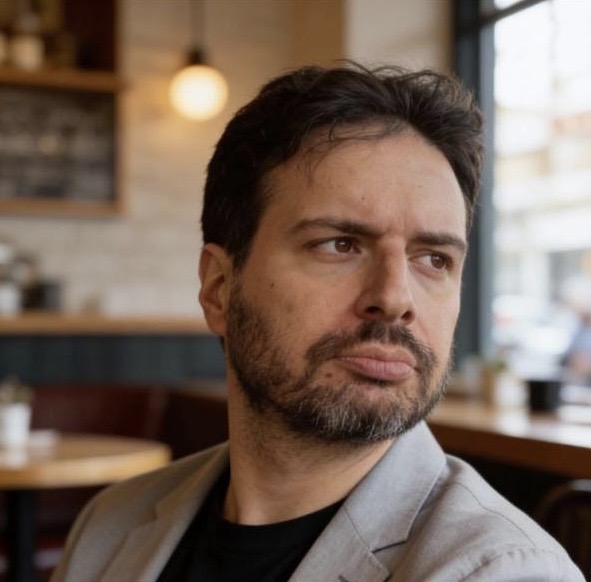
How does one speak of a man who loathed making noise? Who shunned grand gestures and every form of display, even though his brilliance and nobility, much to his own chagrin, were locked in thoroughly unfair competition with his extreme modesty?
The task is particularly difficult. All the more so because the man himself, never fond of the media, interviews, honors or public exposure, would have disapproved of the rather perilous exercise undertaken by the author of these lines.
And yet it is precisely because Sheikh Michel el-Khoury, who passed away on July 4, 2026, just shy of one hundred, had chosen the path of silence and discretion, faithful to his leitmotif that “one must serve rather than serve oneself,” with the state and its primacy taking precedence over everything else, that speaking of him now seems absolutely necessary, at a time when Lebanon is undergoing such profound decay. All the more so because his vision of Lebanon and of its role remains more relevant than ever.
May he show some indulgence toward this attempt, which is less that of a journalist than of a loyal and grateful friend, to bear humble witness to what he was and to what he will remain in memory, if only in the memories of those who had the privilege of knowing him and spending time with him.
The Two “Fathers-References”
Brilliance. Nobility. Silent devotion to the public good, the state and the homeland.
If one had to choose a triptych with which to approach Sheikh Michel’s immensely rich and complex personality, it would be this one.
Béchara el-Khoury, the first president of the sovereign Lebanese Republic, had judged correctly when he once let slip this superb, laconic remark: “My son Michel is a prince. What am I saying, a prince… an archduke!”
Michel el-Khoury was indeed a grand seigneur of Lebanese politics, in the most honorable and graceful sense the expression can hold. A prince in the service of the Republic and democracy… in the irrational age of the mastiffs and wolfhounds of Lebanese politicking, obsessively in pursuit of honors… and patrons.
But could it have been otherwise when the name of his father, Bechara, was inseparable from the independence of Greater Lebanon, and that of his spiritual father, his uncle Michel Chiha, from the Lebanese Constitution?
Escaping the father’s name was impossible. So much so that, even past the age of ninety, and despite an exceptional career in public life and an impressive culture, he would note, with a certain weariness, that the media still continued to saddle him with his father’s first name, as though his own were still not enough…
Fate was ironic. It had never ceased taunting Sheikh Michel, with no regard for his advanced age, his career or his experience.
The Journey of a Rebel
Yet from his earliest youth, the man had fought the very concept of political inheritance and nepotism, which naturally placed him in conflict with his own family.
He certainly admired, respected and was deeply attached to the paternal figure. As an adolescent, he had watched him defy, at the risk of his life, the rifles of the Senegalese soldiers of the French Mandate when, in November 1943, rude, insulting, threatening and violent, they came to the presidential palace in Kantari to take him to the citadel of Rashaya.
The episode remained engraved in young Michel’s memory to the very end, all the more so because his mother, Laure Chiha, suffered a cardiac episode that day, from whose after-effects she would die a few years later. The Mandate authorities had refused emergency assistance to the First Lady: they first had to make sure that the president was in detention… One may therefore say that Sheikh Michel lost his mother as a collateral victim of the struggle for the independence of his motherland, Greater Lebanon… That same mother who had asked him to promise never to enter politics, and to whom he had, quite precisely, promised nothing…
Yet when the head of state, whose close entourage had already been touched by corruption and undermined by clientelism, decided to renew his mandate, the son rebelled and left the family home to seek refuge with his mentor, Michel Chiha, who was himself opposed to Sheikh Bechara’s anti-republican initiative.
Nor was the quarrel confined to the purely familial sphere: in September 1950, Sheikh Michel spoke openly at Michel Asmar’s Lebanese Cenacle to criticize his father’s course. Bear the name, yes. But not at any price.
Here is an excerpt from the lecture:
“We achieved independence. And then what? What has the state of independence done? What has it accomplished in building the state, building the homeland and building the citizen? Nothing. We have gone backwards… to Ottoman habits and colonial practices. We have returned to corruption, negligence and decline… Those born with the independence of 1943 are growing older without our having made the effort, or fulfilled the duty, of bringing them together as true Lebanese… We must eliminate the remnants of the past and this deadly inertia of obsolete methods inherited from the Mandate and earlier periods; we must also remove a moral obstacle: the mentality of ‘divide and rule.’”
The son of independence thus chose… independence.
And it remained a constant, a coherent and assumed choice throughout his career, despite his long-standing affinity with Chehabism. As when, after the war, he decided to resign during his second term as governor of the Banque du Liban because of his firm opposition to Prime Minister Rafic Hariri’s policy of indebtedness. Hariri urged him to remain in office, despite their disagreements and in the name of their friendship. Sheikh Michel’s reply was, as usual, cutting: “It is so that we may remain friends that I am leaving…”
Although he presided for a time over the Destour at the threshold of the civil war, Michel el-Khoury refused to turn it into a traditional party and tried, unsuccessfully, to modernize it. He even dared, ultimate sacrilege, to propose to Raymond Eddé, son of his father’s arch-enemy Emile Eddé, a merger with the National Bloc in order to counter the rise of the militias and the siren call of violence… only to receive an icy reply from the “Amid”: “Never will the son of Émile Eddé place his hand in that of the son of Béchara el-Khoury!”
Raymond Eddé, statesman though he was, was no Charles de Gaulle…
The General, for his part, had shown himself considerably more chivalrous, and more reasonable, when Fouad Chehab, then president of the Republic, entrusted Sheikh Michel with a mission to the Élysée aimed at halting the sale of French-owned land in Lebanon to the Palestinian banker Youssef Baidas. De Gaulle, who rose for no one, received the son of his old adversary standing, surveyed him from the height of his imposing frame and told him in a tone that brooked no reply: “I know whose son you are… One day, you will regret having driven the French out of Lebanon!”
Be that as it may, the French president then facilitated the young emissary’s mission, which proved successful. It was in the wake of that mission that, in 1967, Michel el-Khoury was asked by Jean Kaplan of the Suez Group to take charge of Banque Libano-Française, marking the beginning of a long career in banking.
The Man Behind the Scenes
Michel el-Khoury gradually became the man of subtle political and diplomatic missions, carried out in the shadows, first for Chehab and then for Charles Helou, who entrusted him with the leadership of the strategic National Council for Tourism, which enabled Chehabism to pursue a genuine parallel diplomacy discreetly.
It was a role that suited him perfectly, entirely in keeping with his personality as a servant of the state and a man behind the scenes, far from the glare of the spotlight… even though he also served as a minister, notably as minister of Defense before the Six-Day War.
In that capacity, during meetings with his counterparts and with Arab military officials, he was able to see, from facts and projections alike, that the region’s armies faced a crushing defeat by the Israel Defense Forces in the event of confrontation. The gulf between the reality of the balance of power and Nasser’s populist rhetoric was alarming. The defeat, followed by the extraordinary wave of popular fervor surrounding the Egyptian rais, left a lasting mark on him. He immediately recognized in it one of the region’s most persistent ills: the hold a leader could exert over the collective imagination even in the face of disaster on such a scale…
That discretion, combined with elegance, also ensured that he would be regularly consulted and carefully listened to by foreign chancelleries. Guided by an ethical and political framework whose sole driving force was service to the homeland, its independence, sovereignty and permanence, Michel el-Khoury was undoubtedly one of the rare political figures who asked for nothing for himself… which made him a man worthy of trust. Because he was incorruptible.
An official mission to Ernest Bevin, in Attlee’s Britain, had taught him an unforgettable lesson in this regard. In the aftermath of the war, he had thought, purely as a gesture of courtesy, of offering chocolates to his British interlocutors at a time when the country was still suffering privation. But the gift was returned to him: in a country still subject to restrictions and rationing, public officials would not accept privileges unavailable to ordinary citizens.
Michel el-Khoury remained deeply marked by this. What he admired was not austerity for its own sake, but the almost sacred idea that a public official must be subject to the same rules as everyone else. For a man who would spend his life denouncing clientelism and corruption, the anecdote amounted to a lesson in civic virtue.
Values for Lebanon
But how, then, does one tell the story of a nearly invisible man, a man who, like his great friend, lifelong companion and confidant Fouad Boutros, burned all of his archives before his death so as to leave no trace?
A man who systematically refused to write his memoirs, despite repeated requests from various quarters, including the author of these lines?
A man who left behind only one meditative, intimate, introspective, anguished and sublime work, Ruptures vespérales, strongly evocative of one of his masters, Emil Cioran… and signed with a pen name, Michel Delescure?
Precisely through the values that guided his political action and run through his entire career.
Thus, when speaking of Bechara el-Khoury and Michel Chiha, Michel el-Khoury would express a visceral rejection of the very notion of “tolerance,” contemptible in his eyes, and insist instead on the importance and meaning of “sharing,” which the two men held in common and which he had inherited from them.
This foundational idea of “sharing” no doubt explains the attachment of Michel el-Khoury’s two “fathers-references” to Greater Lebanon, the National Pact and living together. For Chiha, Sheikh Michel explained, the confessional system was ultimately meant to lead toward an inclusive citizenship, not sink into tribal sectarianism.
As for Bechara el-Khoury, according to Sheikh Michel, he had argued in the manuscript of the fourth volume of his memoirs, destroyed during the war in the fire that consumed the Kantari library, that his successor as president of the Republic should be Riad el-Solh, the Sunni prime minister… a sign that the system was not meant to ossify, but on the contrary to evolve, and that what mattered was a specifically Lebanese sense of belonging, not residual affiliations…
Michel el-Khoury would defend this guiding conception to the end.
It also explains his rejection, in Chiha’s spirit, of the State of Israel, which he regarded as the antithesis of Greater Lebanon’s pluralist model and which, in his view, played a pivotal role from its creation in 1948 in sabotaging the young Lebanese state and its development. Indeed, during a visit to the United States in the 1960s, he became embroiled in a public verbal clash with a university professor who, during a conference, openly defended Israel’s designs on neighboring countries… That man would go on to become the all-powerful future secretary of state under Nixon. His name? Henry Kissinger…
It also explains his contempt for populism and for fascistic sectarian excesses within the various communities. Uncompromising when it came to independence and to a certain vision of Lebanon, and capable, when necessary, of silencing an adversary with a single well-aimed retort, Michel el-Khoury was above all a man of mediation, measure and dialogue, faithful to the teachings of his mentor Chiha.
Thus, when President Elias Sarkis sought, through Sheikh Michel, then serving his first term as governor of the Central Bank, to mediate with the Palestinians in order to preserve the continuity and functioning of state institutions, Bachir Gemayel, the dominant Christian strongman in East Beirut, threatened to humiliate him publicly on the grounds that he was betraying Christian esprit de corps.
In the same republican spirit, Michel el-Khoury firmly opposed all para-state and anti-state ventures, from the Syrian occupation to the militias, against whom he once physically placed himself as a human shield to protect the Banque du Liban building and its employees when gunmen attempted to storm it, and later to Iranian influence exerted through Hezbollah.
On February 6, 1984, as the Amal uprising split the army and plunged the capital back into violence, he watched the country unravel and said: “The Pact has shattered.”
On March 14, 2005, violence rekindled a measure of hope after the assassination of Rafic Hariri. The Syrian occupation came to an end, only to be replaced by Tehran’s yoke.
Sheikh Michel, who had been active in the Kornet Chehwan Gathering under the aegis of his friend Patriarch Nasrallah Sfeir, another convinced “Chihist,” joined the March 14 coalition… only to find there the same endemic sickness he had fought throughout his life: struggles for power, sectarian and identity-based retrenchment, and the mediocrity of decision-makers… all of which led to the nightmare of Michel Aoun’s “consensual” election to the presidency of the Republic, in his eyes the quintessence of populism and a symbol of anti-republicanism.
The spirit of Bechara el-Khoury’s independent Lebanon, Michel Chiha’s republican Lebanon and Fouad Chehab’s institutional Lebanon was being trampled underfoot in the service of the personalization of power, demagoguery, populism, and the primacy of blackmail and power politics over democracy and the institutional spirit.
“Without Freedom, Lebanon Is a Fiction”
At bottom, his entire conception of Lebanon rested on a difficult articulation between freedom, pluralism and independence.
A critic of the Lebanese system? Nostalgic for its confessional rigidities? Far from it.
That was not Sheikh Michel’s way. For him, despite its flaws, the system had preserved one irreplaceable good: freedom. Political, intellectual, religious and economic freedom, without which Lebanon, in his eyes, would lose even its raison d’être.
Despite its defects and failings, the pluralism of Greater Lebanon was the guarantor of that freedom, and any project seeking to dismantle it, dilute it, his father had not had Antoun Saadeh executed for nothing, or break it apart under any pretext or name whatsoever, constituted a real threat to that fragile equilibrium standing sentinel over liberty.
“Without freedom, Lebanon becomes a fiction,” he stressed.
Yet that freedom could not survive without evolution. From the 1960s onward, Sheikh Michel advocated a gradual transition away from political confessionalism, the primacy of competence in public administration, civil marriage, and eventually the secularization of the state. But not through revolution.
“It is possible to change the system from within the system itself,” he would say in substance. Any lasting reform required, first of all, a transformation of mentalities through education and citizenship.
For Sheikh Michel, Lebanon possessed something profoundly precious: precisely this ability to enable different communities to live together, what René Maheu called a “style of civilization.” But the country had betrayed that vocation by allowing confessionalism to degenerate into clientelism, identity-based enclosure and an instrument of foreign interference.
The Pact, Yes, but the Human Being Above All
Deeply attached to the Pact, Sheikh Michel faulted its authors for having left it vague, allowing the Lebanese to quarrel over its interpretation while ultimately agreeing never truly to define it. Before the Taif Agreement, he therefore called for a new pact built around new common objectives for all Lebanese, along with a struggle against a form of collective defeatism and the creation of genuine opportunities for progress for all.
“The Pact was a necessary foundation when it was established, but it becomes a negative foundation if one wants to make it the basis for building a nation. The positive foundation necessary for the construction of modern states is not to be found in the Pact.”
For him, the problem clearly did not lie in texts alone, but in people.
“We must accelerate the citizen’s apprenticeship of citizenship, so as to make him a good citizen; then it will no longer be impossible to build a good homeland,” he wrote in 1970.
He added: “The fundamental need is to create a party based on a doctrine, bringing together the different components of which Lebanon is made. If such a party existed today, I would be the first to join it. I would have assumed my share of responsibility and fulfilled my duty in this field.”
“The system needs great undertakings: first will, then education, then morality (…) I have found that change and reform must begin in school, in the family environment, through education.”
Above all, citizenship required that every Lebanese be able to “feel well,” meaning that he or she must enjoy living conditions capable of strengthening attachment to Lebanon, he noted.
“The Pact of 1943 cannot endure for long if one of the groups that accepted it is condemned to a difficult life. (…) A person becomes attached to his homeland only if he finds there the conditions that allow him to live decently.”
And he stressed: “It is not enough for Lebanon to be a living example of Muslim-Christian coexistence; Christians and Muslims must also possess a permanent and certain will to remain Lebanese.”
By the 1970s, however, his judgment of political leaders was already unsparing:
“We sometimes demand the impossible even though we know it is impossible, and yet we continue to demand it. Why? Because some people do not really want to do anything.”
A Neutrality Inseparable from Living Together
Above all, Sheikh Michel defended a singular conception of Lebanese neutrality. Not isolation, but precisely its opposite: Lebanon’s ability to be present in several worlds at once, Arab without being absorbed, open to the West without being subordinated to it, speaking to everyone without becoming anyone’s satellite.
A neutrality of openness and sovereignty.
“But for that, Lebanon must produce and know what it is,” he would say, and above all remain itself.
Years later, he added: “Lebanon is a frontier running through every Lebanese. But that frontier is also a weld.”
In other words, pluralism and living together enriched the Lebanese individual with a complex personality, enabling him to feel and think with members of other communities through a model of empathy, potentially defusing what Amin Maalouf would later call “murderous identities.”
That, for him, was the true Lebanese way of being.
More than half a century later, this “Chihist”-inspired formulation of Lebanon’s vocation, in a world increasingly sealed into identity-based enclosures, remains strikingly relevant.
The vision of positive neutrality that Michel el-Khoury formulated at a lecture at the Lebanese Cenacle in May 1961 bears a remarkable resemblance to the way this principle remains vital to Lebanon’s survival in 2026: protection from other people’s wars, far removed from any temptation toward autarky, while preserving an active Lebanese role in its environment.
The Debt of Loyalty
But one story perhaps best illuminates the importance Sheikh Michel attached to empathy and alterity in his conception of politics, in keeping with the integral humanism defended by Chiha.
It concerns his traumatic experience in Iraq under President Chamoun, which taught him, in a far more brutal fashion, a fundamental lesson in the ethics of life.
He had just lunched in Baghdad with the young King Faisal II, for whom he was supervising a construction project, when, on July 14, 1958, the revolution overthrew the Hashemite monarchy in blood. Michel el-Khoury then saw workers on the construction site erecting gallows for the royal family. One worker confided to him that one of them was intended for him, because he was “a friend of the king”…
The chief engineer of the site saved his life by rushing him straight to the airport.
Back in Beirut, he realized that night that his hair had turned white: he had not felt fear in the moment, but the body, for its part, had kept the account.
Years later, when his providential savior in turn found himself in danger, imprisoned and sentenced to death in Iraq, Sheikh Michel mobilized his connections, notably through Fouad Chehab, to obtain his pardon and enable him to leave the country. He succeeded, at least for a time: the man was later assassinated after returning to Iraq.
For Sheikh Michel el-Khoury, a debt of loyalty is never extinguished.
It was a maxim he would make his own in both his personal life and his political conduct.
Nearly half a century later, he continued to speak of that man with a troubling mixture of gratitude and anxiety, still wondering whether he had proved worthy of the man who had saved his life.
Nobility of soul either exists or it does not.
It cannot be invented.
Perhaps that, in the end, was what Bechara el-Khoury had glimpsed when he called him an “archduke”…
The Renaissance Man
Michel el-Khoury was also a man of almost disconcerting breadth and eclecticism of culture. Names would surface casually in conversation, without his ever thinking to derive prestige from them: Chaplin, whom he met in London, Cioran, Stockhausen, Hélène Carrère d’Encausse, among so many other writers, artists, thinkers and distinguished figures from the political, religious, social and cultural worlds.
He could move effortlessly from a discussion of the Lebanese Constitution to contemporary music, from Chiha to Paul Valéry. During a trip I made to Sète in 2018, he asked me to pay my respects in his name at Valéry’s grave, another of his masters.
Sheikh Michel, the gentleman always impeccable in his refinement, had no need for displays. He had no need to be demonstrative. No greed, no hunger for honors or recognition.
Ruptures vespérales, the only intimate trace he left behind, instead reveals a man haunted by solitude, identity, time and, above all, absence.
“It is fear, in the end, that makes me write, a phobia of absence,” he confesses there.
Every word he traced thus became, in a sense, a weapon against erasure.
There is something both strange and moving in the contradiction: Michel el-Khoury, who feared absence and struggled against nothingness, nevertheless refused to organize his own posterity. Or perhaps, quite simply, living itself, the acts of life he left behind in the memories of those close to him, was the only posterity he needed, one worth far more than the trappings of an illusory glory recorded on perishable paper…
For this Renaissance man, almost universal in his curiosities, writing thus became a form of existential resistance.
Lebanon’s Death in His Soul
Can one live, for better and for worse, until one no longer wishes to?
At ninety-five, Michel el-Khoury would say to his rare visitors: “My friends are no longer of this world. I have long outlived my time on earth. But Death does not want me…”
His political disillusionment had been immense. From his youth onward, he had tirelessly denounced less the imperfection of institutions than the mediocrity of those who distorted them.
“Too many people serve themselves, and too few serve.”
Perhaps his entire political disillusionment was contained in that sentence.
His former classmate Hassan Rifai, who had shared the same school bench with him at La Sagesse, would reach much the same diagnosis in his own way before his death in September 2025. Fouad Boutros did too. And Samir Frangié, who had already been battling cancer for some time, chose, after March 14’s capitulation to Hezbollah and the compromise that brought Michel Aoun to the presidency of the Republic in 2016, to withdraw from everything and return home to die, deeply wounded by political disillusionment and bitterness.
Along with a few others, they belonged not to a generation miraculously spared populism, for their era had more than its share, but to another political tradition, one synonymous with restraint, competence, devotion to the state and the conviction that dialogue remains a foundational element of politics.
But Michel el-Khoury’s disillusionment eventually reached something far deeper than politics.
In September 2020, during the centenary of Greater Lebanon, one month after the Beirut port explosion, he confided to me over the telephone:
“I am no longer proud to belong to this Lebanon. I no longer recognize myself in it at all. I do not want to rest in Lebanese soil. I wish to be buried in France.”
Coming from the man who had written that “Lebanon is an act of faith before it is a political formula,” those words carried the violence of an intimate rupture.
The tragedy of losing the motherland had struck once again.
Michel el-Khoury left this world on tiptoe. He withdrew behind the doors of his home when his body could endure no more, then faded away as he had served: with complete discretion.
During our last telephone conversation, he swallowed back his sobs before telling me: “Michel, wherever I go, you will always be with me, and I know that I will always be with you.”
Sheikh Michel had spent his life erasing his traces.
But, may he forgive me, he did not succeed, and never will, in erasing that trace.
The Sayyed Who Showed the Way
Mohammed Hussein Shamseddine, that Unknown Soldier
Mohammad Hussein Shamseddine, a Shia mind behind March 14
Salma Merchak, Resistance Through the Enlightenment
The story of Salma Mershak, who waited 5 years for justice for her son Lokman
Mais de Michel Hajji Georgiou
Ver tudo


O mais recente do Levant Time
Ver tudo


