

Simon Karam... When National Memory Becomes a Negotiating Asset

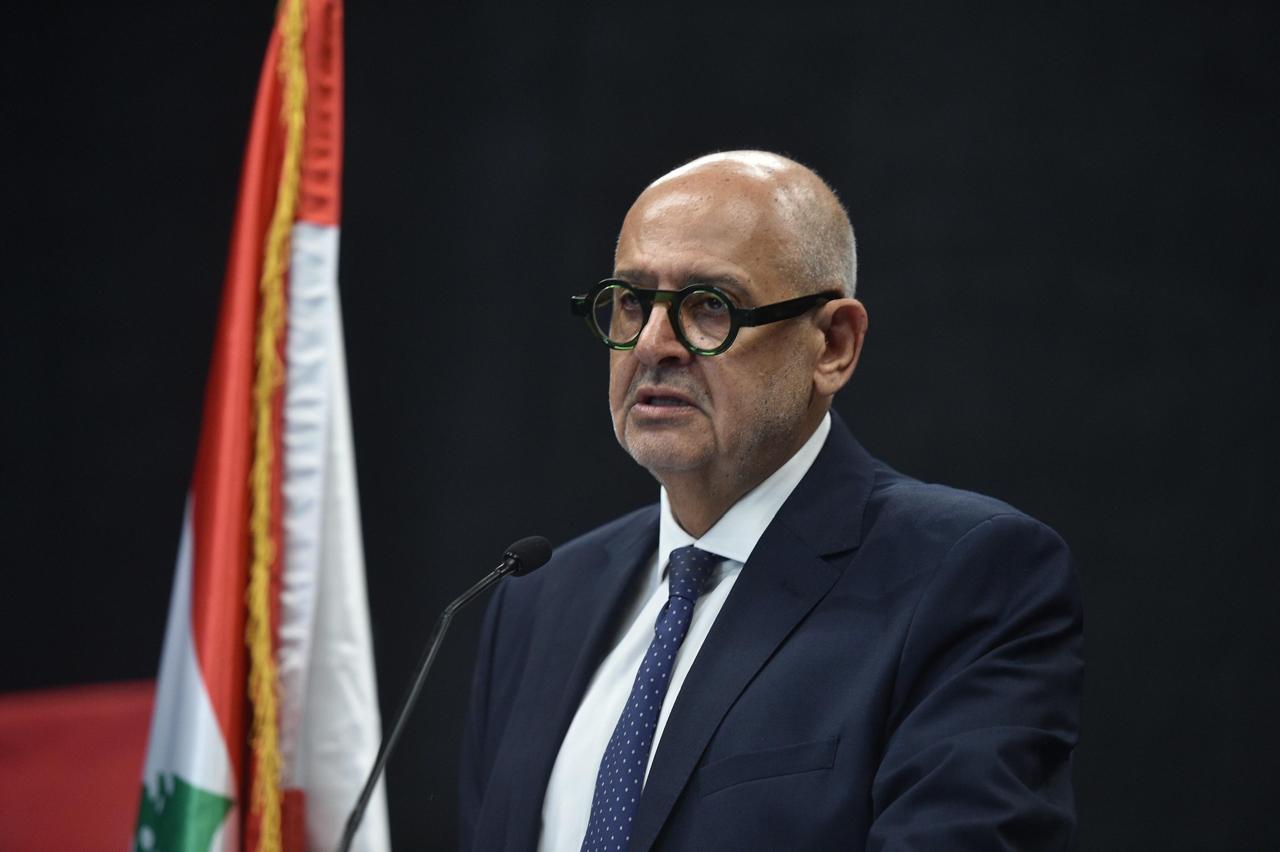
At pivotal moments in history, a nation’s strength is measured not only by its military capabilities, but also by the caliber of those who represent it. High-stakes negotiations are not merely technical discussions about maps or security arrangements. They are a test of a state’s ability to defend its historical narrative while shaping its future.
It is in this context that Ambassador Simon Karam stands out as one of the leading figures of Lebanese diplomacy. His authority rests neither on eloquence nor media visibility, but on quiet composure, rigor, and the integrity of a statesman who measures success by what he accomplishes for his country rather than for himself.
Throughout his career, Karam has demonstrated genuine independence in both judgment and conduct. He has never regarded public office as a personal privilege, nor has he hesitated to relinquish it when it conflicted with his convictions or with what he believed to be consistent with his principles. This was reflected at several stages of his political and institutional career, culminating in his resignation as Lebanon’s ambassador to Washington, affirming that principles must always take precedence over office.
The significance of that decision becomes even clearer when viewed alongside comparable diplomatic careers, where many diplomats choose to remain in office despite political disagreements. By contrast, Karam’s resignation sent a clear message: office is not an end in itself, but a means of serving the national interest. That choice has since afforded him greater freedom in any advisory or negotiating role, as he operates neither under the constraints of career considerations nor personal ambitions.
This background lends him additional credibility in negotiations. A negotiator who is not bound to his position enjoys greater freedom to defend the national interest and is less constrained by concerns over preserving office. Similar forms of independence have been evident in numerous international experiences, where former diplomats have played decisive roles in sensitive negotiations after leaving official positions, drawing on their expertise without being subject to direct administrative constraints.
In addition, Ambassador Karam possesses an extensive knowledge of southern Lebanon, particularly the history of Jabal Amel. That knowledge extends well beyond geography or historical documentation. It encompasses a deep understanding of Ameli society, its social and political history, and the role played by its elites and leading figures in shaping an important part of Lebanon’s national identity.
The value of this expertise lies in the fact that it is not merely theoretical. It is grounded in decades of close observation of southern Lebanon’s evolution through a series of defining moments, from the period following the Israeli invasions to the profound political and security transformations the region has undergone over recent decades. This long experience enables him to grasp the dynamics of both the land and its people with greater depth, an essential asset in any discussion concerning borders, security arrangements, or the future of regional stability.
For example, in any discussion of the Blue Line or disputed border points, familiarity with international legal texts alone is not enough. Understanding the reality of border villages, the extended families whose lives span both sides of the frontier, and the lived experience of communities shaped by successive conflicts becomes indispensable to building a negotiating position that is both realistic and sustainable. It is precisely here that the value of Karam’s background becomes apparent, allowing him to bridge legal principles and social realities on the ground.
This interest in southern Lebanon is not a recent development. It is an integral part of his intellectual and cultural formation, leading him to view its history as a living component of Lebanon’s national memory rather than as a mere account of the past.
This knowledge assumes particular importance in negotiations concerning borders, security, and the future of southern Lebanon, where the land cannot be reduced to lines on a map, but embodies a history, rights, and experiences accumulated over generations. Comparable experiences elsewhere have shown that negotiations which overlook the historical and social dimensions often produce fragile agreements, whereas incorporating those dimensions helps lay the foundations for more durable and lasting settlements.
International experience has likewise shown that the most effective negotiator is one who combines law, history, geography, and politics, rather than confining the discussion to technical considerations alone. It is this tradition of diplomacy that Simon Karam represents, viewing profound knowledge not simply as an intellectual asset, but as a genuine source of negotiating strength.
This dimension becomes even more significant at a particularly sensitive regional moment that could reshape the balance of power in southern Lebanon and open the way to new approaches to regional relations, where a nuanced understanding of both the territory and its people becomes an integral part of the broader equation of security and stability.
From this perspective, the Lebanese delegation does not represent a particular political camp, but the Lebanese state in its entirety, together with its institutions and its history. The presence of experienced and independent figures such as Ambassador Simon Karam strengthens the delegation’s credibility and reinforces its negotiating position, particularly on issues where historical awareness must go hand in hand with legal precision.
Whatever the eventual outcome of these negotiations, one fact remains constant: if Lebanon is to play an active role in shaping its own future, it needs statesmen who combine integrity, experience, and a profound knowledge of the country’s history.
In this respect, Simon Karam embodies the convergence of independence, experience, knowledge, and commitment. His presence in any negotiating process reflects more than personal stature. It expresses a broader vision of the state itself: a state rooted in its history, represented by those who place principle above office, and one that sees diplomacy first and foremost as an instrument for defending rights before it becomes a means of managing balances of power.
The Nobel Prizes and the Search for a Glimmer of Light in Human Behavior
Iran: Executions of young people, a favored tool of repression
A Chinese Perspective on Lebanon's Collapse
Dahr el-Baidar Explosives: Toward the End of Complacency?
Lebanese Moderation Needs a Project
More from Jad Akhawi
View All


More in Analyze
View All


Latest from Levant Time
View All


