

Lebanon Between Arms and Negotiations
Will It Reclaim Its State or Remain a Theatre of Wars?

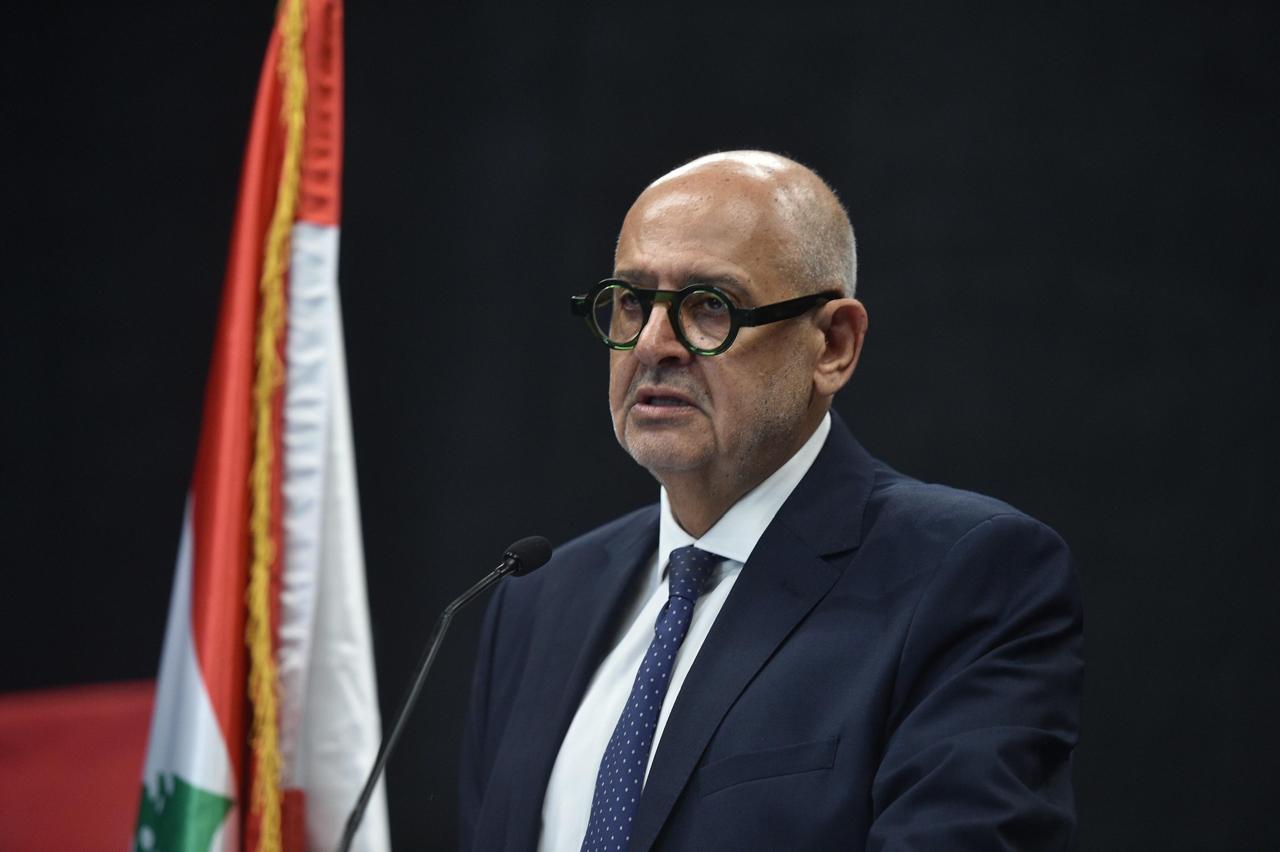
In a moment of extreme regional complexity, Lebanon finds itself confronted with an existential question that goes far beyond the daily calculations of politics and the country's traditional fault lines: what does it seek to obtain from any eventual negotiations with Israel, what can it offer, and does it even possess, internally, the capacity to honour whatever commitments might emerge? These questions have long ceased to be theoretical. They are now directly bound up with the fate of the Lebanese state, with the prospect of hundreds of thousands of its citizens returning to their villages, and with the country's ability to emerge from its condition as an "open theatre of war" and accede at last to the rank of an ordinary state, sovereign over its borders and its decisions.
The fundamental problem confronting Lebanon today lies not only in the war itself, or in the threat of war, but in the absence of a state capable of imposing a coherent national vision. For many years now, the country has lived under the yoke of a lethal duality: on one side, a formal state possessing its institutions, its constitution and its international legitimacy; on the other, a military and security reality endowed with an autonomous capacity to take sovereign decisions bearing on war and peace. It is precisely this duality that renders any future negotiation so thorny, for the international community does not merely ask what Lebanon wants — it also asks who actually holds the power of decision.
In the context of serious negotiations, what would be required of Lebanon is not "gratuitous concessions," as some attempt to frame it, but a clear vision of a state determined to recover its sovereignty and its equilibrium. That begins with the affirmation of a fundamental principle: the exclusive monopoly over decisions of war and peace must rest in the hands of the Lebanese state alone. No state can negotiate in good faith when its security decisions are distributed between official institutions and parallel military forces. Any genuine negotiating process will therefore be inextricably linked to the question of arms outside the state framework — not merely because Israel or the international community raises this file, but because the emergence of a normal state in Lebanon has become impossible without addressing this structural dysfunction.
This is where the great dilemma reveals itself. Can the Lebanese army, on its own, resolve this equation? The realistic answer is that the question far exceeds any purely military capacity. The arms file in Lebanon is not a simple security matter capable of being settled by a field decision or an internal confrontation; it is entangled with confessional balances, regional conflicts, the relationship between Hezbollah and Iran, and the open conflict with Israel. Any attempt to impose a solution through internal force risks propelling the country toward a comprehensive explosion threatening the army's own unity and reproducing scenes of civil war whose scars the Lebanese have not ceased to carry.
This is not to say the Lebanese army has no role — quite the contrary. The military institution remains the sole national entity capable of serving as guarantor of stability, provided it is given the requisite political umbrella and the necessary capabilities. But it cannot be converted into an instrument of internal confrontation without a unifying political decision and sufficiently broad domestic support. Any serious approach to the arms file therefore requires a progressive national strategy: one that begins by strengthening the state itself, building up the army's capacities, and subordinating any security transition to a wide internal consensus and a broader regional settlement.
For reality compels the acknowledgement that the power of Hezbollah derives not only from within Lebanon, but from its membership of a regional axis led by Iran. Any radical change in this file will consequently be conditioned by the future of Iranian-Israeli relations and the nature of the international arrangements taking shape across the region. Reducing the question to the slogan of "disarmament by force" is therefore unrealistic — just as the perpetuation of the status quo is no longer viable for the Lebanese state.
There is, moreover, a file of at least equal urgency — perhaps the most pressing for the Lebanese today: that of the South, the displaced, and the ravaged villages. Thousands of Lebanese families are living a continuous uprooting, the consequence of war and border tensions. The question that imposes itself with force is this: can Lebanon, in the framework of any eventual negotiations, extract from Israel guarantees of withdrawal and the return of the displaced?
Theoretically, yes. It is legitimate for Lebanon to demand a cessation of military operations, an Israeli withdrawal from any point it occupies, and the safe return of inhabitants to their villages. But the historical experience of the region has amply demonstrated that "promises" alone are insufficient. The Middle East is strewn with fragile agreements and arrangements that have collapsed at the first shift on the ground or in the political landscape. Real guarantees require far more than political declarations or verbal understandings.
Should Lebanon engage in a negotiating process, it will need an explicit, written agreement incorporating precise timetables and mechanisms for monitoring and implementation. It will need genuine international sponsorship and guarantees from actors capable of exerting real pressure — the United States, France and the United Nations. The strengthening of UNIFIL's role, or of any other international monitoring mechanism, will be equally indispensable to ensure mutual compliance with a ceasefire and to prevent the rapid collapse of any agreement.
But even if security guarantees were to materialise, another battle no less decisive would present itself: reconstruction. Returning does not mean simply reopening the road to the village; it means rebuilding homes, infrastructure, schools, hospitals, and securing the minimum conditions of a normal life. Any serious negotiation must therefore imperatively link the security dimension to a plan of economic support and reconstruction for South Lebanon — failing which, any return would remain illusory and precarious.
The difficulty in Lebanon is that a large part of the internal debate is conducted with a mentality of absolute slogans. Some regard any negotiation as capitulation; others imagine that a solution will come through a swift internal confrontation settling everything at once. The reality is infinitely more complex. Lebanon is not, today, in a position to afford great adventures — military or political. The country is in the throes of economic collapse, its institutions are exhausted, and Lebanese society itself is divided, frightened and worn down after years of accumulated crises.
Any realistic approach must therefore set out from a fundamental objective: the reconstruction of the Lebanese state itself. The real problem lies not only in the existence of an Israeli threat or an Iranian influence, but in the weakness of the state, which allowed Lebanon to be transformed into an open space for regional conflicts. When the state is failing, all external settlements are temporary and all truces are destined to implode.
The greatest challenge facing Lebanon is therefore not simply how to negotiate with Israel, but first how to recover its national decision-making capacity. For the real negotiation does not begin around a table; it begins when the state exercises genuine authority over its territory, its borders and its institutions. Only then can any agreement transform itself from a fragile truce into a lasting stability.
Lebanon has no use for slogans of illusory victory, nor for discourses of surrender. What it truly needs is a state project: a state that protects its borders through its army, that prevents its territory from being converted into a platform for others' wars, and that guarantees its people the natural right to security, stability and life. All future negotiations must be measured against this single criterion alone: do they bring Lebanon closer to statehood, or do they return it to the logic of arenas of confrontation, regional axes and endless wars?
From the Clash of Civilizations to the Security of Humanity
Who, then, claimed the annexed Golan?
Lebanon: Is Neutrality the Next Project?
But Who Are These Houthis Threatening Freedom of Navigation?
We Do Not Want a Lebanese Hashd al-Shaabi
More from Jad Akhawi
View All


More in Opinion
View All


Latest from Levant Time
View All


