

Lebanon after the holidays: a postponed war or a suspended peace?

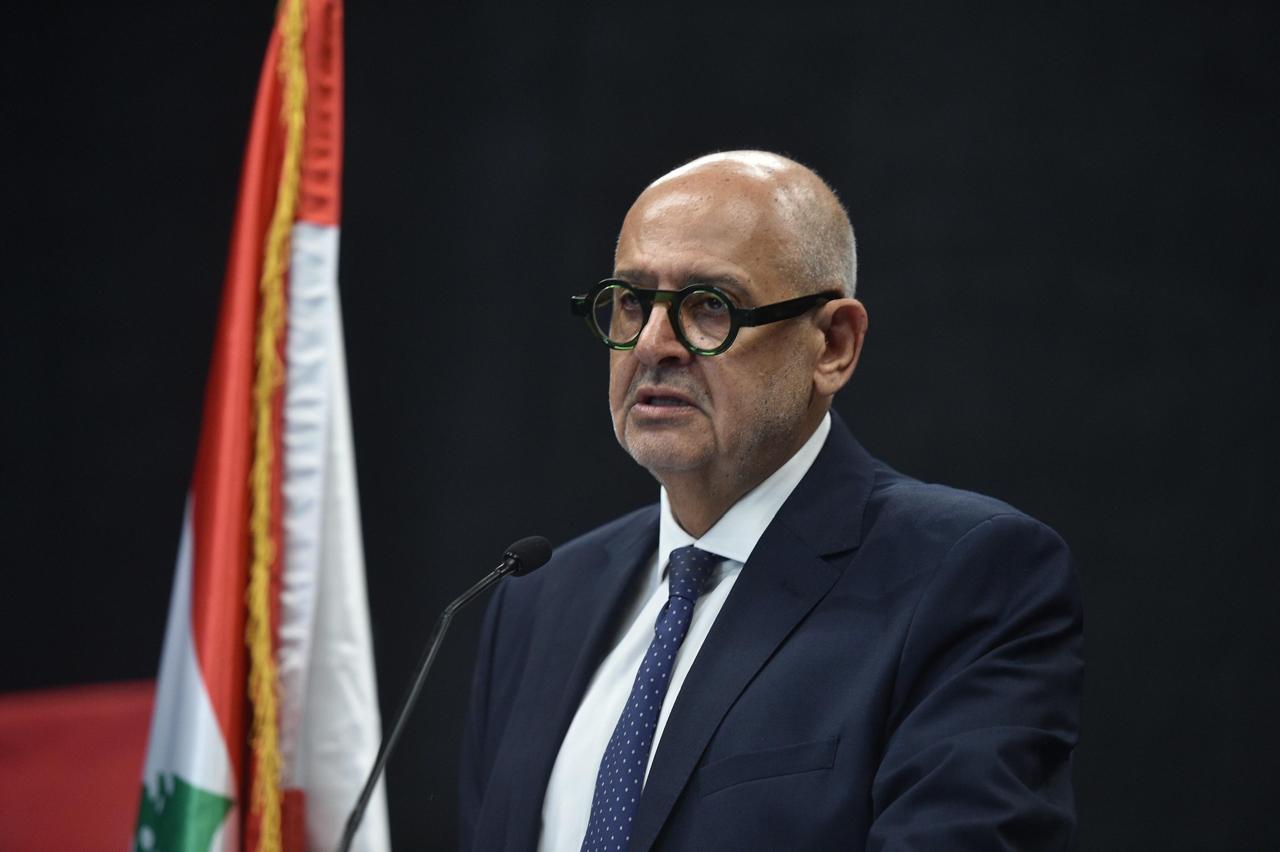
As the holidays come to an end, anxiety once again settles over the Lebanese, crystallizing around a question that has become existential: is Lebanon heading toward a new war, or will the country remain trapped in a fragile truce, liable to collapse at any moment? Yet this question, as crucial as it is, no longer suffices on its own. Behind it looms a deeper, more perilous one: if military initiative comes from the Israeli side, and Hezbollah has refrained from responding since the ceasefire, is this a sign of incapacity or of choice? And who, in the first place, holds the right to decide matters of war and peace in Lebanon?
Lebanon today is not living through an all-out war, but neither is it enjoying genuine peace. It is stuck in a dangerous gray zone, where de-escalation does not amount to stability, and escalation falls short of a full-scale explosion. This gray zone, which the Lebanese have grown accustomed to, silently drains the country and keeps it suspended in a constant state of waiting for whatever may come from outside.
On the ground, there is no denying that southern Lebanon remains an open arena. Israeli violations continue in various forms, from targeted strikes to carefully calibrated military and security messages. Israel, in this context, is not waging a comprehensive war; rather, it is pursuing a policy of testing limits: testing the adversary’s ability to respond, the boundaries of its patience, and the possibility of imposing new rules of engagement through faits accomplis.
Conversely, Hezbollah’s refusal to engage in a broad response since the ceasefire has emerged as a central element in public debate. Some interpret this behavior as weakness or incapacity, but such a reading is overly simplistic, to the point of being misleading. Has the party, in terms of military and organizational capabilities, suddenly lost its ability to respond or to take the initiative? Has its structure disintegrated? Has its weaponry vanished? Has its deployment ceased to exist? These questions alone make it impossible to reduce the situation to mere military incapacity.
The fundamental distinction here lies between capability and decision. War is not a technical matter; it is, above all, a political choice. Hezbollah’s stance at this stage appears as a decision to wait, not a decision to confront. This restraint is governed by clear regional considerations. The party is part of a broader axis led by Iran, and this axis does not see any interest, at present, in igniting the Lebanese front. The priority, until further notice, is to manage the conflict rather than expand it, to regulate engagement rather than break it, and to use arenas as instruments of political pressure rather than as fields of military resolution.
Alongside the regional factor stands the internal Lebanese factor, which is no less significant. Any large-scale war would exact its cost from a country already in collapse: a paralyzed economy, an absent state, dismantled institutions, and a society exhausted to the point of near helplessness. Hezbollah, whatever its regional calculations may be, is fully aware that a new war would place it in confrontation not only with Israel, but also with a Lebanese reality incapable of bearing further destruction, and perhaps even with its own supportive environment.
At the same time, it cannot be ignored that this restraint carries a political and moral price. The continuation of Israeli strikes without a clear response raises serious questions about the very notion of deterrence and weakens the narrative of a “balance of terror.” It also deepens the Lebanese sense that their country is exposed, that military decision-making is detached from the state, yet simultaneously subject to no national accountability.
As for talk of peace, it too requires careful scrutiny. What Lebanon is experiencing is not peace born of a settlement or an agreement; it is a peace of necessity. A de-escalation imposed by regional and international balances, not by a sovereign Lebanese will. By its nature, this kind of peace is fragile, because it is tied to the calculations of others rather than to the interests of the Lebanese state or its stability.
Here lies the core dilemma: Lebanon is neither a decisive actor in war nor in peace. It is an arena upon which conflicts are managed, not a state seated at the decision-making table. It lacks the ability to impose its conditions, and even to protect itself politically before it can do so militarily. This absence is the real danger, and it is what renders the question of war or peace incomplete unless it is linked to the rebuilding of the state and its role.
After the holidays, in all likelihood, we will not witness a full-scale war, nor will we live in a stable peace. We will remain in the same gray zone: no war that is resolved, and no peace that is built. Israel tests and pressures, Hezbollah “contains and waits,” and Lebanon pays the price of waiting.
The issue is not whether Hezbollah is capable of responding or not, nor whether Israel will escalate today or tomorrow. The deeper question is this: how long will decisions of war and peace remain outside the framework of the Lebanese state?
For without a capable state, Lebanon will remain suspended between a postponed war and a fragile peace, hostage to balances it does not control, and a society that merely hopes that “the worst does not happen,” rather than aspiring to a secure and stable future.
From the Clash of Civilizations to the Security of Humanity
Who, then, claimed the annexed Golan?
Lebanon: Is Neutrality the Next Project?
But Who Are These Houthis Threatening Freedom of Navigation?
We Do Not Want a Lebanese Hashd al-Shaabi
المزيد من Jad Akhawi
عرض الكل


المزيد في Opinion
عرض الكل


الأحدث من Levant Time
عرض الكل


