

Large-Scale US Threats and Strikes Shake Iran
IAEA reveals secret nuclear activities under the Assad regime


The United States launched major strikes against Iran on Tuesday night for the second time in a matter of days, with CENTCOM announcing that it had "begun operations against targets belonging to the Islamic Revolutionary Guard Corps."
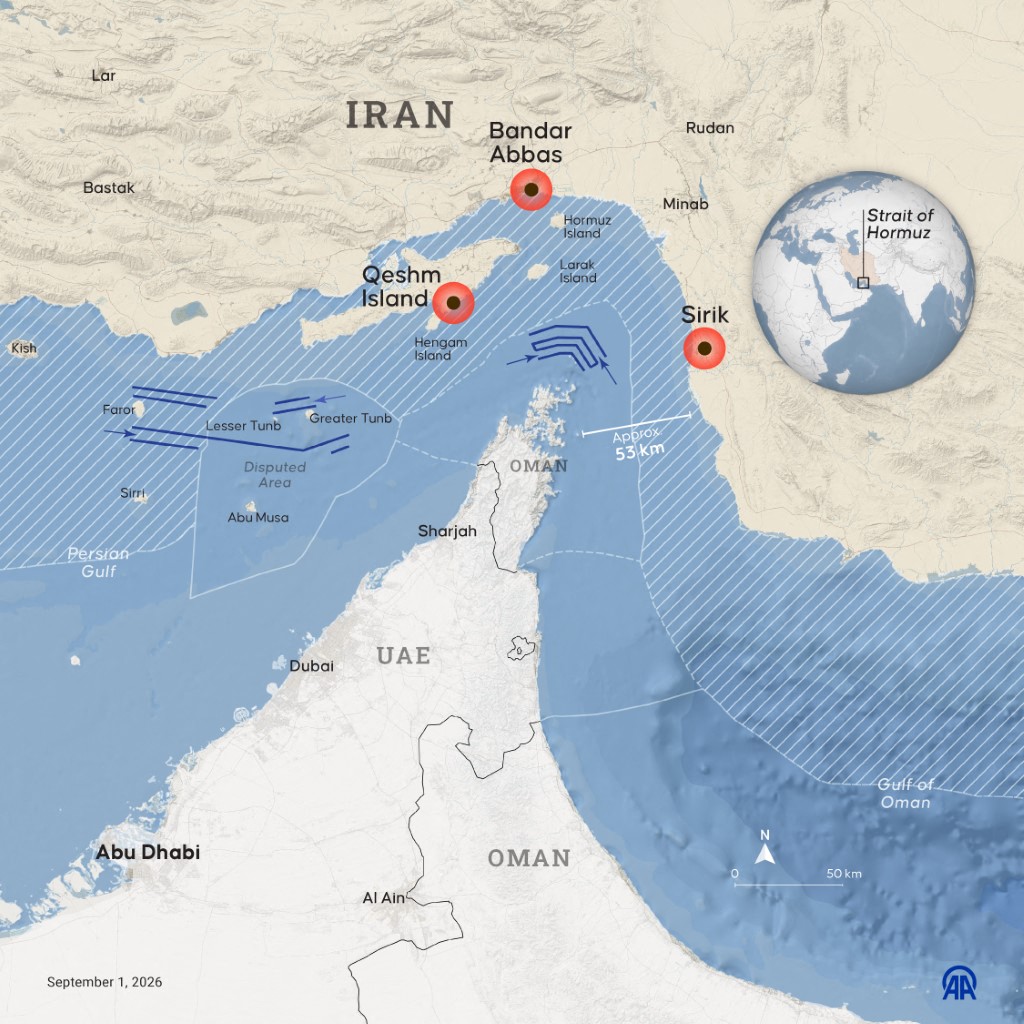
U.S. President Donald Trump went so far as to threaten an even more devastating future attack: "If the failing nation of Iran retaliates against this perfectly justified attack, it will be struck again, far harder," he wrote on his Truth Social platform.
Despite the American warning, Tehran in turn announced a "decisive" response, directly threatening U.S. interests: "American bases and interests in the region are being targeted by Iranian missiles and drones."
The U.S. strikes began shortly after Iranian President Massoud Pezeshkian called for a revival of diplomacy, which has now reached a complete standstill. Urging the United States to honor a compromise signed in June that almost immediately fell apart, he stated: "If the United States returns to its commitments under the memorandum of understanding (...), the Islamic Republic of Iran will immediately take reciprocal measures."
But on Fox News, President Trump quickly fired back, noting that "the deal with the Iranians isn't even worth the paper it was written on," before adding: "We gave them many chances."
The Iranian president was speaking at a Shanghai Cooperation Organisation (SCO) summit in Kyrgyzstan, Central Asia, which was also attended by Russian President Vladimir Putin and Chinese President Xi Jinping — two major allies of the Islamic Republic whom Washington suspects of violating the economic and military embargo imposed on Tehran.
IAEA reveals Assad regime's secret nuclear activities
On a separate matter, the International Atomic Energy Agency (IAEA) revealed yesterday, in a confidential report, that Syrian authorities under Assad had been conducting undeclared nuclear activities. Infrastructure discovered in Deir Ezzor, Syria, is "consistent with that of a nuclear reactor," the IAEA stated, emphasizing that these activities carried out under Bashar al-Assad's regime had never been declared.
IAEA inspectors visited two sites last month — one in Deir Ezzor and another at a second location linked to nuclear materials identified by Syria's new authorities.
In addition to the "nuclear reactor under construction," the IAEA identified a factory for manufacturing nuclear fuel intended for the reactor, as well as a storage site and uranium waste.
On August 18, the IAEA and Syrian authorities announced the discovery of "several tons of nuclear materials" at an "undeclared" site, described as a "legacy of the former regime" and reported in July by the Damascus authorities.
In its report reviewed on Tuesday, the IAEA said it found approximately 73 tons of natural uranium, including 55 tons in the form of fuel rods, with the remainder consisting of waste.
Israel acknowledged in 2018 that it had bombed the site eleven years earlier, claiming to have targeted a nuclear reactor under construction.
In 2008, less than a year after the strike, U.S. officials accused Syria of having sought to build a secret nuclear reactor with North Korea's assistance, stating that Israel had destroyed it during the raid.
European advisers for the Lebanese army
On the local front, the European Union will launch a Lebanese army training mission in the coming months, without replacing the current United Nations mission, EU foreign policy chief Kaja Kallas announced on Tuesday.
"The ministers discussed our plans for a new EU mission to advise and train the country's armed forces, particularly in the areas of border security and maritime security," she said following a meeting of EU Defence Ministers in Wicklow, near Dublin.
Israel faces threat of British sanctions
It should also be noted that the United Kingdom announced on Tuesday that it would take action in the coming weeks in response to the "horrific" attacks by settlers in the occupied West Bank, a subject that is causing growing outrage across European countries. Israel, for its part, warned that it would retaliate.
Alongside Israel's war in Gaza, launched in retaliation for the unprecedented Hamas attack on October 7, 2023, settler violence has intensified over the past three years.
Condemning what he called "absolutely horrific acts of settler terrorism," the new British Foreign Secretary, Ed Miliband, himself from a Jewish family, promised to unveil "a comprehensive package of measures" shortly.
Violence carried out by Israeli settlers in the West Bank, a territory occupied by the Israeli military since 1967, has drawn sharp criticism from European countries as well as from the United States, Israel's staunch ally.
France Avoids a State of Emergency but Prepares for the Worst
A Nobel Peace Prize to Save International Law in Peril
A Lebanese-Iranian Meeting in New York, but Several Political Messages
“No State Can Have Two Armies and Two Decision-Making Authorities,” Salam Says in New York
Trump Pulls Back at the Last Minute From Strikes on the Houthis
Mais de LevantTime .
Ver tudo


Mais em Today's Essential
Ver tudo


O mais recente do Levant Time
Ver tudo


