

Jean-Claude Guillebaud and the Spiritual Question of Evil

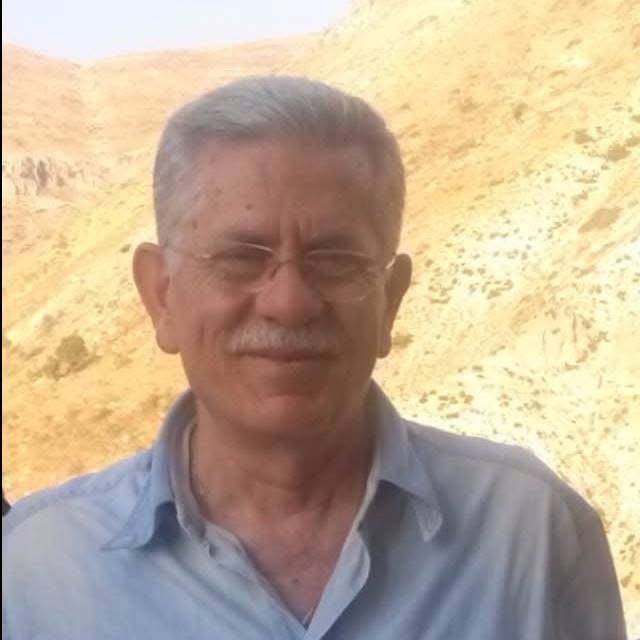
All the thinkers and political leaders who continue to reflect on the unveiling of the countless facets of the Lebanese war, all those drawn to what Michel de Certeau called “cultural poaching, through which non-specialists and the dominated fashion a space of their own,” were struck by the passing, on November 8, of a friend and leading figure who was, and will remain, the essayist Jean-Claude Guillebaud (1944–2025).
A journalist and editor, winner of the Albert Londres Prize in 1972, a great reporter and war correspondent (notably for Le Monde, Sud-Ouest, La Vie, among others) for more than two decades, and co-founder and president of Reporters Without Borders (RSF) from 1987 to 1993, Guillebaud authored some forty reports and essays, dazzling in the richness of their references. An editor with a luminous instinct, curious about everything, his books leave one with the impression that he had read everything, noted everything.
His death, a loss for French and international journalism, is also a loss for Lebanon, which with him loses a committed witness, a great journalist who saw, understood, and made others understand Lebanon. His passing should also be an occasion to reflect on the memory of the Lebanese wars and to finally get to the heart of the matter—something that will not happen as long as the Lebanese themselves have not become aware of what Jean-Claude Guillebaud discovered there.
The Ground Swell of October 2019
Jean-Claude Guillebaud’s last contact with Lebanon coincided with the groundswell of the “October Revolution” of 2019. Triggered by one injustice too many—the government’s attempt to tax the free WhatsApp application, in desperate search of easy revenue—the popular uprising led tens of thousands of Lebanese, thirsty for “a hoped-for but ravaged Lebanese citizenship” (in Guillebaud’s words), to thwart, for a few brief weeks, a political system built on “everyone for himself, omnipresent corruption, and the absence of even minimal citizenship” (ibid.). He reported on it in the weekly La Vie, in an article whose title echoed a saying of John Paul II: “Lebanon Is a Message” (La Vie, November 12, 2019). There he paid tribute to the Lebanese who had taken to the streets to express their rejection of corruption and political cynicism, at a time when many were convinced that the very soul of Lebanese society was irredeemably rotten.
This was not Jean-Claude Guillebaud’s first encounter with Lebanon. Having come to cover the early months of a civil war that would stretch on for years, his experience as a reporter brought him into contact with many of the conflict’s protagonists, among them the deputy and statesman Samir Frangieh, whose friendship and integrity—not to mention his state of health—would matter deeply in Guillebaud’s life.
In his moving short book entitled How I Became a Christian Again (Points-Essais), in which he examined the rational path that led him back to the Christian faith, the essayist spoke of his time in Lebanon and of the “funereal gratuitousness of the massacres” that punctuated the civil war—a war that would turn well-brought-up young men into monsters and awaken his conscience. “I think of the great savagery specific to the passage to action that manifested itself in Lebanon during the first years of the civil war,” he wrote. “In the evenings, in Beirut, at the home of Le Monde correspondent Lucien George, we would speak of it late into the night (…). We were living through indescribable horrors (…). Yes, that strange vertigo which, in a matter of moments, can transform an ordinary man into a torturer capable of anything (…). The event thrust before us a question that no longer truly concerned journalism, and that question was that of Evil (…). It was indeed this ancient question that resurfaced with a crash in the streets of Beirut or in the mountains of the Shouf Mountains, given over to the funereal gratuitousness of the massacres.”
“The return of this spiritual question of Evil to Western consciousness remains associated with Lebanon in the 1970s,” he wrote (pp. 33–35).
The Problem of Evil
Taught by the Catholic Church, the existence of the fallen Archangel had in fact been “erased” from Western consciousness by the Enlightenment and the masters of suspicion, who reduced it at most to a personification of evil. Yet, on the doctrinal level, the existence of the fallen angelic creature has never been questioned. Thus, in a famous homily dated June 29, 1972, commenting on the aftermath of the Second Vatican Council, Pope Paul VI declared: “Faced with the situation of the Church today, we have the feeling that through some fissure the smoke of Satan has entered the people of God. We see doubt, uncertainty, problems, unease, dissatisfaction, confrontation. Trust in the Church has been lost. Trust is placed instead in the first profane prophet who comes along, speaking to us from the platform of a newspaper or a social movement, and we rush after him to ask whether he possesses the formula of true life, without thinking that we already possess it, that we are its masters (…).”
Paul VI’s assertion, corroborated by the Popes who followed him, unsettles our rationalism. One might even speak of the metamorphosis evoked by J.-C. Guillebaud as a kind of inner invasion that temporarily dispossesses a human being of his ordinary conduct. What the Western Jean-Claude Guillebaud rediscovers through contact with the Lebanese war is a “key of interpretation” of a reality lost after the great void left by the “death of God,” which over time gave way to a spiritual desolation bordering on despair, and to an even greater “disappointment” with what the philosopher Emmanuel Mounier, in Introduction to Existentialisms, calls the “replacement myths” (p. 14).
Subsequently, Guillebaud’s reflection confirmed him in this rediscovery of demonic dispossession—a rediscovery he qualifies as “flatly anthropological” (p. 47), and not sentimental or pious. This rediscovery said nothing specific about Lebanon or the Orient. What it spoke to concerned human nature in general, in the dimension accorded to it by Christian thought and anthropology.
The Stubbornness of Hope
What everyone can retain from Jean-Claude Guillebaud is his passion for knowledge, his deep curiosity to understand why things are as they are, or were as they were. His is an intellectual adventure of irreproachable honesty. Deploying all the skill and experience of the investigative journalist in the service of this need to understand, he thus became a reflector of an era. His books will remain beacons in the fog, with the sense of detail he displayed for pleasure and charm, and with quotations that are worth chapters in themselves, such as this one: “It happens,” writes Søren Kierkegaard, “that faith travels incognito” (How I Became a Christian Again, p. 183).
Jean-Claude Guillebaud was a Christian of the stature of the great credible witnesses of Western conscience. “I do not believe despite evil; I believe with it. It is in this tension—between the wound of the world and the promise of light—that hope becomes courage,” he wrote in The Faith That Remains (Éditions de l’Iconoclaste, 2017). This sentence captures his spiritual posture perfectly: it speaks of a faith inhabited by grace, a lucid faith that makes contradiction itself—evil, suffering, doubt—a place from which light can emerge. For Lebanon as for France, and for his wife Catherine, his intellectual and spiritual legacy reminds us that in the stubbornness of hope there is an act of resistance. One is tempted to write: “Blessed are the meek.”
Collège de Nazareth at Risk of Closure
Harassment, Bullying: Women Are the Prime Targets of AI
The Philippe Chebaya Center for Children with Special Needs: A Beacon Above the Holy Valley
World Cup: Collective Emotions and Identifications in Lebanon
Training, Digital Development, AI: La Francophonie's Work in the Middle East
Más de Fady Noun
Ver todo


Más en Society
Ver todo




Nazareth's Extended “Family” Stands United Against the Proposed Sale
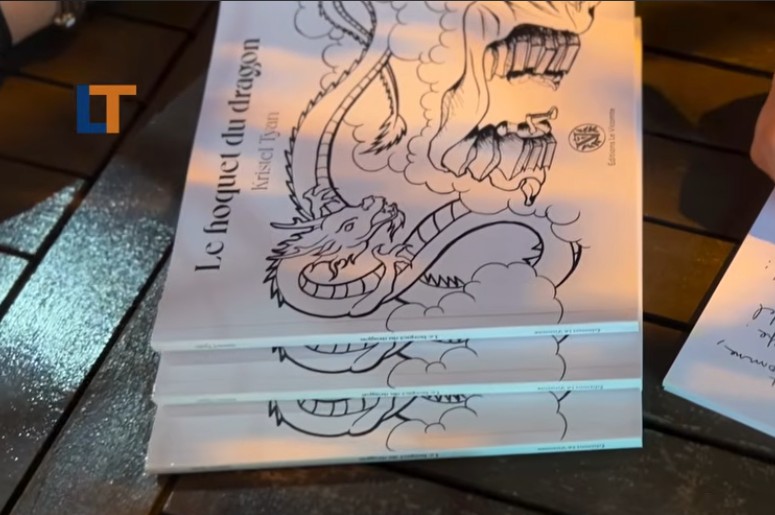
The Dragon’s Hiccup: The War Through The Eyes of a Child
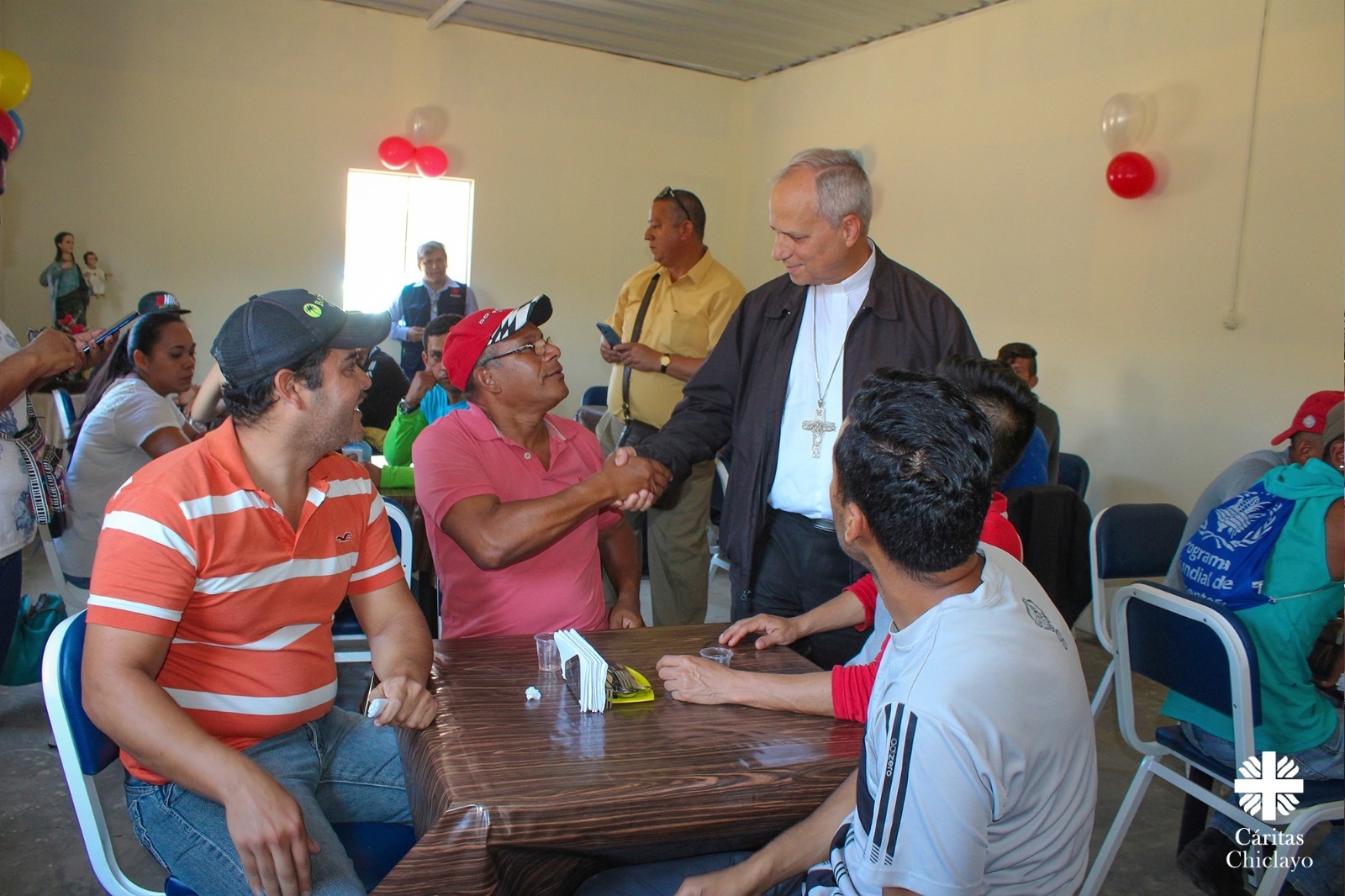
Habemus: Peru, at the heart of Leo XIV's life
Lo último de Levant Time
Ver todo


