

The Philippe Chebaya Center for Children with Special Needs: A Beacon Above the Holy Valley

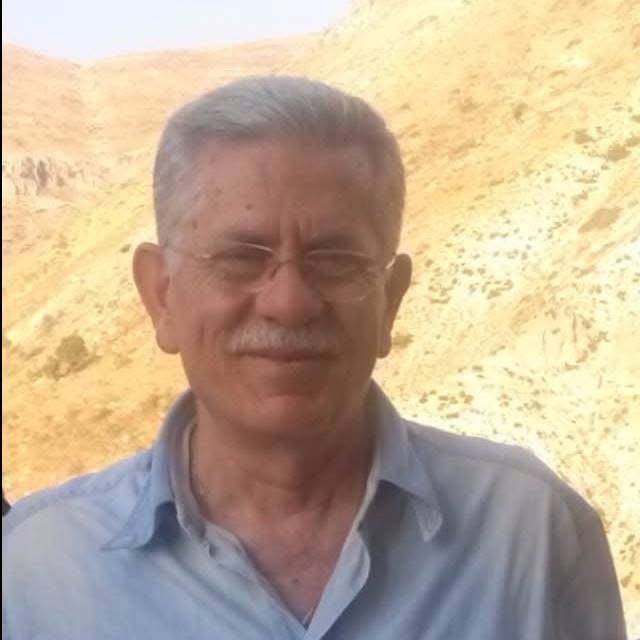
It may be no more than a small mountain project, but the laying of the cornerstone on Saturday, August 8, for a center serving children with special needs in Bcharre, a town of 24,000, is nonetheless a “major undertaking” for those who have embarked on it with limited means but a profound awareness of its necessity.
The center is the flagship project of the Bishop Philippe Chebaya Foundation, named after a priest who served for 40 years as principal of Bcharre’s public school before being ordained a bishop late in life. A priest running a public school: the case is unique in Lebanon. The anomaly is due partly to Bcharre’s distance from Beirut, but above all to the fact that Father Philippe always refused to be paid for his work as principal. During the darkest years of the war and the Syrian occupation, he had turned the school into his monastery, sleeping and eating there.
On reflection, it is hardly surprising that he is revered as a saint by generations of villagers who owe their education and social advancement to him. Indeed, all of Bcharre is steeped in the memory of this man, who could be strict, but whose kindness in the end, and whose smile, quickly erased any memory of the frowns a school principal must sometimes wear.
The modest scale of the project does not detract from its generosity. Jesus himself teaches us this through the “widow’s mite.” Leo XIV has just praised the efforts that, however modest, bring people of goodwill together and contribute to the unity of the human community. Henri de Lubac spoke of the “unknown saints” whom the Church will never formally venerate, but whose existence “helps ensure that our world is not a hell.” The “Greater Lebanon,” whose founding was commemorated at the recent beatification ceremony for Patriarch Howayek, is itself one of the smallest countries in the world.
The project will add to a “Maronite stronghold” in the heart of the northern part of the Mount Lebanon mountain range. It is a small town known for its forest of thousand-year-old cedars and as the birthplace of the poet Gibran Khalil Gibran; a place also chosen by the Missionaries of Charity founded by Mother Teresa to plant a few seeds of holiness.
The project is funded by the German government and the Kindermissionswerk “Die Sternsinger” association. Maronite Patriarch Bechara Rahi, despite his age, made the journey to sprinkle holy water over the ground and the walls under construction, and to bury in one of the future rooms a precious relic of St. Charbel, whose native village, Bkaa Kafra, can be seen from its windows, together with the four volumes of a catechism Father Philippe wrote for his students – the only fortune he left behind.
“This land is holy.” Walking along a dirt path through an orchard of fruit trees, I slow my pace to walk alongside the woman who has just uttered these words. We are heading in single file toward an open grassy area, where chairs have been carefully arranged and speeches are to be given. “This breeze is Father Philippe’s breeze, too,” the woman adds.
In his remarks, Patriarch Rahi will speak of Father Philippe, with whom he was close, as a saint. He does so in the spirit of an earlier age, before the Dicastery for the Causes of Saints existed, when the sensus fidelium was enough to recognize a deceased holy person as a saint.
The patriarch will also speak tenderly of the little “verbs of God,” those with Down syndrome, who, throughout their lives, experience in their own bodies the Redeemer’s redemptive suffering.
The center will be able to accommodate around 50 children. Joseph Chebaya, Father Philippe’s nephew, who runs the foundation, will work to bring it to completion with donations he gathers here and there. The Philippe Chebaya Foundation hopes it will serve as a beacon for all the villages surrounding the magnificent Holy Valley, the Kadisha, which it overlooks.
The sun sets, and the mountain peaks surrounding Bcharre are draped in crimson, mauve and pink. In her remarks, Yasmine Raya, the chargé d’affaires at the German Embassy, will graciously say that she hopes to return once the building has begun welcoming those for whom it exists. An elegant way of assuring its founders that her country’s support will continue through the completion of the project and beyond.
Collège de Nazareth at Risk of Closure
Harassment, Bullying: Women Are the Prime Targets of AI
World Cup: Collective Emotions and Identifications in Lebanon
Training, Digital Development, AI: La Francophonie's Work in the Middle East
Studying in a State of Limbo: When Instability Becomes the Norm
المزيد من Fady Noun
عرض الكل


المزيد في Society
عرض الكل



Nazareth's Extended “Family” Stands United Against the Proposed Sale

The Dragon’s Hiccup: The War Through The Eyes of a Child
Habemus: Peru, at the heart of Leo XIV's life
الأحدث من Levant Time
عرض الكل


