

World Cup: Collective Emotions and Identifications in Lebanon


The FIFA World Cup extends far beyond the realm of sport. As a global event, it temporarily suspends the routines of everyday life and brings millions of people together around a shared collective narrative for the duration of a tournament. In Lebanon, this competition takes on a particularly meaningful dimension. In a country shaped by successive crises, migration, and social divisions, the World Cup makes moments of celebration feel especially precious — almost rare.
For clinical psychologist Sandra Khawam, supporting specific teams is rooted first and foremost in family history, often shaped by emigration. "The family factor plays an important role. Due to wars, crises, and successive waves of emigration, many Lebanese families have scattered across the world," she explains.
This dispersal has created a distinctive emotional geography. Lebanese communities have settled in Brazil, Argentina, Germany, France, and elsewhere — yet they have maintained strong ties to their homeland, not only geographic or administrative ones, but emotional ones. These bonds surface in family stories, memories, habits, and sometimes symbolic loyalties.
During the World Cup, these attachments can shape the way people identify with sports teams. Supporting a foreign team can thus indirectly mean supporting a piece of one's own family history, personal memory, or migratory journey.
Football as a universal need for identity
Beyond the Lebanese context, Ms. Khawam points to a broader, universal mechanism. Football, she argues, fulfills a need to identify with anchors that feel stable, visible, and affirming. "When a team embodies stability, success, high performance, and iconic figures, it naturally becomes an object of identification," she notes.
Fans are not simply following a sporting result — they are following a narrative. They track progress, the possibility of victory, the pushing of limits. This identification works like a symbolic mirror, in which individuals and communities project their personal or collective aspirations.
In the Lebanese context, this dynamic takes on a particular character. Ms. Khawam notes that Lebanese society is marked by identity-based and communal divides that also structure forms of belonging. Football can therefore become a space onto which these divisions are projected. Supporting a team is not purely a matter of sporting preference — it can sometimes reflect a symbolic or identity-based affiliation. "People identify differently, backing one national team over another," she explains. The football pitch thus becomes a space where allegiances shift and latent social tensions can be replayed in symbolic, codified form.
An emotional escape
The psychologist also highlights another essential dimension: collective escapism. In a country like Lebanon, battered by economic, political, and social crises, the World Cup acts as a pause — a space where the weight of daily life is set aside for the duration of a match. "People come together, sharing a sense of unity, joy, pride, and collective excitement," she says.
This pause matters because it opens up an emotional outlet rarely available in everyday life. Football allows heavy realities to be transformed into a shared experience of lightness, where one team's victory becomes everyone's victory — almost symbolic in nature.
This collective intensity is also driven by group dynamics. In gatherings, emotions are not confined to individual expression — they feed off and amplify one another.
Ms. Khawam describes this phenomenon as a crowd effect, where joy, excitement, and sometimes frustration are amplified by collective dynamics. She does emphasize one important point, however: incidents remain the exception. They do not represent the norm, but rather a visible anomaly.
Group dynamics can nonetheless alter individual behavior. The relative anonymity, the power of the collective, and the emotional intensity of the moment can lead some people to act in ways they normally would not. In certain cases, this can escalate to excessive or even violent behavior.
A heated altercation between fans escalated into a brawl and then a shooting during a match between Brazil and Japan in Wadi Jilo, in the Tyre district (South Lebanon). Six people were injured.
In this sense, football can act as a sounding board for social and political tensions. Certain conflicts can surface through sporting rivalries, with teams becoming symbolic vessels onto which deeper allegiances, divisions, or frustrations are projected. Yet for Ms. Khawam, it is important not to reduce the phenomenon to this interpretation alone, since these projections coexist with an equally central festive and unifying dimension.
Passion: between camaraderie and excess
Sergio, 22, from Jbeil, captures this ambivalence on a more personal level. "I support Germany, first because Lebanon doesn't qualify for the World Cup, and also because I have a deep appreciation for that team's style of play — it's been with me since childhood," he says.
Matches are often watched with friends, which doesn't rule out tension. "It starts with jokes, then things can get heated. Sometimes it even gets physical. But we always end up cooling down," he says. The passion for football, despite its excesses, ultimately returns to its original purpose: a space for togetherness.
Jad, 28, a Beiruti who supports the French national team, embodies this festive dimension. "France has been part of my life since school, especially with Mbappé now. It's a team I've followed alongside my brother — it's become a family tradition," he explains.
During this 2026 World Cup, victories spark celebrations. For him, these moments go beyond sport: "For a few hours, we forget about everyday life."
In Jounieh, Maya, 32, an Argentina fan, describes an attachment rooted in family heritage. "It's a passion my father passed down to me during the Maradona era, and I've kept it alive through Messi," she says. Even without joining fan gatherings, she experiences the World Cup in the intimate setting of family life. "My sister lives in Buenos Aires, and during matches we send each other videos as if we were sitting in the same living room."
Karim, 24, a Brazil supporter from Tripoli, describes a more mixed experience. "The game, the samba, the yellow jersey… it's a deep passion," he says. But he also acknowledges rising tensions: "Defeat can really stir up emotions. The arguments on social media, the rivalries… everything intensifies." He recounts scenes of conflict: "I witnessed insults being thrown and tables knocked over in restaurants. I chose to leave."
Ultimately, the World Cup proves to be a deeply ambivalent phenomenon. In Lebanon, this ambivalence is particularly striking. In a country that has been searching for its identity for decades, it is sometimes easier to rally behind another nation's colors than one's own.
Collège de Nazareth at Risk of Closure
Harassment, Bullying: Women Are the Prime Targets of AI
The Philippe Chebaya Center for Children with Special Needs: A Beacon Above the Holy Valley
Training, Digital Development, AI: La Francophonie's Work in the Middle East
Studying in a State of Limbo: When Instability Becomes the Norm
Mais de Nayla Assaf
Ver tudo


Mais em Society
Ver tudo


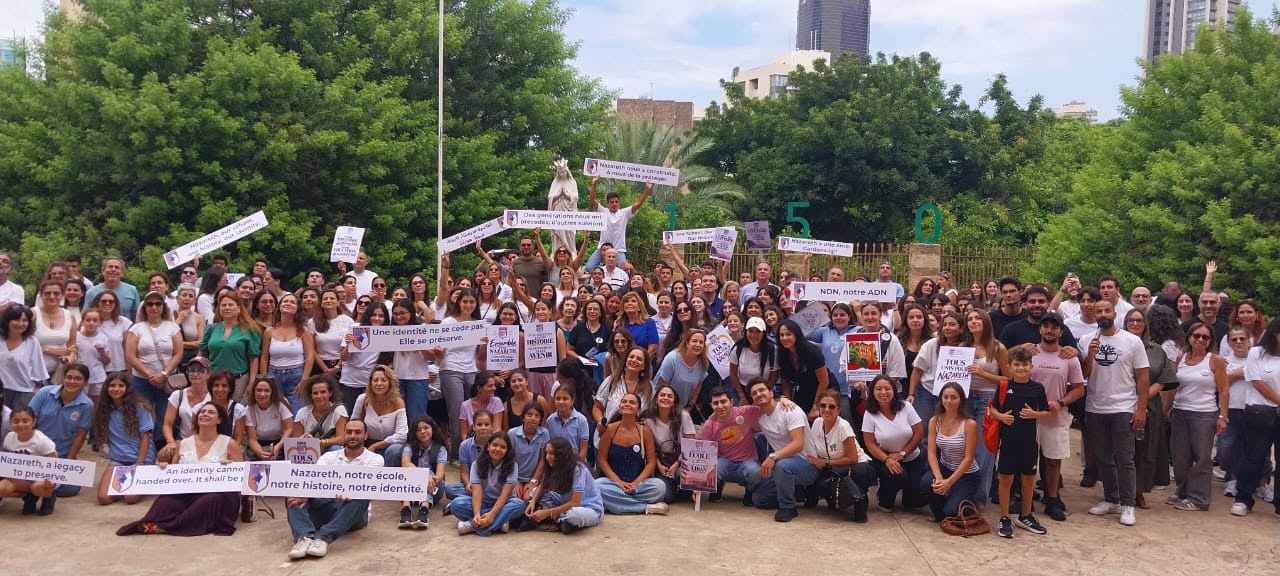

Nazareth's Extended “Family” Stands United Against the Proposed Sale
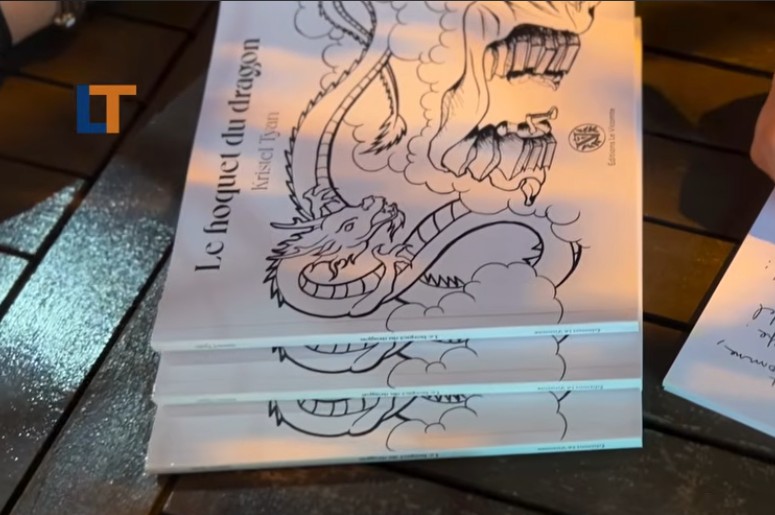
The Dragon’s Hiccup: The War Through The Eyes of a Child
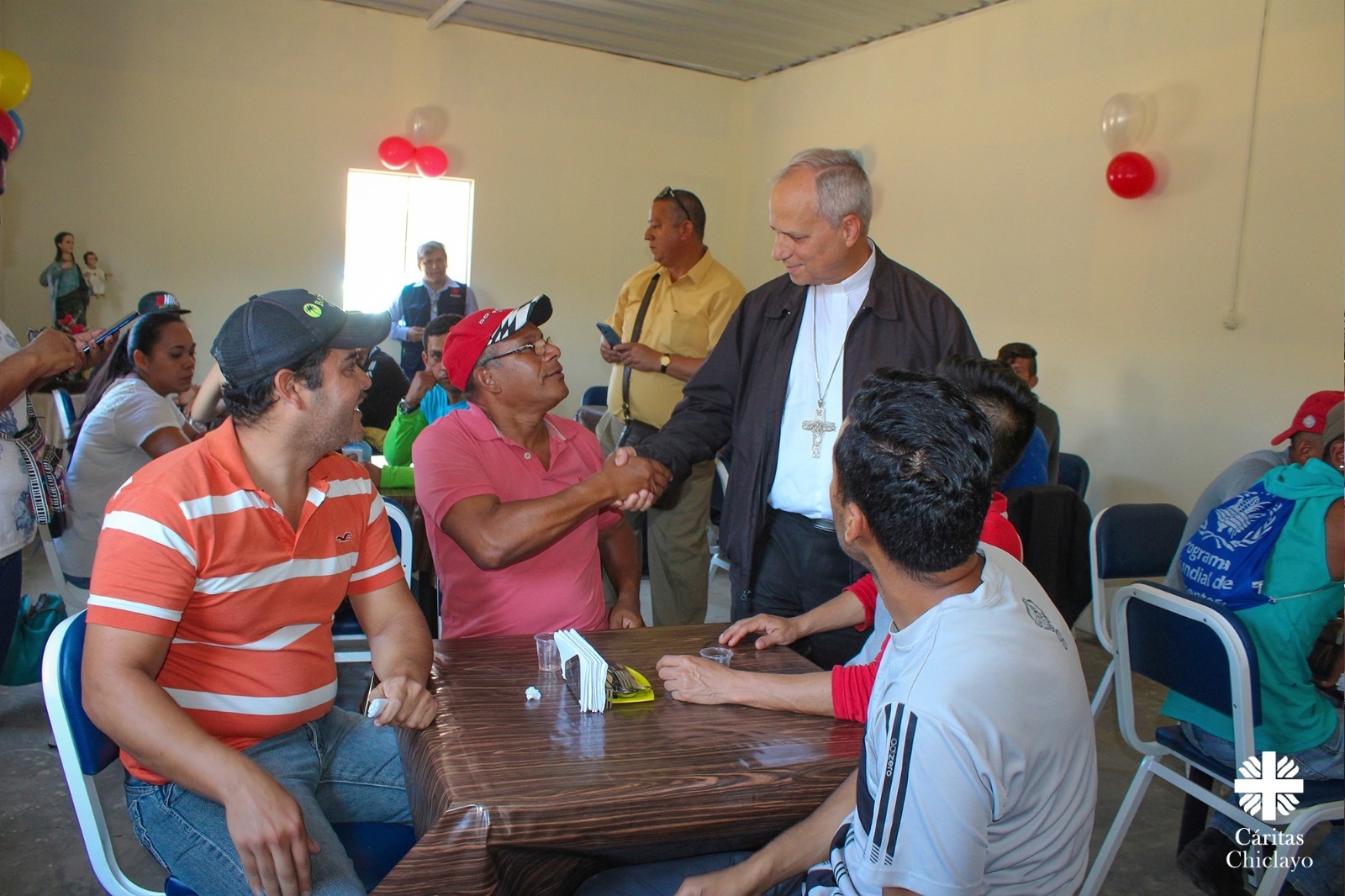
Habemus: Peru, at the heart of Leo XIV's life
O mais recente do Levant Time
Ver tudo


