

South Lebanon: Christians in Border Villages Hold Firm Despite War


Along the front line at Lebanon’s southern border with Israel, several Christian villages lie directly in the path of the fighting. As violence intensifies in this area, the Holy See has not remained indifferent to the precariousness of the Christian presence under current conditions. Pope Leon XIV, deeply moved by the plight of civilians caught in the shadow of war, solemnly spoke of the death of Maronite priest Pierre Rai of Qlayaa – a symbol of a tragedy that strikes indiscriminately.
According to retired General Khalil Gemayel, former commander of the southern Litani sector, the Christian border towns include Alma el-Chaab (Tyr district), Rmeich, Aïn Ebel, Debel, Qowzah and Yaroun (Bint Jbeil district), as well as Bourj el-Moulouk, Qlayaa, Jdeidet Marjeyoun, Ibl el-Saqi and Deir Mimas (Marjeyoun district). In the Hasbaya district, there are also Rachaya el-Foukhar, Kawkaba, Abou Qamha and Mazraat Serda.
From there, these border areas – particularly exposed – remain vulnerable to both airstrikes and potential ground clashes. “The majority of these villages are on the front lines and face daily military developments that have caused the deaths of many residents,” General Gemayel notes.
In this context, he adds that “the ongoing military activities of Israel and Hezbollah keep these areas under constant threat.” He describes a fragile security situation, marked by “great concern” and in need of enhanced protective measures.
Staying Put Despite Everything
In this climate of constant tension, reports from the ground underscore both the intensity of the pressure and the determination of residents not to succumb to exodus.
According to Nawraj NGO president Fouad Abou Nader, “no fewer than 17,950 Christian residents currently remain in the Christian villages of southern Lebanon, out of 70,000 who lived there before the outbreak of the March 2026 war.” He adds that “these residents, on the front line, have decided to stay in their homes and on their land, refusing to abandon them despite the extremely difficult security situation.”
From this perspective, Abou Nader stresses a central point: the need for an effective state presence. He highlights “the role of the Internal Security Forces, which, in the absence of a full military deployment, must maintain an active presence on the ground and in police stations.” According to him, “such a presence would preserve a vital link between the residents and the homeland.”
Moreover, this presence is seen as “crucial” to prevent “populations from turning to Israel for supplies,” which could be mistakenly interpreted as an act of betrayal.
At the same time, the most urgent needs are becoming clearer. They primarily include medicines, healthcare services, and job creation – all essential for enabling residents to stay and maintain a decent standard of living. Added to this are access to fuel, essential supplies, and the continued functioning of schools – all key factors in preventing an exodus to Beirut or other cities.
From a broader perspective, Abou Nader warns of a strategic shift in the conflict. According to him, “the current situation differs from the previous war,” with Israel now pursuing “a scorched-earth strategy aimed at emptying the South of its residents to create a buffer zone.”
Local and International Mobilization
In response to this reality, action has not been slow. Several civil and community associations have coordinated their efforts to support the Christian border villages.
On the ground, this mobilization takes the form of providing fuel, food, medicines, and reconstruction materials. “These initiatives aim to rehabilitate infrastructure, reinforce the legitimate presence of the state, and strengthen Lebanon’s diplomatic role,” explains Abou Nader, noting that they benefit all communities in the South – Christian, Druze, Sunni, and Shia – without distinction.
In the same spirit, he emphasizes the importance of coexistence among the different components of Lebanese society. Nawraj is developing projects, including the “SAWA” program, designed to foster coexistence and strengthen residents’ attachment to their land.
At the international level, efforts continue. The NGO focuses on fundraising and implementing long-term projects aimed at stabilizing the southern villages and preventing their depopulation.
Finally, Abou Nader calls on the Lebanese state to “fully assume its responsibilities by ending the internal power struggles that have weakened the country and allowed foreign interference, particularly from Iran.” While he believes that “the current exodus is temporary,” he nevertheless warns that “Israel could create a buffer zone in the South.”
A Humanitarian Response Takes Shape
Building on these initiatives, church institutions have also organized their response.
Michel Constantine, regional director of the pontifical mission CNEWA (Catholic Near East Welfare Association), notes that several meetings have been held – notably in Bkerké and at Caritas – to assess needs and map the aid available.
In this context, a crisis committee has been established to coordinate the work of different organizations and avoid duplication. Through regular meetings and a shared monitoring system, information on funding, its use, and the beneficiaries is centralized and updated according to the evolving situation.
Once this data is consolidated, a humanitarian convoy will be sent to southern Lebanon to assess conditions on the ground. It will include representatives from Caritas and other church organizations, under the coordination of APEC (Assembly of Catholic Patriarchs and Bishops of Lebanon), represented by its secretary-general, Father Jean Younes.
To Stay or to Leave: A Fragile Balance
On the ground, the situation remains precarious. According to Constantine, nearly 4,530 families still live in the southern villages, with a Christian presence maintained across 15 localities.
At the same time, 960 families have left these villages. Of these, 200 have sought refuge in Rmeich and Deir Mimas, while nearly 750 others have settled elsewhere, primarily with relatives, notably in Beirut.
The challenge is clear: enabling residents to remain. The pontifical mission focuses its aid on essential needs – food, fuel, and medicines – as well as on communication tools, which are crucial in the event of road closures.
Within this framework, a system of vouchers or supermarket cards is being considered for displaced families, allowing them to purchase necessary goods directly.
Finally, it is worth noting that this aid transcends religious affiliations. Some Muslim families have taken refuge in these villages, particularly in Rmeich, and are also receiving assistance.
The Church on the Front Line
Alongside humanitarian efforts, religious and diplomatic initiatives are multiplying.
Apostolic Nuncio Paolo Borgia has visited several Christian villages, commending the resilience of residents and reaffirming the Church’s support.
In the same vein, Maronite Patriarch Bechara Raï described the Christians of the South as a “bulwark on the borders,” while announcing that the Bishop of Tyre, Charbel Abdallah, would be stationed in Rmeich to represent him.
On the diplomatic front, Foreign Minister Joe Raggi sought the intervention of the Holy See. In discussions with Archbishop Paul Richard Gallagher, the latter assured that “the Vatican is continuing its efforts to curb the escalation and prevent the displacement of populations.”
Towards a South Emptied of Its Residents?
Beyond the humanitarian emergency, a strategic concern is emerging.
For General Khalil Gemayel, “the possibility of creating a buffer zone in southern Lebanon is today one of the main threats.” He says Israel is pursuing an undeclared objective aimed at establishing an area emptied of its residents along the border.
This scenario would explain both the intensity of the attacks and the gradual exodus of the population. He recalls that during the previous war, “the presence of the Lebanese army provided a measure of security” – a guarantee that is now absent.
From this perspective, several conditions appear necessary to enable residents to stay or return: security guarantees through the presence of the Lebanese army and UNIFIL, rehabilitation of infrastructure, sustainable economic support, as well as international guarantees, notably from the Vatican.
Failing this, he concludes, “the risk of seeing these villages gradually emptied of their residents remains very real.”
Collège de Nazareth at Risk of Closure
Harassment, Bullying: Women Are the Prime Targets of AI
The Philippe Chebaya Center for Children with Special Needs: A Beacon Above the Holy Valley
World Cup: Collective Emotions and Identifications in Lebanon
Training, Digital Development, AI: La Francophonie's Work in the Middle East
Más de Nayla Assaf
Ver todo


Más en Society
Ver todo


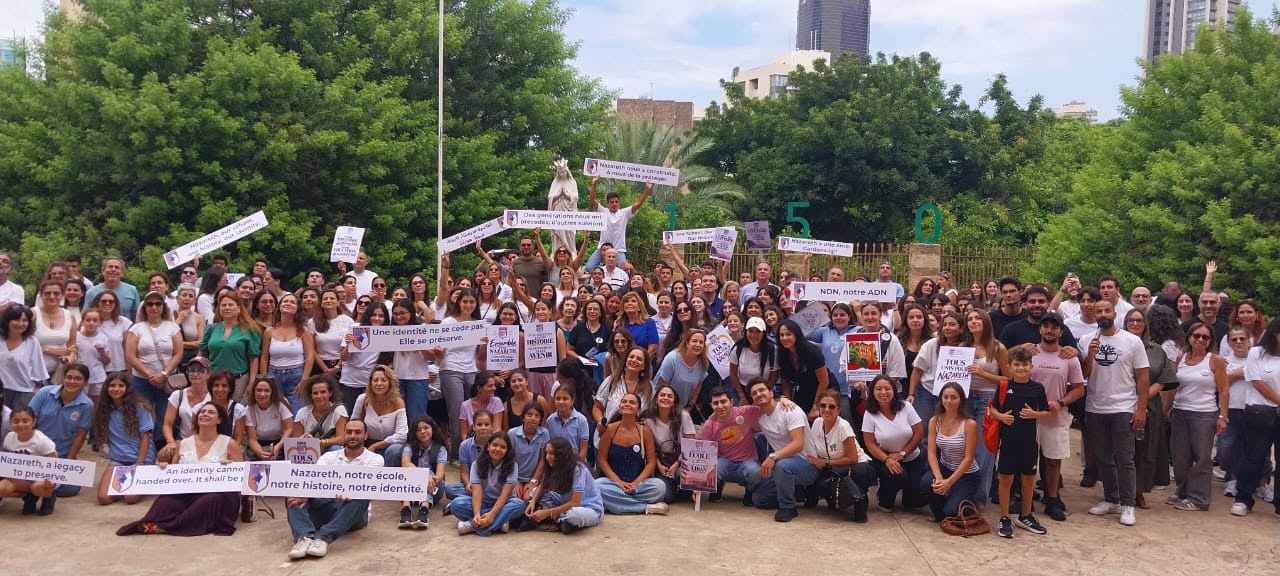

Nazareth's Extended “Family” Stands United Against the Proposed Sale

The Dragon’s Hiccup: The War Through The Eyes of a Child
Habemus: Peru, at the heart of Leo XIV's life
Lo último de Levant Time
Ver todo


