

Birth of a State Decision or Overreach Without Means?
An Analytical Reading of the Speech by President of the Republic Joseph Aoun

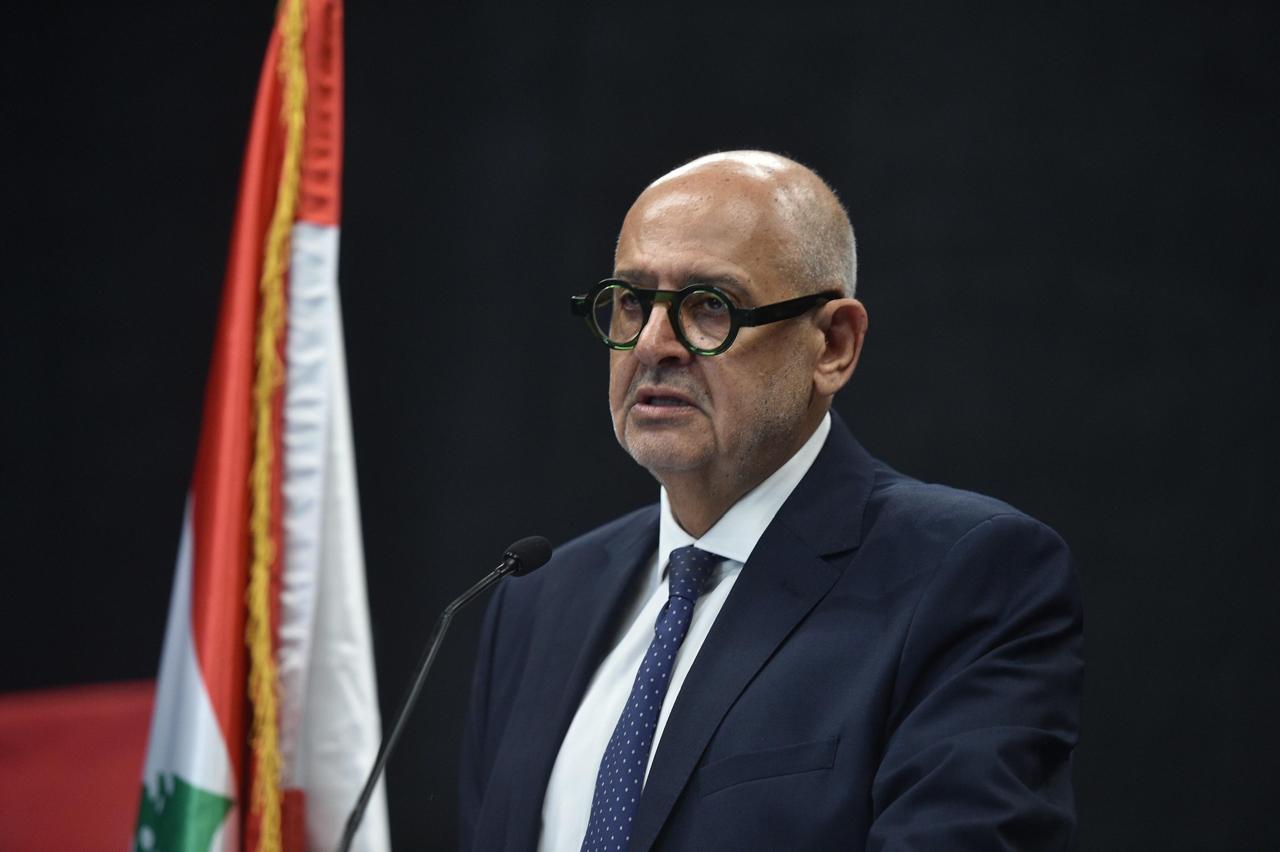
Delivered at a critical moment, following the entry into force of the ceasefire with Israel, the speech by Lebanese President Joseph Aoun stands out as one of the clearest in tone and most ambitious in its political aspirations. Neither an ordinary speech of appeasement nor a ceremonial statement of thanks, it amounted rather to a sweeping declaration of intent: to redefine Lebanon’s position, recover the State’s decision-making authority, and engage in a negotiation process supposedly different from everything that has come before.
But between the force of the speech and the reality of the balance of power, the real questions arise: are we witnessing a genuine turning point, or a speech that runs ahead of the State’s actual capabilities?
The Structure of the Speech — From Gratitude to the Announcement of a Course
The speech opens on a point of convergence: expressions of thanks. Thanks to various states, and foremost to “friend Donald Trump,” to Saudi Arabia, and to all the parties that contributed to the ceasefire. This opening is not incidental. It aims to anchor an image of international support and to lend external legitimacy to the course that will subsequently be proposed.
But the speech quickly moves from thanks to the essential: the announcement that Lebanon is entering “the phase of permanent agreements.”
It is precisely here that the true political dimension begins. The president does not merely describe what has happened — he sets out what is to come: negotiations, agreements, a long process that goes beyond a simple ceasefire.
The Central Message — “We Have Recovered Lebanon’s Decision”
The key formulation of the speech is the following: “We have recovered Lebanon and Lebanon’s decision, for the first time in nearly half a century.”
This sentence encapsulates the essence of the speech, yet at the same time it carries the highest degree of complexity. What does it mean concretely? That Lebanon did not previously command its own decision, that the current period represents a qualitative turning point, and that the State is now the sole instance that decides and negotiates.
Yet this is precisely where the major challenge emerges: is this a realistic assessment, or a declaration of objectives? For the recovery of sovereign decision-making in Lebanon is not achieved through a speech, but through a profound transformation of internal power dynamics — and in particular on the question of the State’s monopoly over arms and security decisions, a question that has not yet been resolved, either politically or practically.
This formulation can therefore be read more as a “statement of intent” than as a description of an accomplished reality.
The Defense of Negotiation and the Breaking of a Political Taboo
One of the most striking features of the speech is the boldness with which negotiation is presented as a legitimate — indeed necessary — choice. The president left no room for ambiguity, insisting that negotiating is neither a sign of weakness, nor a retreat, nor a concession.
This passage targets directly the environment hostile to any negotiation process with Israel, which has always equated negotiation with capitulation. What the president is attempting here is an operation of “redefinition”: transforming negotiation from an accusation into a sovereign instrument, linking it to the protection of the people rather than to the abandonment of rights, and placing it within the framework of the State rather than within external backroom dealings.
This proposition, despite its clarity, runs up against a divided political and social reality, where a large part of Lebanese opinion continues to regard any negotiation as crossing red lines.
The Discourse Against “Absurd Wars” — An Indirect Confrontation
In several passages, the president attacks the logic of repeated wars, using striking formulations: “absurd, gratuitous, and periodic death,” “dying for something that is not Lebanon,” “between suicide and prosperity.” These are not ordinary phrases. They carry an implicit indictment of a course maintained for years, built on anchoring Lebanon within regional conflicts.
For the first time with such clarity, two options are placed before the Lebanese: to persevere in the logic of wars, or to shift into the logic of the State and of life.
But here again, the problem lies not in the diagnosis but in the capacity to change this reality.
Arms and the State — The Most Sensitive Formulation
Among the most serious and significant passages in the speech is the affirmation that the authority of the State must extend across the entire territory “by its own forces exclusively,” and that a “single armed force protects us all.”
These formulations, without explicitly naming any party, are unambiguous in their import: they point to the monopoly of arms by the State. Why does this matter? Because it is precisely here that the crux of the Lebanese crisis lies — the presence of arms outside the State’s framework, the duplication of security decision-making, and the anchoring of these arms within regional calculations.
The president places this issue at the heart of the coming phase, without however proposing a precise mechanism for achieving it. And this is where the true challenge lies: moving from the slogan of the “monopoly of arms” to an implementation plan requires an internal consensus that does not yet exist.
The Popular Dimension — A Speech of Rational Mobilization
The speech was not addressed solely to political elites — it turned resolutely toward public opinion, with an explicit call to reject accusations of treason, to resist being swept up by slogans, and to allow reason to prevail over instinct.
This dimension reflects an awareness that any political change in Lebanon requires popular backing, or at the very least a reduction in public tensions. But in return, Lebanese society remains deeply divided, which exposes any unifying discourse to contradictory readings.
The International Dimension — Anchoring the Partnership
By thanking the United States and Saudi Arabia, the president seeks to establish an international umbrella for the new course. Two objectives emerge: to reassure the outside world that Lebanon is moving toward stability, and to secure political and economic support for the coming phase.
But this also raises a question: is this course genuinely autonomous, or tied to external conditions?
Between Boldness and Risk-Taking
There is no question that the speech carries a manifest political audacity: publicly raising the question of negotiation, speaking of the monopoly of arms, refusing proxy wars. But this boldness carries with it a considerable risk — that of raising the threshold of expectations without guaranteeing the capacity to meet them, of opening an undeclared internal political confrontation, of placing the State before a difficult test.
Are We Facing a Founding Moment?
The speech presents itself as a decisive turning point: the end of “Lebanon-as-arena” and the beginning of “Lebanon-as-State.” But Lebanese history is strewn with similar moments that never came to fruition.
What will determine the outcome is the convergence of several factors: genuine political will, the State’s capacity to impose its decisions, the position of the essential internal forces, and international and regional support. If these elements converge, the speech may prove to be the beginning of a turning point. Otherwise, it will remain in the realm of aspiration.
In Conclusion — A Speech That Founds a Larger Question
President Joseph Aoun’s speech goes beyond a simple political stance — it is an attempt to repose Lebanon’s fundamental question: do we truly want a State?
The president offered a clear answer: yes, one State, one decision, one armed force, and a negotiation process that protects the country.
But the real challenge lies not in formulating this project, but rather in the capacity to impose it on a complex reality, where domestic interests are intertwined with regional calculations.
The speech charted the direction, without deciding the path.
And it is here that the judgment on this address depends on what follows: either it will be the opening of a genuinely sovereign process, or it will join the pantheon of the most powerful speeches… that changed nothing.
The Nobel Prizes and the Search for a Glimmer of Light in Human Behavior
Iran: Executions of young people, a favored tool of repression
A Chinese Perspective on Lebanon's Collapse
Dahr el-Baidar Explosives: Toward the End of Complacency?
Lebanese Moderation Needs a Project
المزيد من Jad Akhawi
عرض الكل


المزيد في Analyze
عرض الكل


الأحدث من Levant Time
عرض الكل


