


Pope Leo gave the Lebanese what belongs to the Lebanese: recognition of their great resilience. But if we try to read his words on the serious global problem he identified for everyone through Lebanese eyes—let's say Lebanese eyes only, since he addressed these words to the whole world—we would understand that this resilience should be investigated: “A kind of pessimism and sense of powerlessness seem to have taken hold, where people are no longer able to ask themselves what they can do to change the course of history. Major decisions appear to be taken by a select few, often to the detriment of the common good, as if this were an inevitable destiny”.
Being in Beirut over the past few weeks, I perceived this resilience, which is private rather than public or communal, as a problem of mistrust in politics. There is an air of disillusionment that leads to withdrawal or adaptation. And this makes foreigners wonder whether it makes sense to stick with a political framework that still refers, at least in large part, to the days of the civil war.
In my opinion, for Lebanon to fully return to the message that John Paul II spoke of in 1997, there would need to be reconciliation between the political sphere and the common sentiment of the population. So, once again, I read the Pope's words in Lebanese terms: “There can be no lasting reconciliation without a common goal, or without openness towards a future in which good prevails over the evils that have been suffered or inflicted in the past or the present. A culture of reconciliation, therefore, does not arise only from below, from the willingness and courage of a few. It also needs authorities and institutions that recognize the common good as superior to the particular. The common good is more than the sum of many interests, for it draws together everyone’s goals as closely as possible, directing them in such a way that everyone will have more than if they were to move forward by themselves. Indeed, peace is much more than a mere balance – which is always precarious – among those who live separately while under the same roof. Peace is knowing how to live together, in communion, as reconciled people. A reconciliation that, in addition to enabling us to live together, will teach us to work together for a shared future side by side”.
If this was, at least in part, the meaning of his speech, then we could think that his visit to Beirut was not only for Beirut but for the whole of the great or new Levant that I see in the succession of territories that have been tested, often brutally, from the Mediterranean to Mesopotamia. These are territories organized into countries that everyone knows and that have had a painful past, often marked by brutal stories, denials, protectorates, and vicious murders.
But as Bishop of Rome, with a Roman education, Leo knows well that some countries here in Europe, one fine day after the Second World War, after fighting each other for centuries, discovered that they were neighbors, then traveling companions, then friends, contributing to the founding of the European Union experiment. Why couldn't Lebanon, Syria, and Iraq attempt the same undertaking?
All in all, these are the territories over which various patriarchs of Antioch have jurisdiction. History can turn its pages, if it wants to, and sometimes it does, if it wants to. Of course, the problems are enormous, such as the weight of the past, the pain of wounds that have not yet healed, the still partial recognition, and the logical mistrust. But if the Churches of Antioch, many of which are based in Beirut, were to take on this strategic depth, this perspective, they would reduce the weight of nostalgia, of limited perspectives, of closures, and would become the outgoing Churches that Francis spoke of, or the missionary Church that Leone speaks of.
Fears of downsizing also arise from the perspective one takes. If one looks at one's own mountain or valley, downsizing is inevitable. If one broadens one's horizons, if one can imagine wooded expanses and prairies while walking in one's own backyard, downsizing is rejected first and foremost within ourselves. This is where Beirut could once again see itself as the engine of a train made up of different carriages, each with its own history and identity, but linked by a common hook, that of the need to connect with the Mediterranean space, with trade not only in goods but also in ideas.
In the streets of Jemmayze or Ashrafyeh, I felt that a Christian presence exists there, and as Europeans I recognize it as such, but it also needs to breathe, to be part of a broader discourse, and your city makes this possible and, above all, understandable to this pope who, like Francis, is attached to the idea of “polar tension.” The poles do not cancel each other out, they complement each other, they need each other. The poles of Beirut are, on the one hand, the mountains so close to you, with their wealth of traditions to be preserved, and on the other, the sea, with its horizons bringing exchange, encounters, and new ideas that are essential for change and growth, together. This in many eyes is the road of the train, the one you could help us to see again.
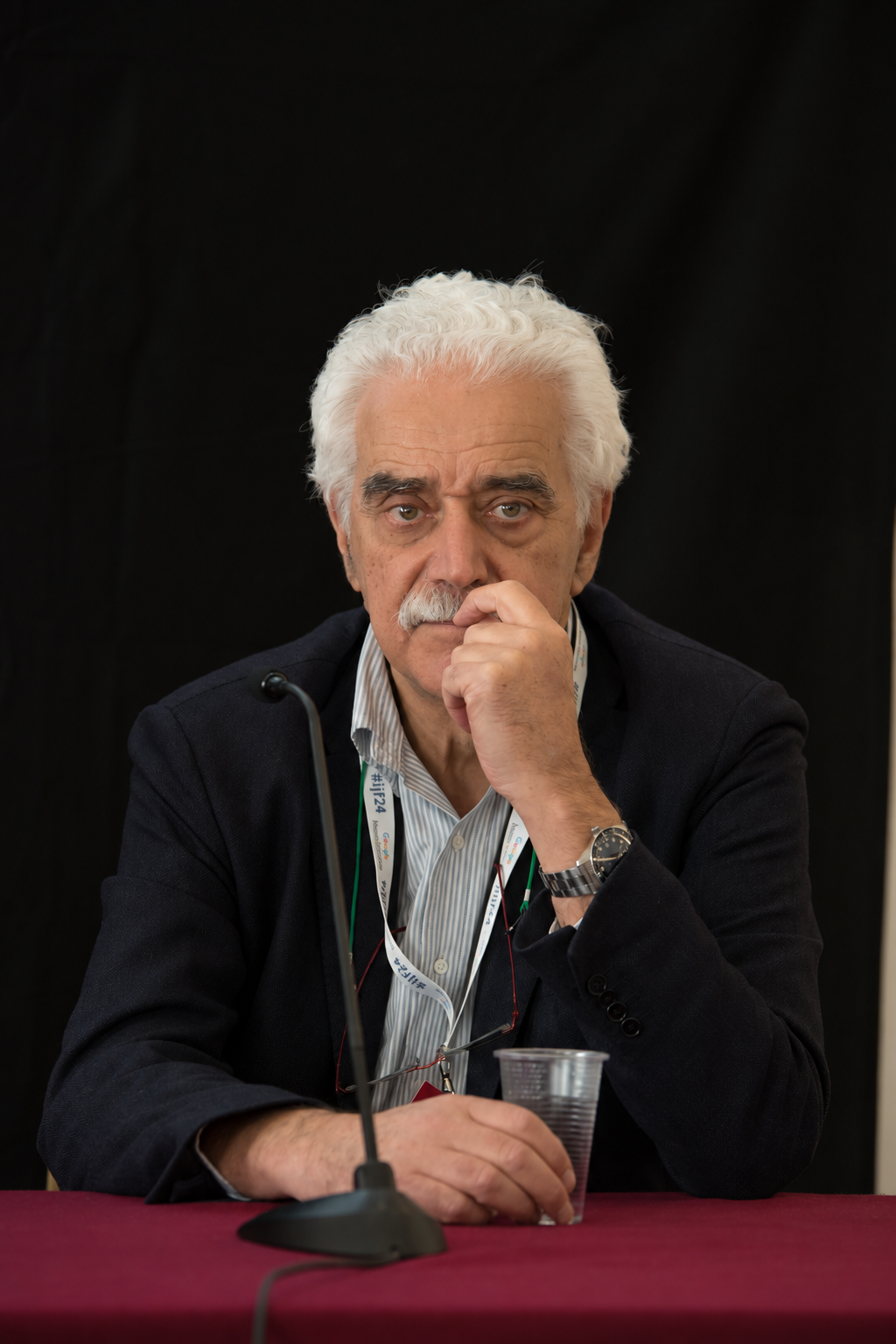
Riccardo Cristiano is a Specialist in Vatican affairs on Italian public radio RAI; author of several works on interreligious dialogue and Pope Francis’s pontificate.
In Search of Lebanon, from Beirut to the Vatican
UN: Paris Wants to Replace UNIFIL With a 'Different Type' of Presence
The Abolition of the Death Penalty: Ibrahim Najjar and Élie Keyrouz’s Long Fight
The Testament of Hassan Rifai
A ceasefire... yes, but what happens next?
Mais de Riccardo Cristiano
Ver tudo
Mais em Politics
Ver tudo



Mexico: after the Elimination of El Mencho, the Calm Before the Storm?
«Remaining»: Rekindle the Memory of the Victims of Political Assassinations Since 2005
Revolutionary Guards, Supreme Organ of Repression
Tropic Thunder: Understanding US Interventionism in the Caribbean

Tropic Thunder: Understanding US Interventionism in the Caribbean
O mais recente do Levant Time
Ver tudo


