

The National Museum of Iran: A Mirror of a Millennia-Old History (2/2)


Museums in Iran play a key role in supporting the country’s political and diplomatic strategy. They are also crucial for preserving and showcasing the treasures of Persian civilization.
The National Museum of Iran stands as the country’s foremost archaeological and historical museum. It highlights the richness of Persian heritage and houses invaluable collections spanning Iranian history – from the Paleolithic era through the Medes, Elamites, Achaemenids, Parthians, Sassanids, and into the Islamic period. Within its walls, the official narrative of “Iran” is articulated: a continuous thread running from Elam and the Achaemenid Empire to the Islamic Republic, represented by over 300,000 objects that weave together the nation’s millennia-spanning history.
The National Museum is composed of two main entities: the Museum of Ancient Iran and the Museum of the Islamic Period.
The Museum of Ancient Iran
Established in the 1930s during the reign of Reza Shah, the main building – known as the Museum of Ancient Iran – is dedicated to the pre-Islamic period. Its architecture draws inspiration from the Sassanid style, notably the Taq-e Kasra (Arch of Ctesiphon). Designed by French architects André Godard and Maxime Siroux, the museum was inaugurated in 1937.
Rather than showcasing the legendary jewels of the Shahs’ treasury, the museum presents the full sweep of Iran’s history, embodied in thousands of objects, including seals, bas-reliefs, pottery, manuscripts, statues, and more.
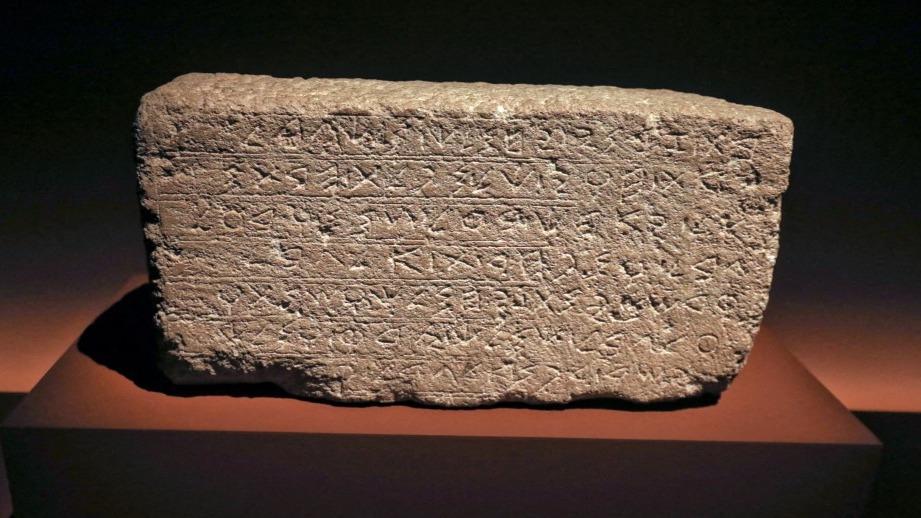
Among its highlights are inscriptions and texts from the Late Uruk period (circa 3350–3000 B.C.), which were relocated to modern, secure storage during the 2010s.
The museum also houses one of the “Salt Men” of Zanjan – a naturally mummified miner, perfectly preserved by the salt of the mine where it was discovered, dating to roughly 550–330 B.C.
Other standout pieces include the monumental Shami Bronze, towering 1.94 meters and considered a masterpiece of Parthian sculpture. The museum also preserves bas-reliefs and bull-headed capitals from Persepolis (6th–4th century B.C.), of exceptional quality, offering a striking synthesis of Achaemenid architectural artistry.
The collection further encompasses prehistoric pottery and ceramics from Tepe Sialk, near Kashan – true works of art dating from the 6th to the 4th millennium B.C. – as well as bronzes from Lorestan (circa 1000-650 B.C.) and gold cups and rhytons from Marlik (1400-1200 B.C.), considered the pinnacle of Iron Age Iranian craftsmanship.
The Museum of the Islamic Period
The Islamic Art department of the National Museum of Iran occupies a dedicated modern building, inaugurated in 1996. It houses an invaluable collection tracing Persia’s post-Islamic history, highlighting the refinement of Islamic art in Iran. The collection features Safavid artworks, ceramics, manuscripts, metalwork, textiles, and many other treasures.
Among its standout pieces is the Ilkhanid mihrab from Dar-e Behesht, known as the “Gate of Paradise.” This 14th-century mosaic of glazed tiles, produced under the Ilkhanid dynasty, is renowned for its intricate calligraphy (kufic, thuluth, naskh) and its floral and geometric motifs. The museum also displays a 9th-century ceramic bowl from Gorgan adorned with an anthropomorphic bull-headed figure, watercolor paintings by Sani ol-Molk from the Qajar period (18th century), as well as elegant astrolabes and other masterpieces.
The Role of Museum Curators
Walking a fine line between power and memory, museum curators in Iran navigate a complex and delicate terrain. They frequently encounter subtle forms of censorship – not overt bans, but signals, recommendations, and “sensitivities” that must be observed. Even decisions about which works to display and how to frame them can involve sensitive subjects, including ancient religious pluralism, the role of women in past societies, or foreign influences.
The fundamental challenge for curators is to balance the pre-Islamic narrative – of an ancient, imperial nation – with the Islamic narrative and the state’s identity strategy, all while preserving the intellectual rigor required of any historical account.
Finally, it is worth noting the professionalization efforts undertaken in some of Tehran’s museums: modernization of storage and security systems, appointment of a dedicated curator for the inscriptions section, and more. These measures reflect an increasingly technocratic approach to heritage management.
This raises a provocative question: in times of national crisis, is it inappropriate to focus on the fate of museums and works of art rather than the welfare of people? On the contrary – the more unsettled the world becomes, the more essential art and its guardians are, not only to bear witness but, above all, to preserve and transmit our shared human history to future generations.
Read on the same topic:
Museums in Iran: a Heritage Under Siege (1/2)
With the OIF, Francophone Literature Breaks Down Borders
Eva Gonzalès: Subtle Freedom Through the Brush
September News: The Battle of Lebanon
The Samir Kassir Festival, or the Lebanon Yet to Be Born
Why Habermas Remains Urgently Relevant
Más de Micha Moussallem
Ver todo


Más en Culture
Ver todo



'Byblos' at the IMA: a cultural resistance in the face of war
Lo último de Levant Time
Ver todo


