

Rebels, inspiring and inspired: Camille Claudel (3)


Some human beings resign themselves to their fate, while others take their destiny into their own hands. This is all the more difficult when you are a woman in a man's world. And yet… some have not hesitated — they have chosen to fight, managing to shatter the taboos and dictates of their time.
Throughout history, women have refused to be mere footnotes. Whether wielding a paintbrush, a pen, science, or their voice, they inhabited their era with a boldness that sometimes bordered on scandal. They were wanted as muses — they became creators. They were expected to be submissive — they chose freedom. They were meant to be silenced — they proclaimed their convictions louder and stronger than ever.
From Artemisia Gentileschi defying Italian society and its courts five centuries ago, to George Sand trading her corset for the freedom to write, from the raw and wounded Camille Claudel, to the rigor and genius of Marie Curie, to the universal voice of Oum Kalthoum… these women did not merely work around the dictates of their time: they shattered them. In doing so, they sometimes succeeded and sometimes failed, but they never gave up.
This series of articles is a journey through time, bringing us face to face with these incandescent figures, driven by an unshakeable will, who remain profoundly inspiring to this day.
At the end of the 19th century, a respectable woman was expected to be a wife, a mother, and at best, a delicate muse. She did not get her hands dirty, did not chisel marble, and did not confront the naked human form. Sculpture — that physical and "unclean" art — was exclusively reserved for men.
And yet, it was precisely that forbidden territory that Camille Claudel (1864–1943) chose to conquer.
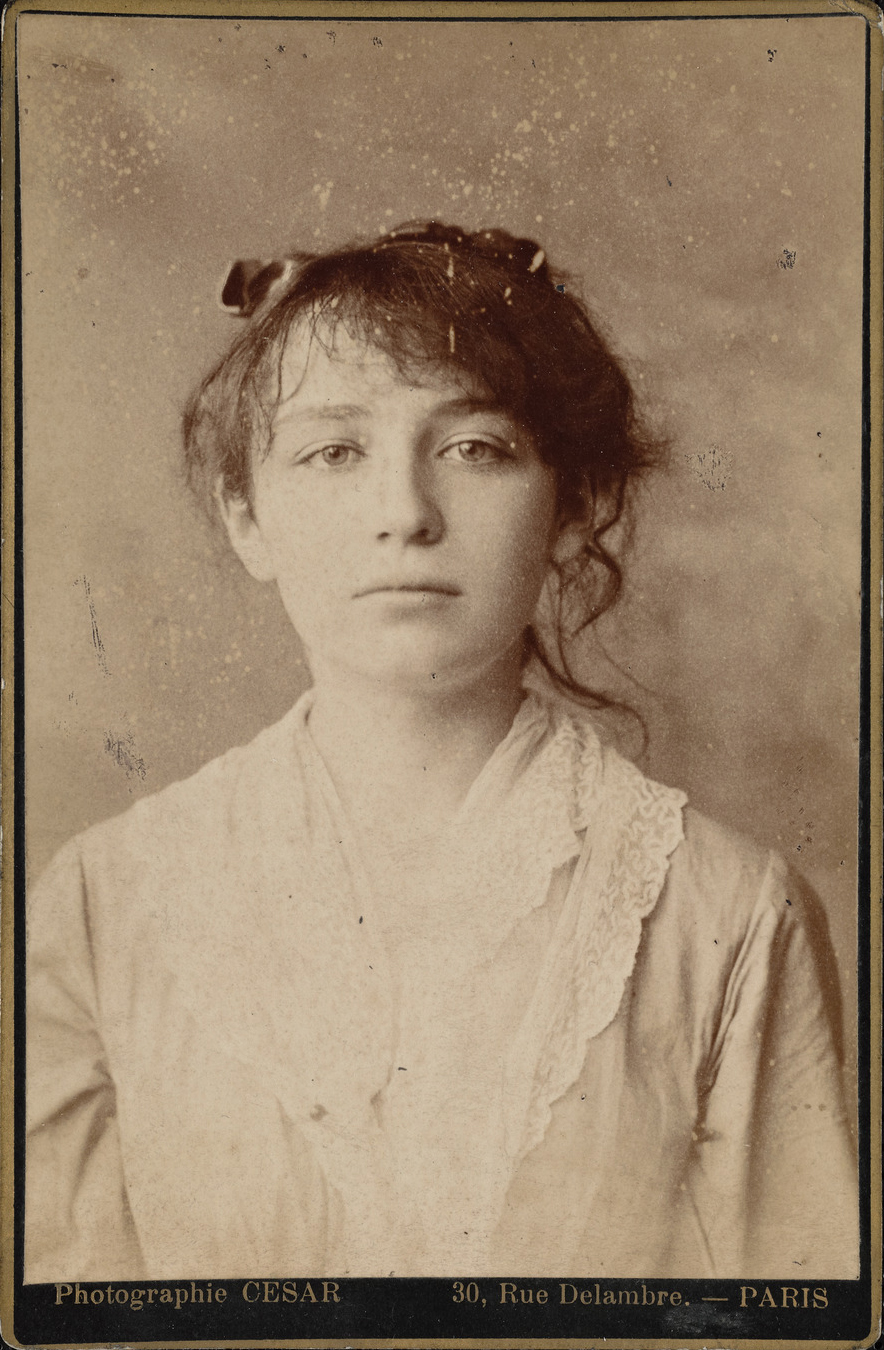
Camille Claudel, 1881, Photo César Séegner, Musée Rodin.
An artist of blazing genius, she dared to break every boundary of a suffocating era. She chose sculpture as her profession, lived a love story like no other, and paid a heavy price for a freedom that fin-de-siècle society could not forgive.
Her tragic trajectory, of a rare and searing intensity, was shattered against the walls of an asylum.
The Early Years
Born into a lower-middle-class provincial family, sister of the writer Paul Claudel, nothing seemed to destine young Camille for sculpture — women were expected to stick to watercolors or embroidery.
Yet from adolescence, Camille worked clay with a visceral, almost furious energy. Encouraged by her father, who recognized her extraordinary talent early on, and against the wishes of her cold and rigid mother, she moved to Paris. There she joined the Académie Colarossi, where she learned to master her medium.
The Burning Mirror: The Rodin Whirlwind
In 1883, her path crossed that of Auguste Rodin. He was 43; she was 19. The master, then at the height of his fame, immediately recognized the young woman's exceptional talent. She became his student, his model, his collaborator, and then his lover. For a decade, their two genius minds merged in an artistic dialogue of extraordinary power. Camille influenced Rodin as much as he inspired her.
She collaborated on some of the master's greatest works (such as The Gates of Hell, The Kiss, The Burghers of Calais… and others), bringing a lightness to his bronze.
Despite her talent, society saw in her only the courtesan. Even critics began to whisper that her gift was merely a reflection of the master's. In 1892, after Rodin refused to leave Rose Beuret — his lifelong companion — to marry her, Camille ended their relationship. She chose solitude to save her art, refusing to be reduced to the role of "Rodin's doll."
The Assertion of an Independent Genius
Alone, Camille Claudel sculpted her most powerful works and broke free from the Master's aesthetic. Where Rodin worked with mass and volume, Claudel chiseled intimacy and imbalance. She sought to express the truth of bodies, the movement of the soul, and raw sensuality. She invented a narrative form of sculpture, capturing fleeting moments with extraordinary delicacy, working in onyx and marble and blending different materials.
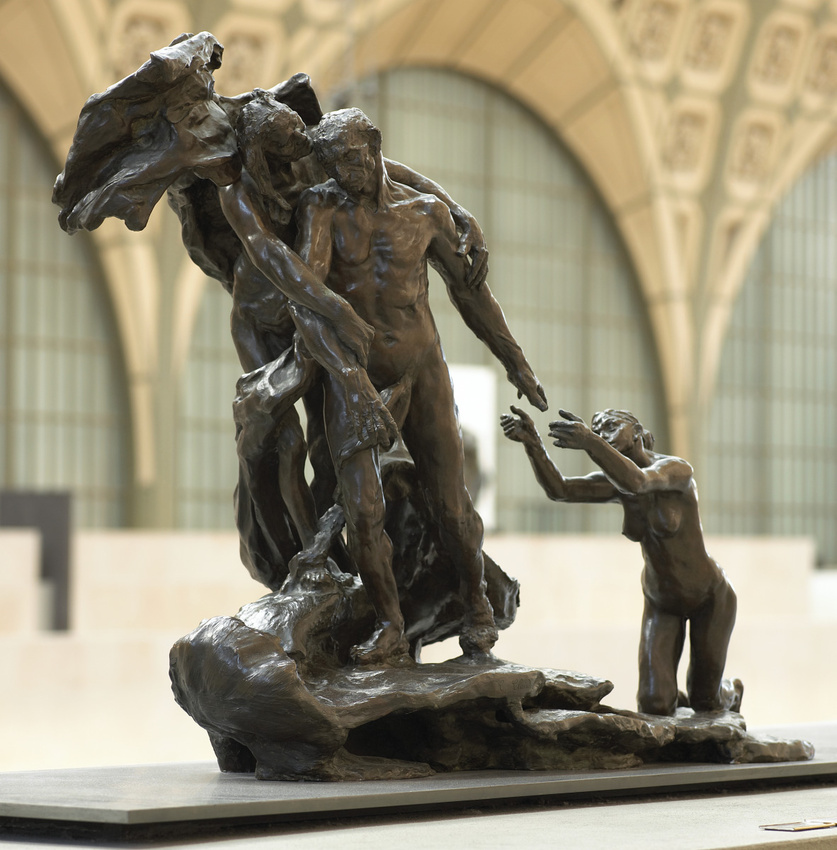
The Age of Maturity, Camille Claudel, 1902, Musée d'Orsay.
Her masterpiece, The Age of Maturity, immortalizes the inexorable passage of time and her lost love with Rodin: it depicts a middle-aged man being pulled away by an old woman from the arms of a young woman, kneeling and pleading.
One of the 6 bronze casts of this work was discovered by chance in a Parisian apartment a few years ago and sold for over 3 million euros.
Camille's independence came at a price. Without the backing of Rodin's network, commissions grew scarce. Camille descended into poverty, isolation, and a destructive paranoia. She became convinced, wrongly, that Rodin was spying on her and stealing her ideas. In fits of despair, she smashed her own plaster works with a hammer.
The punishment: Thirty years of silence
The verdict of patriarchal society came down like a guillotine blade, orchestrated by her own family. In 1913, upon the death of her father — her only source of support — her brother Paul Claudel and her mother signed the papers for her psychiatric commitment. Camille Claudel was 48 years old.
She would spend the last thirty years of her life in an asylum, never touching sculpture again. Yet medical reports quickly noted that her delusions had faded — but her mother categorically refused to allow her release.
Paul Claudel visited her only a handful of times over three decades.
She died in 1943, largely forgotten, a victim of the malnutrition that ravaged asylums at the time. She was buried in a common grave, her body lost forever.
The legacy of a rebel
Camille Claudel paid for her genius with her life. Society and her own family sought to erase her name, but the material she loved so deeply did not forget her.
Years after her death, her works were rediscovered and her talent finally recognized.
She who was not even granted a decent burial was at last acknowledged as a pioneering and brilliantly gifted artist. Since 2017, she has had her own museum, placing her among the greats.
Today regarded as one of the most important sculptors in history, she proved that genius has no gender, and she paved the way for generations of women artists.
Oum Kalthoum, Architect of Her Own Myth (2/2)
Oum Kalthoum, Architect of Her Own Myth (1/2)
Marie Curie: Beyond Prejudice, Uranium and Two Nobel Prizes (4)
George Sand: A Man’s Name to Establish Herself as a Prolific Writer (2)
When An Artist from Old Florence Takes Up Her Brush (1)
Mais de Micha Moussallem
Ver tudo


O mais recente do Levant Time
Ver tudo


