Eva Gonzalès: Subtle Freedom Through the Brush
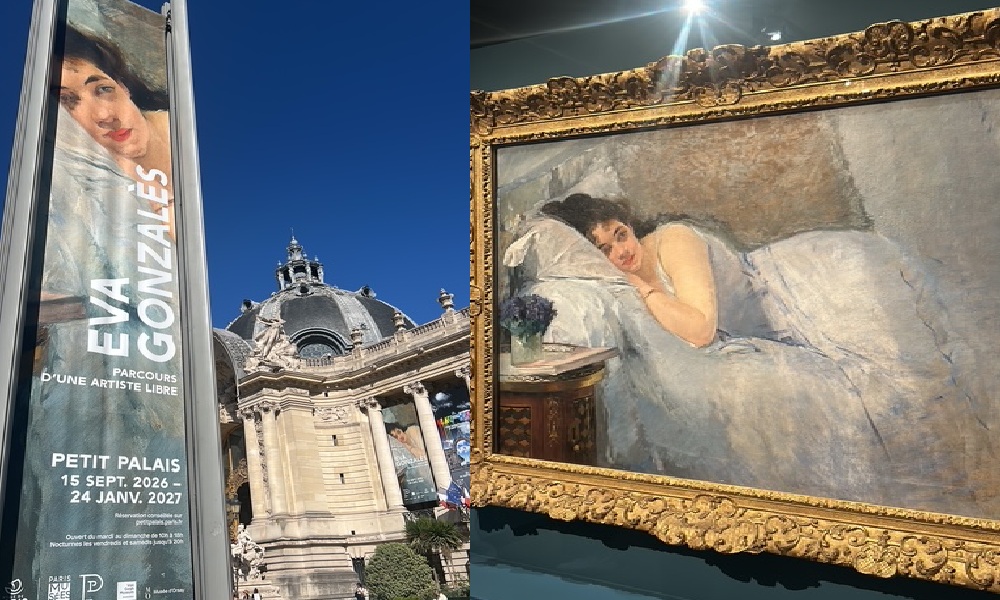

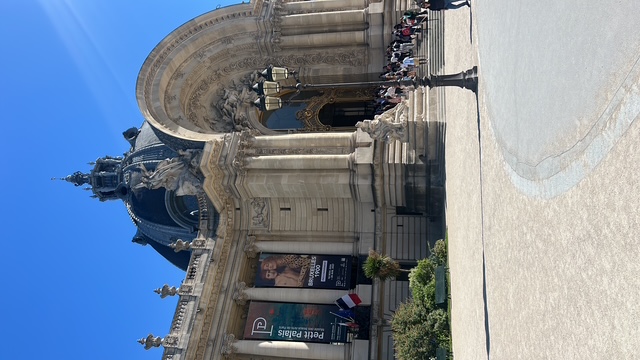
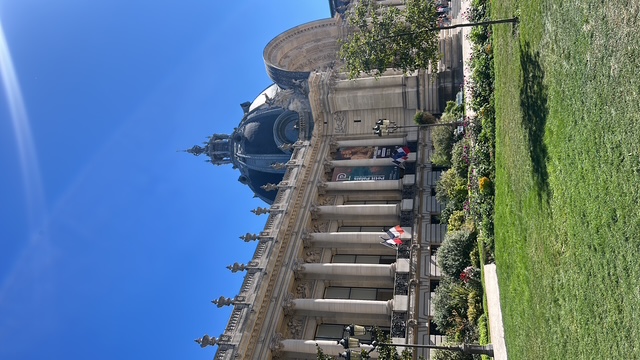
The Petit Palais is devoting its first major retrospective to Eva Gonzalès, running from September 15 through January 24, bringing together nearly one hundred paintings, pastels, and prints. The only official pupil of Édouard Manet, and a contemporary of Berthe Morisot and Mary Cassatt without ever truly belonging to the Impressionist group, she was above all a woman who forged her own path in a 19th century that offered few such opportunities to artists of her sex. Exceptionally well curated, the exhibition is also moving: behind the pupil, the model, the wife, and the mother, it reveals, work by work, a painter claiming her freedom.
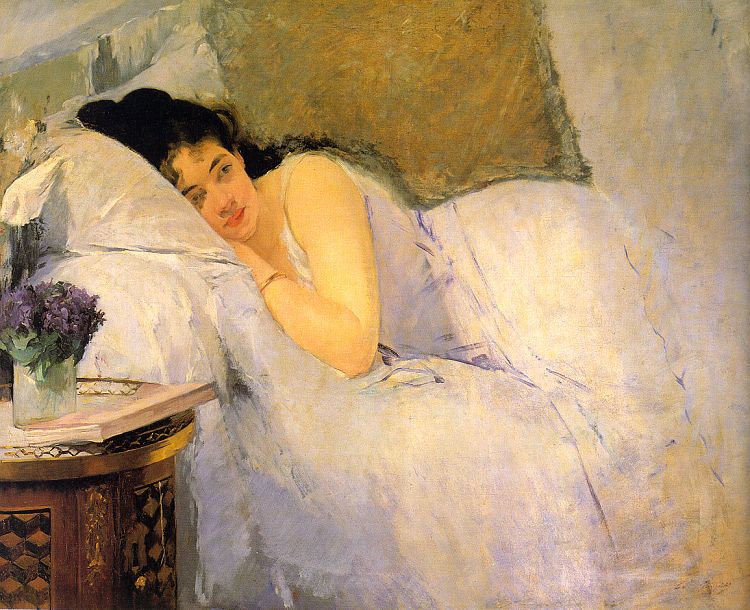
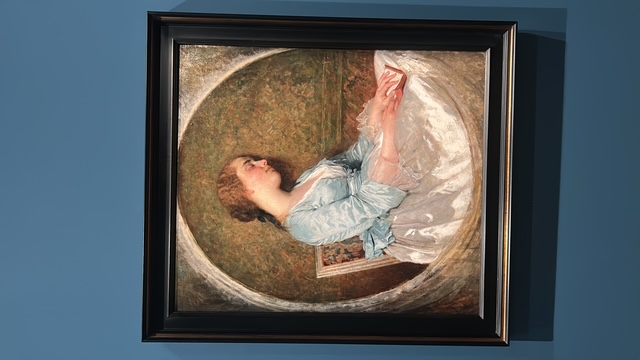
The Awakening, 1877.
Some artists are forever defined by a single work; others, by a relationship. For Eva Gonzalès, it was Manet. She was his pupil—the only one officially recognized—as well as his model, immortalized by him in 1870 wearing a long white dress and seated before her easel. Yet this pivotal closeness long kept her work in the master's shadow.
The Petit Palais exhibition wisely makes this starting point explicit in order to move beyond it. From room to room, the refinements inherited from Charles Chaplin meet Manet's blacks and modernity, before her brushwork broadens, her backgrounds become lighter, and the air of the Normandy beaches seems to enter the canvas almost tangibly. What emerges is no longer simply the evolution of a style, but the hard-won emergence of a voice.
Becoming a painter when you are born a woman
This struggle began long before Manet. Before she could free herself from her masters, Eva Gonzalès had to break away from what her era had planned for her.
Born in Paris in 1847, the daughter of writer and journalist Emmanuel Gonzalès and musician Célina Ragut, Eva grew up in a cultured bourgeois household where the arts were naturally part of her education. She herself played the piano for several hours a day and could have remained the accomplished young woman to whom her social milieu readily granted access to the arts, provided they remained a pastime. But Eva chose painting as her calling.
In the 19th century, however, the doors of the École des Beaux-Arts remained closed to women. They had to study elsewhere, in private studios, and Eva trained with Charles Chaplin from 1866 onward. The Petit Palais also accompanies her journey with a thread entitled A Woman Artist's Life, reminding us how becoming a painter as a woman already meant finding ways around the rules of a world largely conceived by men.
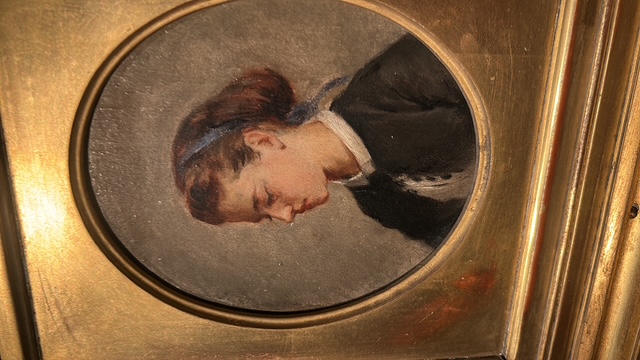
Her early works retain an almost powdery grace. In The Young Lady, as in The Two Sisters or The Toilette, the fabrics are sumptuous, the colors soft, and the gestures restrained. One sister arranges the other's hair, and in this intimate scene appears one of the most constant presences in Gonzalès's work: Jeanne, her younger sister, who would in turn be her model, pupil, confidante, and near double. She appears throughout her paintings over the years, her face bent or her gaze elsewhere, offering Eva a familiar territory in which to explore, experiment, and gradually invent herself.
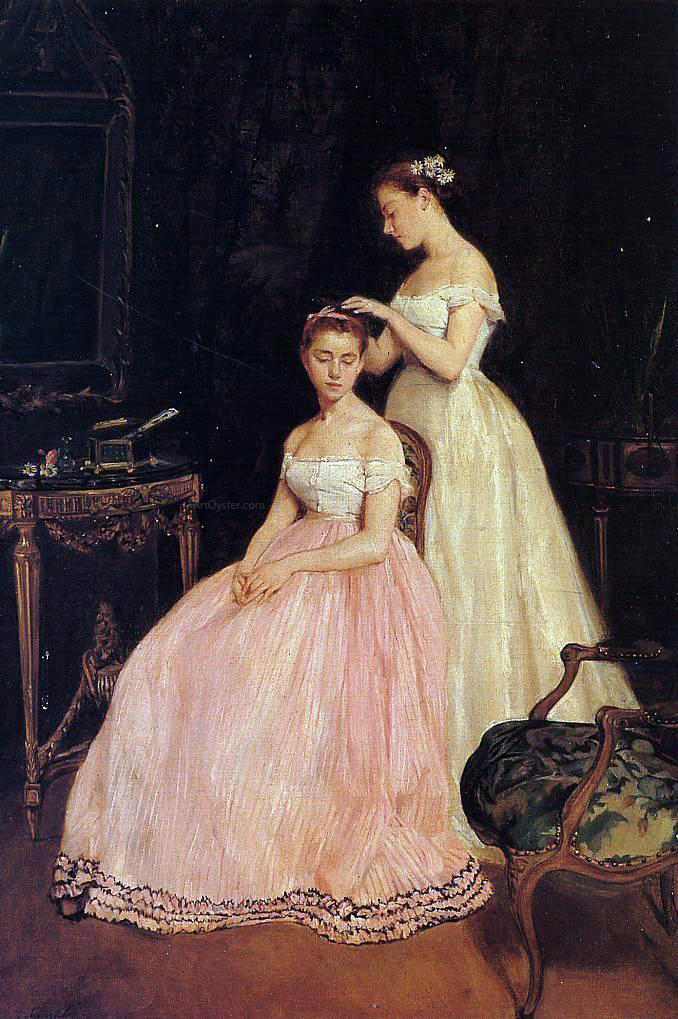
The Two Sisters or The Toilette, c. 1866–1868.
In Manet's shadow, finding her own light
When Gonzalès met Manet in 1869, she was twenty-two, and her painting began to breathe differently. The refinements she had learned from Chaplin did not disappear entirely, but they encountered the depth of blacks, the directness of line, and that distinctly modern way of letting the brush exist on the canvas. Gonzalès looked closely at her master, of course; yet as the exhibition unfolds, what moves us is precisely watching her gradually, almost imperceptibly, move away from him, until influence ceases to be a shadow and becomes a legacy.
A Box at the Italiens, around 1874, is one of the finest examples. Jeanne poses beside Henri Guérard, Eva’s future husband, in the velvety darkness of a theatre box. Rejected by the Salon of 1874, the painting was criticized precisely for what some saw as Manet’s excessive influence. Gonzalès did not give up: she exhibited it in her studio, reworked it, then submitted it again to the Salon in 1879, where it was accepted this time. There is already something of her freedom in this quiet determination: to take in, transform, withstand rejection, and return.
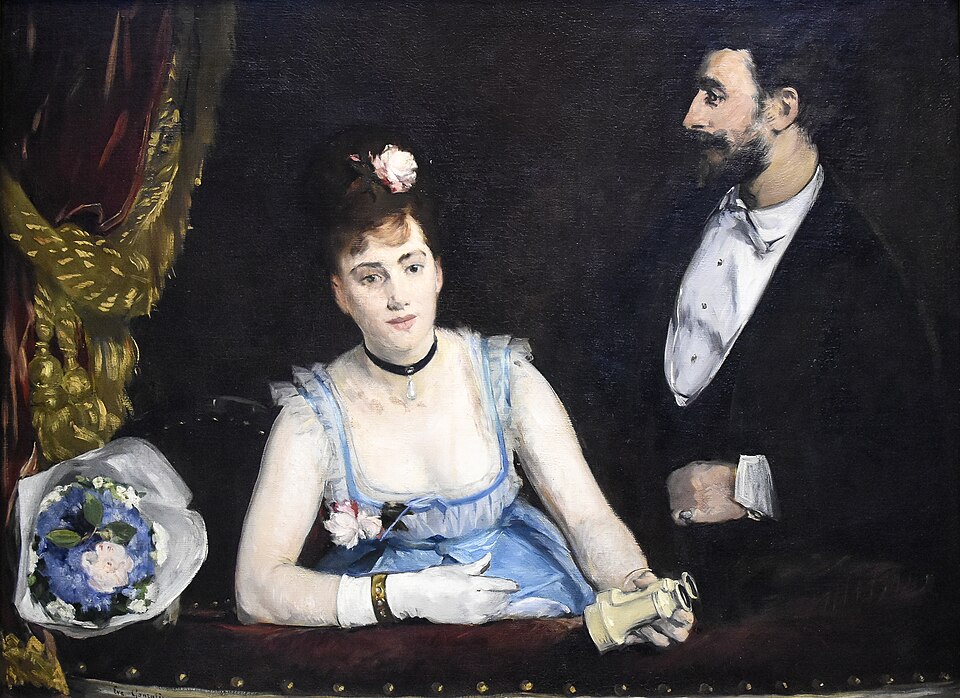
A Box at the Italiens, around 1874, Musée d’Orsay.
Yet something even subtler than the blacks, the compositions, or the modernity of the subjects remains from Manet in her work: violets. They reappear in Indolence, then in The Awakening, placed beside the bed amid the whiteness of the sheets. The flower belongs to Manet’s pictorial world, and the Petit Palais exhibition specifically invites us to read these bouquets as a reminder of the master. In Gonzalès’s work, these small mauve touches become a discreet echo: no longer an influence asserting itself, but a memory that endures. A few flowers, almost nothing—as though Manet could remain present without casting a shadow over her any longer.
When Painting Goes Outdoors
In Dieppe, Honfleur, and Grandcamp, her painting opens up to a different light. In Children in the Sand Dunes, Grandcamp, around 1877–1878, a few grasses, a basket, two children, and a sky are enough. The paintwork becomes swifter, almost unfinished in places, as though the aim were less to describe the landscape than to capture the moment before the light changes.
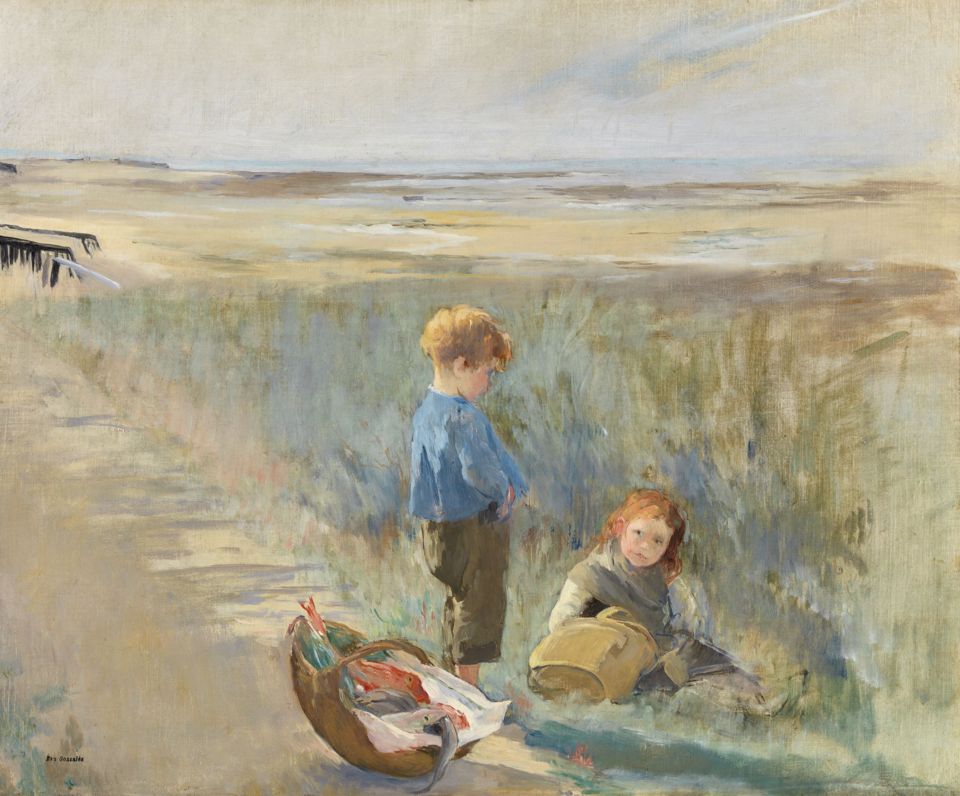
Children in the Sand Dunes, Grandcamp, around 1877–1878, National Gallery of Ireland.
Gonzalès never took part in the Impressionist exhibitions and, like Manet, preferred to continue testing herself against the Salon. Yet her painting naturally aligns here with some of their explorations, not through membership in a group, but because air and light seem to compel her to see in a new way. The outlines grow less restrained, the brushwork freer; something has loosened from the precious finish of her early work, without ever losing the distinctive gentleness that is her own.
The transformation becomes almost tangible. She is no longer merely a pupil mastering what she has been taught, but a painter beginning to choose what she wishes to retain and what she can now do without.
These Women Looking Elsewhere
In The Donkey Ride, around 1880–1882, Jeanne and Henri Guérard are together again, but we are far from the restrained refinement of the early years: the brushstrokes have broadened, the background is suggested rather than described, and the painting no longer feels compelled to finish everything. Perched on the animal, Jeanne looks away.
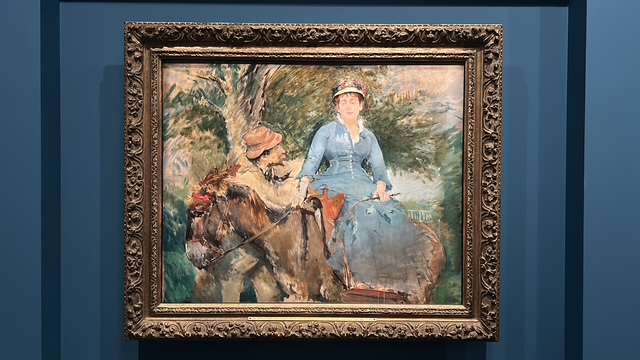
The Donkey Ride (Henri and Jeanne), around 1880–1882, Bristol Museums & Archives.
This gaze directed elsewhere could almost become the exhibition’s secret thread, so unconcerned do Eva Gonzalès’s women seem with the gaze cast upon them. They read, dream, arrange their hair, awaken, recline in an armchair or on a bed, and contemplate what lies beyond the painting. They are elegant without being decorative, present without wholly offering themselves. They possess an inner life to which the viewer has no full access, and perhaps it is there, without manifesto or claim, that Gonzalès’s painting seems so modern to us today.
For her freedom was never spectacular. Eva Gonzalès did not live on the fringes of her world: she knew its conventions, married Henri Guérard in 1879, and became a mother. Yet she continued to paint, to exhibit, and to face judgment and rejection in a century when a woman artist’s career remained precarious.
The inclusion of Marie Bracquemond’s The Afternoon Snack in the exhibition gives this reality particular resonance. Her sister Louise is absorbed in her reading, in a world that engages wonderfully with that of Gonzalès. Yet their paths diverged: Bracquemond would gradually stop exhibiting, in a marriage that was not conducive to her painting. The juxtaposition, without being overstated, says a great deal. For a woman in the 19th century, learning to paint was already an achievement; continuing to paint could be another.
Eva Gonzalès, for her part, continued. Not amid the clamour of rebellion, but with the quiet determination that seems to run through her entire body of work. Her freedom was forged within the very constraints of her time: those imposed by her sex, her social background, the Salon, and her teachers. She did not shatter them; she shifted them just enough to carve out a space of her own.
A freedom cut short
Fate, however, gave her little time to continue that struggle. On 19 April 1883, she gave birth to her son, Jean-Raimond. Manet died on 30 April. Six days later, on 6 May, Eva succumbed to an embolism. She was only thirty-six. Two years later, a posthumous exhibition was devoted to her at the salons of La Vie moderne; then time slowly did its work of erasure.
This abrupt ending lends the final rooms a particular poignancy. We have just watched a body of work opening up, even as we know how suddenly her life is about to close. And this is perhaps where the structure of this retrospective is at its most apt: nearly one hundred works tell not only the story of a career, but make palpable a movement—that of a woman who learned from Chaplin, admired Manet, retained a certain gentleness from one and the modernity of vision, along with a few violets, from the other, before gradually finding her own light.
One leaves the Petit Palais with the sense of having encountered far more than “Manet’s only pupil.” A painter, certainly, but also a woman who, without rhetoric or posturing, refused to let the limits of her century become her own.
Eva Gonzalès did not free herself from the constraints of her era by smashing them. Her freedom was subtler, and perhaps more difficult: canvas by canvas, she learned to become herself within the boundaries her time had drawn for her.
Eva Gonzalès: The Journey of a Free Artist, at the Petit Palais, Paris, through 24 January 2027.