

The Iranian conflict ignites new fronts


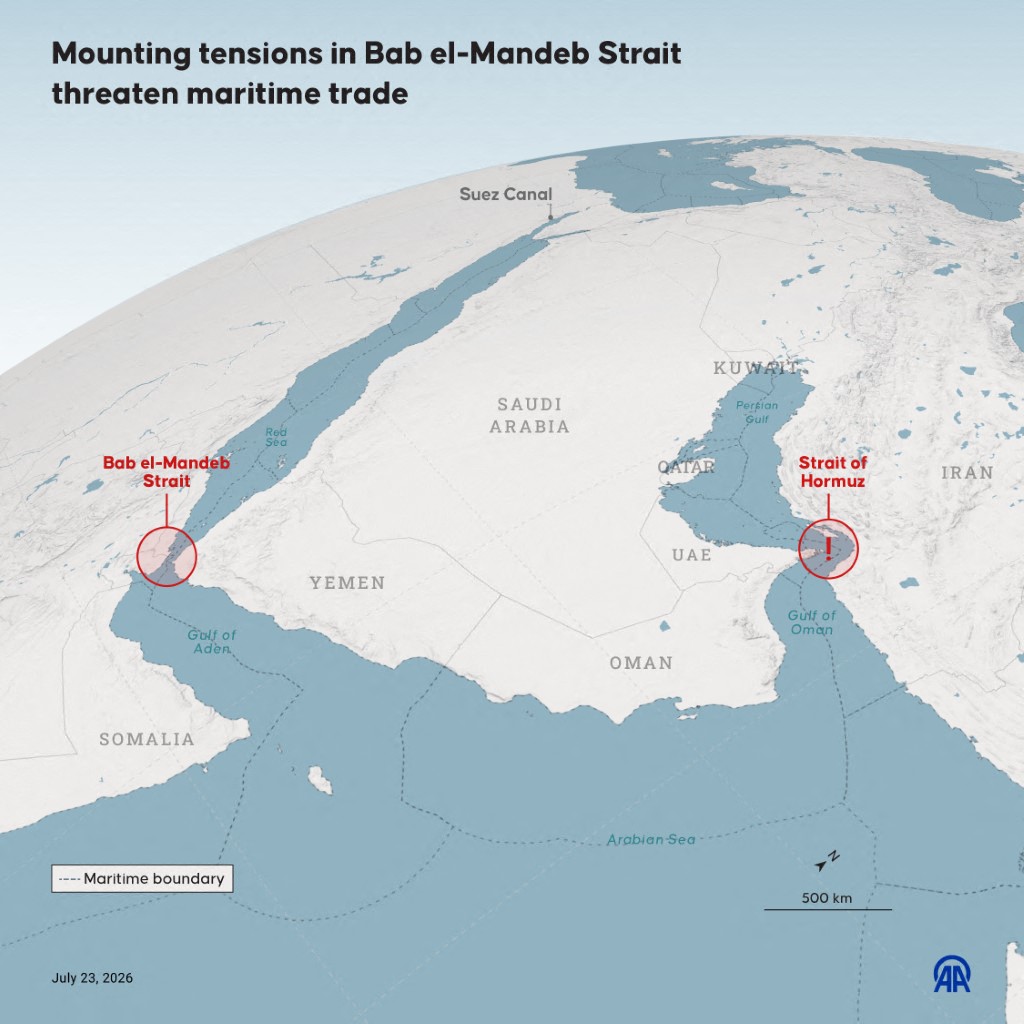
Yemen's Houthi rebels, allies of Tehran, targeted Saudi Arabian oil facilities on Saturday in retaliation for strikes by Riyadh, marking a further escalation of hostilities on yet another front of the war engulfing the Middle East.
While Saudi authorities have so far remained silent on the matter, the Greek air force — tasked with operating an air defense system in Saudi Arabia — announced it had intercepted two missiles and a drone launched from Yemen toward Yanbu.
Having stepped up strikes against Gulf states in recent months in retaliation for American bombardments, Tehran now appears to be opening a new front through its Houthi allies against the Riyadh-led coalition.
These new clashes in the strategically vital Red Sea region — while the Strait of Hormuz remains blocked at the other end of the Arabian Peninsula — are deepening concerns about the global transport of hydrocarbons.
In response to this latest escalation, Donald Trump threatened the Houthis and Iran this week with "major military punishment."
The American president said he was keeping diplomatic channels open and continuing dialogue with Iranian leaders, while also stating he could inflict a "far worse level" of strikes on the Islamic Republic. On Friday, several American media outlets reported discussions about a possible large-scale military operation.
Bahrain and Kuwait: a rare Gulf counterstrike
For several weeks, Iran has been focusing its retaliatory strikes on Bahrain and Kuwait — two countries that host American military bases. Both Gulf states, equipped with relatively modest air forces fielding American and European aircraft, are no longer willing to let Tehran strike them with impunity.
According to Friday's Wall Street Journal, Bahrain and Kuwait secretly sent fighter jets to strike military sites in Iran, marking their first direct retaliation against the Islamic Republic. Carried out earlier this month, these operations reflect a growing awareness among Arab states of a conflict that threatens to draw them in ever deeper.The strikes reportedly targeted drone depots, missile stockpiles, and other military infrastructure. The United Arab Emirates, which had already taken part in several operations against Iran at the outset of the conflict, is said to have provided targeting intelligence and defensive air cover — a sign of increasingly close Arab military cooperation against Tehran, according to the same sources.Repression continues in Iran
Despite the ceasefire reached in April, executions of protesters, members of banned groups, and alleged spies continue in Iran. Human rights organizations say this amounts to an attempt by the authorities to prevent the emergence of a new protest movement similar to the one seen last January.
The recent resumption of hostilities is causing even greater concern among these organizations, which fear a further tightening of repression aimed at silencing any dissent.
Iranian authorities accuse those executed of having taken part in deadly attacks against security forces or of targeting public buildings. However, NGOs denounce arbitrary and summary trials, as well as acts of torture.
These cases are said to represent only the tip of the iceberg. According to Iran Human Rights (IHR), nearly 400 people have been executed since the beginning of the year, mainly in murder or drug trafficking cases.
With 2,150 executions recorded last year, Iran once again ranked second in the world behind China, according to Amnesty International.
Tensions spread to new fronts
Avec 2150 exécutions recensées l'an dernier, l'Iran occupait une nouvelle fois la deuxième place mondiale derrière la Chine, selon Amnesty International.
Les tensions gagnent de nouveaux fronts
Crisis hotspots continue to shift across the Middle East, where fears persist that war between Washington and Tehran could resume at any moment. Both sides say they are ready for a new round of confrontations, while the prospects for a return to dialogue appear increasingly slim given the hardening of their respective positions.
Israel, for its part, says it is ready to resume strikes against the Islamic Republic if Iran attacks its territory or if Washington gives the green light for a large-scale military operation.
Against this backdrop, Israeli Prime Minister Benjamin Netanyahu's visit to Washington early next week takes on particular significance.
The Israeli prime minister's office announced on Friday that Netanyahu would be received at the White House by Donald Trump on Tuesday, putting an end to weeks of speculation about a deterioration in relations between the two leaders.
The meeting is expected to give them an opportunity to explore the various options that could bring an end to a grinding conflict, while preventing Tehran from rebuilding its military capabilities or regaining the diplomatic initiative from a position of strength.
In another sign that hostilities could resume, the U.S. Embassy in Israel urged American citizens in the country to "closely monitor the evolving situation and prepare for possible disruptions to air travel."
Deadly clashes in the West Bank
In the West Bank, residents of the Palestinian village of Tell buried four men on Saturday who had been killed the previous day during clashes with Israeli settlers.
The violence erupted on Friday after around twenty settlers from the nearby Havat Gilad outpost entered the village. According to the Israeli army, a Palestinian seized a settler's weapon before killing one of them. A gunfight then broke out, leaving four Palestinians and a second Israeli dead.
Israel immediately launched a large-scale security operation, sealing off the area and closing roadblocks throughout the West Bank, a Palestinian territory occupied since 1967.
Violence in the West Bank has escalated sharply since the Hamas attack on Israel on October 7, 2023. Settler attacks and Israeli army raids on Palestinian villages have become nearly daily occurrences. These acts are regularly documented in videos shared on social media, sometimes by the perpetrators themselves.
Following what he described as a "deadly terrorist attack" that killed two Israelis, Benjamin Netanyahu vowed to act "firmly" and announced "the accelerated legalization of settlement outposts."
These outposts, typically consisting of a few trailers or prefabricated structures built without official authorization, are intended to create facts on the ground.
Two sites granted emergency World Heritage in Danger listing
On a separate note, the fortresses of Jabal Amel in southern Lebanon and the archaeological site of Sebastia in the West Bank were granted emergency inscription on both the UNESCO World Heritage List and the List of World Heritage in Danger on Friday.
The five Jabal Amel fortresses are located in a region of southern Lebanon that has been regularly bombed by Israel since the start of the conflict.
The "constituent elements" of these fortifications, dating from the 12th century and built on hills overlooking the surrounding area, have sustained damage and remain exposed to threats linked to the ongoing armed conflict — threats "serious enough to warrant the use of an emergency procedure," UNESCO emphasized.
Gradual return to Zawtar el-Gharbiyeh
In Lebanon, a tentative sign of calm has finally emerged in the South. Residents of Zawtar el-Gharbiyeh have begun gradually returning to their village under the supervision of the Lebanese army, which has deployed there in accordance with the framework agreement reached on June 26 between Beirut and Israel.
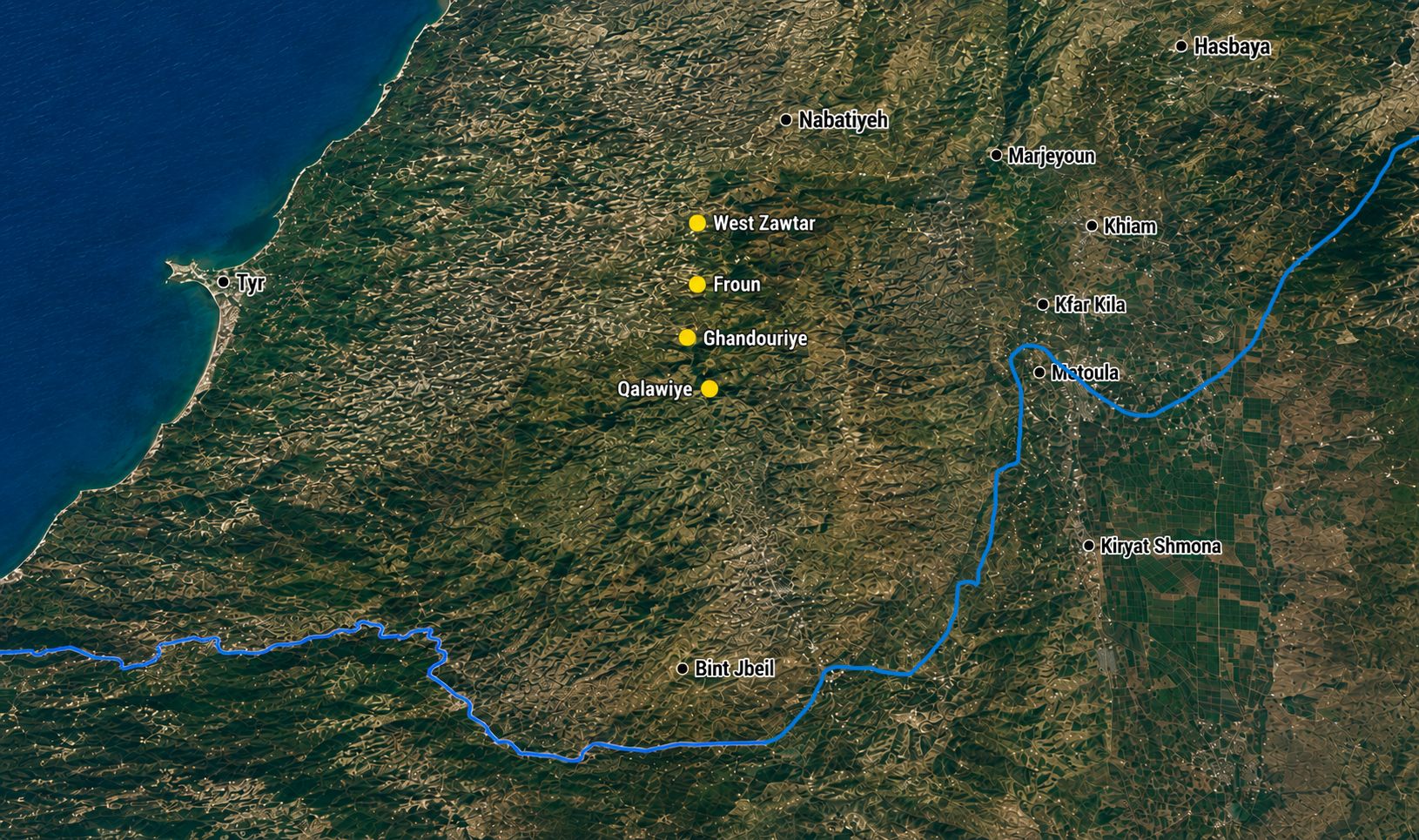
This return suggests that the implementation of the agreement is moving forward, despite the Israeli army continuing demolition operations in other parts of southern Lebanon.
The gradual withdrawal of Israeli forces remains contingent, however, on the full deployment of the Lebanese army and the dismantling of Hezbollah's paramilitary infrastructure.
In Syria, Guterres calls for international support
On the diplomatic front, United Nations Secretary-General Antonio Guterres, making his first visit to Syria, called on the international community on Saturday to support the country as it navigates a transitional phase following more than a decade of civil war and the establishment of new authorities.
Standing alongside President Ahmad al-Sharaa, he also advocated for respect for Syrian sovereignty, in reference to Israeli incursions into the south of the country.
This visit marks the first by a UN Secretary-General to Syria since Ban Ki-moon's trip in 2009. It comes more than a year and a half after the fall of President Bashar al-Assad in late 2024, who was overthrown by a coalition of rebel groups.
France Avoids a State of Emergency but Prepares for the Worst
A Nobel Peace Prize to Save International Law in Peril
A Lebanese-Iranian Meeting in New York, but Several Political Messages
“No State Can Have Two Armies and Two Decision-Making Authorities,” Salam Says in New York
Trump Pulls Back at the Last Minute From Strikes on the Houthis
Plus de LevantTime .
Voir tout


À lire aussi dans Today's Essential
Voir tout


Les derniers articles de Levant Time
Voir tout


