

The Beaufort Explosions Trigger a Political Shockwave
Trump Plan: Hamas confirms its agreement on disarmament


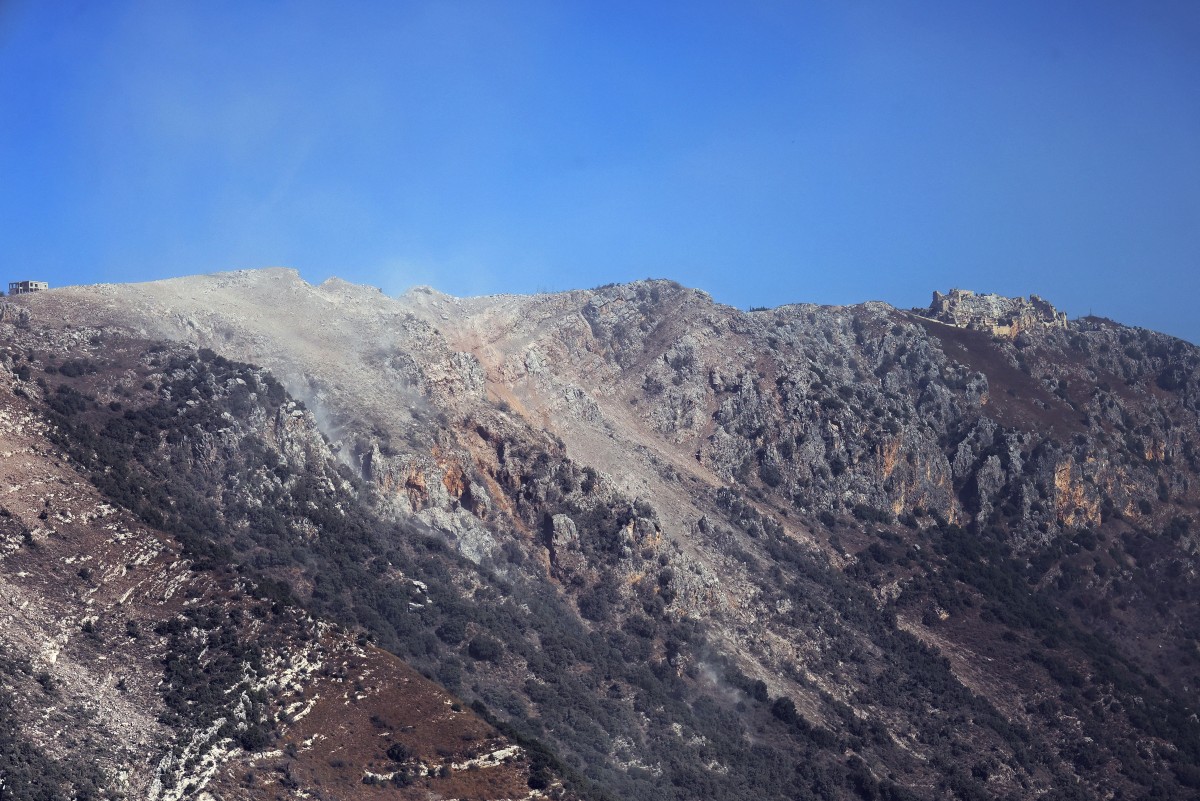
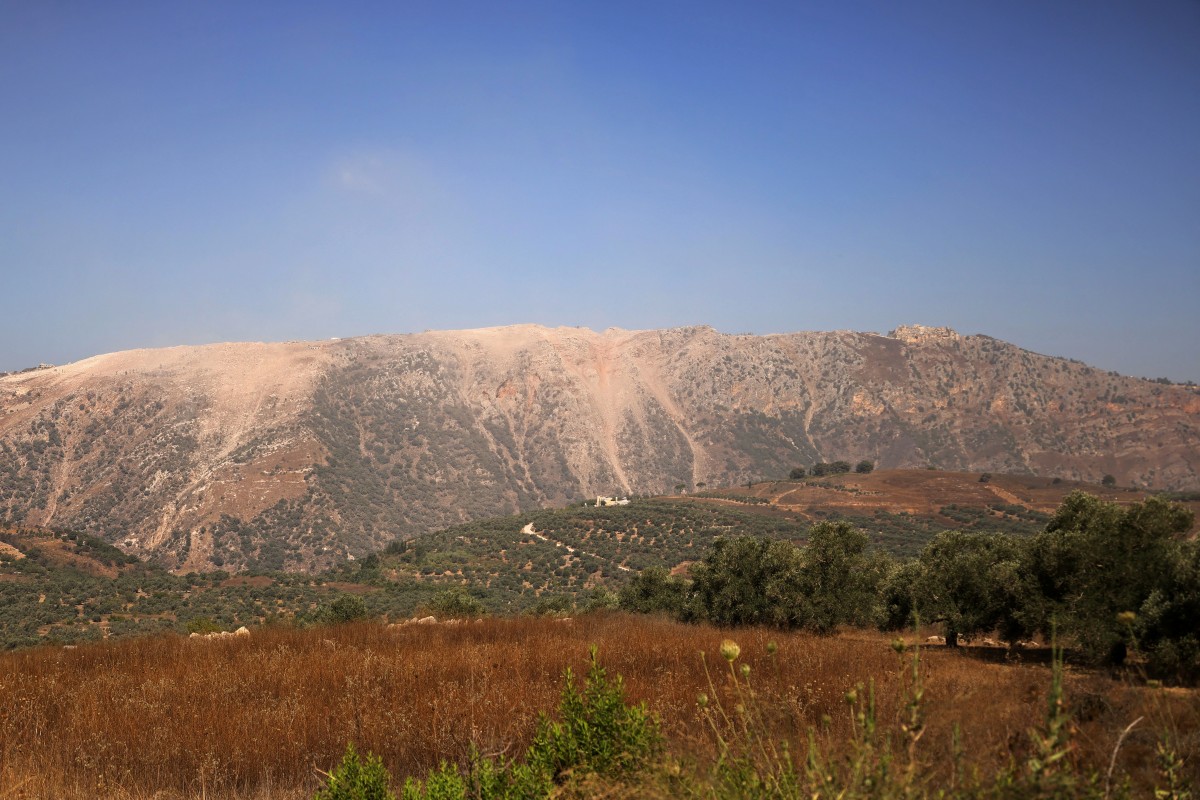
The explosions generated shockwaves equivalent to a magnitude 3.2 earthquake: the Israeli army carried out massive explosions near Beaufort Castle in southern Lebanon on Thursday night, drawing condemnation from President Joseph Aoun and Prime Minister Nawaf Salam.
The head of state went so far as to denounce "an extremely dangerous escalation" and "a direct threat" to the implementation of the framework agreement concluded in June between Lebanon and Israel under U.S. auspices.
While the United States had confirmed on Monday that new talks between Israel and Lebanon would be held in Rome from August 4 to 6, aimed in part at expanding the process, the presidency lamented in a statement that "the timing of these aggressions sends negative messages and undermines international efforts to consolidate stability," just days before those new negotiations.
700 tons of explosives
Lebanese Prime Minister Nawaf Salam condemned "Israel's ongoing aggressions in the South, in the form of explosions, bombardments and systematic destruction," including "damage to archaeological sites."
(AFP)
In a joint statement, Israeli Prime Minister Benjamin Netanyahu and Defense Minister Israel Katz announced that the army had destroyed "terrorist tunnels in the Beaufort area" using around 700 tons of explosives.
They stated that the explosions came in response to "a flagrant ceasefire violation by Hezbollah" on Wednesday.
The Israeli army had accused Hezbollah on Wednesday of violating the ceasefire by launching an explosive drone at an Israeli military vehicle in the south of the country.
(AFP)
Beaufort Castle, a Crusader-era fortress located in the southern area occupied by Israel, was added to UNESCO's List of World Heritage in Danger last week.
According to Lebanon's Ministry of Culture, the explosions "may have caused damage to the surroundings of the fortress," the full extent of which "can only be assessed following an on-site inspection" — which is currently impossible.
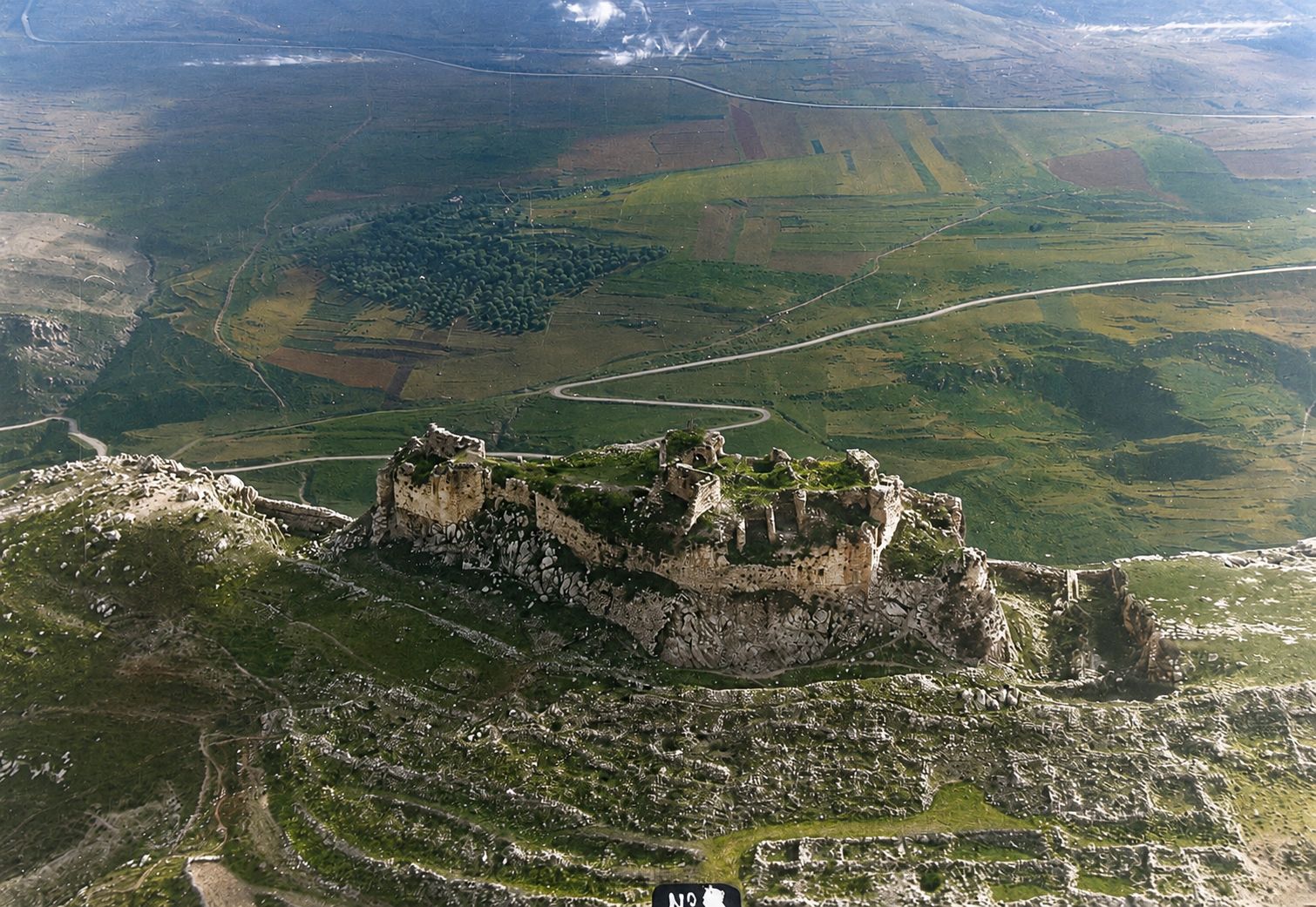
Aerial photo taken by the Armée du Levant in 1936, colorized by AI. (Wikimedia Commons)
Riad Salamé placed in detention at a hospital
In a separate development, former Banque du Liban governor Riad Salamé, who faces embezzlement charges, has been placed under police-supervised detention in a hospital where he was admitted after suffering a health episode.
Governor of the Banque du Liban (BDL) from 1993 to July 2023, Riad Salamé, 76, faces multiple charges in Lebanon and abroad, but has consistently denied any wrongdoing.
He was due to appear in court on Thursday in connection with a complaint filed by the new governor, Karim Souaid, for embezzlement of the institution's funds, illicit enrichment, and money laundering.
Having failed to appear at the hearing, Riad Salamé was subsequently the subject of a summons warrant issued by a judge, but ultimately decided to go to the courthouse voluntarily, accompanied by his lawyer, a judicial source said.
He then "suffered a health episode on his way to the Palace of Justice," the source added, noting that the hearing had been postponed indefinitely.
Later, after authorities were unable to locate him at his registered addresses or at any hospital, the Attorney General at the Court of Cassation issued a new warrant for his arrest.
Riad Salamé was eventually found on Friday at a hospital outside Beirut.
The judge ordered that "security measures be reinforced in the wing where he is staying" as well as at the hospital's entrances, and that he be considered "in detention," the judicial source added.
Riad Salamé is accused by his critics of being one of the key figures responsible for Lebanon's financial collapse.
Gaza: Hamas confirms a deal on its disarmament
On the regional front, Hamas confirmed on Friday that it had accepted a deal calling for its disarmament and a gradual Israeli withdrawal from Gaza — the second phase of a US-led plan to end the war between the Palestinian Islamist movement and Israel.
Nearly twenty-four hours after Donald Trump announced the agreement — a major diplomatic breakthrough for him at a time when the United States remains entangled in its war with Iran — the Israeli government had yet to officially respond. Far-right Israeli minister Itamar Ben Gvir, however, denounced it as "unacceptable for Israel."
The deal, a fifteen-point roadmap published Friday by the "Peace Council," calls for both sides to halt military operations and for the National Committee for the Administration of Gaza (NCAG) — tasked with managing daily life during the transition period — to be allowed into the territory.
This body, made up of Palestinian technocrats, is currently based in Egypt, as Israel has been blocking its access to Gaza.
The NCAG will gradually take charge, according to a set timeline, of the process of dismantling and storing Hamas's heavy weapons, military production sites, weapons depots, and tunnel network — with no weapons to be handed over to Israel or to any non-Palestinian organizations.
The process will be tied to a phased Israeli withdrawal. Implementation of the agreement will be overseen by an International Verification Committee (IVC).
The text also provides for the temporary deployment in Gaza of the International Stabilization Force (ISF), currently being formed as part of Donald Trump's plan, to monitor compliance with the ceasefire and ensure the delivery of humanitarian aid.
The "Peace Council's" senior representative for Gaza, Nikolai Mladenov, stressed that "the Israeli withdrawal must go hand in hand with disarmament." The deal, announced two days after Donald Trump met Israeli Prime Minister Benjamin Netanyahu at the White House, required "months of very difficult negotiations," he noted.
In the cramped, densely populated territory, where the humanitarian situation remains deeply alarming, residents are caught between skepticism and hope.
Israeli forces occupy more than 60% of the territory, which is separated from the Hamas-controlled zone by a "yellow line" of demarcation.
Les forces israéliennes occupent plus de 60 % du territoire, séparé de la zone contrôlée par le Hamas par une «ligne jaune» de démarcation.
France Avoids a State of Emergency but Prepares for the Worst
A Nobel Peace Prize to Save International Law in Peril
A Lebanese-Iranian Meeting in New York, but Several Political Messages
“No State Can Have Two Armies and Two Decision-Making Authorities,” Salam Says in New York
Trump Pulls Back at the Last Minute From Strikes on the Houthis
المزيد من LevantTime .
عرض الكل


المزيد في Today's Essential
عرض الكل


الأحدث من Levant Time
عرض الكل


