

Sheikh Zayed Grand Mosque: An Architectural Jewel and Symbol of Tolerance

The Sheikh Zayed Grand Mosque in Abu Dhabi is one of the most iconic landmarks of the United Arab Emirates. A true architectural masterpiece, it welcomes nearly 7 million visitors a year, 82% of whom are international tourists. Beyond its grandeur, the mosque serves as a platform for interfaith dialogu and the promotion of universal human values.
The mosque’s story begins in the 1980s, when Sheikh Zayed bin Sultan Al Nahyan, the founding father of the United Arab Emirates, envisioned a place of worship that would symbolize the moderation of Islam. His vision was clear: to create a building that promotes tolerance and cultural exchange while blending the cultural diversity of the Islamic world with both historical and contemporary architectural and artistic values.
Construction took eleven years, finally concluding in December 2007. Sheikh Zayed, who passed away in 2004, is buried in the courtyard of the mosque he commissioned.
The Sheikh Zayed Grand Mosque impresses as much for its beauty as for its scale. Covering more than 12 hectares (120,000 square meters), it can accommodate nearly 55,000 worshippers, making it one of the largest mosques in the world.
A Collective Construction Project
The mosque’s creation was a global endeavor, involving nearly 3,000 workers and 38 local and international companies. Renowned professionals, artists and craftsmen from countries including Syria, India, Italy, Germany, Turkey, Pakistan, Malaysia, Iran, China, the United Kingdom, New Zealand and North Macedonia contributed to the project.

(Photo Mohamed Zarandah / Anadolu via AFP)
The result is a harmonious blend of different Islamic architectural styles. The mosque features 82 domes of varying sizes, some reaching up to 85 meters in height. Four minarets, each over 100 meters tall, rise at the corners of the courtyard, while more than 1,000 columns support the structure.
Delicate floral mosaics adorn the courtyard, and the capitals of the columns are decorated with gilded palm flowers. The mosque’s steel and concrete framework is entirely clad in Carrara marble, renowned as the purest white marble in the world. The central courtyard, covering 17,080 square meters, is also paved with this marble, giving the building an unparalleled brilliance.
Interior Refinement
The façade is equipped with an innovative nocturnal lighting system. Following the lunar cycle, the lights gradually shift from a cold white at full moon to a deep blue by the fourteenth night.
The interior decoration adheres strictly to Islamic principles: there are no human or animal representations, but floral and geometric patterns and arabesques enrich the space. Pointed arches embellish the structure, and 12,100 molded of plaster and fiberglass panels covers the interior. The 1,048 ornamental columns, sculpted by local artisans, are inlaid with semi-precious stones.
The ceiling of the grand prayer hall is supported by 24 columns clad in white marble and inlaid with mother-of-pearl. The 99 names of God (Allah) are inscribed on the subtly illuminated qibla wall. Spectacular chandeliers are adorned with Swarovski crystals and 40 kilograms of 24-carat gold, the main chandelier being the largest in the world.
The Persian carpet in the grand prayer hall is a masterpiece. Covering 5,627 square meters, it is the largest hand-woven carpet in the world, with an estimated value of 8.5 million dollars.
Intercultural Dialogue
Since its opening, the mosque has become a major cultural tourism destination, ranking among the world’s most sought-after attractions and the leading cultural and religious site in the Middle East.
Beyond its religious role and architectural splendor, the mosque remains true to its mission of intercultural dialogue. The Jusoor program (“roots” in Arabic, ed.), launched in 2019, is a prime example. Through this initiative, individuals and institutions from diverse backgrounds are invited to experience a unique religious and cultural journey, fostering mutual understanding and the promotion of universal human values.
The site also houses the Sheikh Zayed Grand Mosque Center, a learning center with a library housing classical works and publications in several languages, including Arabic, English, French, and Italian.
More than a cultural landmark, the Grand Mosque embodies the values of tolerance, openness, and peaceful coexistence that Sheikh Zayed sought to pass on to future generations. It remains a living symbol of his enduring legacy.
With the OIF, Francophone Literature Breaks Down Borders
Eva Gonzalès: Subtle Freedom Through the Brush
September News: The Battle of Lebanon
The Samir Kassir Festival, or the Lebanon Yet to Be Born
Why Habermas Remains Urgently Relevant
Más de Micha Moussallem
Ver todo


Más en Culture
Ver todo


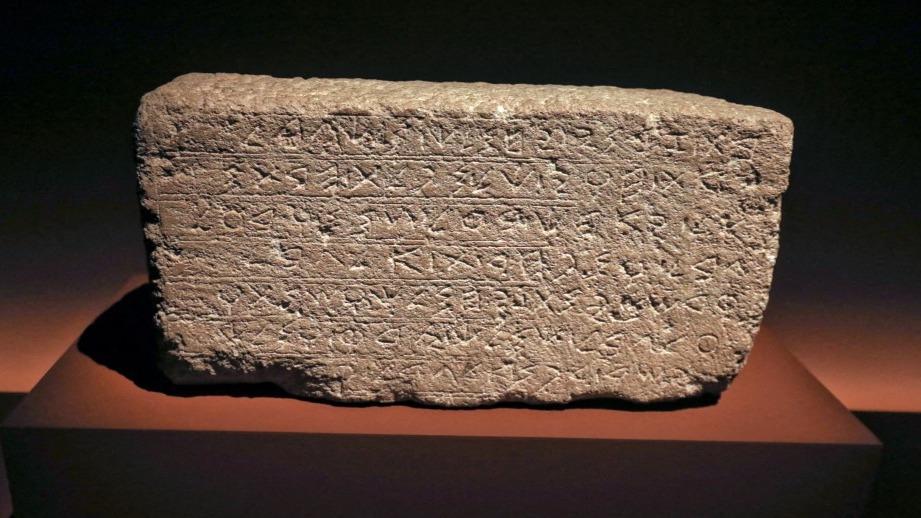

'Byblos' at the IMA: a cultural resistance in the face of war
Lo último de Levant Time
Ver todo


