

Nabih Berri: The Architect of Iran’s Occupation of Lebanon

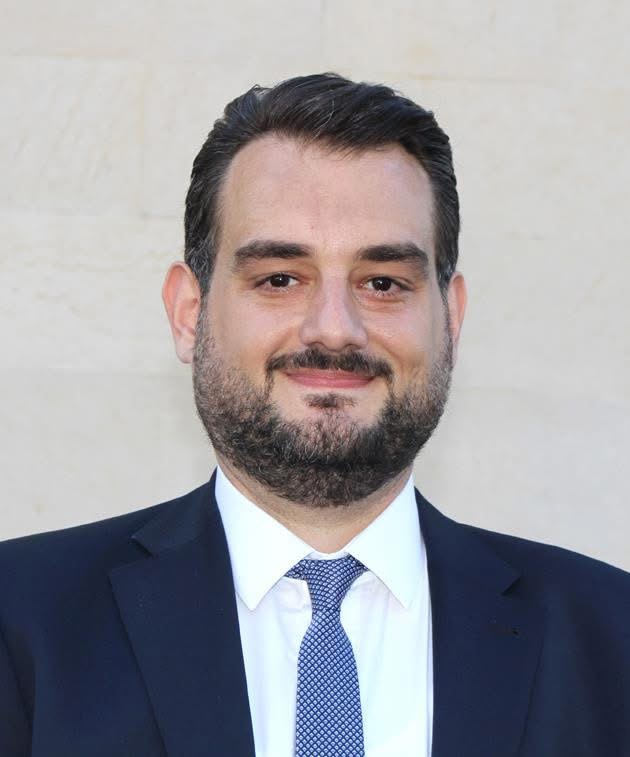
At a pivotal moment in Lebanon’s trajectory, the decision to expel the Iranian ambassador cannot be treated as a routine diplomatic move. It is, quite simply, the first real test of whether the Lebanese state is capable of saying “no” to a regional project that has hollowed out its sovereignty for years.
But as always, the problem is not only external—it lies within, and specifically with those who claim to be partners in governance.
At the center of this stands Nabih Berri, our omnipresent Speaker of the House.
Berri, who today attempts to present himself as a underwriter of stability, is in reality one of the chief architects of its collapse. The man who long branded himself as a “safety valve” has instead become a valve of obstruction, blocking any serious attempt to challenge Hezbollah’s dominance and Iran’s hold over Lebanon.
Let us be clear: the issue is not merely the expulsion of the Iranian ambassador, but the system that allowed that ambassador to behave as a de facto ruler, openly bypassing diplomatic norms and speaking above the Lebanese state itself. And when a minimal act of accountability is finally taken, Berri emerges to question the decision—as if Lebanese sovereignty were a matter of negotiation.
What Berri is doing today is not mediation. It is protection.
He knows full well that expelling an ambassador will not remove the Islamic Revolutionary Guard Corps from Lebanon. Yet he still refuses even this minimal political confrontation.
Why? Because any serious challenge would inevitably dismantle the very system he is deeply invested in—a system of corruption and patronage that has, for decades, provided political cover for Hezbollah’s weapons.
More dangerously, Berri—who once claimed he could “contain” Hezbollah and reintegrate it into the Lebanese state—has now all but disappeared. No leadership, no clarity, only a chorus of voices warning against “provoking the Shiite community,” as though sovereignty itself were a sectarian offense.
This is the equation Berri is trying to impose: any attempt to confront Hezbollah’s weapons or Iran’s influence becomes an attack on an entire sect. It is a deeply cynical and dangerous formula—not one that protects the Shiite community, but one that holds it hostage to a regional project that has little regard for its lives or its future.
What we are witnessing today is, in part, a belated rescue attempt—not just of the state, but of a large segment of Lebanese Shiites whose political agency has been systematically hijacked. The irony is unmistakable: the very forces that oppose Hezbollah and its allies are often the same ones providing refuge and dignity to displaced families, while their own areas in the South are turned into battlegrounds.
As for the threats of ministerial withdrawal, they are little more than political theater. The issue is not two replaceable ministers, but an armed structure that operates above and beyond the state. If Berri believes that street pressure or the specter of civil war will reverse the current trajectory, he is gravely mistaken.
Lebanon has changed.
Hezbollah can no longer convincingly present itself as a “resistance” movement—not after turning its weapons inward, not after embedding itself within an Iranian regional agenda. Nor can Lebanese citizens be expected to accept that stability comes from endless compromise with those who drag the country into wars it neither chose nor can sustain.
Yes, the risk of escalation exists. Yes, tensions are real. But the greater danger lies in continuing this collective denial—in a political logic that attempts to normalize the abnormal, to transform the aggressor into a legitimate partner in governance.
Today, the Lebanese state faces a stark choice: continue down the path of complicity, as Berri and his allies prefer, or begin—however cautiously—to reclaim its authority.
Expelling the Iranian ambassador may not be sufficient, but it is a message.
A message to the Lebanese before the international community—that there are still those who refuse to let Lebanon remain a platform for other people’s wars. And a message, above all, to Nabih Berri: the era of balancing acts is over. Those who believe they can continue managing this collapse as if it were a political detail will soon discover that the ground beneath them is already shifting.
Lebanon does not need wheeler dealers within the state. It needs a state.
And a state cannot exist as long as those entrusted with protecting it are the very ones undermining it.
If a reminder is needed, what we are witnessing today is nothing more than a distorted replay of February 6, 1984—when the slogan of “ending injustice” was used to justify a coup against the state, one that ultimately transformed weapons from a supposed tool of justice into an instrument of domination. Those who took up arms that day did not do so in defense of the state, but because they deemed it absent—and decided to replace it. The result was not the restoration of the state, but its burial. The irony is stark: those who claimed to be fighting injustice gradually became its greatest agents, monopolizing power, hijacking institutions, and reproducing the very system they once claimed to resist.
Today, Nabih Berri and his allies are recycling that same failed experiment: the same pretext, the same weapons, and the same outcome—a captured state, and a people expected to applaud their own subjugation in the name of “dignity” and “rights.” Well think again.
From the Clash of Civilizations to the Security of Humanity
Who, then, claimed the annexed Golan?
Lebanon: Is Neutrality the Next Project?
But Who Are These Houthis Threatening Freedom of Navigation?
We Do Not Want a Lebanese Hashd al-Shaabi
Plus de Makram Rabah
Voir tout


À lire aussi dans Opinion
Voir tout


Les derniers articles de Levant Time
Voir tout


