Levant Time logo
Makram Rabah

Makram Rabah

The Name Nawaf Salam Would Not Say
By
Makram Rabah
Published
Sep 26, 2026 - 20:27

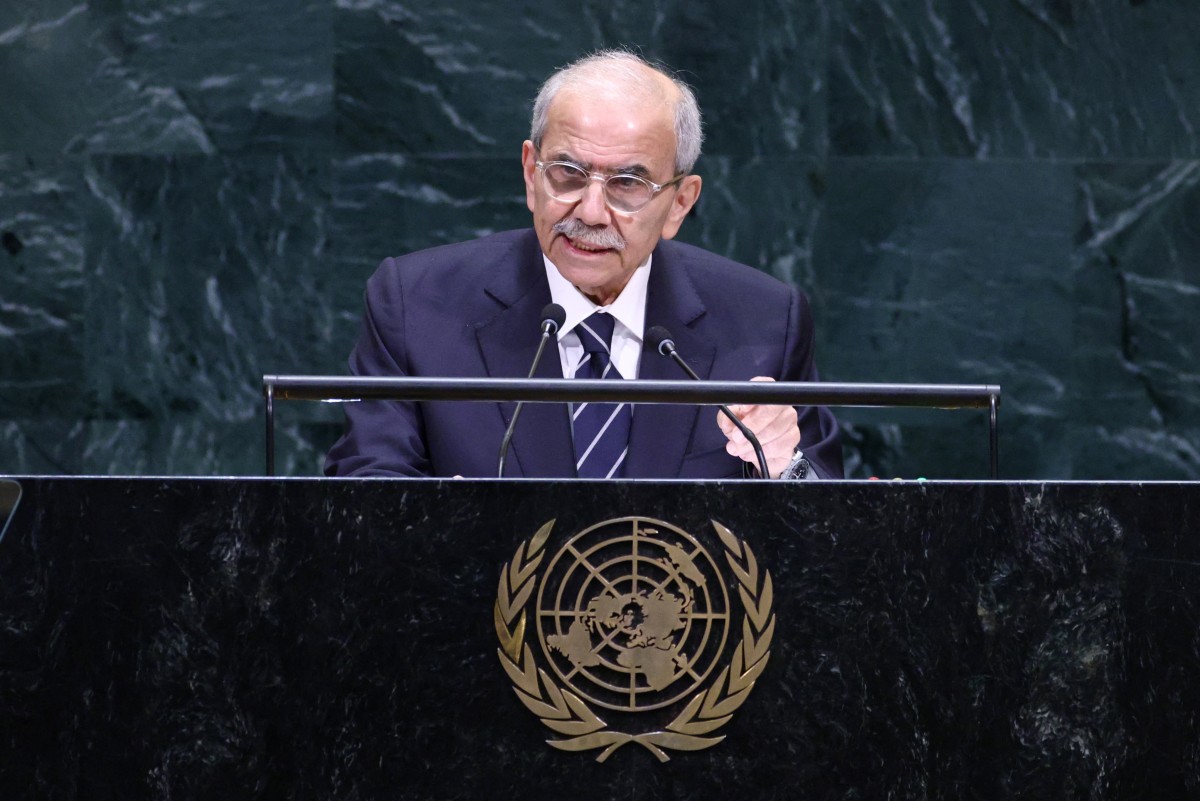
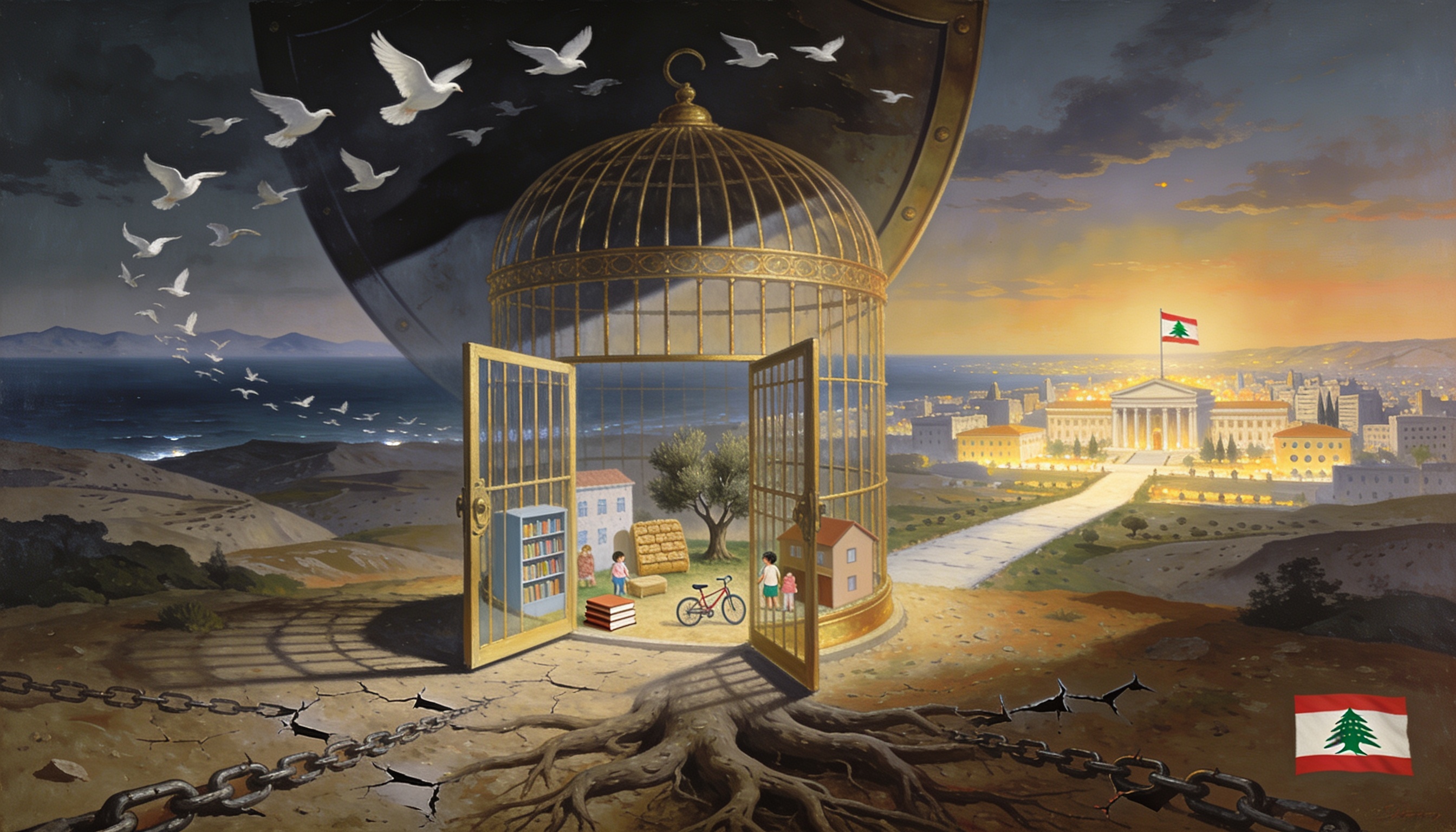
Prime Minister Nawaf Salam went to the United Nations and spoke at length about sovereignty. He called for Israel’s withdrawal from Lebanese territory, reaffirmed the state’s exclusive authority over weapons and the decision of war and peace, and insisted that no one has the right to negotiate on Lebanon’s behalf. These are all principles that a Lebanese prime minister should defend. But there was one remarkable omission from his speech: Hezbollah. Not once did Salam name the organization whose weapons make the very principle he was defending necessary. He spoke of “arms outside the state,” of wars Lebanon did not choose, and of the need to restore national decision-making. Yet the actor that possesses those arms, has repeatedly made decisions of war and peace outside the state, and has tied Lebanon’s security to Iran’s regional strategy remained unnamed.

The "Resistance"’s Copium of Denial
By
Makram Rabah
Published
Sep 12, 2026 - 00:53

In April 2003, Mohammed Saeed al-Sahhaf gave the world one of the greatest political performances in the art of denial. On April 7, American tanks had entered the heart of Baghdad, their images broadcast across television screens worldwide. Yet Saddam Hussein’s information minister stood before reporters and declared—with the confidence of a man who possessed information unavailable to the human eye—that there were no Americans in Baghdad and that the invading forces were being crushed and annihilated. Two days later, on April 9, Baghdad fell. Al-Sahhaf was not merely lying. He was providing a psychological service to an audience no longer capable of confronting the truth. That is precisely what makes him so contemporary in Lebanon.

When Sociology White Washes Hezbollah
By
Makram Rabah
Published
Jul 9, 2026 - 16:22

There is a logic that reappears every time the question of Hezbollah’s weapons is raised. It tries to present the party not as an armed authority that has confiscated the decision of a sect and a country, but as the natural extension of Lebanon’s Shiite community — as though objecting to Hezbollah were an objection to Shiites themselves, and as though disarming it meant uprooting an entire community from its history, memory, and means of protection. This logic is not only wrong. It is insulting. It reduces Shiites to their fear. It turns their long history into a prelude to a rifle. It treats an entire community as though it cannot exist except inside the network of an armed party — as though Jabal Amel, Najaf, jurisprudence, reform, scholars, intellectuals, farmers, students, merchants, and all the Lebanese Shiite national experiences were nothing more than a preparation for Wilayat al-Faqih.

When the Druze Say: “Enough… It’s Time to Go for Peace”
By
Makram Rabah
Published
May 23, 2026 - 02:07

In Druze jargon, there is a phrase people use at moments of transition: “Enough… it’s time to go offer congratulations.” In another context, the same instinct may take the form of: “It’s time to go pay our condolences.” It is not merely a social courtesy. It is a political reflex shaped by history. It means that one moment has ended, another has begun, and those who understand the world as it is — not as they wish it to be — must act accordingly. The Druze have long been sensitive to political change. Geography taught them this. History reinforced it. Survival made it instinctive. They do not always need official declarations from capitals to know that the wind has shifted. Often, they sense it before others do.

Lebanon Is Not Gaza
By
Makram Rabah
Published
May 1, 2026 - 03:43

When Israeli officials threaten to treat southern Lebanon like Gaza, the statement is not only reckless but politically revealing, exposing the extent to which regional escalation has become entangled with domestic calculations inside Israel while simultaneously reflecting Lebanon’s own structural paralysis. Such rhetoric should be dismissed for what it is—electoral posturing dressed as strategic doctrine—yet it cannot be separated from a far more consequential reality: Lebanon has once again been dragged into a war it did not choose, by an actor that does not answer to the state and does not bear the costs of its decisions in any accountable way.

When Classrooms Become Battlefields
By
Makram Rabah
Published
Apr 14, 2026 - 17:58

In Lebanon, education is meant to liberate minds, but Iran’s proxies weaponize it. Lebanon has long prided itself on something rare in this region: a belief that education is not a privilege, but a pathway. A country where, despite war, collapse, and political decay, parents still scrape together what little they have to send their children to school. A country where classrooms have historically produced doctors, engineers, writers, and thinkers, not martyrs for the Iranian Revolutionary Guards. The numbers tell part of that story. Lebanon boasts one of the highest literacy rates in the region, hovering near 98 percent. For years, it ranked among the top countries globally in the perceived quality of education. Mathematics and science are not taught as luxuries but as necessities, often delivered in English or French from an early age. Education here is not simply about acquiring knowledge; it is about mobility, dignity, and escape, from sectarianism, from violence, from the suffocating limits of geography.

Nabih Berri: The Architect of Iran’s Occupation of Lebanon
By
Makram Rabah
Published
Mar 26, 2026 - 05:05

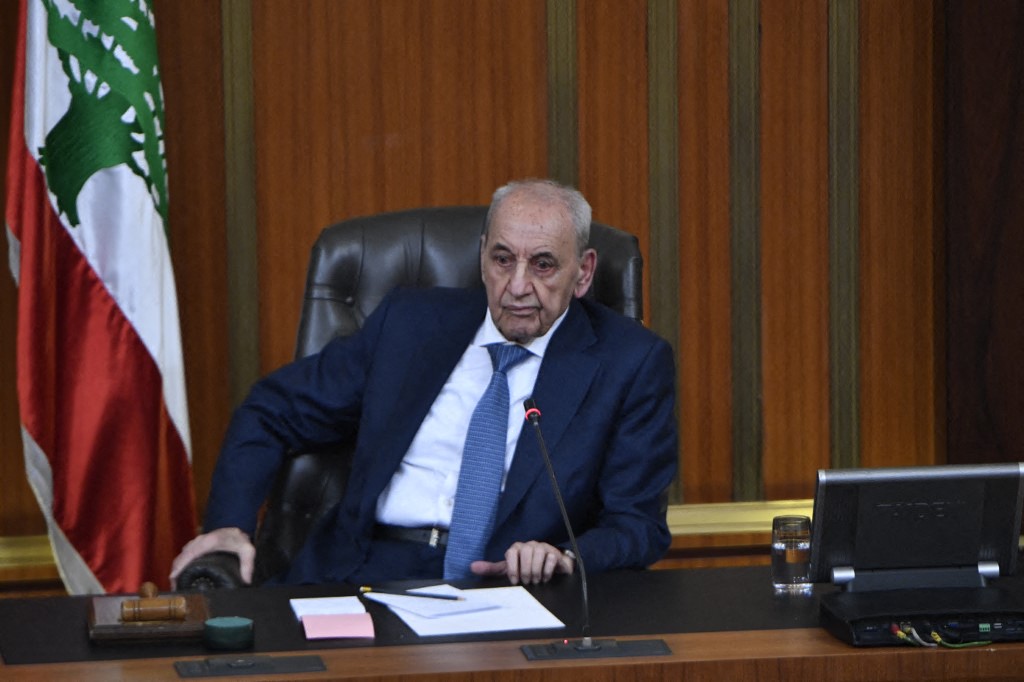
At a pivotal moment in Lebanon’s trajectory, the decision to expel the Iranian ambassador cannot be treated as a routine diplomatic move. It is, quite simply, the first real test of whether the Lebanese state is capable of saying “no” to a regional project that has hollowed out its sovereignty for years. But as always, the problem is not only external—it lies within, and specifically with those who claim to be partners in governance. At the center of this stands Nabih Berri, our omnipresent Speaker of the House. Berri, who today attempts to present himself as a underwriter of stability, is in reality one of the chief architects of its collapse. The man who long branded himself as a “safety valve” has instead become a valve of obstruction, blocking any serious attempt to challenge Hezbollah’s dominance and Iran’s hold over Lebanon.

Naïm Kassem is a Liar
By
Makram Rabah
Published
Mar 6, 2026 - 05:41

In his latest address, Naim Qassem attempted to present Hezbollah’s decision to launch rockets and widen the war as a reluctant act of defense forced upon it by Israeli violations. According to his account, Hezbollah exercised patience for fifteen months after the November 2024 ceasefire, allowed diplomacy to run its course, and finally acted only when it became clear that Israel would not stop violating Lebanon’s sovereignty. This argument does not deserve to be debated seriously, because it is built on a lie. Qassem is not mistaken, misinformed, or presenting an alternative interpretation of events. He is lying. The facts are neither complicated nor ambiguous, and the timeline itself exposes the dishonesty of his claim. Hezbollah did not suddenly discover Israel’s violations after fifteen months of silence, nor did it decide that Lebanese sovereignty had finally reached a breaking point. The organization chose its moment very carefully, and it did so immediately after the killing of Ali Khamenei.

Indivisible Sovereignty in a Divided Lebanon
By
Makram Rabah
Published
Feb 25, 2026 - 21:54

Naim Qassem has delivered many speeches over the years. His latest, marking the anniversary of Hezbollah’s “martyr commanders,” was not particularly original—but it was revealing. It was part elegy, part sermon, part warning, and entirely predictable. The martyrs were invoked, the faith was affirmed, Israel was denounced, Iran was praised, and the Lebanese government was gently informed that it is both responsible for everything and entitled to decide very little. It is a remarkable formula: Hezbollah demands that the state defend sovereignty—provided the state does not insist on owning it. Qassem’s central argument is simple. Lebanon respected the November 2024 ceasefire; Israel did not. Therefore, the Lebanese government must confront Israeli violations. So far, so reasonable. But then comes the sleight of hand: while the government is urged to act like a sovereign authority vis-à-vis Israel, it is simultaneously warned not to act like a sovereign authority vis-à-vis Hezbollah’s weapons. Apparently, sovereignty is indivisible—except when it reaches Dahiyeh.