

Lebanon’s Impasse Calls for New Approaches
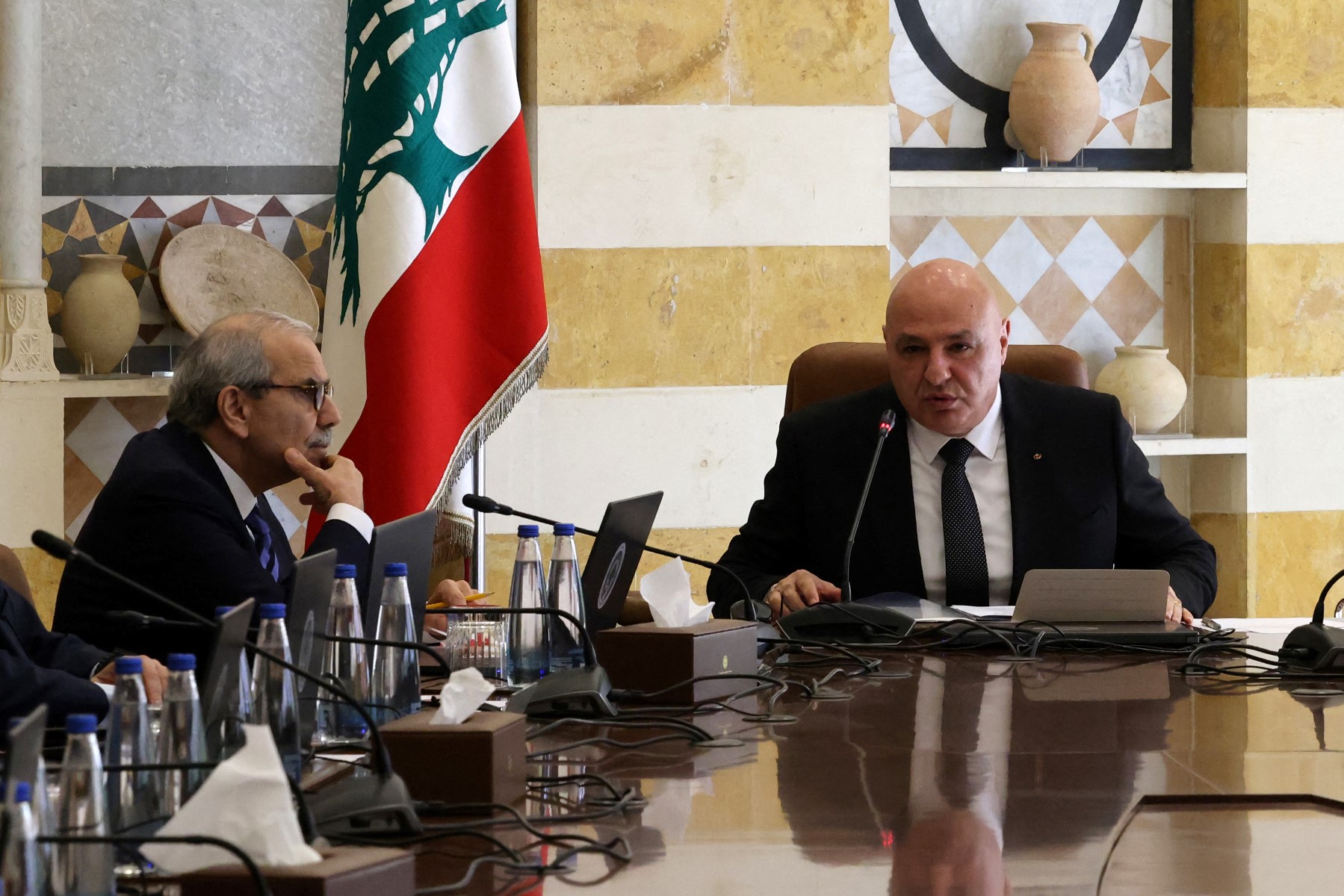
If the Lebanese authorities believe they are mobilizing all their energies and capabilities to address the new reality created by Israel’s occupation of roughly 7 percent of Lebanon’s territory, and making every possible effort to implement the framework agreement signed with Israel and revive the stalled negotiations in Rome or Washington, then they must also seek to devise some form of internal political dialogue, particularly with Hezbollah, which bears primary responsibility for drawing Lebanon into two successive wars, in 2024 and 2026.
The Lebanese authorities have set the bar high since the political order was reconstituted with the election of General Joseph Aoun as President of the Republic in January 2025 and the formation of Prime Minister Nawaf Salam’s government in February of the same year. It must be acknowledged that these were goals that could scarcely even have been contemplated a few years earlier, when Hezbollah’s grip on the Lebanese state and political establishment had become deeply entrenched and its military strength had driven it to expand into Syria and become immersed in that country’s complexities and problems.
It is worth recalling that the government reaffirmed that weapons must be exclusively in the hands of the state, a demand on which there is almost a national consensus, since it represents the most basic and essential first step toward building the state. The government then went further, deeming the party’s military activities illegal and affirming that its role should be confined to civilian political activity. It also stressed the need to prevent any rockets from being launched from Lebanese territory and called on the security agencies to enforce that decision.
Over time, however, and particularly as Iran, the party’s main sponsor, held its ground in the face of the US-Israeli war, the official tone began to shift. This did not mean reversing those fundamental decisions, but rather turning attention to how they could be implemented. If the authorities have now reached the political conclusion that forcibly disarming Hezbollah is, in practical terms, impossible, then Lebanon must break out of this deadlock and engage in dialogue with the party and with Tehran over the future of this arsenal, given the implications it will have for Lebanon’s future.
And if Beirut has repeatedly laid down the principle that no one, whoever they may be, should negotiate on its behalf, that is an understandable and commendable position. But it does not mean ignoring the realities on the ground or failing to adopt new approaches different from those pursued during the previous phase. Lebanon may not have much to offer Iran in return for ending its support for Hezbollah. Yet a decision to expel an ambassador that later proved impossible to enforce, which is a problem in itself, may make it necessary to seek other means in this regard. Such a retreat, if it occurs, would not be cowardice. It would be political realism, something badly needed at this pivotal moment.
The Lebanese government also needs to develop a comprehensive approach to this issue, one that goes beyond the question of weapons despite its central importance, and to seriously examine how ties between Hezbollah’s community, its social environment and the state can be rebuilt. This constituency has long felt that the state treated it with condescension and indifference and left it facing deprivation. Bridging that gap requires examining ways to gradually integrate social and medical institutions and services. This, after all, is the state’s duty toward its citizens.
Such an approach cannot, of course, ignore the party’s members or the question of how to deal with them. They should not be absorbed into state institutions as a single bloc capable of reshaping their internal balances through its political weight and ideological background. Rather, they should be treated as individuals who need new avenues of employment that allow them to live with dignity and move beyond a closed existence defined by weapons and war.
This is, of course, an extremely complex matter. But Lebanon is not the only country to have gone through such experiences, even if it has its own cultural and pluralistic particularities. Drawing on the experiences of other countries therefore seems worthwhile in light of the difficulties Lebanon currently faces.
What is certain is that the negotiations need to be shaken out of their current paralysis by reaffirming certain national principles that can strengthen Lebanon’s negotiating position, and by opening channels of internal and external dialogue in order to move beyond the impasse and into a new era defined by stability and trust.