

Lebanon’s Internal Fragmentation Deepens the Risks
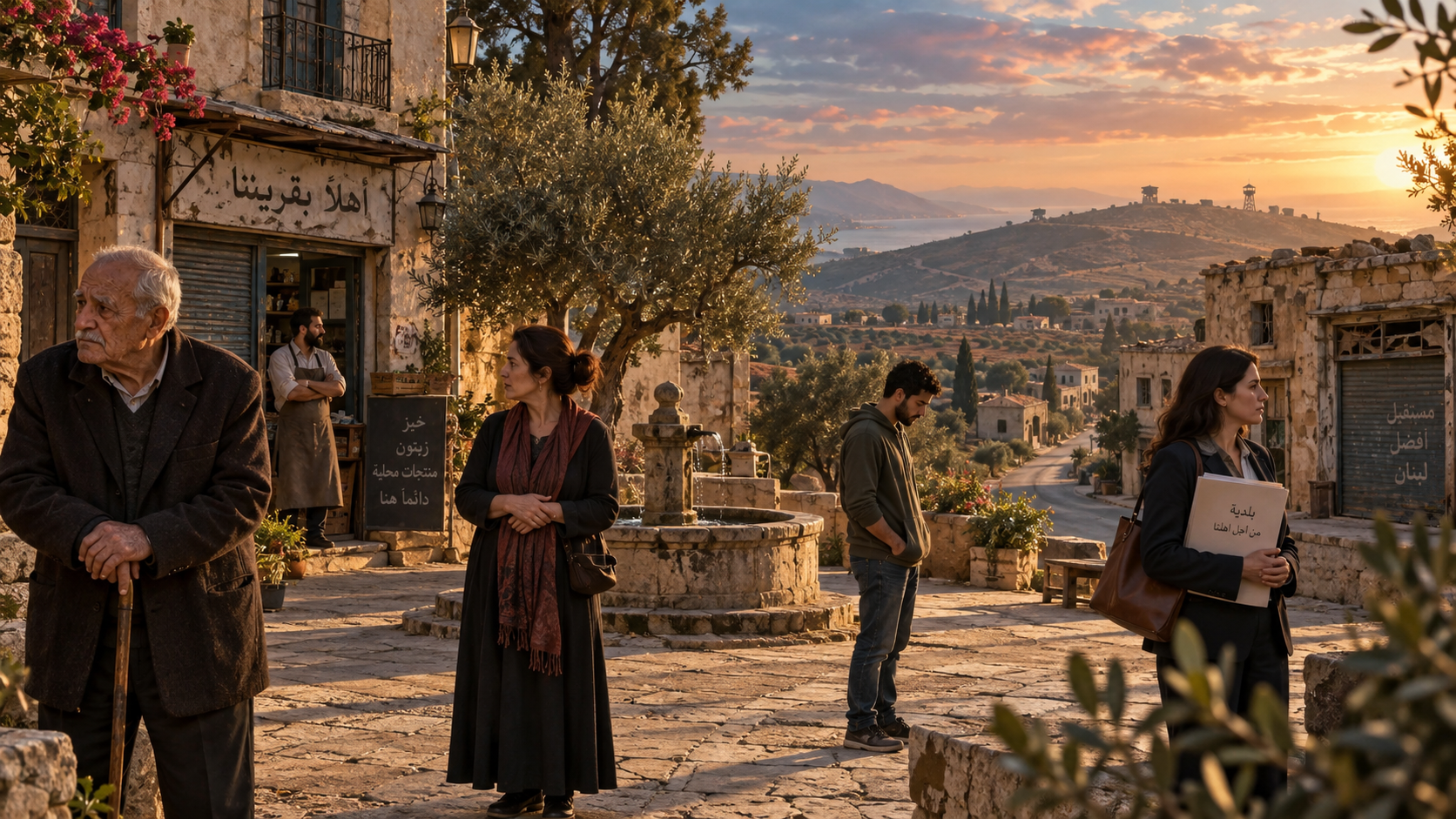
It will take a long time before Lebanon regains full stability. The greater danger, however, lies in growing accustomed to the shocks it is currently experiencing. The situation is stark: southern territory remains under occupation, while increasingly extensive measures on the ground by the occupying forces give no indication of any military withdrawal in the foreseeable future, as statements by Israeli officials themselves confirm; internal political dialogue has come to a complete halt; and the U.S.-Iranian war continues in different forms and at different levels.
It is clear that negotiations, although they remain the only option available to the Lebanese, are stalled. This deadlock is undoubtedly linked to Israel’s determination not to alter the new reality that has taken shape in South Lebanon. Israel has, in one way or another, managed to neutralize Resistance operations, or at least significantly weaken them, while retaining complete freedom of action to bomb villages, towns and areas in the south without even feeling the need to justify those strikes. Some of them, for example, have resulted in the complete destruction of more than 60 towns and villages, with losses estimated at around $11 billion and monthly displacement costs exceeding $100 million, according to Lebanon’s economy minister.
The rapid official measures aimed at filling the vacuum and dealing with the new reality in the south, including President Joseph Aoun’s visit to Nabatieh and several villages, successive ministerial visits and attempts to provide a minimum level of essential services to devastated communities, are welcome and necessary. They help narrow the historic gap between the people of the south and the state, and they should be acknowledged rather than overlooked. Yet the continued inability to produce solutions risks inflaming disputes and deepening internal divisions, from which the Israeli occupation alone stands to benefit.
For many years, South Lebanon endured Israeli attacks, including before the Palestinian presence in Lebanon and before Hezbollah came into existence. Figures and studies attest to this. See, for example, issue 147 of the Journal of Palestine Studies, Summer 2026, pp. 221-239. This directly contradicts the theories promoted by those rushing toward normalization without conditions and toward peace agreements that appear more illusory than ever, particularly in light of the profound imbalance of power produced by the 2024 war, then further widened in 2026, and whose effects remain with us to this day.
But the fundamental question is this: does that mean backing away from the decision to establish the Lebanese state’s exclusive authority over arms, in implementation of the Taif Agreement? The theory of a “balance of deterrence,” or “balance of terror,” advocated by Hezbollah from at least the aftermath of the July 2006 war until 2024, has collapsed. It became clear that all the slogans that had been raised were either detached from reality or suffered setbacks that had not been anticipated. That, too, is a problem no less serious than the first.
Some Lebanese imagine that the issue of establishing the state’s exclusive authority over arms can be separated from regional developments, particularly the U.S.-Iranian war. They are mistaken. Those who believe it can be resolved by pushing the Lebanese Army to address it militarily are mistaken as well. This is not because the army lacks the right to extend state authority without the participation of any other party. On the contrary, this is both a right and a duty from which there can be no retreat. Rather, the issue is more complex and far deeper than anything that can be resolved through military or security means alone.
Iran has pursued a policy of regional proxies in Lebanon, Yemen, Iraq and other arenas. Over decades, it has “invested” billions of dollars in them and reinforced that “investment” with an ideological framework deeply rooted among its supporters, to the point where martyrdom became an objective and dying for the “cause” a goal and aspiration. This has made the issue more difficult and added further layers of complexity. If one also takes into account the harsh conditions endured by southerners before and during the last two wars, it becomes clear that the problem will not be solved by magic or by any magician. It requires a serious approach marked by responsibility and awareness, without abandoning the basic principles, foremost among them enabling the state to exercise its powers and fulfill its role without sharing either with anyone else.
Lebanon has moved from full liberation in 2000, to five occupied points in 2024, and then to roughly 6 percent of its territory, with more than 60 villages under occupation in 2026. Israel’s policy of territorial encroachment continues, and nothing appears capable of stopping it: neither negotiations, nor the Resistance, nor the American sponsor that gives it the green light.
The Lebanese have a great deal of work ahead of them. And it can begin only with the development of a national vision for addressing the current imbalances, which threaten to have grave consequences.