

Geopolitics of the Sunni World: From Ideological Conflict to Political Pragmatism

Since the Iran–Iraq War began in 1980, the Middle East has been the scene of an ideological conflict between Iranian Shiism, rooted in the doctrine of wilayat al-faqih, and the Sunni world, within which rivalries surfaced in 2011 in the wake of the Arab Spring. These rivalries warrant a fresh look at their origins, their evolution, and the profound transformation they are undergoing today.
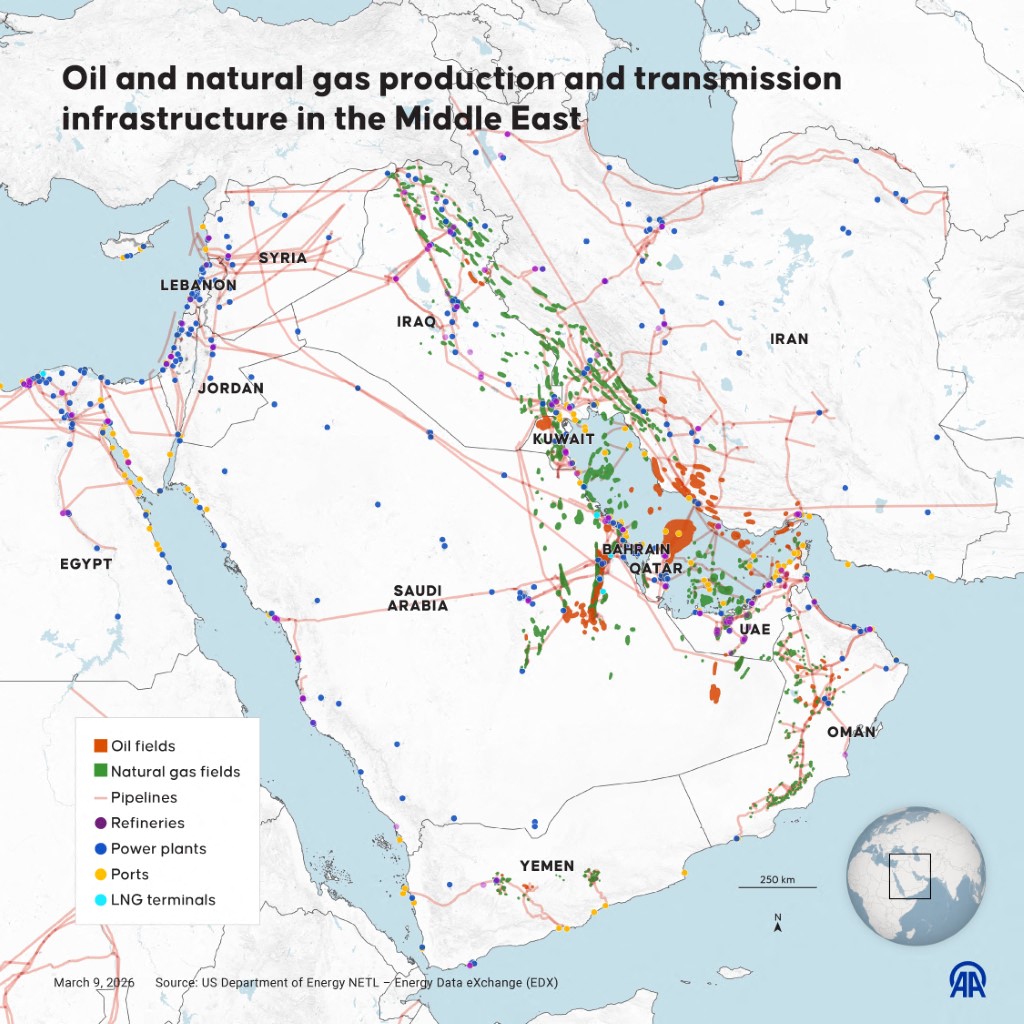
Two political visions after the Arab Spring uprisings
During the civil wars in Syria, Libya, and Yemen, the question was: which political model was the Sunni world fighting for? Was it the model championed by the conservative, counterrevolutionary camp (comprising Saudi Arabia, Bahrain, Egypt, and the United Arab Emirates), which saw the Muslim Brotherhood and fundamentalist Islam as a genuine threat? Or was it the model of the camp comprising Turkey, governed by the Justice and Development Party (AKP), and Qatar, which portrayed the Muslim Brotherhood as a democratic force?
Egypt, the epicenter of the clash between the two camps
It was in Egypt that the conflict between the two camps broke out into the open. Elected in June 2012, Mohamed Morsi, a member of the Muslim Brotherhood, received $7.5 billion from Qatar, while Turkey pledged a $2 billion loan. After the army overthrew him on July 3, 2013, the new regime received a total of $20 billion over three years from Saudi Arabia, Kuwait, and the United Arab Emirates to fund major projects.
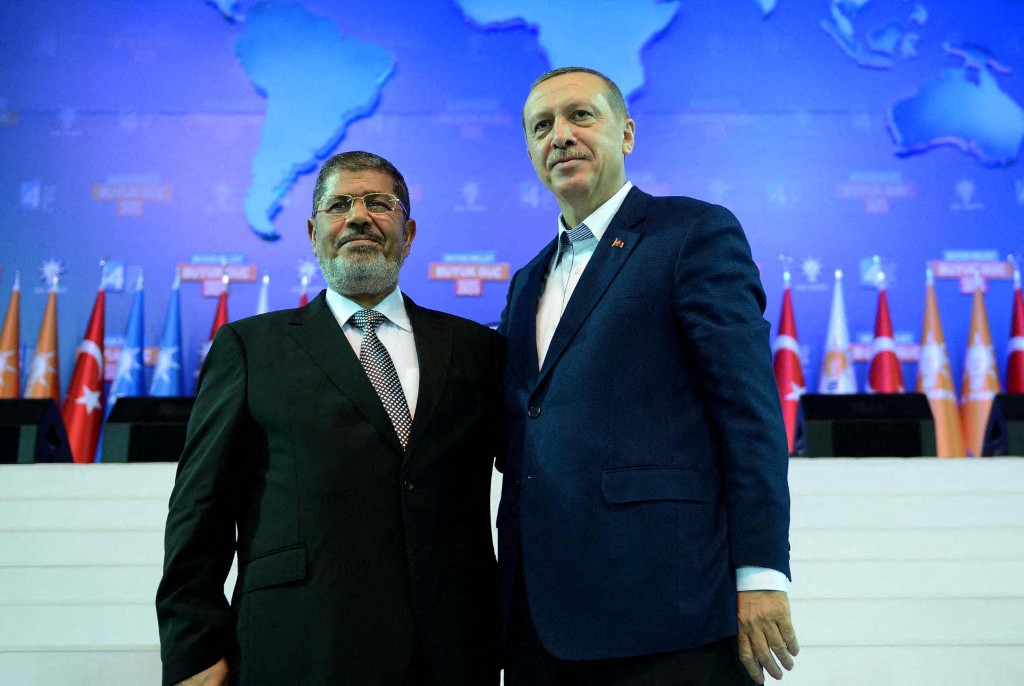
Mohamed Morsi and Recep Tayyip Erdoğan: an alliance of religious obscurantism. (AFP)
Forty days after Morsi's removal, his supporters were protesting with a sit-in in Cairo's Rabaa al-Adawiya Square. The sit-in was dispersed after 47 days, on August 14, 2013, in an operation that left no fewer than 800 people dead. Recep Tayyip Erdoğan publicly condemned the crackdown, accused the Egyptian regime of state terrorism, and vehemently denounced the international community's silence. Relations between Ankara and Cairo deteriorated and were severed in November 2013, a rupture that lasted ten years. Later, the Muslim Brotherhood was designated a terrorist organization in Egypt, Saudi Arabia, and the United Arab Emirates.
The confrontation between the two blocs spreads to the Gulf
In late 2013, Egypt sentenced three journalists from the Qatari television network Al-Jazeera to prison terms ranging from seven to ten years. The channel gave extensive airtime to the Egyptian spiritual leader of the Muslim Brotherhood, Yusuf al-Qaradawi, who had lived in Qatar since 1961. A serious crisis erupted in March 2014 when Riyadh, Abu Dhabi, and Manama recalled their ambassadors from Doha, accusing Qatar of hosting the Muslim Brotherhood in breach of its previous commitments and broadcasting al-Qaradawi's speeches on Al-Jazeera. He publicly condemned Morsi's overthrow and criticized the United Arab Emirates, accusing it of hostility toward any Islamic government. Ten months later, Qatar silenced al-Qaradawi but allowed him to remain in the country until his death in 2022, and asked seven Brotherhood leaders to leave. They settled in Turkey, bringing the crisis to an end.
In December 2014, tensions flared again with the opening of a Turkish military base in Qatar. The breaking point came three years later, on June 5, 2017, when Saudi Arabia, the United Arab Emirates, Bahrain, and Egypt imposed a blockade on Qatar, accompanied by a ten-day ultimatum to close the Turkish military base and the Al-Jazeera network, and sever ties with the Muslim Brotherhood.
Turkey retaliated by defying the blockade and deploying troops to Qatar's Tariq bin Ziyad base(1) as early as June 7, 2017, and the establishment of an air and sea bridge to supply Doha with food. In return, Qatar pledged in August 2018 to invest $15 billion in Ankara to support the Turkish lira, then in 2020 increased the currency swap agreement between the two central banks from $3 billion to $15 billion.
This cold war crystallized around two key events: the Khashoggi affair in 2018 and Qatar's withdrawal from OPEC in early 2019. Two years after the Khashoggi affair, and following Ankara's legal action targeting Riyadh, Saudi Arabia boycotted Turkish goods, cutting their flow by 92%. Driven by economic urgency, Turkey engineered a rapprochement two years later by transferring the Khashoggi court case to Riyadh. This normalization brought an end to the boycott, driving bilateral trade to $7.2 billion in 2025.
Another arena of confrontation: Libya
Libya, plagued by internal wars since Gaddafi's fall, became an arena of confrontation between the two blocs. In the east, Field Marshal Khalifa Haftar's army enjoyed the support of the United Arab Emirates, Egypt, Saudi Arabia and Russia. In the west, the Tripoli-based Government of National Accord was backed by Turkey and Qatar. Haftar's April 2019 offensive on Tripoli collapsed a few months later following military intervention by Ankara and Syrian mercenaries. Faced with this setback, Egypt drew a military red line along the Sirte–Jufra axis (2). In July 2020, the Turkish base at Al-Watiya came under an airstrike of unknown origin, often attributed to the United Arab Emirates and sometimes to Egypt.
The EMGF and growing rivalries in the Eastern Mediterranean
Meanwhile, Egypt's establishment of the Eastern Mediterranean Gas Forum (EMGF) in January 2019, bringing together six Mediterranean countries, deliberately excluded Turkey. Turkey responded by signing a maritime boundary agreement with Libya's Tripoli government in late 2019. Athens and Cairo countered by signing their own boundary agreement in 2020. The United Arab Emirates also demonstrated its support for Greece through military exercises and a defense pact.
Strategic pragmatism
Driven by economic pragmatism and regional crises, Egypt, Qatar and Turkey pursued a major strategic rapprochement between 2021 and 2026, reversing the previous trend. This process began with the restoration of relations between Cairo and Doha under the Al-Ula agreements in January 2021, followed between 2021 and 2023 by Ankara's sidelining of Muslim Brotherhood networks, the symbolic meeting between el-Sisi and Erdoğan in Doha in November 2022, and the formal exchange of ambassadors between Egypt and Turkey in July 2023.
These reconciliations took concrete form with the signing of 17 bilateral agreements between Cairo and Ankara aimed at achieving $15 billion in annual trade and fostering defense cooperation, and with the announcement in August 2026 of a $29 billion Qatari investment in an urban development project in Alam Al-Roum, near Marsa Matrouh. Finally, this three-way rapprochement led to decisive operational coordination on Gaza: the three countries co-signed the Sharm el-Sheikh declaration in October 2025 as guarantors of the ceasefire, before institutionalizing their cooperation in November 2026 through trilateral meetings of their intelligence chiefs in Cairo.
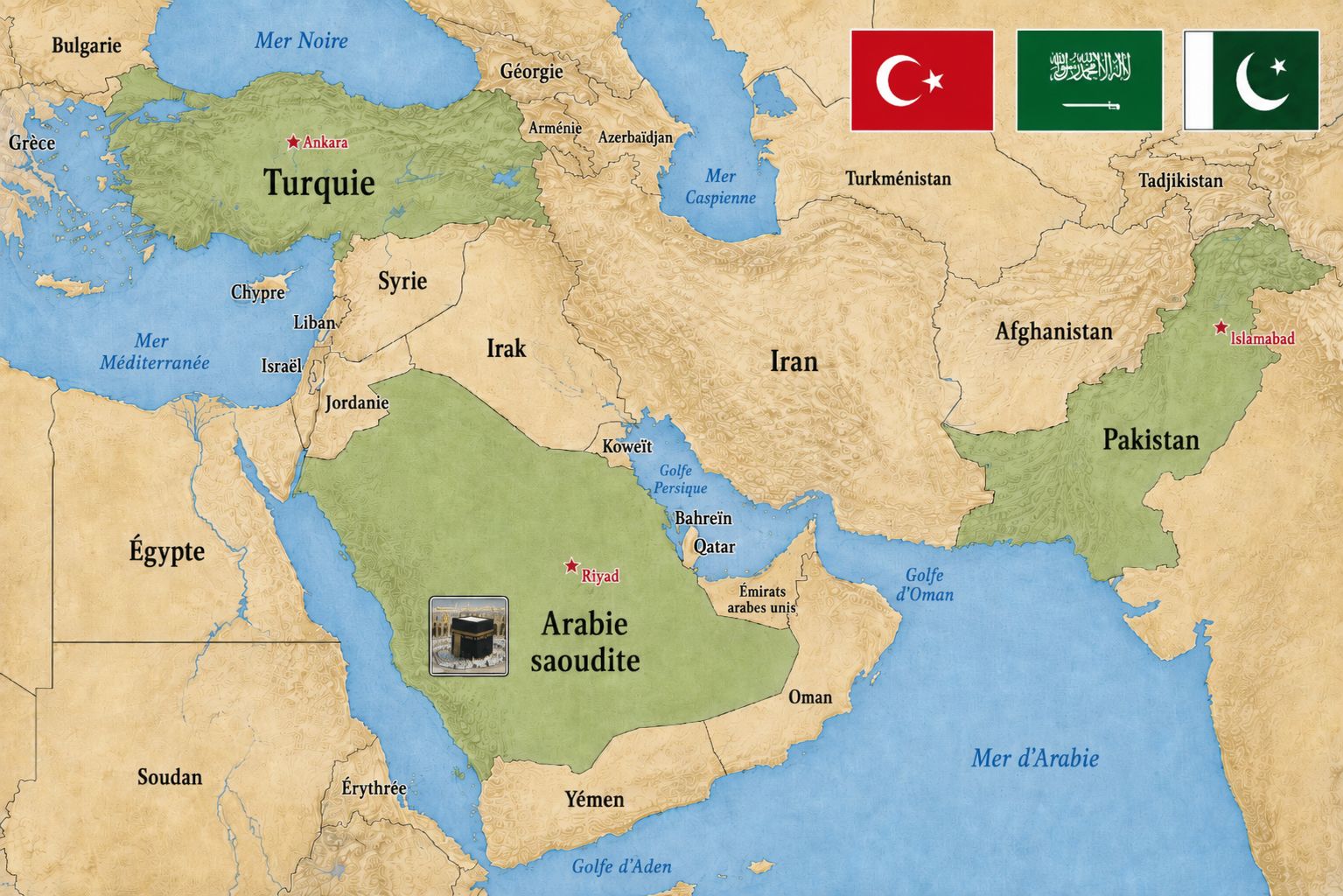
Meanwhile, the war between the United States and Iran served as a catalyst for the signing of the Mecca Pact in August 2026, by Saudi Arabia, Turkey and Pakistan. Ankara then shifted from being Riyadh’s adversary to its ally, while Qatar had resumed its participation in the Gulf Cooperation Council in 2021 after signing a reconciliation agreement with Saudi Arabia.
Confrontation within the Sunni world has thus given way to rapprochement and regional stabilization. By combining the demographic, military, industrial and geopolitical weight of Egypt and Turkey, the financial resources of Qatar and Saudi Arabia, Qatar’s mediation capabilities and Pakistan’s military capabilities, these Sunni alliances are reshaping the balance of power in the Middle East amid current security crises. As a result, the ideological cold war that had pitted two distinct camps against each other since 2013 has given way to pragmatism.
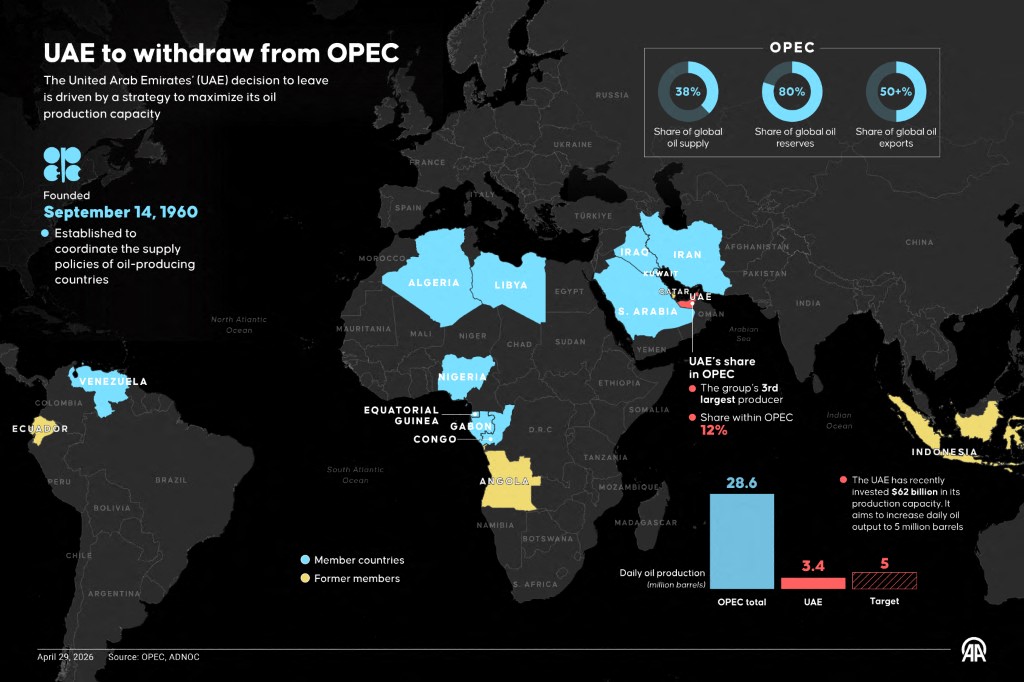
There is, however, a fault line between Riyadh and Abu Dhabi, despite their shared opposition to the Muslim Brotherhood. The UAE’s withdrawal from OPEC in May 2026 confirmed a rivalry fueled by disagreements with Saudi Arabia over Yemen, Sudan, the Horn of Africa, Israel and Iran. Nevertheless, despite competing to diversify their economies, the two countries remain major security and trading partners.
In this complex context, the conflict between Tehran and Washington and the resulting maritime insecurity continue to fuel instability in the Middle East, which finds itself in a rapidly changing multipolar system.
(1) Turkey’s Tariq bin Ziyad base in Qatar is a concrete expression of the strategic alliance between Ankara and Doha. Located near the capital, it can accommodate up to 5,000 troops and supports land, air and naval operations. Six F-16 fighter jets are currently stationed there, along with patrol vessels tasked with securing Qatar’s territorial waters. During the 2025–2026 conflict between Iran and the United States, the base did not intervene in response to Iranian strikes on Qatar.
(2) Egypt threatened to intervene militarily if the Tripoli government’s forces continued their advance and crossed the Sirte–Jufra line.
Hezbollah-Israel: An Endless War in Whose Interests? (21)
United States vs. Iran: An Assessment and Outlook
Energy Geopolitics 2026: Oil and Gas
Red Sea and Horn of Africa: Four Possible Scenarios (6/6)
The Red Sea and the Horn of Africa: Converging Interests and Regional Rivalries (5/6)
More from Khalil Helou
View All


More in Strategia
View All


Latest from Levant Time
View All


