

A memorandum of understanding or a war on pause?
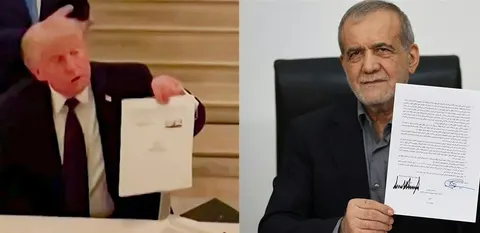


As Iran lies practically in ruins, the memorandum of understanding signed between Washington and Tehran on June 17 has left a cloud of uncertainty hanging over the Middle East. As long as the Iranian regime remains in place and its regional proxies survive — however weakened — the foreseeable dynamic will be no different from the one that has defined the region since the Islamic Revolution of 1979 in Tehran.
Iran would thus continue to draw on a blend of ideology and pragmatism — first to ensure its survival, then to reassert itself regionally while keeping tensions alive.
Operation 'Epic Fury' is undoubtedly a masterpiece of tactical execution, but so far it has yielded no clear strategic benefit, while Iran attempts to portray itself as the big 'winner' through a barrage of false propaganda, media manipulation, and state-sponsored disinformation.
Geopolitical analyst George Friedman describes the current situation as a 'paradox of power in the Middle East' — in other words, a world in which the United States and Israel have achieved an unparalleled level of conventional military dominance, yet have still fallen short of all their strategic objectives.
In the face of Iranian propaganda, it bears repeating again and again that the scale of destruction inflicted on Iran over 40 days has been immense.
The United States and Israel carried out roughly 18,500 air sorties and struck 130,000 Iranian targets with surgical precision, according toForeign Affairs,demolishing 85% of Iran's missile and drone production facilities and eliminating 70% of its missile launch infrastructure.
Furthermore, the initial decapitation strike eliminated nearly 40 of Iran's top political and military leaders, including Ali Khamenei himself. They were replaced by a new generation of Islamic Revolutionary Guard Corps (IRGC) officers — more pragmatic and less ideologically driven — who acted swiftly to prevent the regime's collapse.
A fragile memorandum of understanding
The memorandum of understanding signed on June 17 by Donald Trump and Massoud Pezeshkian looks less like a peace treaty than a phase defined by a temporary ceasefire.
The factors that catalyzed it stem from domestic political pressures within all three belligerents, rather than from the military situation on the ground. Indeed, internal tensions within the United States have become — as in every war since 1917 — a priority that overshadows broader geopolitical stakes.
President Donald Trump is under pressure from all sides, particularly from a faction within his own party that is war-weary and sees the conflict as a betrayal of his campaign promises — even though American casualties in human lives have been minimal.
His opponents across both parties are exploiting the economic fallout from the closure of the Strait of Hormuz as a weapon against his administration.
Meanwhile, the Democratic Party spares no effort to discredit him, whatever he does.
There is also a growing divergence between Washington and Jerusalem: while the United States views the cessation of hostilities as a necessary pause to replenish certain components of its arsenal that have reached critically low levels and to address soaring oil prices, Israel remains in an existential posture.
For his part, Prime Minister Benjamin Netanyahu is facing a political storm and mounting pressure from the ultra-Orthodox community on his right flank over military conscription. These ultra-Orthodox groups are staging sit-ins outside prisons where those who refuse to report for military service are being held.
On his left, he is challenged by those demanding his immediate departure, through protests and road blockades. Finally, he is caught in a vice between angering Trump and continuing the intensive war in Lebanon, or angering his security apparatus, which is determined to achieve a "total victory" that includes the complete dismantling of Hezbollah and a definitive end to Iran's nuclear program.
Meanwhile, in Iran, the new generation of IRGC leadership has been facing an unprecedented economic crisis since the summer of 2025, greatly worsened by the war, and finds itself dramatically short of the resources needed to manage it.
Some of Iran's new leaders fear a regime collapse if the war continues, while others want to keep using the Strait of Hormuz and exploit it as a lever of sustained pressure on the global economy.
Washington, Tehran, and Jerusalem thus find themselves too preoccupied with their internal challenges to focus on geostrategic considerations.
They ultimately agreed to a memorandum of understanding whose clauses can be interpreted "à la carte" as each party sees fit, viewing it as a necessary pause.
Rebuilding the arsenals
Iran's heavy arsenal has been largely destroyed. Tehran is left with only modest asymmetric capabilities, though sufficient to block the Strait of Hormuz and harass Gulf states — including roughly a dozen Ghadir midget submarines, thousands of Shahed-136 drones, hundreds of fast attack boats, and naval mines.
For its part, Operation "Epic Fury" exposed a massive ammunition burn rate. Within a matter of weeks, the U.S. Navy fired more than 1,000 Tomahawk cruise missiles, while the United States' current annual production capacity stands at only 90 to 100 units. The U.S. military budget for 2027 plans to purchase 950 next-generation missiles of this type, which implies funding the production line to accelerate manufacturing. Furthermore, the U.S. military expended 53% of its pre-war supply of THAAD interceptors — unique in the world — and 46% of its Patriot missiles to counter swarms of inexpensive Iranian missiles and drones.
That said, the U.S. Department of Defense is pursuing an initiative to develop affordable, higher-performance anti-drone and anti-missile weapons in order to preserve costly, sophisticated munitions. The Pentagon was aware that it was winning the air war but losing on the balance sheet. In short, a pause to replenish stocks proved necessary for both Washington and Tehran.
A new American doctrine for the region?
An analysis in the latest issue of
Foreign Affairs
suggests a fundamental rethinking of American power in the wake of this 40-day war. The United States would use the ceasefire created by the memorandum of understanding to reorganize its presence in the region, where it can no longer afford to be the sole security guarantor — Arab countries having demonstrated an unwavering willingness to defend themselves against Iranian attacks. Some of these countries, including Qatar and Saudi Arabia, activated diplomatic channels simultaneously.
The development of an American military access route to the Persian Gulf from the west — specifically through Israel, Jordan, and western Saudi Arabia — known as the "Western Access Network," was put in place during the preparation phase for the 40-day war, as the sixteen American bases around the Persian Gulf (Kuwait, Bahrain, Qatar, UAE) were vulnerable to Iranian drones. U.S. forces had evacuated them in anticipation of the conflict.
The same analysis in
Foreign Affairs
Le développement d’un accès militaire américain vers le Golfe Persique à partir de l’Ouest, notamment à partir d’Israël, de la Jordanie, et de l’Ouest de l’Arabie Saoudite, appelé «Western Access Network» ou «réseau d’accès occidental», a été mis en place pendant la phase de préparation à la guerre des 40 jours, les seize bases américaines autour du Golfe Persique (Koweït, Bahreïn, Qatar, EAU) étant vulnérables aux drones iraniens. Les forces américaines les avaient évacuées en prévision du conflit.
La même analyse du Foreign AffairsIt also suggests a "co-production" of ammunition with regional allies (already underway), particularly Saudi Arabia and the United Arab Emirates, which shifts Washington's role from security guarantor to security integrator.
But this requires greater solidarity among Arab nations and the activation of the Abraham Accords. According to the article's author, this is a doctrine of necessity, not of choice — an acknowledgment that the era of unipolar military solutions is over.
To navigate the coming decade, the United States must facilitate a regional security architecture that includes Turkey, Saudi Arabia, and Egypt, while attempting to resolve the "non-issue" of a Palestinian state — a Gordian knot that has confounded every American administration for seventy-five years.
Memorandum of Understanding… and Lebanon?
Israeli-Lebanese negotiations in Washington appear to have been overshadowed by the memorandum of understanding. A "pilot zones" model had been proposed, aimed at testing the Lebanese state's capacity to reassert itself and empowering the Lebanese army to secure those zones and prevent Hezbollah from returning to them.
Will these negotiations continue in light of Hezbollah and Nabih Berri's rejection of these pilot zones and their willingness to defer to Mohammad Bagher Ghalibaf?
The "Yellow Line" and the demolition of homes preventing residents from returning have effectively turned South Lebanon into a permanent no man's land. This gives Hezbollah the latitude to raise its voice, reassert its resistance rhetoric, and refuse to hand over its weapons to the Lebanese state.
Adding to all of this is Israel's self-defense doctrine authorizing its forces to fire on any "source of suspicion," which suggests that the risk of the ceasefire in Lebanon collapsing is significant.
This June 17, 2026 ceasefire runs a strong risk of sharing the fate of the ceasefires of 1993, 1996, 2006, and 2024. There is only one hope in this situation: the resurgence of the Lebanese state, which has been long awaited since the new presidential term began. Perhaps one day?
The Nobel Prizes and the Search for a Glimmer of Light in Human Behavior
Iran: Executions of young people, a favored tool of repression
A Chinese Perspective on Lebanon's Collapse
Dahr el-Baidar Explosives: Toward the End of Complacency?
Lebanese Moderation Needs a Project
More from Khalil Helou
View All


More in Analyze
View All


Latest from Levant Time
View All


