

Lebanese Impressionism: from the Parisian Greyness to the Light of Mount Lebanon (1/4)

The year 2026 marks the centenary of the death of Claude Monet, one of the founding figures of Impressionism. It was, after all, one of his paintings – Impression, Sunrise (Impression soleil levant) – that lent the movement its name.
Impressionism emerged in France in the 1870s, carried by artists such as Claude Monet, Auguste Renoir, and Camille Pissarro. Breaking with the rigid rules of the Academy, the Impressionists moved away from the idea of rendering the “subject” with polished perfection. Instead, they sought to capture light, the fleeting moments, and the impression that a scene or model conveys. They embraced a spontaneous, unfiltered vision of the world, stripped of hierarchy – characterized by fragmented touches, swift, visible brushstrokes, and an intensive use of color, in which even shadows shimmered with hues of blue or violet rather than of black.
They painted outdoors rather than in the studio - a revolution made possible by the advent of paint in tubes, which freed artists from the confines of the workshop and allowed them to capture scenes directly from nature.
Lebanon’s Cultural Flourishing
At the dawn of the 20th century, Lebanon experienced an unprecedented cultural flourishing. It was the dawn of the Nahda, an intellectual and cultural revival that touched nearly every field, and painting in particular. Pioneer Lebanese artists travelled to Paris and Rome to study, bringing back the techniques of modern painting, including Impressionism.
Here, however, the aim was no longer to reproduce the grey light of the Parisian sky, but rather the radiant light of Mount Lebanon’s landscapes. In this sense, Levantine Impressionists had to master the region’s harsh, white light, giving rise to a more contrasted and vibrant style.
Lebanese Impressionism did not merely imitate its Western counterpart. It adapted it to an Eastern sensibility, expressing nostalgia, rural life, and the beauty of nature and cultural heritage.
The Quartet of Light
At the turn of the 20th century, four artists emerged as the pioneers of both Impressionism and modern painting in Lebanon: Khalil Saleeby, Omar Onsi, César Gemayel, and Mustafa Farroukh.
Khalil Saleeby, a Leading Figure of Lebanese Painting
A true precursor of modern painting in Lebanon, Saleeby introduced a more liberated approach to both portraiture and landscape and showed a keen ability to capture and convey the psychology of his subjects. In the manner of the Old Masters, Saleeby employed light and chiaroscuro to shape volume and depth, giving his portraits a remarkable sense of depth and presence.
His Journey
Khalil Saleeby was born in Btalloun in 1870. After studying at the Syrian Protestant College (now the American University of Beirut, AUB) he went to study art in Edinburgh, the United States, and Paris. There, he encountered prominent figures, including the American painter John Singer Sargent, whose influence profoundly shaped Saleeby’s portrait technique.
Upon returning to Lebanon in 1900, Saleeby opened his own studio in Beirut, directly opposite the AUB. He became a mentor to future leading figures of modern Lebanese painting, including César Gemayel and Omar Onsi. His life ended tragically in 1928, when he and his American wife, Carrie, were murdered in their native village following a local dispute over water rights.
His Work
Saleeby transformed art in Lebanon from a craft or religious based practice into a truly intellectual and modern profession. His style evolved from classical, academic realism toward a vibrant form of Impressionism. He employed a rich palette, playing with light, soft pink tones, and opalescent blues.
Although he painted landscapes and village scenes, Saleeby is best known for his portraits and nudes. He was among the first Arab artists to treat the nude academically, breaking through the numerous social taboos of his time.
His personal collection, preserved by his family, is now housed at the AUB Art Gallery in Beirut, regarded as a national treasure.
A Signature Work: The Unfinished Self-Portrait
Throughout his career, Saleeby painted several self-portraits in which he depicts himself with an intense, proud gaze, employing light and broad brushstrokes. These works perfectly demonstrate his ability to capture not just the physical likeness, but the inner psychology of his subjects.
among his most poignant pieces is his unfinished self-portrait from 1928. Left on his easel at the time of his assassination, the painting encapsulates Saleeby’s late style: free and vigorous brushwork, an intense gaze reflecting his own psyche, and a masterful use of light that remains striking despite the work’s unfinished state.
Next article
Lebanese Impressionism: Omar Onsi, Master of Light
With the OIF, Francophone Literature Breaks Down Borders
Eva Gonzalès: Subtle Freedom Through the Brush
September News: The Battle of Lebanon
The Samir Kassir Festival, or the Lebanon Yet to Be Born
Why Habermas Remains Urgently Relevant
Mais de Micha Moussallem
Ver tudo


Mais em Culture
Ver tudo


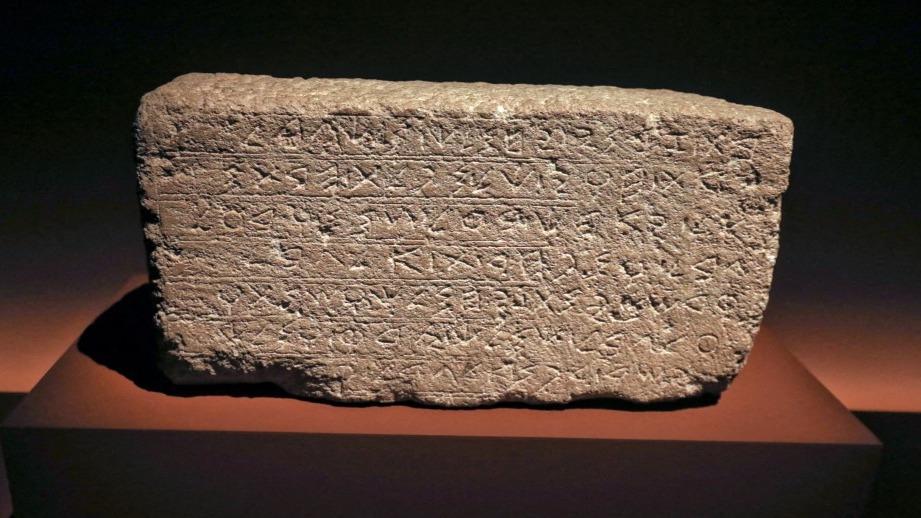

'Byblos' at the IMA: a cultural resistance in the face of war
O mais recente do Levant Time
Ver tudo


