

Jean-François Leroy and the Image That Opens onto a World

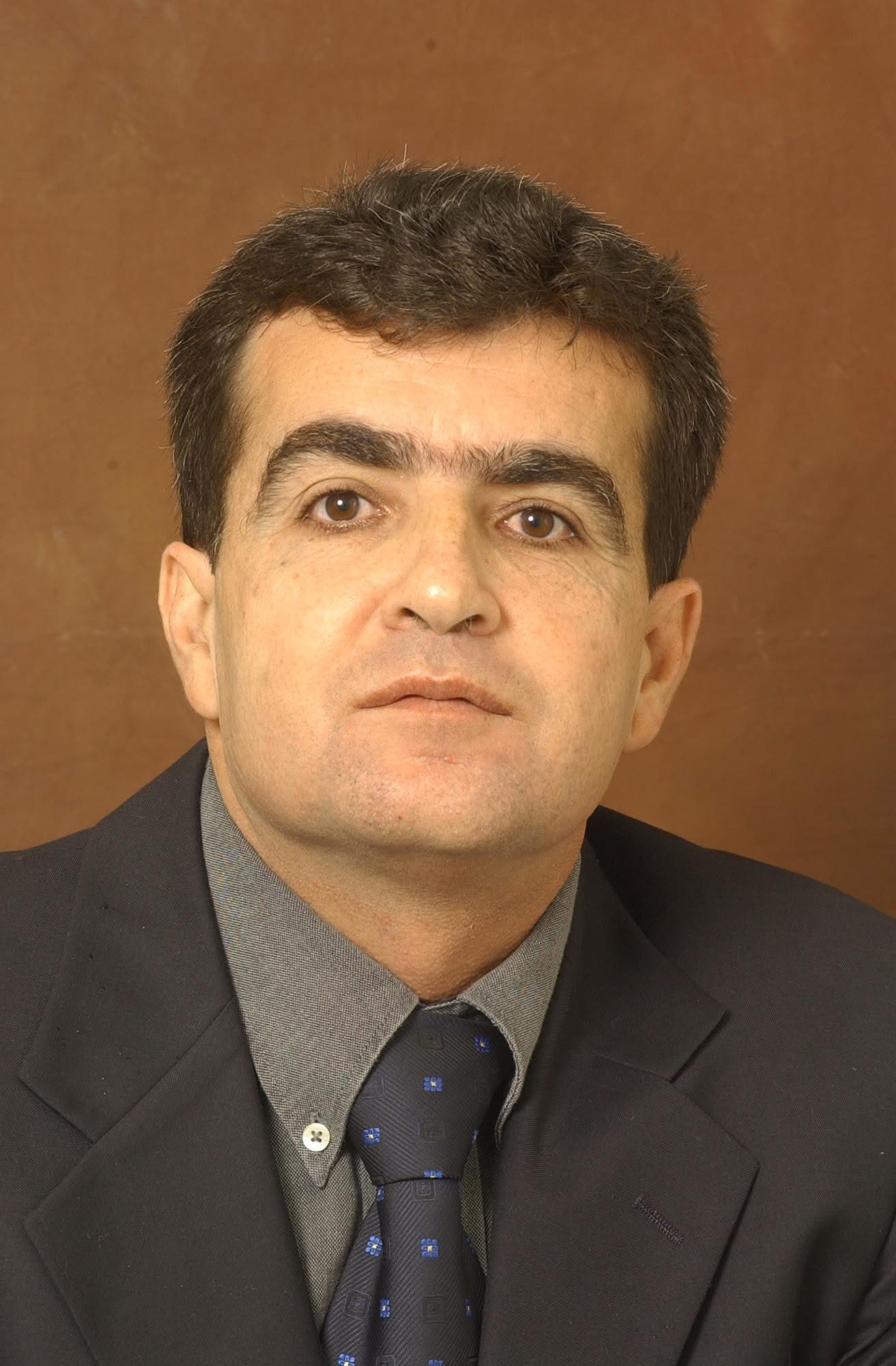
The death of French photographer Jean-François Leroy offers an opportunity to explore the passion that drew him to the image. Not as a cold document, but as a means of approaching human beings in moments of their greatest vulnerability, as a sensory expression of human thought and the human psyche through the physiology of perception.
This is what made his experience different. He was more than a mere witness to events. He ventured into that sensitive space, fascinated by life as it appeared in its utmost fragility, with a particular ability to express the autonomy of the image and what distinguishes it from other symbolic manifestations.
He was so ill that he was unable to attend “Visa pour l’image” one last time, the photojournalism festival in Perpignan that he had founded and directed for nearly forty years. He had devoted his life to fiercely defending press photography. He died in Paris on August 31, 2026, at the age of 69, after a battle with cancer, his inseparable cigarette still in hand.
He leaves behind a legacy of sincere commitment to a world of images that was, for him, neither an aesthetic object nor merely a journalistic field. It was a place where human truth is rapidly laid bare, in its cognitive and empirical dimensions, through representations of fear, war, loss, solidarity, waiting, and dignity, without direct political discourse.
His images come from every continent. From wars, famines, migration, uprisings, camps, regions, and forgotten photographic stories. Geographies, faces, and regimes change, but one thing remains: the image when it becomes a mirror of history.
What appears in it is not everything, but what the world reveals of itself at a given moment. The human being, the soldier, the refugee, the child, the woman, the revolutionary, the leader, and even the victim all become equal for an instant before the photographer’s lens. Through them, he reveals a tragedy, a metaphor for reality and memory, a reflection of power and the world.
Leroy did not bring together photographers from around the world merely to exhibit their work. Year after year, he was building a larger picture of the world through smaller images, with an unsuspected power to confront the negativity of reality.
Above all, this larger picture is not one of a triumphant civilization, but of a world in the process of being represented, fragmented, fearful, and violent. For Leroy, the image did not merely say what it showed, but what things themselves say, what the world conceals from itself.
He was the man behind the festival, but at heart he was a rebel against the institution of the image itself. At times, he sought in the impossible and the imaginary more than sensory perception alone could offer.
Over the years, he made the festival a free event open to the public, enjoying great popularity, with more than 220,000 visitors annually, and a global meeting place for professionals in the field.
But he also felt anger at the crisis in photojournalism and the impoverishment of photographers. They face the financial difficulties of the press and the disappearance of news agencies, which gradually force them to turn to grants, nongovernmental organizations, or the art world to finance their work.
By distributing more than 150,000 euros annually to photographers in the form of awards, he succeeded in placing his festival within this new economic model. With his ethics and commitment, he regarded photographers as “correspondents” sent into the world to bear witness to events.
After training as a magician under Jacques Delord and spending a period studying medicine, Jean-François Leroy quickly turned toward photography. He was influenced by the years he spent in the photo laboratory of “La Vie catholique,” where his aunt worked as editor-in-chief.
He then became an assistant to Gökşin Sipahioğlu (1926–2011), founder of Sipa Press, worked as an agent for photographer Dominique Issermann, and later became editor-in-chief of “Photo” magazine.
In 1989, with the help of Roger Thérond, director of “Paris Match” and one of his mentors, and Michel Decron, director of “Photo,” he won the City of Perpignan’s tender and founded “Visa pour l’image,” following an artistic formula from which he would not depart, bringing together a large number of photographers with distinctive and independent perspectives.
Around thirty free exhibitions throughout the city transformed professional practice into an unmissable event. Year after year, he welcomed and accompanied different generations of photographers, from the conflicts in the former Yugoslavia with Laurent Van der Stockt or Alexandra Boulat, to the “Arab Spring” with Rémi Ochlik (1983–2012), Chechnya with Stanley Greene, and Ukraine with Guillaume Herbaut.
Each year, the prestigious “Visa” awards recognized photojournalists, regularly including correspondents from “Le Monde”: Laurent Van der Stockt, with clandestine reports from Syria in 2013, Lucas Barioulet in Ukraine in 2022, or Rafael Yaghobzadeh, recognized in 2026 for his reportage on Lebanon.
His festival was also a gathering place for legendary figures, such as American David Douglas Duncan (1916–2018), author of “This Is War!,” with his striking images of the Korean War, Russian Dmitri Baltermants (1912–1990) and his photographs of the Soviet era, and Paul Fusco (1930–2020), with his “Funeral Train” series on the funeral of Robert Kennedy (1925–1968), exhibited in France for the first time in 2000.
Throughout these years, he did not hesitate to express his views frankly and defend photojournalism against media takeovers for ideological or financial reasons, against a press that sends too few photographers into the field, against restrictions on press freedom, against the transformation of magazines into “celebrity brands,” and against the circulation of images produced by artificial intelligence.
One of the truths of the world of images lies in the very concept of truth, that is, in the semiotics of the image, in what underlies expression and its implications. He criticized what ordinary photographers capture in a superficial and confused manner.
On stage, he also repeatedly paid tribute to photographers killed in the field, witnesses to tragedies in Syria, Ukraine, or Gaza, as well as Russian journalist Anna Politkovskaya, assassinated on October 7, 2006.
He thus took photography in another direction. What mattered was no longer for the image to be a witness to the event, as in the nineteenth century, but for it to bear witness to the human being within the event.
He was not fascinated by the beautiful image, but by the image that opens onto a world behind which lie the tribe, religion, memory, betrayal, heroism, love, fear, and even poetry.
This is why he defended photojournalism as a way of understanding the world, not merely transmitting news. He had made it an independent field of inquiry, central to his work and life.
He was an unwavering supporter of certain photographers. Stanley Greene, with his striking images of Chechnya. Or Pascal Maitre, with a photograph containing an entire world, that of Commander Massoud, who became in the Afghan imagination a figure combining the warrior, the intellectual, the poet, the politician, and the tribal symbol.
There was also Eugene Richards, who relentlessly exposed the failings of American society, and Nick Ut, winner of the Pulitzer Prize for his famous photograph of the girl in the napalm photograph.
His concerns centered on conflicts, epidemics, social crises, and migrants, even if he had to open himself, from time to time, to more conventional projects, such as the double exhibition of artist Éric Baudelaire in 2006, exhibitions of photographs by anonymous people from Iran in 2023, or the images of photographer Samuel Bollendorff in 2025.
Leroy believed that the image could make visible what we cannot conceive. Yet today’s world produces more images than we can absorb. And what is happening from Gaza to Ukraine has come to exceed the image itself.
The problem is no longer seeing war, but understanding why human beings have become capable of enduring so much violence.
Leroy’s death at this particular moment carries a cruel symbolic significance. He embodied a singular phenomenon, a way of being and feeling, a distinctive relationship with the world, through the power of the image and its historical lessons, but also through the world of news, culture, religion, and society.
Repealing the Israel Boycott Law and Its Demons
Lebanon: Political Clans Strangled the State, Hezbollah Swallowed It
The Nobel Prizes and the Search for a Glimmer of Light in Human Behavior
Iran: Executions of young people, a favored tool of repression
A Chinese Perspective on Lebanon's Collapse
More from Yakzan Takki
View All


More in Analyze
View All


Latest from Levant Time
View All


