

The National Museum of Beirut, Against All Odds


The survival of the National Museum of Lebanon is a miracle. Located on the demarcation line that divided the capital between the warring parties, the building was the target of gunfire and shells. But the country's main archaeological museum, which houses exceptional collections ranging from prehistory to the Mamluk period, was able to be reborn just after the war.
The museum’s construction
The idea for the museum emerged in the early 20th century, when plans were made to bring together in one place the collection of Raymond Weill, a French officer stationed in Lebanon.
The building was constructed between 1930 and 1937 during the French Mandate, thanks to the efforts of the Friends of the Museum Committee led by Bechara El Khoury, then Prime Minister and Minister of Education.
It was officially inaugurated on May 27 1942, following the designs of architects Antoine Nahas and Pierre Leprince Ringuet, in a monumental ochre-stone style inspired by antiquity.
The museum during the war
The National Museum of Beirut stood on what was a frontline during the Lebanese War — an area ravaged by heavy fighting. Protecting the collections from both looting and bombardments became a matter of urgency.
This task was undertaken by Emir Maurice Chehab, then the museum’s chief curator.
First of all, he secured transportable artifacts inside reinforced vaults.
As for the monumental pieces, he protected them with sandbags, walled off certain rooms, and encased huge sculptures in reinforced concrete. This evokes the story of Jacques Jaujard, who saved the treasures of the Louvre Museum during World War II — a reminder that sometimes one person’s goodwill and determination can alter the course of the inevitable.
After the war, beginning in 1993, an extensive restoration campaign was launched, allowing the museum to reopen in 1997 thanks to devoted patrons such as Mona Hraoui, then First Lady and president of the National Heritage Foundation. Since then, the modernization of the museum’s displays and infrastructure has continued unabated.
Collections and major pieces
The museum houses around 100,000 artifacts, of which 1,300 are on display in chronological order — from the Paleolithic era to the Mamluk period.
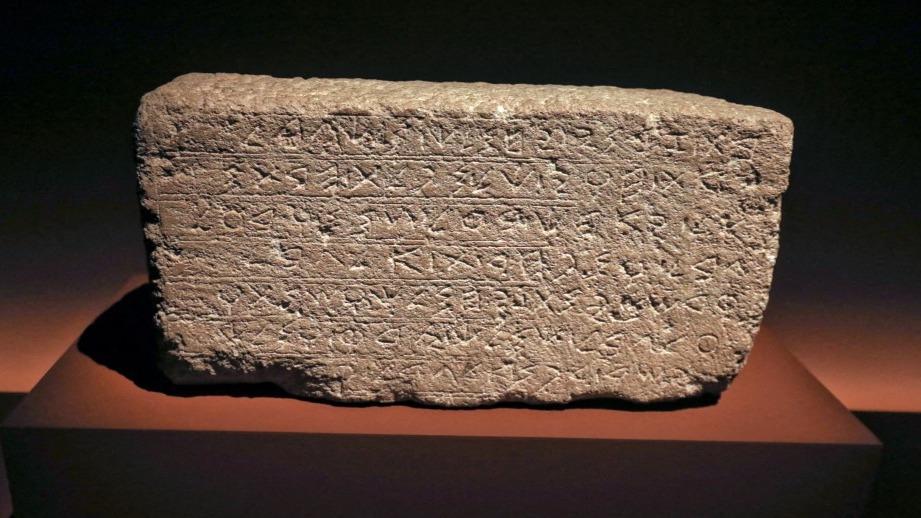
Among its most iconic pieces is the sarcophagus of Ahiram, King of Byblos — a masterpiece of both art and epigraphy, bearing one of the earliest known inscriptions in the Phoenician alphabet.
Another remarkable ensemble includes 31 anthropoid Phoenician sarcophagi from the “Ford Collection.” Aligned like an “army of the dead,” these stone coffins borrow from Egyptian and Greek models while preserving a distinctly Phoenician identity.
At the entrance to the central hall stand magnificent Greco-Roman and Byzantine mosaics — some damaged during the war and still scarred today. They beautifully illustrate the flourishing mosaic art that once thrived in Lebanon during the Roman and Byzantine periods.
Their themes range from Greek mythology and biblical scenes to folk beliefs and philosophy: such as the famous “Seven Sages” mosaic depicting philosophers including Socrates; that of “the Good Shepherd” or “Europa Abducted by Zeus”; or the one celebrating “the birth of Alexander the Great”.
Lebanon’s soil, in fact, abounds with mosaic masterpieces. Excavations in downtown Beirut revealed over 1,000 sqm of mosaics that may one day form a museum of their own.
The museum recently renovated basement is devoted to funerary art and thematic exhibitions. For the Phoenicians, the tomb served both as an eternal dwelling and as a physical vessel for dynastic and family memory.
The museum’s upper levels continue this narrative through smaller objects — statuettes, jewelry, coins, and ceramics — shedding light on daily life, economy, and religious practices across the ages.
Many terracotta female figurines are displayed there, originating from temples dedicated mainly to Baalat Gebal and Astarté. These pieces reflect an ideal of beauty tied to fertility and social status — adorned with feminine attributes, jewelry, and elaborate hairstyles — showcasing the central role of women as embodiments of the divine.
A bridge between past and future
Though the National Museum of Beirut is a temple of the past, it also looks firmly to the future. A testament to this vision is the Nuhad Es-Said Cultural Center, a new annex to the museum — which we will explore in our next article.
With the OIF, Francophone Literature Breaks Down Borders
Eva Gonzalès: Subtle Freedom Through the Brush
September News: The Battle of Lebanon
The Samir Kassir Festival, or the Lebanon Yet to Be Born
Why Habermas Remains Urgently Relevant
المزيد من Micha Moussallem
عرض الكل


المزيد في Culture
عرض الكل



'Byblos' at the IMA: a cultural resistance in the face of war
الأحدث من Levant Time
عرض الكل


