

SpaceX: The Birth of the First Corporate Superpower?
Elon Musk's firm crosses the symbolic $2 trillion market capitalization threshold


On June 12, 2026, financial markets around the world witnessed a moment of history unfolding in real time.
Just hours after its IPO, SpaceX crossed the symbolic threshold of a $2 trillion market capitalization, making it the largest initial public offering ever completed. Its founder, Elon Musk, simultaneously became the first individual in human history to see his personal net worth surpass one trillion dollars.
Unsurprisingly, Wall Street immediately split into two camps.
For some, this valuation represents the ultimate expression of the speculative excess of our era: a market intoxicated by technology, artificial intelligence, and boundless growth narratives.
For others, it simply reflects the logical value of a company that has revolutionized access to space, now dominates satellite communications, and could ultimately redefine humanity's future beyond our planet.
But both camps may be asking the wrong question.
The true significance of SpaceX's IPO does not lie in whether the company is or isn't worth $2 trillion. It lies in the fact that investors may no longer be valuing a company.
They may be valuing a new form of supranational power.
The Supranational Corporation
Throughout modern history, companies have operated within structures created and protected by states.
Governments controlled territories, maintained armies, built roads, administered justice, and issued currencies.
Economic actors and corporations generated their profits within these institutional frameworks.
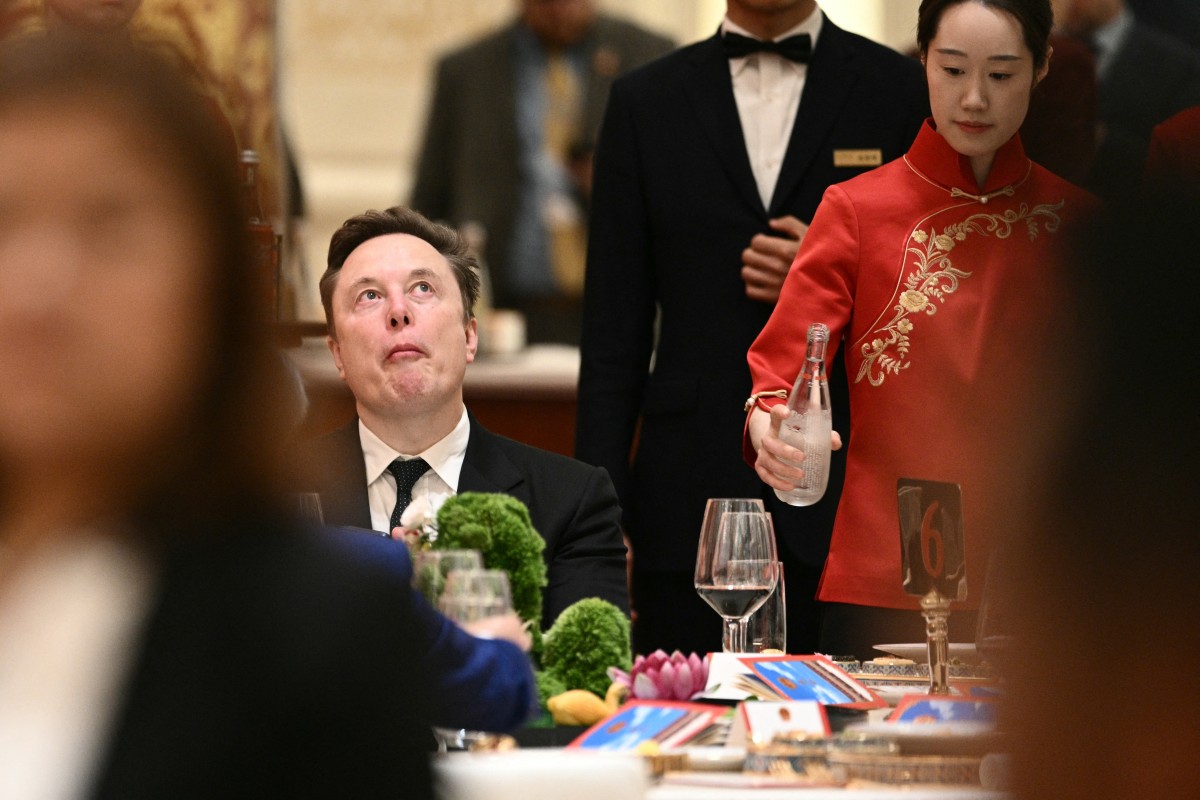
Elon Musk and other Big Tech leaders are now part of official delegations during President Trump's trips abroad, as seen in this photo from May 14, 2026, at the US-China summit in Beijing. (AFP)
SpaceX is now blurring these boundaries.
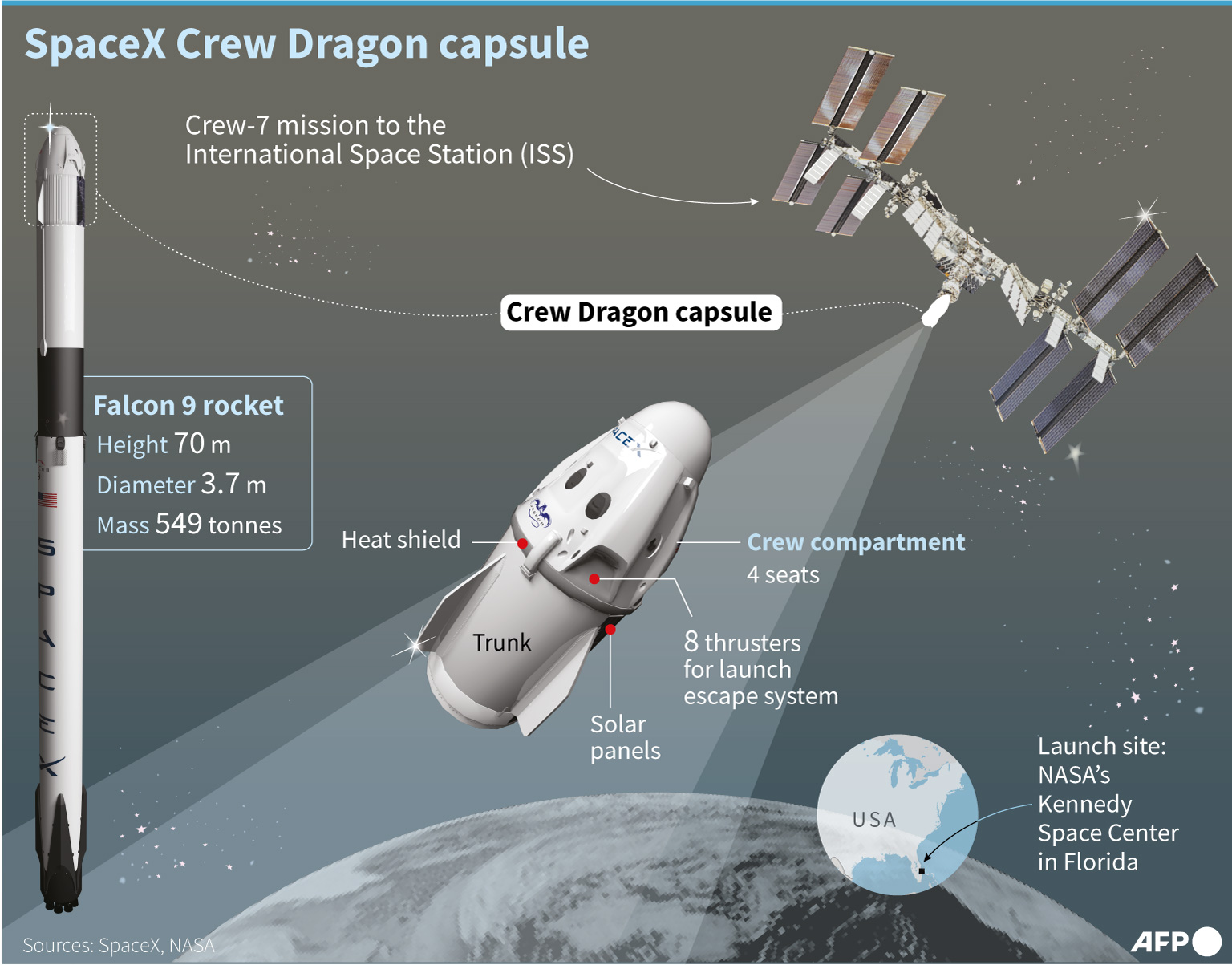
The company owns and operates the world's most advanced launch infrastructure. Through Starlink, it controls the largest satellite communications network ever deployed. It has become indispensable to the United States military and intelligence services. It is simultaneously developing capabilities spanning telecommunications, defense, artificial intelligence, logistics, and space exploration.
Historically, the ability to project power beyond national borders belonged almost exclusively to states.
But that was before the digital age.
Today, SpaceX projects its capabilities beyond the planet Earth itself.
This is no longer merely a technological achievement. It is a geopolitical one.
Every Era Produces Its Giant
History occasionally sees the rise of companies that transcend their original commercial purpose to become the defining infrastructure of their time.
As far back as 1602, the Dutch East India Company financed and facilitated the first great era of global trade. The British East India Company became one of the primary instruments of British imperial expansion. The railways transformed commerce and geography throughout the 19th century.
Standard Oil fueled the industrial age. IBM built the information age. Microsoft provided the operating system for the digital revolution. Apple turned the smartphone into the central object of modern life.
All of these organizations became far more than mere companies. They became the platforms upon which entire economic systems were built.
SpaceX today appears to be following a similar trajectory.
But unlike its predecessors, the company operates simultaneously across several strategic domains: transportation, communications, defense, data infrastructure, and space.
No company before had ever attempted to integrate so many critical systems under one roof.
The New Frontier of Great Power Competition
SpaceX's rise cannot be separated from the broader geopolitical rivalry shaping the 21st century. Over the past three decades, globalization has shifted much of industrial production to Asia, and to China in particular. Beijing has gradually established dominant positions in manufacturing sectors, strategic minerals, batteries, solar technologies, and industrial supply chains.
The United States has found itself increasingly unable to compete on traditional industrial terms. It has, however, retained one decisive advantage: technological innovation.
The concentration of venture capital, entrepreneurial culture, tech talent, and financial markets within Silicon Valley remains unmatched anywhere in the world.
SpaceX is arguably its purest expression.
While China masters industrial scale, America continues to lead in building entirely new technological ecosystems. The significance of SpaceX therefore extends far beyond returns for its shareholders.
The company represents an attempt to establish a dominant position in the next strategic domain before the rules of the game have even been written.
The race for space increasingly resembles the race for mastery of the seas that defined previous centuries.
The Merger of Corporate and State Power
One of the most remarkable aspects of SpaceX is the gradual blurring of the line between public authority and private enterprise.
The company is simultaneously a commercial launch provider, a defense contractor, a global communications network, a strategic intelligence asset, and an essential component of Western military planning.
The geopolitical importance of Starlink came into sharp focus during the conflict in Ukraine and has since expanded to numerous regions of major strategic interest. Few companies in history have exercised such direct influence over military and political outcomes.
Of course, SpaceX operates in a radically new world. But the accumulation of strategic capabilities in the hands of a single private entity raises questions that governments are only just beginning to grapple with.
How far should a company's power extend?
And what happens when governments become dependent on it?
Can a $2 Trillion Valuation Be Justified?
The debate over SpaceX's valuation is far from settled. Traditional valuation models struggle to capture disruptive technologies.
How do you value a company whose ambitions simultaneously span global communications infrastructure, industrial production in orbit, lunar logistics, artificial intelligence integration, interplanetary transport, and asteroid resource extraction?
The reality is that discounted cash flow models become increasingly unreliable when applied to markets that do not yet exist.
That doesn't mean the valuation is irrational. Nor does it mean it's justified. It simply means investors are attempting to discount a deeply hypothetical future.
A Warning from Financial History
The timing of SpaceX's IPO deserves careful attention.
It comes after one of the most extraordinary periods of technological speculation in modern history. Tech and AI valuations have skyrocketed. Technology stocks dominate global indices. Retail investor participation is at all-time highs. Leverage is at extreme levels.
Compelling narratives have replaced economic and financial fundamentals.
Historically, such environments have often accompanied major financial turning points.
Every investment bubble has been fueled by real innovation. Every one has ended in a painful correction.
History teaches us that revolutionary technologies and speculative excess are not opposing phenomena. On the contrary, they tend to go hand in hand.
Artificial intelligence and space communications will likely transform the world.
But investors who bought into the great technological revolutions at the peak of speculative enthusiasm have often found that even the best ideas can turn into poor investments when acquired at unrealistic prices.
The Real Message Behind SpaceX's IPO
Ultimately, the significance of SpaceX's IPO may have little to do with its share price. Or with Elon Musk's personal fortune.
Its true meaning lies in what it reveals about the shifting relationships between states, technology, and capital.
For centuries, companies operated within frameworks established by governments.
Today, governments appear increasingly dependent on corporations to achieve their strategic objectives.
As globalization enters a new phase defined by technological rivalry, supply chain fragmentation, and the return of geopolitical competition, entities like SpaceX are becoming full-fledged players on the world stage.
Will this shift strengthen the global order or contribute to its unraveling?
No one knows.
What is certain, however, is that we are witnessing the emergence of a world in which economic power, technological power, and geopolitical power are increasingly concentrated in the same hands.
Markets will no doubt continue to debate whether SpaceX is truly worth $2 trillion.
But perhaps the more unsettling question lies elsewhere:
Who will govern the future when the builders of that future become more powerful than the governments meant to oversee them?
Keynes Betrayed: When the Cure Became the Disease
Rich Countries, Indebted Nations
What If Lebanon Was at Peace?
Lebanon-Israel Maritime Deal Put to the Test by Regional War
Más de Jacques Mechelany
Ver todo


Más en Economy
Ver todo


Lo último de Levant Time
Ver todo


