

Rich Countries, Indebted Nations
The rise in French debt confirms a broader trend across developed economies.
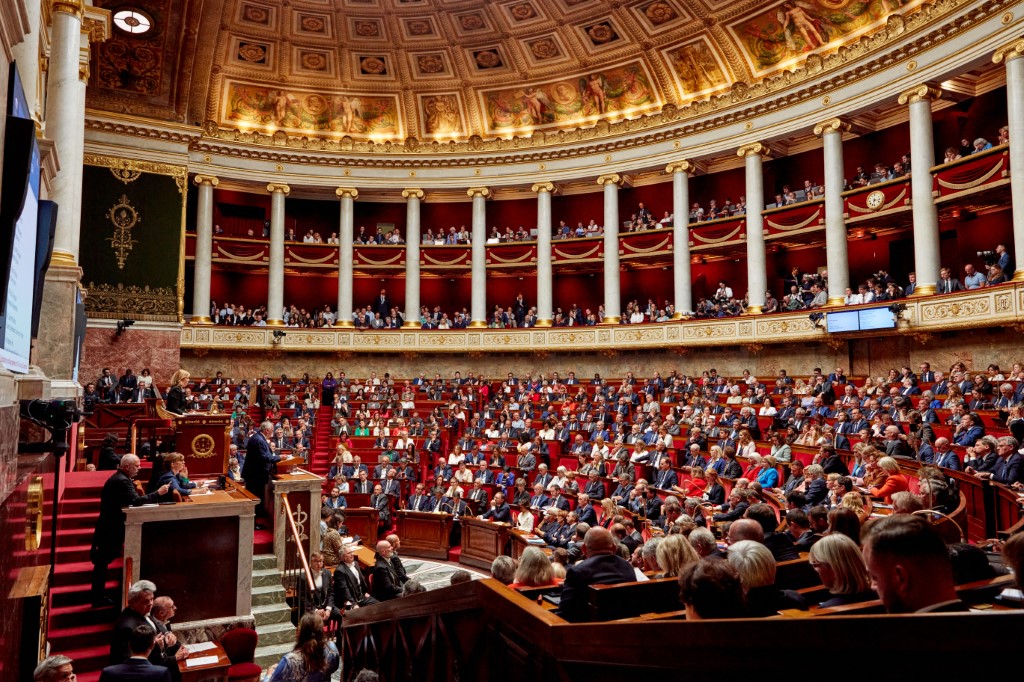

The latest increase in France’s debt illustrates a pressure shared by several major economies: borrowing is piling up while financing it is becoming more expensive. From deficits to interest rates, twelve questions to understand a phenomenon that is weighing on public budgets and citizens alike.
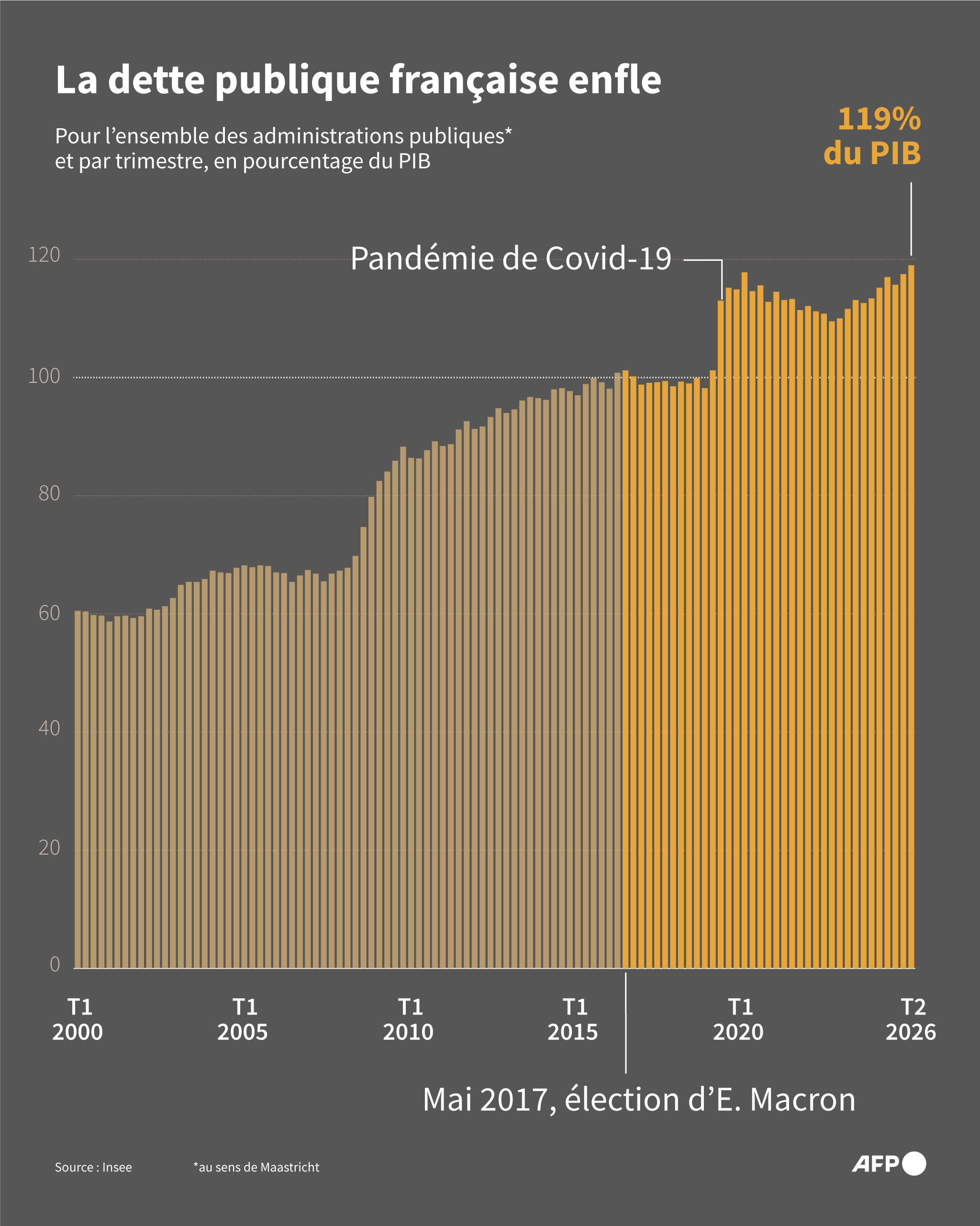
France has crossed a new threshold. According to figures published by INSEE on September 29, its public debt stood at €3,595.5 billion at the end of the second quarter of 2026, equivalent to 119% of gross domestic product (GDP). It increased by €59.6 billion in three months. The government expects it to reach 121.7% of GDP in 2027.
This accumulation of debt is being compounded by higher financing costs. On September 29, the yield on 10-year French government bonds rose above 4.80%, its highest level since 2008. But France is not alone: from the United States to Japan, several wealthy countries are grappling with high levels of debt and rising interest costs.
What is the difference between debt and deficit?
The public deficit is the annual gap between government expenditure and revenue when spending exceeds income. Interest payments on the debt are included in this expenditure.
Debt, by contrast, is a stock: the total amount of outstanding borrowing that remains to be repaid. It mainly results from the accumulation of past deficits, although treasury operations and purchases or sales of assets can also affect it.
In France, it includes in particular the debts of the central government, the Social Security system and local authorities. Expressing it as a percentage of GDP makes it possible to compare its size with the country’s annual economic output. Repayment, meanwhile, is spread over multiple maturities.
Reducing the deficit is therefore not necessarily enough to bring debt down: as long as public finances remain in deficit, new financing needs will continue to arise.
Why have such wealthy countries become so heavily indebted?
A country’s wealth gives it a greater capacity to raise taxes and inspires confidence among lenders. This makes borrowing easier, but does not guarantee balanced public finances.
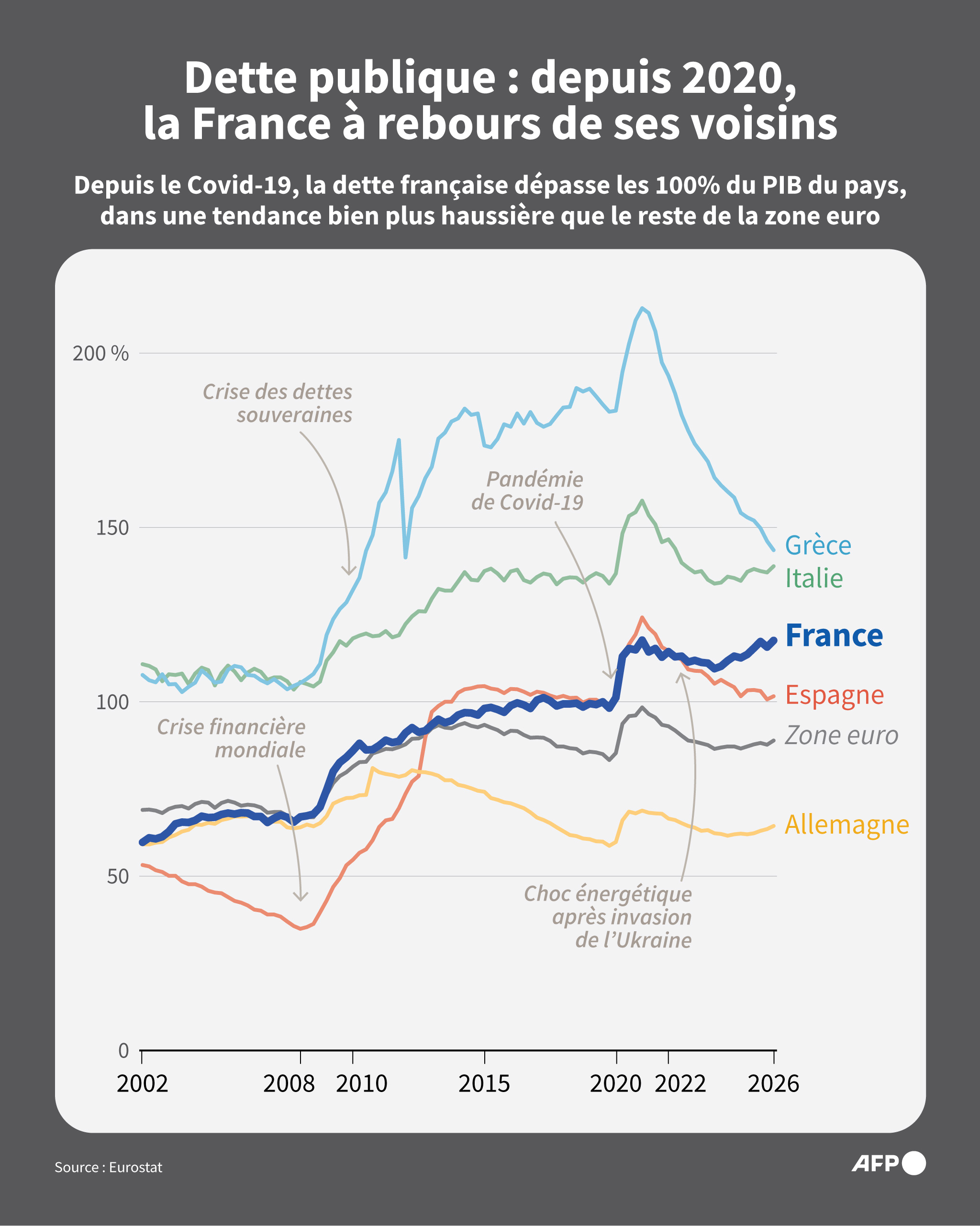
Since the 2008 financial crisis, shocks have followed one another: recession, the pandemic and the energy crisis. Governments supported businesses, protected incomes and cushioned price increases, while economic slowdowns weighed on tax revenues.
On top of these exceptional expenditures come structural imbalances: ageing populations, growing healthcare and pension needs, new spending without corresponding revenues, or tax cuts that are not offset elsewhere.
For years, very low interest rates allowed governments to finance rising debt at little cost. The increase in rates is now making budgetary trade-offs more difficult, just as defence and energy-transition needs are also rising.
Is France an isolated case?
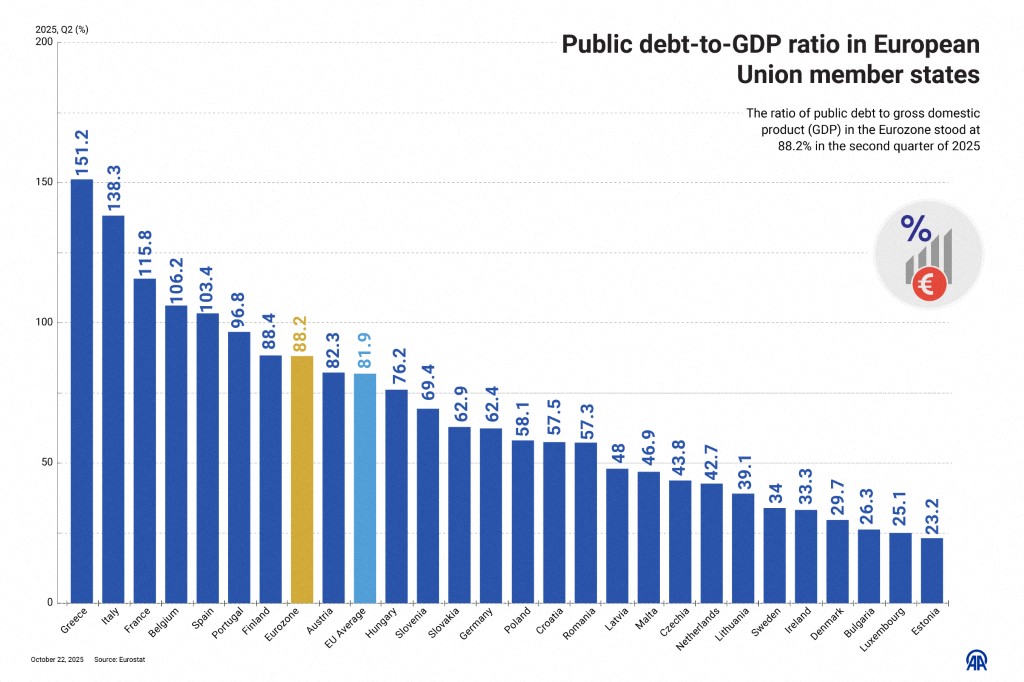
No, but national situations differ. The United States, Japan and the United Kingdom are also facing higher borrowing costs. Even Germany, where debt levels are lower, must finance additional expenditure.
France combines this international pressure with problems of its own: a public deficit still expected to reach 5.4% of GDP in 2026, according to government announcements reported by AFP, as well as political uncertainty surrounding efforts to restore the public finances.
Not all wealthy countries are therefore following the same trajectory. Their growth prospects, taxation, the currency in which they borrow and investor confidence all determine their ability to sustain their debt.
How does a government borrow and repay?
It sells debt securities to investors. In France, Agence France Trésor (AFT) organises these issues on behalf of the state, notably in the form of Obligations Assimilables du Trésor, or OATs.
The buyer lends a sum for a predetermined period. With a conventional fixed-rate bond, the investor receives interest payments, known as “coupons”, and recovers the principal when the bond matures.
The government regularly repays its creditors, but finances part of those repayments through new borrowing: it “refinances” its debt. This is standard practice. Its sustainability depends on the government’s ability to continue borrowing at an affordable cost.
The €340 billion in medium- and long-term issuance, net of buybacks, planned by France for 2027 therefore does not represent €340 billion in additional public spending. It will be used both to finance the deficit and to replace debt reaching maturity.
Who lends this money to governments?
Creditors are numerous: banks, insurers, pension funds, asset managers, central banks and, indirectly, individuals. Some of the savings invested in life-insurance products can therefore be used to finance public debt.
According to AFT data, non-residents held 56% of France’s negotiable central-government debt at the end of 2025. This refers to their tax residence, not necessarily their nationality.
These investors do not all behave in the same way. Some hold their bonds for years. Others, particularly hedge funds, engage in frequent short-term transactions and can amplify market movements, without being responsible for the deficits themselves.
Why are interest rates rising?
Several forces are combining. Inflation erodes the purchasing power of the money lenders will eventually recover, so they demand higher returns to protect themselves. Energy tensions linked to the war in the Middle East are adding to these concerns.
The supply of debt also matters: when governments borrow more at the same time as companies are seeking capital, investors may demand more attractive terms.
A country whose public finances or political stability raise concerns may also have to pay an additional return, known as a “risk premium”.
Central banks can also raise their policy rates to curb price increases. Long-term government bond yields depend in part on expectations regarding monetary policy, inflation and economic growth.
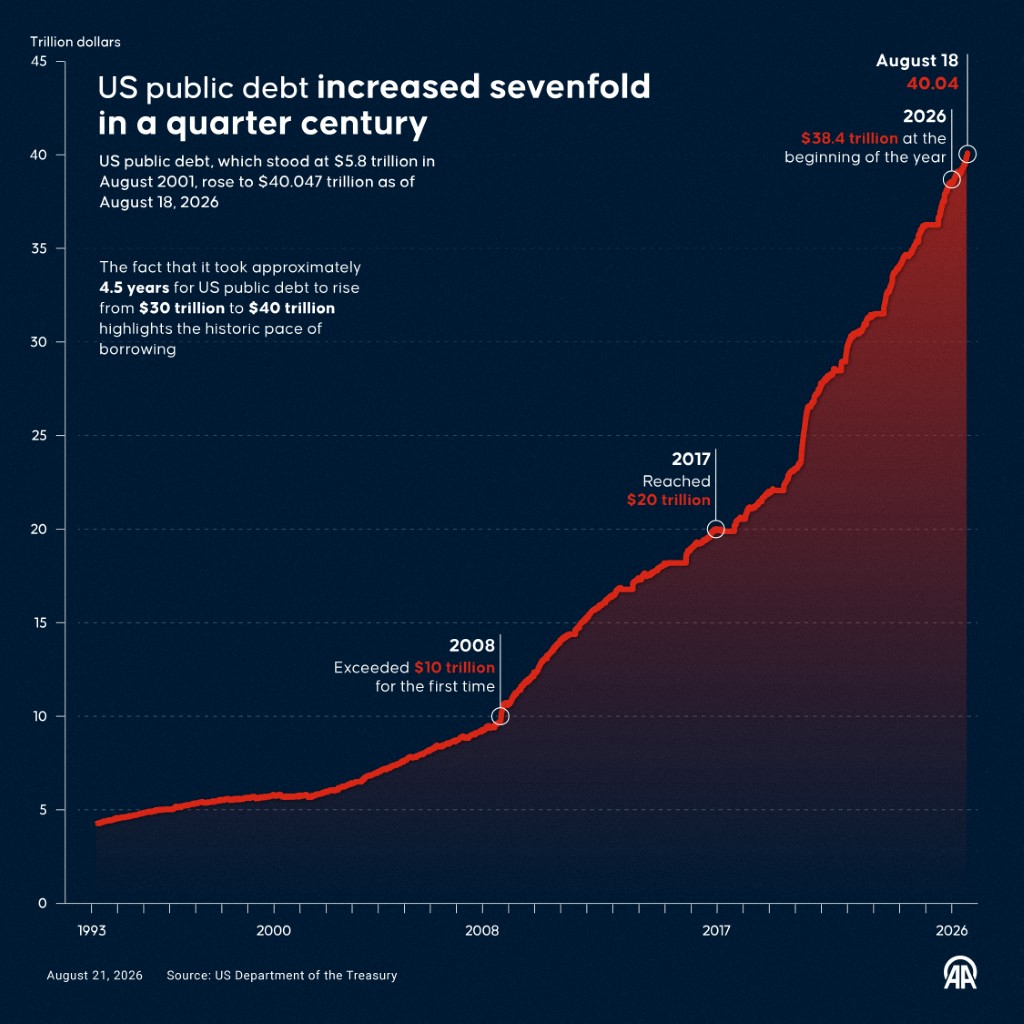
In the United States, the yield on 10-year Treasury bonds had risen above 5% by late September for the first time since 2007, prompting the Federal Reserve to raise interest rates for the first time since 2023, following the ECB.
On Friday, the Bank of Japan also raised its policy rate by 0.25 percentage point to 1.25%, its highest level in 31 years.
Japan’s decision came after pressure from US Treasury Secretary Scott Bessent, who wants the yen to strengthen against the dollar.
Japan is in fact the largest holder of US government debt, and Washington fears that Tokyo could sell Treasury bonds to support its currency, which would further increase US borrowing costs…
What does the interest-rate gap between France and Germany mean?
This gap, known as the “spread”, compares the yields on bonds of the same maturity. German debt serves as the benchmark in the eurozone. On September 29, the gap with France was approaching 1.20 percentage points: investors were demanding a significantly higher return to hold French securities.
These yields fluctuate on the secondary market, where previously issued bonds are bought and sold. For a fixed-rate bond, when its price falls, its yield for a new buyer rises.
These transactions do not alter the interest payments promised on an existing bond. They do, however, influence the conditions under which the government will be able to issue future debt.
Does the rise in interest rates immediately make the entire debt more expensive?
No. Fixed-rate bonds that have already been issued retain their existing terms until maturity. The additional cost is passed on gradually as new debt is issued and old debt is refinanced. Debt with shorter maturities is therefore exposed more quickly to rising rates.
In a simplified example, borrowing €100 billion at 4% rather than 2% doubles the annual interest bill, from €2 billion to €4 billion.
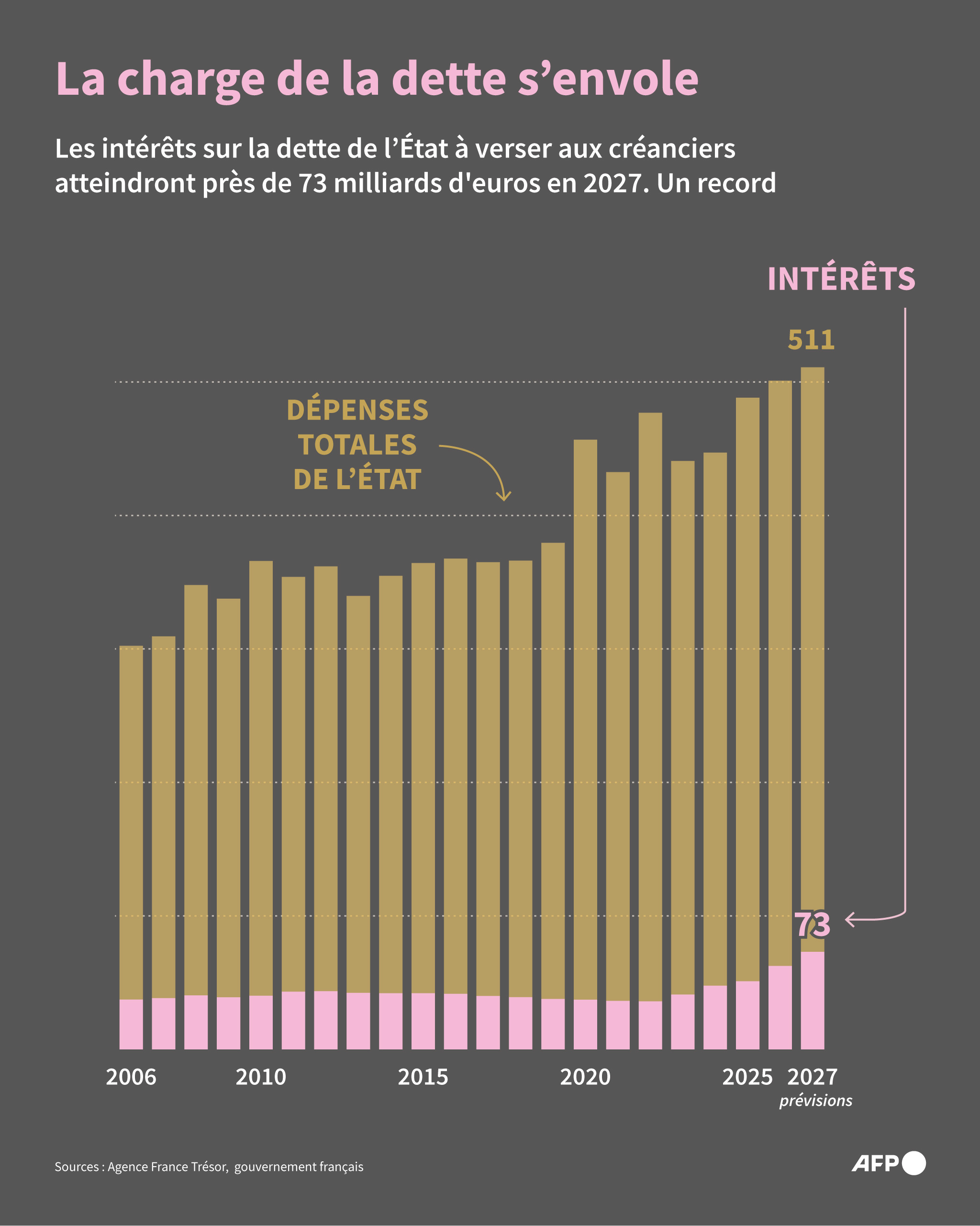
For the French central government alone, AFT expects the budgetary cost of servicing the debt to reach €72.9 billion in 2027, compared with €62.6 billion in 2026. This item essentially covers interest payments and the indexation effects of certain securities; it is separate from repayment of the principal.
When does debt become dangerous?
There is no universal threshold that automatically triggers a crisis. A country’s ability to pay also depends on growth, public revenues, interest rates, debt maturities and lenders’ confidence.
One relationship is crucial: the relationship between the average interest rate paid on the debt and nominal GDP growth, including inflation. If the former exceeds the latter, interest payments tend to push the debt-to-GDP ratio upward. To offset this effect, the government must generate a surplus before interest payments, known as a “primary surplus”.
Conversely, sufficiently strong growth can reduce the relative burden of debt even if its nominal amount continues to increase.
A rise in interest rates therefore does not mean an imminent default. AFT said French bond issues were still attracting demand greater than supply at the end of September. The risk would arise if France were no longer able to refinance maturing debt on affordable terms.
Moreover, the environment of high and volatile yields on French debt also appears to be attracting growing interest from hedge funds, whose very short-term investments could add further instability to the market.
The influence of hedge funds on the rates at which France finances itself is therefore causing concern. Although these funds hold only a fraction of French debt, their share of daily trading continues to increase.
What are the consequences for citizens?
A heavier interest bill reduces the resources available to finance public services, invest or respond to a new crisis. It can lead to higher taxes, spending cuts or additional borrowing.
Higher interest rates can also feed through to mortgages and corporate financing, slowing purchases, investment and employment. Loans already contracted at fixed rates nevertheless remain protected by their original terms.
The impact varies between households: some savers may benefit from higher returns, while those who need to borrow face higher costs.
How can the debt burden be reduced?
Governments can act on revenues, expenditure and growth. Increasing revenue or slowing spending reduces the need to borrow. A more dynamic economy broadens the tax base and increases the GDP against which the debt is measured.
The balance matters. An excessively abrupt adjustment can weaken economic activity and tax revenues, while repeatedly postponing action allows interest costs to accumulate. The quality of expenditure is also important: productive investment can strengthen the economy’s future capacity to generate output and repay debt.
Inflation can erode the real value of older fixed-rate debt. But it also increases certain expenditures, the cost of inflation-linked bonds and the price of future borrowing. It is therefore neither a sustainable nor a painless solution.
What policies are needed in the long term?
This is where the central political and social debate lies in Western democracies. And it is hardly new: since the rise of so-called ultraliberal public policies, supporters of this approach have campaigned for the reduction, or even elimination, of social benefits in several developed countries. One striking example is the United States, where under President Clinton — a Democrat — reforms were introduced to the pension and Social Security systems.
Other reforms followed in Europe, albeit with greater moderation. Germany and Spain are examples. In France, the debate over reducing social expenditure is as divisive as the Dreyfus Affair…
It is clear that while Germany has managed to raise its retirement age to 67, France is struggling to move beyond 64. For a rapidly ageing country, the consequences could be catastrophic.
France’s Social Security deficit is thus estimated at €21.8 billion for 2026, while the basic pension schemes are expected to post a deficit of €8 billion in 2026.
In France, around 57% of total public expenditure is devoted to social protection and healthcare, according to INSEE figures for 2024. This includes social protection excluding healthcare — pensions, family benefits, unemployment benefits and social assistance — amounting to €693 billion, or around 41% of public expenditure. Healthcare spending must then be added, at €261 billion, or around 16% of expenditure.
By way of comparison, the ratio of social-protection expenditure to total public spending in the United States stands at 47%... but with almost 50 million Americans lacking medical coverage because it is too expensive!
Why not simply cancel part of the debt?
A restructuring can provide for later repayments or a reduction in the amounts owed. However, it imposes losses on creditors and can damage the country’s access to financing, with repercussions for banks and savers.
Cancelling bonds held by a central bank raises a different issue. In the eurozone, the ECB considers such cancellation incompatible with the prohibition on monetary financing of governments laid down in the treaties. Some economists dispute this framework or argue that it should be changed.
Even cancelling part of the debt would not, on its own, correct a persistent imbalance between revenue and expenditure. If that imbalance remains, debt will simply begin accumulating again.