
Levant Time logo
Jacques Mechelany

Jacques Mechelany

What If Lebanon Was at Peace?
By
Jacques Mechelany
Published
Aug 4, 2026 - 13:12

As this is being written, Lebanon is at war again. Since March 2, 2026, large-scale exchanges of fire between Israel and Hezbollah have resumed, extending a cycle of violence that began in October 2023 and never truly ended despite the November 2024 ceasefire. The war has cost more than 4,000 lives, displaced over a million Lebanese – more than a fifth of the population – and destroyed entire cities, villages and homes, some of them centuries old and irreplaceable. The International Monetary Fund now expects Lebanon’s GDP to contract by 12% to 16% in 2026, driven mainly by the collapse of tourism and the paralysis of economic activity in border regions.
The Restoration of the Lebanese State
By
Jacques Mechelany
Published
Jul 23, 2026 - 17:38

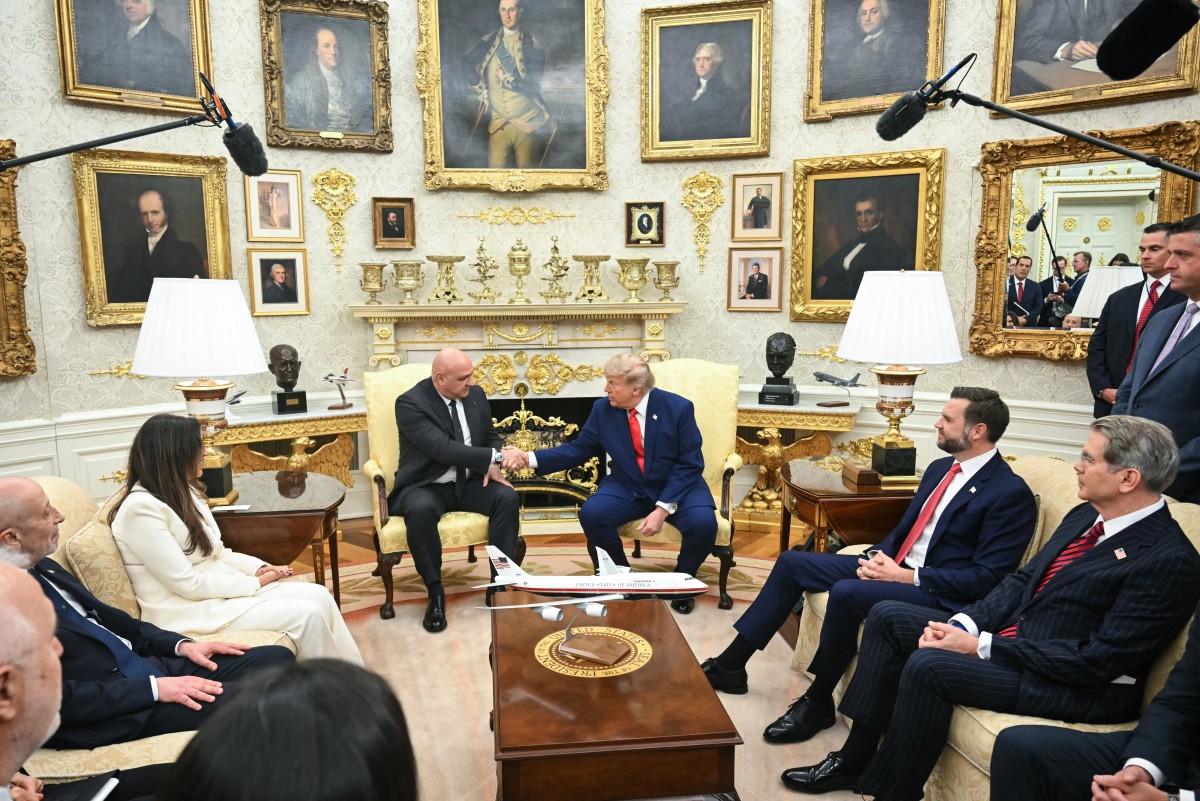
For the first time since 2009, a Lebanese president walked through the doors of the White House this week not as a supplicant coming to beg for attention, but as the bearer of a plan. On Tuesday, President Joseph Aoun sat across from Donald Trump and handed him a written proposal: a roadmap to dismantle Hezbollah's arsenal, consolidate all weapons in the country under the exclusive authority of the Lebanese state, and in return, secure an Israeli withdrawal from the territory the Israeli army still occupies in the south. Trump, for his part, struck an almost paternal tone. "We feel very good about Lebanon," he told reporters, adding that the country had been "very badly treated" and deserved to be "treated with the respect it deserves." He acknowledged in the same breath that "there is a Hezbollah problem" — as if he were diagnosing, in a single phrase, both Lebanon's tragedy and its opportunity.

SpaceX: The Birth of the First Corporate Superpower?
By
Jacques Mechelany
Published
Jun 23, 2026 - 13:25

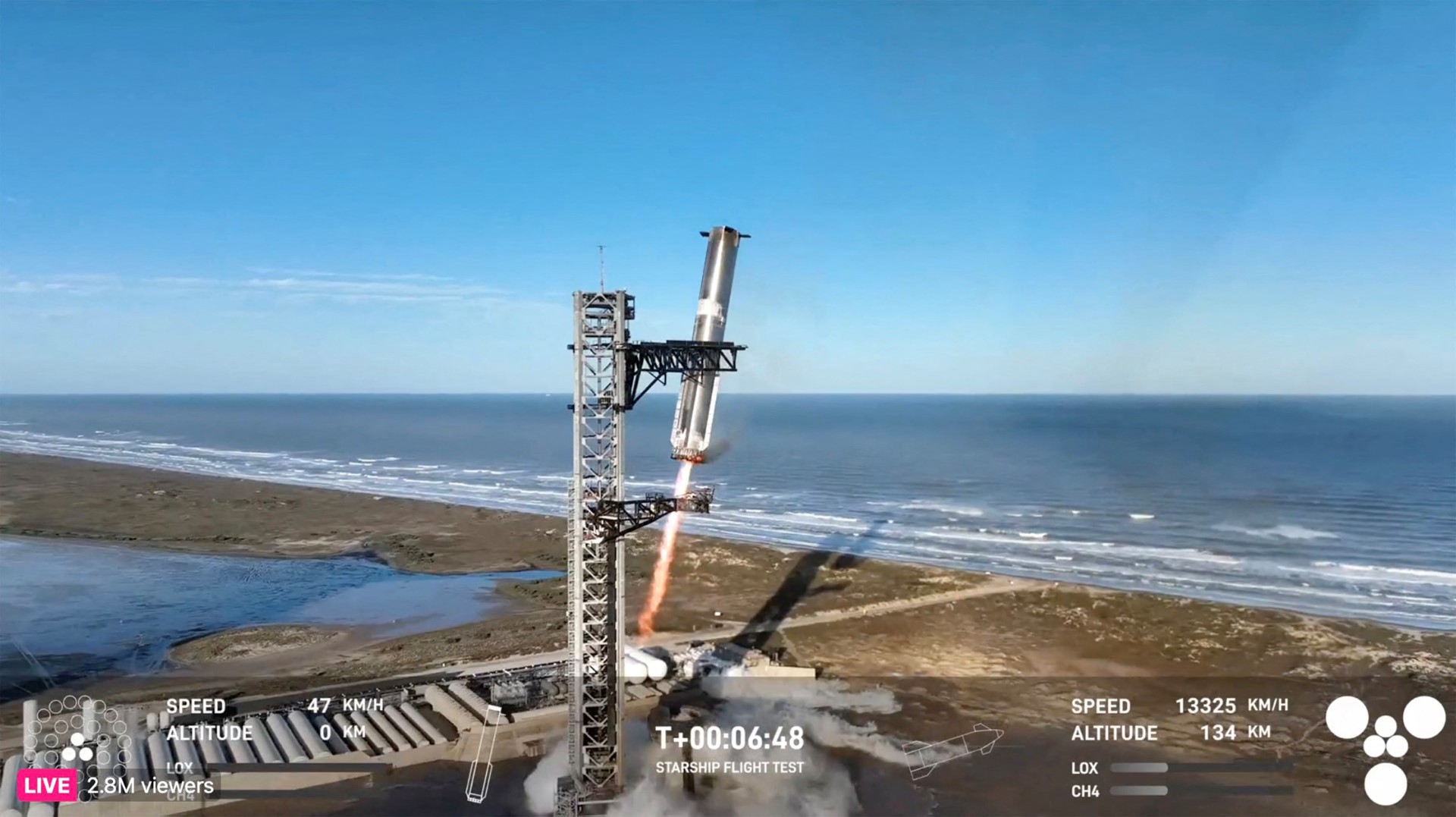
On June 12, 2026, financial markets around the world witnessed a moment of history unfolding in real time. Just hours after its IPO, SpaceX crossed the symbolic threshold of a $2 trillion market capitalization, making it the largest initial public offering ever completed. Its founder, Elon Musk, simultaneously became the first individual in human history to see his personal net worth surpass one trillion dollars. Unsurprisingly, Wall Street immediately split into two camps. For some, this valuation represents the ultimate expression of the speculative excess of our era: a market intoxicated by technology, artificial intelligence, and boundless growth narratives.

Are We Nearing the End of the War in Iran?
By
Jacques Mechelany
Published
Apr 7, 2026 - 18:49

Thirty-nine days into the war, the question that now hangs over the Middle East is no longer whether the conflict will reshape Iran. It already has. The real question is whether we are approaching the moment when the war moves from its destructive phase into its political phase — the moment when wars historically reach their climax and the foundations of the post-war order begin to emerge. Every war follows a brutal but recognizable trajectory. First comes shock. Then escalation. Then devastation. And finally — when the human, economic, and political costs become unbearable — the search for a new equilibrium begins.

The Perfect Storm
By
Jacques Mechelany
Published
Mar 22, 2026 - 19:36

Major economic crises almost never happen without warning. Long before markets collapse or economies contract, warning signs discreetly accumulate beneath the surface: financial excesses grow, geopolitical tensions escalate, technological disruptions accelerate, and the architecture of the global economy becomes increasingly fragile. For several years, many of these signs have been visible worldwide. Stock markets have reached historically high valuation levels. Public debt has reached unprecedented levels. Artificial intelligence is transforming industries at dizzying speed. And geopolitical tensions are beginning to disrupt some of the most vital arteries of global trade and energy.

The U.S. – Iran Confrontation Through the Lens of Game Theory
By
Jacques Mechelany
Published
Feb 25, 2026 - 08:46

By February 2026, the temperature in the Persian Gulf is approaching a boiling point. The U.S. Fifth Fleet has completed a military buildup rarely seen since the Cold War. Strategic bomber wings rotate through forward bases. Tel Aviv experiences intermittent GPS signal jamming. News feeds oscillate between predictions of “World War III” and dramatic narratives of a “Sino-Russian alliance defending Tehran to the death.” The world is staring at radar screens, waiting for ignition. Yet if we strip away the ideological noise, the confrontation deserves to be analyzed through a far more sober framework: game theory.

USA: The Supreme Court and the Limits of Executive Power
By
Jacques Mechelany
Published
Feb 23, 2026 - 16:02

On April 2, 2025, standing in the White House Rose Garden, President Donald Trump declared what he called “Liberation Day.” By signing Executive Order 14257 under the International Emergency Economic Powers Act (IEEPA), the administration imposed sweeping “reciprocal tariffs” on foreign imports. The justification was expansive: the persistent U.S. trade deficit—exceeding $1.2 trillion annually—was declared a national emergency. Blanket tariffs were applied to nearly all trading partners, with rates reaching as high as 50 percent. The objective was explicit: compel bilateral negotiations, extract investment commitments, and accelerate industrial reshoring.

Will AI Take Control of Our World?
By
Jacques Mechelany
Published
Feb 17, 2026 - 11:24

The Intelligence Monopoly Ended. For most of human history, one assumption remained unquestioned: intelligence belonged to us alone. We were the only species capable of abstract reasoning, scientific accumulation, technological scaling, and political organization. Intelligence was our monopoly — and therefore our power. That monopoly is now over. Artificial intelligence systems already outperform humans in pattern recognition, large-scale code generation, protein folding, predictive modeling, and increasingly in scientific hypothesis formation. In domain after domain, the ceiling of human cognition is no longer the frontier.

Bitcoin crash: is it the end of the crypto sphere? (2/2)
By
Jacques Mechelany
Published
Feb 13, 2026 - 15:54

In the first part, we examined the evolution of Bitcoin from its inception to its current collapse. In this part, we detail the alternatives and the role of public authorities. Stablecoins: from retail convenience to systemic risk If Bitcoin is crypto’s flagship, stablecoins are its bloodstream. Stablecoins began as a simple tool: a way for retail traders to move between crypto and “dollars” without leaving the ecosystem. They promised stability in a volatile world. But stablecoins evolved. And today, they represent one of the most important—and underappreciated—systemic vulnerabilities in digital finance.

Bitcoin crash: is it the end of the crypto sphere?
By
Jacques Mechelany
Published
Feb 12, 2026 - 16:44

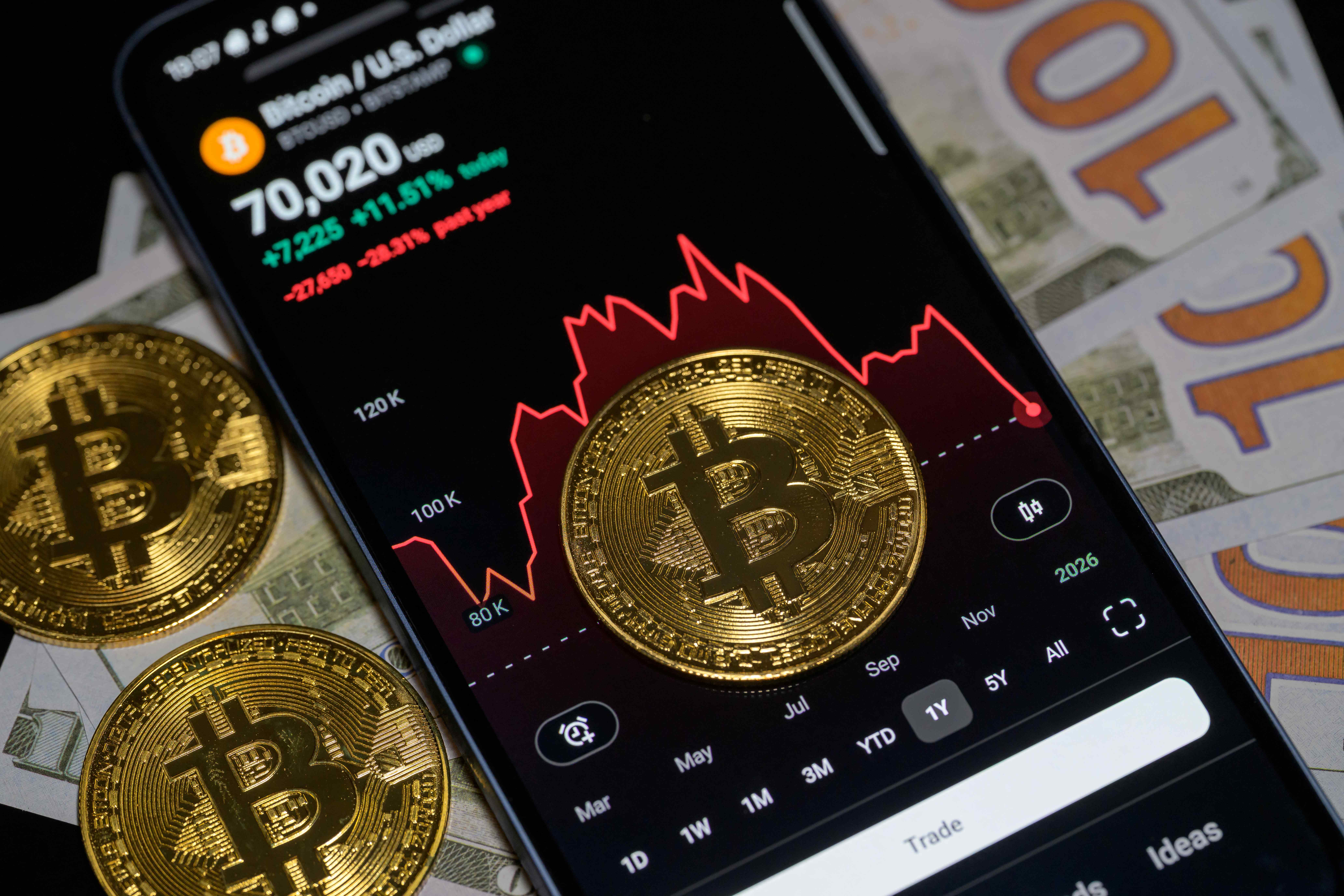
From its $126,000 all-time high to yesterday’s close near $69,000, Bitcoin—the poster child of cryptocurrencies—has lost approximately 45% of its value, wiping out an estimated $1.1 trillion in nominal investor wealth. Bitcoin’s latest crash is not just another bout of volatility. It is a stress test of the entire crypto architecture: the belief that ETFs created a permanent institutional bid, the assumption that stablecoins are “cash equivalents,” the rise of corporate leverage masquerading as long-term conviction, and the accelerating reality that states—China first, others inevitably following—intend to dominate the future of digital money.

/