

Lebanese Impressionism: Moustafa Farroukh, Painter and Committed Intellectual (4/4)

Moustafa Farroukh ranks among the leading pioneers of modern Lebanese painting and played a major role in shaping the country’s artistic landscape.
He was born in 1901 in the modest Basta neighborhood of Beirut, into a Sunni family, and died in 1957. From an early age, he was encouraged and trained in the studio of the modernist painter Habib Srour.
In 1927, he left Beirut for Rome, where he studied at the Regia Accademia di Belle Arti (San Luca), graduating the same year.
He later continued his training in Paris, notably under Paul Émile Chabas, then president of the Société des artistes français. He began exhibiting in major artistic events, including the Paris Salons, the Rome Biennale, and later in Venice, New York, and Beirut.
Back Home
Farroukh returned to Beirut in 1932, where he opened a permanent studio-gallery that soon became a gathering place for the city’s artistic life.
He taught art at several prestigious institutions, including AUB, ALBA, and the École normale de Beyrouth. He also delivered lectures in various intellectual circles, notably at the Lebanese Cénacle (Al-Nadwa), thereby contributing to the institutional consolidation of Lebanon’s emerging artistic field. Highly active on the international exhibition circuit, his name was included in the Bénézit Dictionary of Artists in 1950, widely regarded as the world’s most authoritative reference work on artists.
Farroukh was both a committed artist and an intellectual, publishing numerous articles on art in the press and contributing to the broader public’s artistic education. He also authored five books on the philosophy of art and Lebanese identity, including an autobiography. His writings played a key role in shaping the theoretical foundations of art in Lebanon’s emerging society.
His Work and Style
Farroukh was a prolific painter who left behind more than 2,000 paintings, widely collected both in Lebanon and abroad.
His style is essentially post‑Impressionist, figurative, and realist, shaped by his European academic training yet deeply rooted in Lebanese themes.
His favorite themes draw from everyday life: rural and urban landscapes, villages, fields, ports, the Beirut corniche, notables, working women and peasants. He also painted a number of nudes – an audacious choice in the Levantine context of the time.
His palette is luminous and warm. He paid particular attention to chiaroscuro, inherited from his Italian training, which he harmoniously combined with Mediterranean light.
In the 1930s, following a formative stay in Spain, he began to draw on Arab‑Andalusian heritage in his work, incorporating the memory of Arab Andalusia into a modern pictorial language.
An Iconic Work: “The Corniche of Ras Beirut”
His views of Beirut’s seafront and the corniche are often cited as iconic representations of a Lebanon in transition, where the port, the sea, and the city form a defining triptych.
“The Corniche of Ras Beirut,” painted in 1941 under the French Mandate, reflects Farroukh’s desire to lay the foundations of a distinctly Lebanese national painting, while drawing on his European influences.
The urban landscape, opening onto the sea, symbolizes a dialogue between the modern city and the Mediterranean horizon, with a strong emphasis on light and atmosphere. Ras Beirut emerges as a threshold between East and West, modernity and tradition. The work captures an emerging Lebanese identity and marks a key moment in the country’s pictorial modernity.
It offers a poetic vision of Lebanon, where sea, mountain, and traditional architecture coexist in harmony. The composition, structured in three planes, creates depth to the painting, guides the viewer’s eye from the pathway to the horizon line. The warm earth tones contrast with the cool shades of blue of the sea and sky, creating an atmosphere that is both luminous and melancholic. The presence of two adults at the center humanizes the scene and introduces a narrative dimension characteristic of Farroukh’s work. Palm trees and low houses, rendered with a supple brush, anchor the painting in an idealized Mediterranean Orient, imbued with nostalgia and softness.
Iconic Painters of a Nation on the Rise
In conclusion, Lebanon’s four pioneering painters – Khalil Saleeby, Omar Onsi, César Gemayel, Moustafa Farroukh – though by no means the only ones, stand out as emblematic figures of a nation on the rise. Trained abroad, they drew inspiration from the European schools of painting of their time, selectively adopting the best techniques while adapting them to Mediterranean and Eastern light and sensibilities. In doing so, they reinforced Lebanon’s emerging national identity and created a distinctly Lebanese art style of painting, at once reminiscent of and distinct from early 20th-century European art.
The influence of Western painting allowed them to liberate both their brushstrokes and their palettes, while freeing themselves from religious and official commissions, breaking the social taboos of the period. Some drew on Impressionism, others leaned toward Realism or Post‑Impressionism, yet all contributed to forging a Lebanese national identity and fostering the country’s artistic and social development. Their works also served as a source of inspiration for other Levantine societies of the era.
Read on the same topic
– Lebanese Impressionism: From Parisian Greyness to the Light of Mount Lebanon (1/4)
– Lebanese Impressionism: Omar Onsi, Master of Light (2/4)
– Lebanese Impressionism: César Gemayel, a Pioneer Between Two Worlds (3/4)
With the OIF, Francophone Literature Breaks Down Borders
Eva Gonzalès: Subtle Freedom Through the Brush
September News: The Battle of Lebanon
The Samir Kassir Festival, or the Lebanon Yet to Be Born
Why Habermas Remains Urgently Relevant
Plus de Micha Moussallem
Voir tout


À lire aussi dans Culture
Voir tout


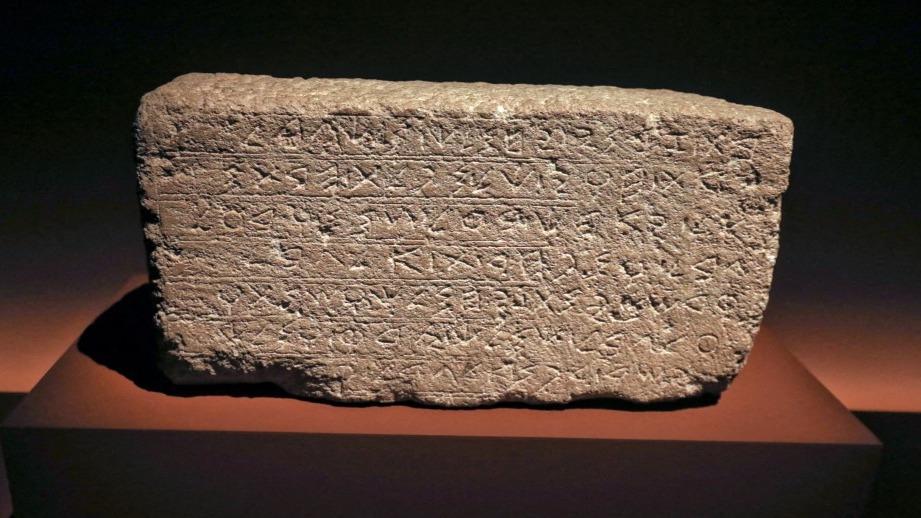

'Byblos' at the IMA: a cultural resistance in the face of war
Les derniers articles de Levant Time
Voir tout


